Best Calendar Method Apps for Women in 2026: 8 Tools Compared

How we put this together: we compare official feature and pricing pages, app store listings, privacy policies and public user reviews. Prices change, so check the provider's site before you pay.
Key takeaways
- Natural Cycles is the only app here with a cleared contraceptive claim in the US and Europe, and it requires daily temperature readings.
- Clue and Flo are best for general cycle tracking, while Fertility Friend and Kindara suit people who want detailed charting.
- No app predicts ovulation with certainty, and irregular cycles, illness, stress, and poor sleep can all shift predictions.
- Privacy matters for health data, so check each app data policy, sharing settings, and deletion options before you log sensitive details.
- These apps are not a substitute for medical advice, and calendar methods have real failure rates when used alone for avoiding pregnancy.
Quick comparison
| Name | Who it suits | Starting price | Free option | |
|---|---|---|---|---|
 Clue | Science led cycle tracking | Free | Yes | Visit |
 Flo | Health articles and community | Free | Yes | Visit |
 Natural Cycles | Temperature based contraception | See website | No | Visit |
 Ovia Fertility | Trying to conceive guidance | Free | Yes | Visit |
 Glow | Community and partner sharing | Free | Yes | Visit |
 Kindara | Detailed fertility charting | Free | Yes | Visit |
 Fertility Friend | In depth BBT charting | Free | Yes | Visit |
 Premom | Ovulation test strip reading | Free | Yes | Visit |
The best calendar method apps for women
Calendar method apps estimate fertile days from past cycles and, in some cases, temperature and other signs. They differ in how much data they ask for, how they present predictions, and what claims they make. The list below separates general trackers from apps built for detailed fertility awareness.
A short plain note before you choose: these apps are not a substitute for medical advice. Calendar methods have real failure rates, especially when cycles are irregular or data are entered inconsistently. If avoiding pregnancy is critical, talk to a clinician about methods with lower failure rates, and do not rely on an app prediction alone.
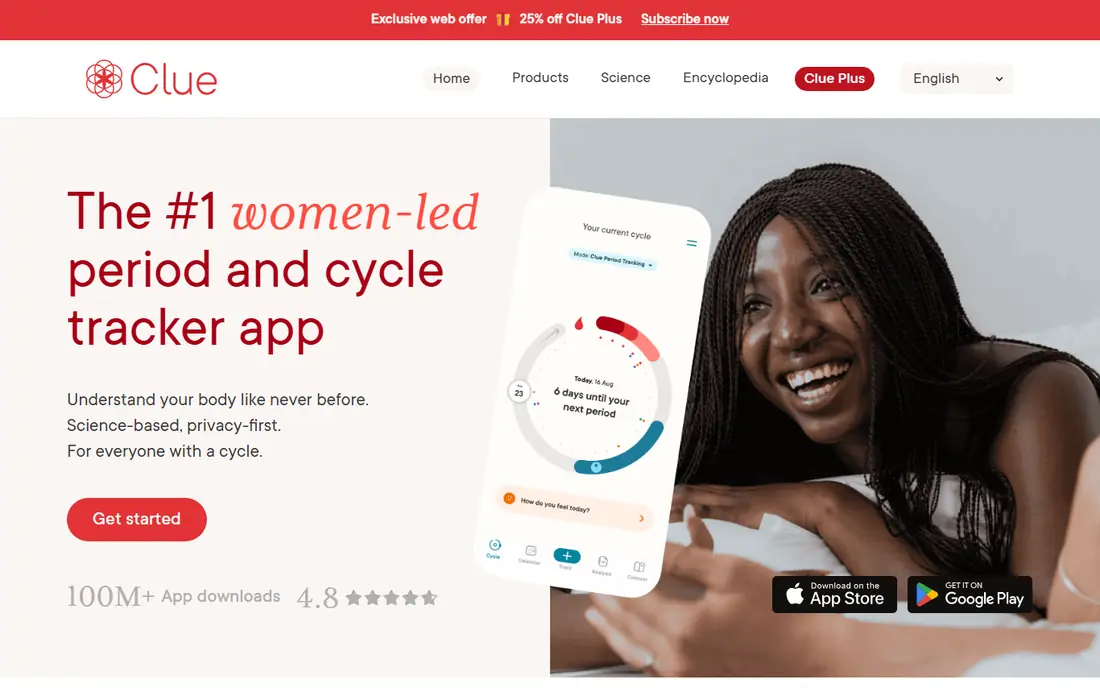
Clue fits people who want a clean, calm tracker without a lot of extra content. You log periods, symptoms, mood, and other signs, and the app shows predicted period and fertile days based on your history. The interface is simple, which helps with daily logging, and that consistency is what makes any prediction more useful over time.
The app also publishes articles written with medical reviewers, which is helpful when you want to understand why a cycle changed. Privacy settings let you control data sharing, and Clue is based in Berlin, so European data rules apply to its handling of health data. That will matter to readers who are careful about where sensitive data are stored.
The limit is scope. Clue predicts, but it does not claim to be contraception, and its free version does not include every premium insight. If you need a method for avoiding pregnancy, Clue alone is not enough, and you should pair tracking with another method or advice from a clinician.
- Clear cycle predictions
- Science based articles
- Privacy controls based in Europe
- Premium features need a subscription
- No contraceptive claim for most users
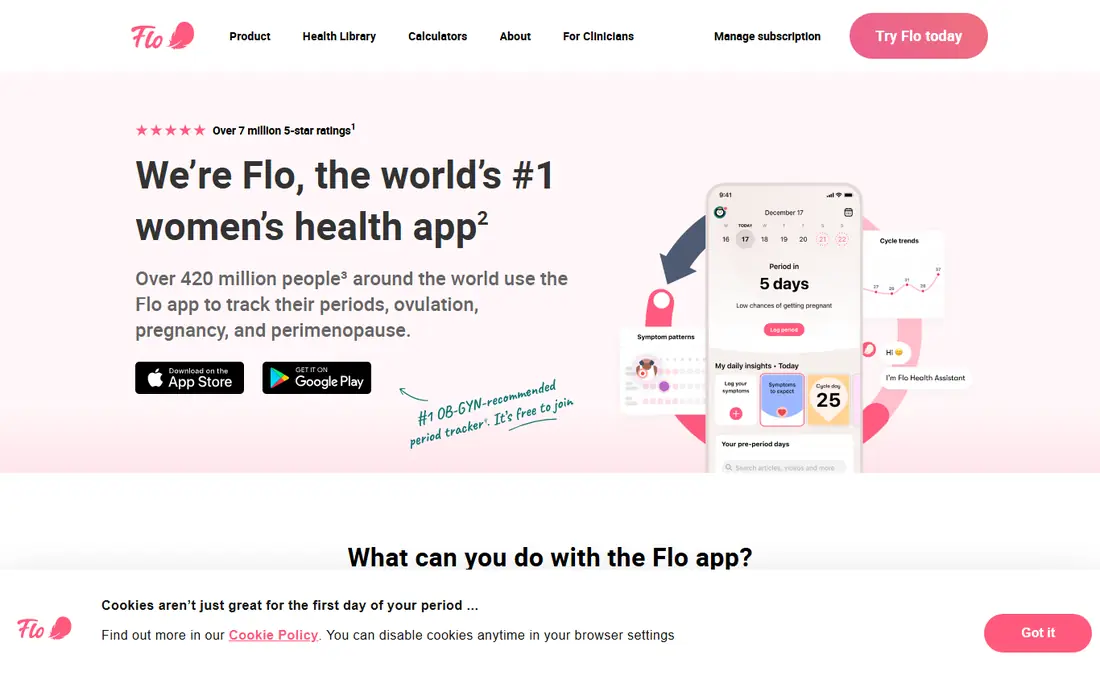
Flo is a good fit for people who want cycle tracking plus a lot of reading material. The app covers periods, ovulation, pregnancy, and general health, with articles, quizzes, and a community section. That breadth makes it useful for someone who is still learning about their cycle and wants context for symptoms.
Logging is quick, and the app shows a calendar view with predicted fertile days and period dates. Flo also offers an anonymous mode, which some users choose for extra privacy. You can log symptoms, mood, sleep, and other signs, and the app uses that history to adjust future predictions.
The weakness is the same as for most general trackers. Predictions are based on past cycles and logged signs, so they can be wrong, especially after illness, travel, or stress. Flo is not contraception, and its premium articles and insights require a paid plan, which may not be needed if you only want basic tracking.
- Large article library
- Symptom and mood logging
- Anonymous mode option
- Premium content is paywalled
- Predictions are estimates, not guarantees
Natural Cycles is different from the other apps here because it is cleared as a contraceptive method in the US and Europe when used as directed. It uses basal body temperature readings, taken each morning, and an algorithm to identify fertile and non fertile days. You must follow its instructions closely, including using protection or abstaining on red, fertile days.
For people who want a hormone free method and are willing to measure temperature every morning, this structure is a strength. The app gives a clear daily status, and it can also be used in a mode for planning pregnancy. Temperature data, rather than calendar dates alone, gives it more information than a simple period tracker.
The cost is commitment and price. Daily readings are essential, and missed readings reduce accuracy. The subscription is paid, and the app states that it is less suitable for some users, including those with very irregular cycles. Read its own eligibility guidance and talk to a clinician before relying on it for contraception.
- FDA cleared and CE marked contraceptive app
- Uses daily temperature data
- Clear fertile and non fertile days
- Requires daily temperature readings
- Subscription cost
- Less suitable for very irregular cycles
Ovia Fertility suits people who are trying to conceive and want daily guidance. It gives a fertility score, tracks cycles, basal body temperature, cervical mucus, and other signs, and offers tips tied to where you are in your cycle. The free core features cover most tracking needs, which makes it easy to start without paying.
The app also includes articles and tools for health tracking beyond fertility, which can be useful if you want one app for several health topics. Logging is structured, and the calendar view makes it easy to see predicted ovulation and fertile days at a glance.
Privacy deserves attention here. Some versions of Ovia are offered through employers or health plans, and data sharing in those versions may differ from the direct consumer app. Check the privacy policy for the version you use, and decide what you are comfortable logging. As with all trackers, predictions are estimates, not a guarantee of ovulation on a given day.
- Daily fertility score
- Trying to conceive tips
- Free core features
- Employer sponsored versions raise privacy questions
- Predictions are estimates
Glow fits people who value peer support alongside tracking. It offers cycle and ovulation predictions, symptom logging, and community forums where users share experiences about trying to conceive, pregnancy, and cycle health. Partner sharing lets a partner see cycle information, which some couples find helpful.
The app also provides insights based on logged data, such as patterns in symptoms or cycle length. That can help you spot changes worth discussing with a clinician, such as consistently short or long cycles. The free version covers core tracking, while premium adds deeper analysis.
The drawback is that community advice is not medical advice, and forum posts can be misleading. Premium features require payment, and some users may find the app busy compared with simpler trackers like Clue. Use Glow for tracking and support, but check health claims with a clinician.
- Large community forums
- Partner sharing option
- Detailed cycle insights
- Premium features cost extra
- Community content is not medical advice
Kindara is built for fertility awareness charting, not just calendar predictions. You can log basal body temperature, cervical mucus, cervix position, and other signs, and view them on a chart. That detail suits people who have learned a fertility awareness method and want an app that respects that method, rather than a simple date calculator.
The chart view is the main strength. It lets you see temperature shifts and mucus patterns over time, which can help confirm ovulation after it happens, rather than only predicting it in advance. Community features and learning resources support new charters, though the method itself takes time to learn well.
The weakness is the learning curve. Kindara is less plug and play than Flo or Clue, and new users may need to study fertility awareness rules before the charts make sense. It is not contraception on its own, and using charting to avoid pregnancy requires training and consistent daily logging.
- Detailed fertility awareness charting
- Cervical mucus and temperature logging
- Community support
- Learning curve for new charters
- App updates have been less frequent
Fertility Friend is the most data heavy app on this list, and it suits people who want detailed analysis. It supports basal body temperature, ovulation tests, cervical mucus, and many other signs, and it produces charts, reports, and interpretations based on your data. Users with irregular cycles often value this depth, because it shows patterns that a simple calendar would miss.
The app also lets you export data and share charts with a clinician, which can be useful at a fertility appointment. Its long history means there is a large body of help articles and community discussion about charting rules and common patterns.
The interface is the main drawback. It feels older and denser than newer apps, and some advanced analysis sits behind a paid plan. New users may find it overwhelming at first, but for serious charters, the depth outweighs the dated design.
- Very detailed charting tools
- Data analysis and reports
- Long history in fertility tracking
- Interface feels dated
- Premium analysis needs payment
Premom fits people who use ovulation predictor kits and want the app to read the results. You photograph a test strip, and the app estimates the LH level and plots it on a curve, which helps show the rise before ovulation. That is more concrete than a calendar prediction alone, especially for irregular cycles.
The app also tracks periods, basal body temperature, and other signs, and it offers a community section. The free version covers core tracking and strip reading, while premium adds extra analysis. For people already buying test strips, Premom can turn a pile of photos into a clear chart.
The limit is dependence on strips. Without regular testing, Premom is similar to other calendar trackers. You also need to check its privacy policy, since health and test data are sensitive, and past regulatory attention to fertility app privacy means you should review sharing settings before you start logging.
- Scans ovulation test strips
- LH curve charts
- Free core tracking
- Best with compatible test strips
- Privacy policy needs careful reading
How we picked these
We reviewed official app pages, app store listings, privacy policies, and public regulatory information for each app. We kept only apps that still operate in October 2026, offer cycle or fertility tracking on iOS or Android, and describe their method clearly on their own site. We gave extra weight to apps that explain their limits, offer data export or deletion, and distinguish between general tracking and cleared contraception. We left out apps that made vague accuracy claims without explaining their method, or that had closed or stopped updating.
Choosing a calendar method app safely
Start with your goal, because the right app depends on it. If you want general period tracking, a simple app like Clue or Flo is enough. If you are trying to conceive, an app that logs temperature, mucus, and test results, such as Fertility Friend or Premom, gives you more useful data. If you want to avoid pregnancy without hormones, Natural Cycles is the only app here with a cleared contraceptive claim, and it still requires strict daily use.
Check privacy before you log. Read the data policy, turn off sharing you do not want, use anonymous mode where offered, and check how to delete your data. Health data can be sensitive, and policies differ, especially for apps offered through employers or health plans. If a policy is unclear, choose an app with clearer controls.
Be honest about accuracy limits. Calendar predictions are estimates based on past cycles, and ovulation can shift. Temperature and mucus signs can confirm ovulation after it happens, but they cannot guarantee a future date. For avoiding pregnancy, this uncertainty matters, and failure rates for calendar methods in typical use are higher than for long acting methods. Talk to a clinician if your cycles are irregular, if you have a condition such as polycystic ovary syndrome, or if pregnancy would carry high risk for you.
Frequently asked questions
Can a calendar app be used as birth control?
Only Natural Cycles on this list is cleared as a contraceptive app, and only when used exactly as directed, with daily temperature readings and protection on fertile days. Other apps are trackers, not contraception, and relying on their predictions alone to avoid pregnancy carries a real risk of unintended pregnancy. Talk to a clinician about methods that fit your needs and risk tolerance.
How accurate are ovulation predictions?
Predictions are estimates, not certainties. They are based on past cycle lengths and logged signs, and they can be wrong when cycles vary, after illness or stress, or when data are missing. Temperature based apps can confirm ovulation after it occurs, but they cannot predict it with perfect accuracy in advance. Use predictions as a guide, not a guarantee.
What is the difference between calendar method and fertility awareness?
The calendar method, also called the rhythm method, estimates fertile days from past cycle lengths alone. Fertility awareness methods add daily signs, such as basal body temperature, cervical mucus, and ovulation tests, to identify fertile days more precisely. Fertility awareness requires more daily logging and learning, but it gives more information than dates alone.
Are these apps safe for irregular cycles?
Apps can still be useful for logging irregular cycles, and the data may help a clinician spot a pattern. Predictions will be less reliable, however, because irregular cycles break the assumption behind calendar maths. Apps with detailed charting, such as Fertility Friend and Kindara, are often more helpful than simple calendar apps in this situation.
Which app is best for privacy?
Clue is often cited for its European base and privacy stance, and Flo offers an anonymous mode, but no app is private by default without checking settings. Read the privacy policy, limit data sharing, avoid logging details you do not need, and check deletion options. If you use an employer sponsored version, check whether that version shares data differently.
Do I need a thermometer or test strips?
Not for basic period tracking, which needs only dates and symptoms. Temperature based tracking needs a basal body thermometer and daily morning readings. Ovulation test strips help Premom and similar apps estimate the LH surge. Choose tools that fit how much daily effort you are willing to sustain, because inconsistent logging weakens every method here.
Sources we checked (8)

Online Jobs is an independent blog about careers, online work, learning new skills and the tools that help people earn. More about us.
Keep reading
All posts
Best workout apps for women
Compare the best workout apps for women in 2026, from free guided classes to structured strength plans, with current prices, free plans and honest trade-offs.

Best Yoga App
Find the best yoga app for home practice in 2026, with verified prices, free options, class styles, trials and honest limits for 10 yoga apps compared.
Best Workout Tracker App
We compared the best workout tracker app options for gym, home, and running training, checking prices, free plans, and logging tools in detail. See inside.