Best Budgeting Apps for Couples in 2026: 9 Tools Compared


Shared budgets and net worth tracking · Starting price: $14.99 per month
How we put this together: we compare official feature and pricing pages, app store listings, privacy policies and public user reviews. Prices change, so check the provider's site before you pay.
Key takeaways
- Monarch Money is our pick for most couples who want shared budgets, net worth tracking, and clear permissions in one place.
- YNAB suits couples who want a strict plan for every dollar and are willing to learn a method together.
- Goodbudget and EveryDollar give couples a useful free starting point, with paid plans adding bank sync or more envelopes.
- The cheapest paid option is not always the best fit, because bank sync, joint access, and goal tracking matter more than a small monthly saving.
- Check how each app handles joint accounts, separate accounts, and privacy before you link a bank, and agree on who updates the budget each week.
Quick comparison
| Name | Who it suits | Starting price | Free option | |
|---|---|---|---|---|
| Monarch Money | Shared budgets and net worth tracking | $14.99 per month | Free trial (7 days) | Visit |
 YNAB | Zero-based planning together | $14.99 per month | Free trial (34 days) | Visit |
 Simplifi by Quicken | Low-cost automatic tracking | $5.99 per month | Free trial (30 days) | Visit |
 Goodbudget | Envelope budgeting for two | Free | Yes | Visit |
 EveryDollar | Simple zero-based budgets | Free | Yes | Visit |
 PocketGuard | A clear safe-to-spend figure | $12.99 per month | Yes | Visit |
 Copilot Money | Apple households | $95 per year | Free trial (30 days) | Visit |
 Rocket Money | Subscriptions and spending | Free | Yes | Visit |
 PocketSmith | Cash flow forecasts | See website | Free trial | Visit |
The best budgeting apps for couples
Couples rarely need the same thing from a budget. One partner may want detail, the other may want a quick weekly check, and both need to trust the numbers. The apps below cover shared planning, envelope methods, automatic tracking, and simple spending limits.
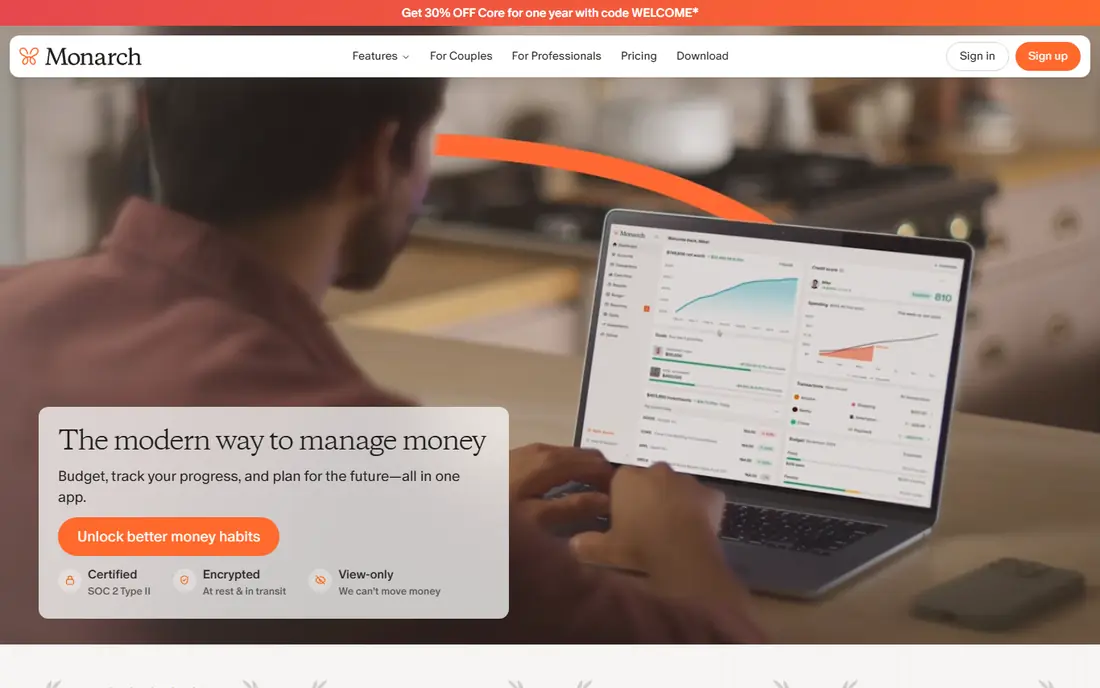
Monarch Money works well for couples because it treats a household as a team with boundaries. You can share a budget and selected accounts without giving a partner access to every account you own, which helps when one person keeps a separate account for gifts, personal spending, or a side project. The dashboard pulls budgets, bills, investments, and net worth into one place, so a monthly money talk starts from shared facts.
The catch is price and scope. At $14.99 per month, or $99.99 per year, Monarch Money costs more than a simple budget app, and the 7-day trial is short for a couple who wants to test bank sync across several accounts. If you only need a grocery budget and a bills list, this much detail may slow you down.
- Shared budgets with flexible permissions
- Net worth, investments, and cash flow in one view
- Strong bank connections
- No free plan beyond the trial
- The full dashboard can feel like a lot for a couple who only wants a budget
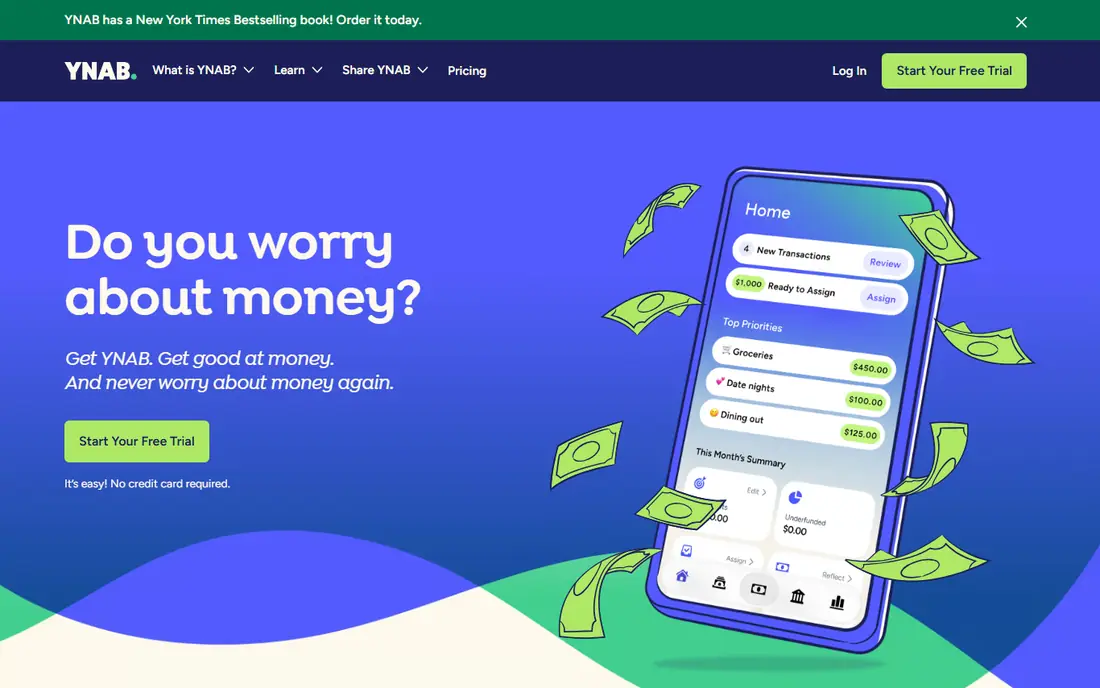
YNAB, short for You Need A Budget, asks couples to give every dollar a job before the month starts. That rule sounds strict, and it is, but it also ends the most common couple argument about money, which is the quiet drift between payday and the end of the month. Partners can see the same categories, move money between them when plans change, and build targets for bills, debt, and savings that both people can follow.
The honest trade-off is effort. YNAB rewards couples who check in weekly and learn its method, and it can frustrate a couple who wants an app to sort everything in the background. The 34-day trial gives you a full month to test that habit. At $14.99 per month, or $109 per year, it is a paid commitment, so try the trial as a pair before you subscribe.
- A clear method for assigning every dollar
- Strong debt payoff tools
- Sharing for a household
- A real learning curve in the first weeks
- No free plan after the trial
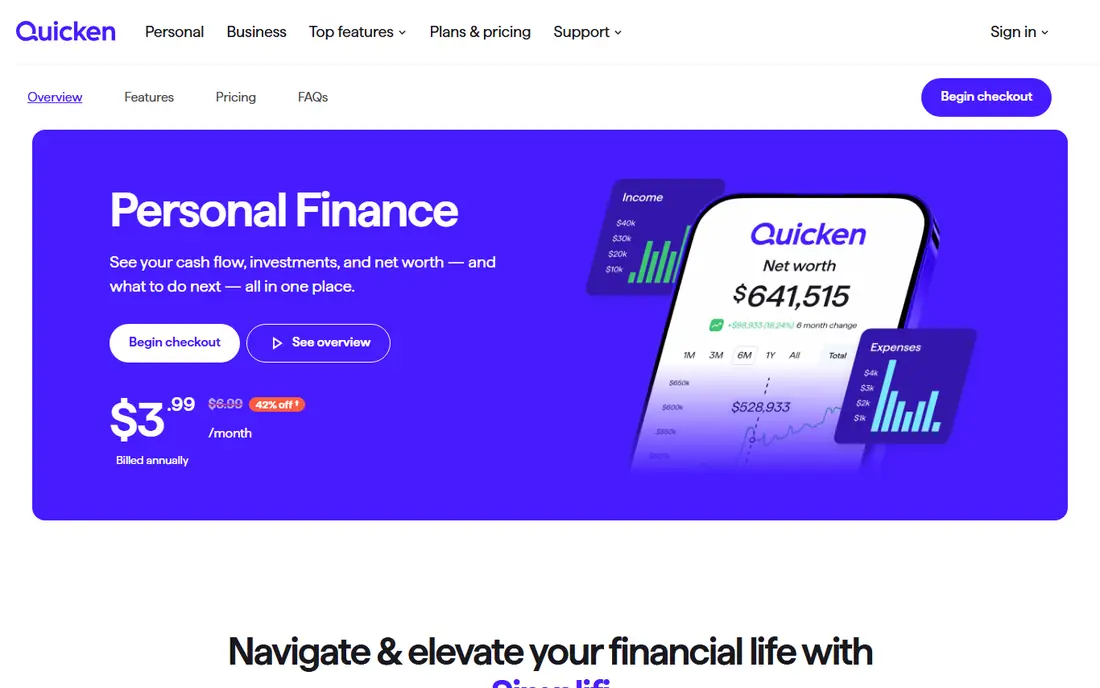
For couples who want tracking without a weekly planning ritual, Simplifi by Quicken is a calm middle ground. It connects accounts, sorts spending, and builds a spending plan that shows what remains after bills and savings. Projections help a couple see whether a slow month or a large bill will strain cash flow, which is useful when income varies or a big expense is coming.
Simplifi is less of a coach than YNAB. It will not force a couple to assign every dollar, and that freedom can become drift if neither partner reviews the plan. The price helps here, because $5.99 per month billed annually is low enough to keep as a shared dashboard even if one partner does most of the checking. Start with the trial and set a short weekly review.
- Low price for automatic tracking
- Spending plans and projections
- Clear reports
- Less hands-on planning structure than YNAB
- No free tier beyond the trial
Goodbudget turns the old cash envelope method into a shared phone app. A couple creates envelopes for rent, groceries, transport, eating out, and savings, then fills them from income and records spending against each one. When an envelope is empty, the choice is clear, and that clarity helps couples who overspend in one category while another sits untouched.
The free plan covers 20 envelopes, one account, and two devices, which is enough for many couples to test the method. The paid plan, at $10 per month or $80 per year, adds unlimited envelopes and bank sync for United States banks. Manual entry remains the heart of Goodbudget, so a couple who hates typing in transactions may prefer an automatic tracker. For couples who want to slow spending down, that manual step can help.
- Simple digital envelopes
- A free plan for testing
- Easy syncing for a household on the paid plan
- Bank sync is paid and limited to United States banks
- The free plan caps envelopes, accounts, and devices
EveryDollar keeps budgeting close to a simple list. Income goes at the top, planned spending follows, and the remaining amount should reach zero by design. Couples who find other apps busy will like this layout, because it leaves little room for confusion about where money was meant to go. The free plan supports manual entry, which suits a couple with few accounts or a strong habit of recording spending.
Bank sync sits in the premium plan, at $17.99 per month or $79.99 per year, which is a steep jump for a simple app. Before paying, test the free plan for a month and see whether manual entry survives real life. If it does, EveryDollar can be the best budget app for couples who value simplicity over charts. If it does not, an automatic tracker will save more arguments than it costs.
- A free manual budget
- A simple zero-based layout
- Easy to learn
- Bank sync needs the paid plan
- The paid plan costs more than some fuller dashboards
PocketGuard answers one question that many couples ask every week, which is how much can we spend right now without breaking the plan. After bills, savings goals, and planned spending, it shows a remaining figure that both partners can use for day-to-day choices. That single number reduces the need to open a full budget before a grocery trip or a small purchase.
The limit is depth. PocketGuard is a spending guardrail more than a full planning system, so couples who want detailed categories, debt plans, and long-term forecasts may outgrow it. The paid plan, at $12.99 per month or $74.99 per year, adds more features, while the free plan gives a useful taste. Use it when one partner wants simplicity and the other wants a safety check, not a second job.
- A simple In My Pocket figure after bills and goals
- Automatic account sync
- Bill tracking
- The free plan is limited
- Deeper planning tools are thinner than YNAB or Monarch Money
Copilot Money is built for couples who live inside the Apple world. The iPhone and Mac apps feel calm, categories update automatically, and shared access lets both partners see the same budget without passing a phone back and forth. For a couple who already uses Apple devices for banking, notes, and calendars, Copilot Money slots into daily life with little friction.
The main limit is platform. There is no Android app, so a mixed-device household will face an uneven experience. At $95 per year, with a trial of about a month, Copilot Money also asks for a yearly commitment without a free tier. If both partners use iPhones, test the trial together and judge the categorization on your real spending. If one partner uses Android, choose a cross-platform app instead.
- Clean design on iPhone and Mac
- Automatic categorization
- Shared access for a household
- No Android app
- No free plan after the trial
Rocket Money starts from a different problem, which is the money that leaves a joint account without either partner noticing. It lists subscriptions, flags price changes, and helps cancel services you no longer use, alongside basic spending tracking. For couples who suspect they pay for three streaming services they forgot about, that cleanup can free up more cash than a stricter budget would.
Budgeting itself is lighter here than in YNAB, Monarch Money, or Goodbudget. Think of Rocket Money as a companion to a budget rather than a full replacement, unless your main goal is subscription control. The free plan covers tracking, while premium plans are priced from $7 to $14 per month in the ranges shown on its site. Check the current plan details before you subscribe, because premium features and pricing tiers change.
- A free plan for tracking and subscriptions
- Subscription cancellation help
- Spending alerts
- Budgeting is thinner than dedicated budget apps
- Premium pricing varies by plan
PocketSmith suits couples who think in months rather than weeks. Its calendar shows income, bills, and planned spending across future months, so a couple can see whether a holiday, a car repair, or a quiet work month will strain the account. That forward view helps with decisions a simple monthly budget hides.
Setup takes more care than a quick tracker, because forecasts only help when bills and income dates are correct. Pricing and bank feed coverage vary, so use the trial to confirm that your banks connect and that the forecast matches your real pay dates. For couples who already budget well month to month and now want to plan six months ahead, PocketSmith adds a view the others on this list do not stress as much.
- Long-range cash flow forecasts
- Calendar view of bills and income
- Support for many account types
- Pricing and bank feed availability vary by region
- The forecast view takes time to set up well
How we picked these
We compared official feature pages, pricing pages, app store listings, privacy policies, and public reviews for apps that support shared or household budgeting in the United States. We favored apps that let two people view the same budget, handle joint and separate accounts, and show clear pricing, and we noted where bank sync, free plans, or platform support limited a choice. We did not claim hands-on testing, and we did not rank an app higher for a feature its own site does not describe.
Prices change, and free plans change with them, so check the vendor pricing page before you subscribe. A price in this article is a starting point for comparison, not a promise that the same plan will be on offer when you read it.
What to agree on before you pick one
A budgeting app works when both partners use it the same way, so agree on the basics before you link a bank. Decide whether you will share every account or only joint accounts, who enters manual spending, and how often you will review the budget together. A short weekly check, even 15 minutes, beats a long monthly argument about a number neither person remembers.
Joint, separate, or a mix
Many couples keep a joint account for shared bills and separate accounts for personal spending. Choose an app that can show the joint budget clearly while respecting the privacy of a separate account, and test its sharing settings before you add sensitive accounts. If an app forces all-or-nothing sharing, it may not fit your household.
Manual entry or automatic sync
Manual entry slows spending and builds awareness, but it fails when life gets busy. Automatic sync saves time, but it can hide mistakes if categories are wrong. A good compromise is automatic sync plus a weekly review, where both partners fix categories together.
Goals, bills, and surprises
Look for goal tracking, bill reminders, and a clear view of irregular costs such as car repairs, school costs, and annual subscriptions. A budget that only handles regular monthly bills will break in the first month with an unexpected expense. Set aside a small buffer category, even if it starts small, and treat it as a shared safety net rather than spare spending money.
Frequently asked questions
What is the best budgeting app for couples?
Monarch Money is our pick for most couples, because it combines shared budgets, net worth tracking, and flexible account sharing. YNAB is a stronger pick for couples who want a strict zero-based plan and will learn its method together. Goodbudget is a good free starting point for couples who like envelope budgeting.
What is the best budget app for couples on a free plan?
Goodbudget and EveryDollar both offer useful free plans, with Goodbudget focused on envelopes and EveryDollar focused on simple zero-based lists. PocketGuard and Rocket Money also offer free plans, but their free tiers are more limited for full budgeting. Test a free plan for a full month before paying.
What is the best personal finance app for couples who also track investments?
Monarch Money stands out here, because it shows budgets, investments, and net worth in one dashboard. Simplifi by Quicken also gives a broad financial view with spending plans and projections. If investing is your main focus, check the investment tracking details on each vendor site, because budget apps vary in how much investment detail they show.
Is YNAB good for married couples?
YNAB can work well for married couples who share finances and want a joint plan for every dollar. Its method asks both partners to agree on categories and targets, which helps when income and bills are shared. The learning curve is real, so use the 34-day trial together and agree on a weekly review before you commit to the annual price.
How do couples budget together without arguing about every purchase?
Agree on personal spending allowances first, then budget the shared costs together. A personal allowance gives each partner freedom for small choices without a discussion, while shared categories cover rent, bills, groceries, and savings. Review the budget weekly, focus on the plan rather than blame, and adjust categories when life changes instead of treating the first plan as final.
Should couples use a joint bank account for budgeting?
A joint account makes shared bills simpler, but it is not required. Many couples use a joint account for shared costs and keep separate accounts for personal spending, then link only the shared accounts to the budget app. Choose the setup that fits your trust and privacy needs, and check sharing settings before linking any account.
Sources we checked (9)

Online Jobs is an independent blog about careers, online work, learning new skills and the tools that help people earn. More about us.
Keep reading
All posts
Best Trading Apps for Beginners
Compare the best trading app for beginners, with $0 stock commissions, fractional shares, education, paper trading and account types explained in 2026 now.

Best Trading App
We compared the best trading apps for beginners and active traders on fees, tools, accounts and ease of use, so you can pick a platform that fits your plan.

Best Tax Software
Compare the best tax software in 2026 for simple returns, investors, freelancers, and preparers, with free options, state fees, and honest limits for filing.