Best Apps to Learn Korean in 2026: 9 Apps Compared

How we put this together: we compare official feature and pricing pages, app store listings, privacy policies and public user reviews. Prices change, so check the provider's site before you pay.
Key takeaways
- LingoDeer and Talk To Me In Korean give the clearest grammar teaching, while Duolingo is best mainly for building a daily habit.
- Hangul comes first in almost every good plan, because reading Korean letters makes vocabulary and listening much easier.
- No single app teaches speaking well on its own, so add a tutor or language exchange once you can form basic sentences.
- Free tiers are useful for testing an app, but the full course usually sits behind a subscription, so check what the free tier actually includes.
- A main course plus one supplement, such as flashcards or a tutor, beats collecting six apps and finishing the first lesson in each.
Quick comparison
| Name | Who it suits | Starting price | Free option | |
|---|---|---|---|---|
 Duolingo | Daily habit building | Free | Yes | Visit |
 LingoDeer | Structured grammar for beginners | $14.99 per month | Yes | Visit |
 Talk To Me In Korean | Graded grammar lessons | See website | Yes | Visit |
 KoreanClass101 | Listening and dialogue | See website | Yes | Visit |
 HelloTalk | Language exchange with native speakers | Free | Yes | Visit |
 italki | One-to-one tutoring | See website | No | Visit |
 Memrise | Vocabulary recall | See website | Yes | Visit |
 Drops | Short visual vocabulary sessions | Free | Yes | Visit |
 Pimsleur | Hands-free audio speaking drills | See website | Free trial | Visit |
The best apps to learn korean
Korean looks hard from the outside, but the alphabet is a sensible place to start, and the apps below take different routes from there. Some teach through short games, some through clear grammar lessons, and some through real conversation. We compared official feature pages, pricing pages, app store listings and public reviews to match each app to the learner it suits best.
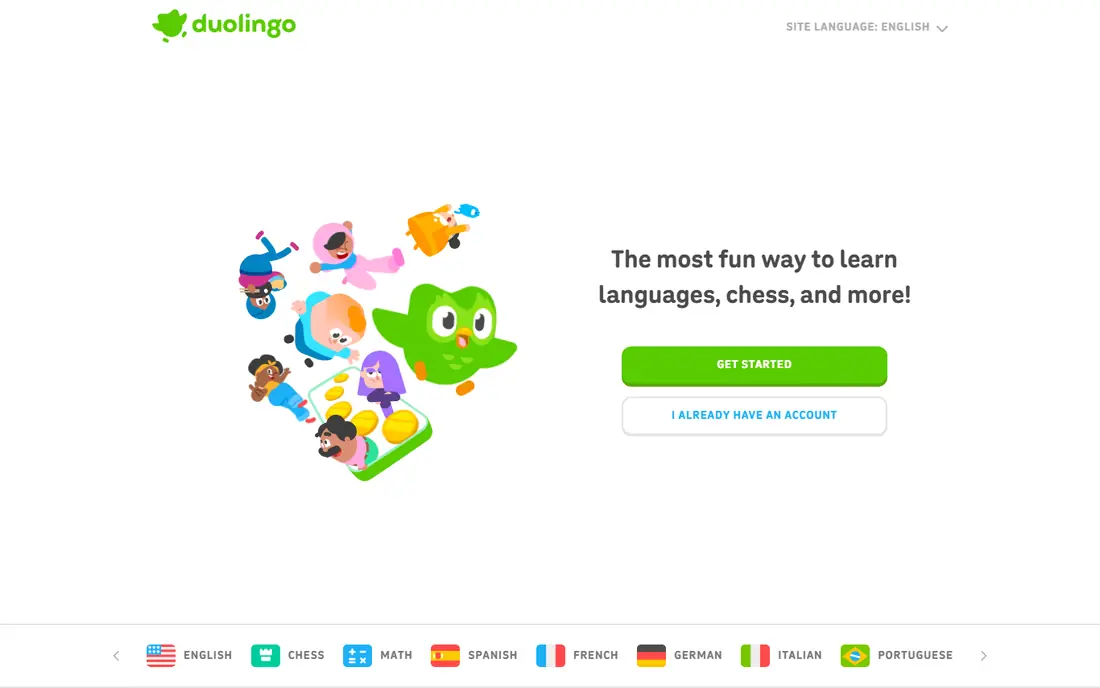
Duolingo is the easiest app to open every day, and that is not a small point. Short lessons, streaks and reminders keep many learners going when a textbook would stay closed. The Korean course covers vocabulary, reading, listening and writing basics, and it now goes further than the very short course early users remember. For a curious beginner, the free tier is a fair test.
The limit is depth. Duolingo teaches patterns mainly by repetition, so learners often recognise a sentence without knowing why its ending changed. That gap matters in Korean, where politeness levels and particles change meaning. Use Duolingo as a habit builder, then add a grammar source when you want to understand what you are saying.
- Free core course with ads
- Short lessons that fit a busy day
- Teaches Hangul early in the course
- Grammar explanations are light
- Speaking practice is limited compared with tutor apps
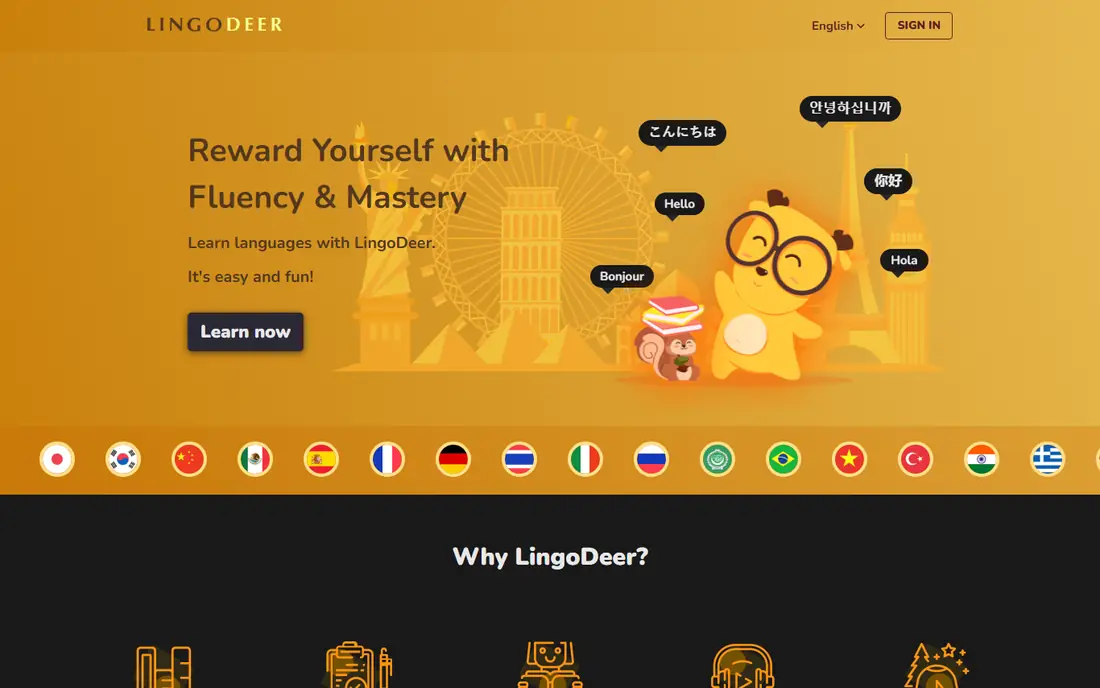
LingoDeer feels like Duolingo with a teacher standing nearby. Lessons still use matching, listening and short exercises, but each unit includes grammar tips that explain particles, verb endings and sentence structure. That extra explanation helps learners who get frustrated when an app only shows a pattern and expects them to guess the rule. The alphabet section also pushes Hangul early, which pays off quickly.
The free portion covers the alphabet and the first unit, so you can judge the teaching style before paying. After that, the course needs a subscription. LingoDeer does not replace speaking practice, but as a main course for beginners who want structure, it is one of the strongest picks in this list.
- Built for Asian languages, with explicit grammar notes
- Native speaker audio
- Offline lessons and a dedicated alphabet section
- Full course needs a paid subscription
- Speaking is mainly listening and repetition, not live conversation
Talk To Me In Korean, often called TTMIK, has taught Korean since 2009, and its strength is explanation. Lessons are organised by level, and each one deals with a grammar point in plain language, with examples that show how a particle or ending changes a sentence. Learners who want to know why a sentence works, rather than only how to repeat it, tend to stay with TTMIK longer than with game-led apps.
Much of the audio library is free, which makes it a good second track beside a main app. The paid courses add structure and extra material, and the Stories app adds graded reading and listening. The design is less polished than Duolingo or LingoDeer, but the teaching is the reason to choose it, not the interface.
- Ten graded grammar levels with clear explanations
- Large free audio library
- Graded stories and speaking tools as supplements
- App interface feels dated beside newer apps
- Full structured courses need a paid plan
KoreanClass101 is built around listening. Lessons use natural-speed dialogue, with a teacher breaking down vocabulary and grammar after you hear it in context. That format suits commuters and learners who like to study by ear, and the library is large enough to keep going from beginner phrases to more advanced conversation. Lesson notes help when you want to review words later.
The size of the library is also a weakness, because not every lesson feels equally polished, and the tiered pricing can be confusing. A free tier and trial let you test whether the teaching style suits you. Use KoreanClass101 as a listening supplement to a grammar course, rather than as your only source of explanations.
- Large audio and video lesson library
- Lessons at many levels
- Lesson notes and vocabulary lists
- Lesson quality and style vary across the library
- Best value comes from frequent sale prices, not list prices
HelloTalk connects you with native speakers who want to practise your language, so both sides help each other. You can send text and voice messages, get corrections, and ask about natural phrasing that a textbook may not cover. For learners past the first few weeks, that real feedback is often what turns memorised phrases into usable Korean. The free tier covers the core exchange features.
It is not a course, and that matters. HelloTalk will not teach Hangul, grammar order or vocabulary in a planned sequence, and the experience depends on finding a patient partner. Start it after you have a basic course in place, set clear goals for each chat, and keep sessions short and regular.
- Free exchange with native Korean speakers
- Text, voice and correction tools
- Useful once you can write basic sentences
- Quality of partners varies
- Not a structured course, so beginners can feel lost without a main course
italki is the most direct way to practise speaking with a real person. You pick a teacher, book a lesson, and work on exactly what you need, from pronunciation and politeness levels to exam preparation or a trip. Pay-per-lesson pricing means you can try one teacher without committing to a monthly plan, and community tutors are often cheaper than professional teachers.
The trade-off is effort and cost over time. A weekly lesson adds up, and a tutor can only help if you arrive with questions or material to practise. For many learners, one lesson a week beside a main app changes progress more than any extra app feature. If speaking is your goal, this is the supplement to prioritise.
- Choose a professional teacher or a community tutor
- Pay per lesson, with no long subscription
- Lessons can target speaking, TOPIK or travel needs
- Prices vary widely by teacher
- You need to book and prepare, so it takes more effort than opening an app
Memrise focuses on getting words to stick. It uses video, audio and spaced repetition, so words you met in a course come back at intervals that help memory. The Korean course includes a Hangul section, and the format suits short sessions when you have a few minutes but not enough time for a full lesson. As a vocabulary layer under a main course, it works well.
Memrise is not a full course, and learners who expect it to explain grammar will be disappointed. It also works best when the words match what you are learning elsewhere, rather than as a random word list. Pair it with LingoDeer or TTMIK, and use it to review, not to learn grammar from scratch.
- Video clips and spaced repetition for vocabulary
- Dedicated Hangul section
- Useful for keeping words you have already met
- Grammar teaching is light
- Full features need a paid plan, and free lessons are limited
Drops treats vocabulary as a quick daily snack. Each session lasts five minutes on the free tier, with pictures, audio and matching exercises that make new words easier to remember. Topics are grouped by everyday life, travel and work, which helps learners who want useful words fast. Hangul recognition is built in, so beginners can practise reading letters without a separate alphabet app.
Five minutes is both the appeal and the limit. Drops will not teach you to build sentences, explain particles, or practise conversation. It works as a second app for days when a full lesson feels too much, and as a way to keep vocabulary fresh between main lessons. Paying removes the time limit, but the app is still a supplement, not a course.
- Five-minute visual sessions that fit a busy day
- Clear Hangul recognition and writing practice
- Vocabulary grouped by topic
- Free tier is limited to five minutes a day
- No deep grammar teaching, so it cannot carry a course alone
Pimsleur is for learners who want to speak first and read later. Lessons are audio only, with a speaker prompting you to repeat and build sentences, and spaced repetition brings phrases back before you forget them. That format suits commuters and learners who feel shy about speaking, because you practise out loud in private before trying a real conversation.
The cost is the main drawback, and the coverage is narrow. Pimsleur does not teach Hangul, reading or grammar in the same depth as a course app, so it needs a reading and grammar partner. Used as an audio supplement, especially in the first months, it can give you the confidence to start a HelloTalk chat or an italki lesson.
- Audio-first lessons that build speaking confidence
- Spaced repetition for phrases
- Works while walking, driving or doing chores
- Narrow focus on spoken phrases, with little reading or writing
- Subscription cost is high for what it covers
How we picked these
We compared official feature pages, pricing pages, app store listings and public reviews, and we checked that each app offers a real Korean course or Korean learning service in October 2026. We favoured apps with clear Hangul teaching, a planned course or a clear supplement role, and honest free or trial terms. We also looked at who each app serves, because a beginner, a traveller and a TOPIK candidate do not need the same tool.
We did not claim hands-on testing for every app. Where prices vary by region, sale or subscription length, we used See website rather than a single figure that could mislead. Check the current price and free-tier limits in your app store or on the vendor site before subscribing, and try the free portion first when one is offered.
How to build a Korean study plan that lasts
Pick one main course and stick with it for at least a month. LingoDeer or Talk To Me In Korean both give a clear path, and switching every week resets your progress. Add at most one supplement at first, such as Memrise for vocabulary or Pimsleur for speaking, and keep daily study short enough to repeat tomorrow.
Learn Hangul before you chase vocabulary
Hangul is the Korean alphabet, and most learners can read it after a few focused sessions. Reading letters, even slowly, makes pronunciation clearer and stops you relying on romanised spellings that hide real sounds. LingoDeer, Memrise and Drops all teach Hangul, and TTMIK covers it in its early material. Spend a weekend on it, then keep reading aloud as you learn new words.
Add speaking early, even if it feels awkward
Korean politeness levels and pronunciation only settle when someone responds to you. A short HelloTalk exchange or a single italki lesson each week will show gaps that an app cannot, such as a sentence that is grammatically correct but sounds too formal for a friend. Keep the first sessions simple, prepare three sentences you want to use, and accept mistakes as part of the lesson.
Frequently asked questions
What is the best app to learn Korean for beginners?
LingoDeer is a strong first pick for beginners who want structure and grammar notes, while Duolingo suits learners who mainly need a daily habit. The best app for learning Korean for beginners depends on whether you prefer clear explanations or game-led lessons. Try the free portion of both, then commit to one main course for a month before adding supplements.
What is the best Korean learning app for grammar?
Talk To Me In Korean gives the deepest graded grammar teaching in this list, with ten levels that explain particles, endings and politeness in plain language. LingoDeer is the next best choice if you want grammar inside a gamified app. A grammar-led app matters because Korean sentence structure differs from English, and pattern guessing alone often leaves learners stuck at intermediate level.
What is the best app for learning Korean for free?
Duolingo offers the most complete free course in this list, with ads, while HelloTalk gives free language exchange and TTMIK gives a large free audio library. Drops also gives a useful free tier, limited to five minutes a day. A free stack of Duolingo plus TTMIK audio is a fair start, but paid plans usually open the full course and remove limits.
Is Duolingo good enough to learn Korean alone?
Duolingo can build vocabulary, reading and a daily habit, but it is light on grammar and speaking, so most learners need a supplement. Pair it with a grammar source such as TTMIK or HowToStudyKorean, and add speaking practice once you can form basic sentences. Used alone, Duolingo is better for a first introduction than for reaching a conversational level.
How long does it take to learn Korean with an app?
Hangul can be learned in a few days of focused practice, basic conversation takes months of regular study, and comfortable conversation usually takes years, not weeks. App progress depends on daily minutes, speaking practice and review, not on streaks alone. A realistic plan is 20 to 30 minutes a day on a main course, plus weekly speaking, for several months before judging progress.
Do I need a tutor if I use a Korean learning app?
You do not need a tutor to start, but a tutor helps a lot once you can make simple sentences. A tutor corrects pronunciation, explains politeness levels in context, and gives you a reason to speak each week. If cost is a barrier, HelloTalk offers free exchange, while italki lets you pay per lesson instead of taking a subscription.
Sources we checked (9)

Online Jobs is an independent blog about careers, online work, learning new skills and the tools that help people earn. More about us.
Keep reading
All posts
Best Tools for Virtual Tutoring
Compare the best tools for virtual tutoring, from one-to-one tutor marketplaces to free self-paced learning, with pricing, subjects and honest limits.
Best Study Apps for Young Children
Compare the best study apps for young children in 2026, from Khan Academy Kids and ABCmouse to Reading Eggs, Starfall, Duolingo ABC and PBS Kids, with prices.
Best Study Apps for Kids
Looking for the best study apps for kids? We compare Khan Academy Kids, ABCmouse, Prodigy, IXL and more on age, safety, price and subjects for home learning.