Best Apps for Workout Tracking in 2026: 8 Products Compared

How we put this together: we compare official feature and pricing pages, app store listings, privacy policies and public user reviews. Prices change, so check the provider's site before you pay.
Key takeaways
- Strong and Hevy are the best pure gym loggers, with Hevy offering the more generous free tier and social features.
- Fitbod builds workouts from history and equipment, while JEFIT offers the deepest free exercise library and analytics.
- Strava leads for running and cycling outdoors, while Nike Training Club leads for free guided home workouts.
- A tracker should match the training style: a fast logger for lifters, a program builder for beginners, and GPS tracking for endurance athletes.
- Our pick for most gym users is Hevy for free logging, or Fitbod when a ready made workout each session is the main need.
Quick comparison
| Name | Who it suits | Starting price | Free option | |
|---|---|---|---|---|
 Strong | fast gym logging | See website | Yes | Visit |
 Hevy | free gym logging with social features | See website | Yes | Visit |
 Fitbod | workouts built for you | See website | Free trial | Visit |
 JEFIT | large exercise library | See website | Yes | Visit |
 Strava | running and cycling | See website | Yes | Visit |
 Nike Training Club | free guided workouts | Free | Yes | Visit |
 Freeletics | bodyweight HIIT coaching | See website | Yes | Visit |
 StrongLifts 5x5 | simple beginner strength program | See website | Yes | Visit |
The best apps for workout tracking
These eight apps cover gym logging, programmed workouts, outdoor endurance and guided home training.
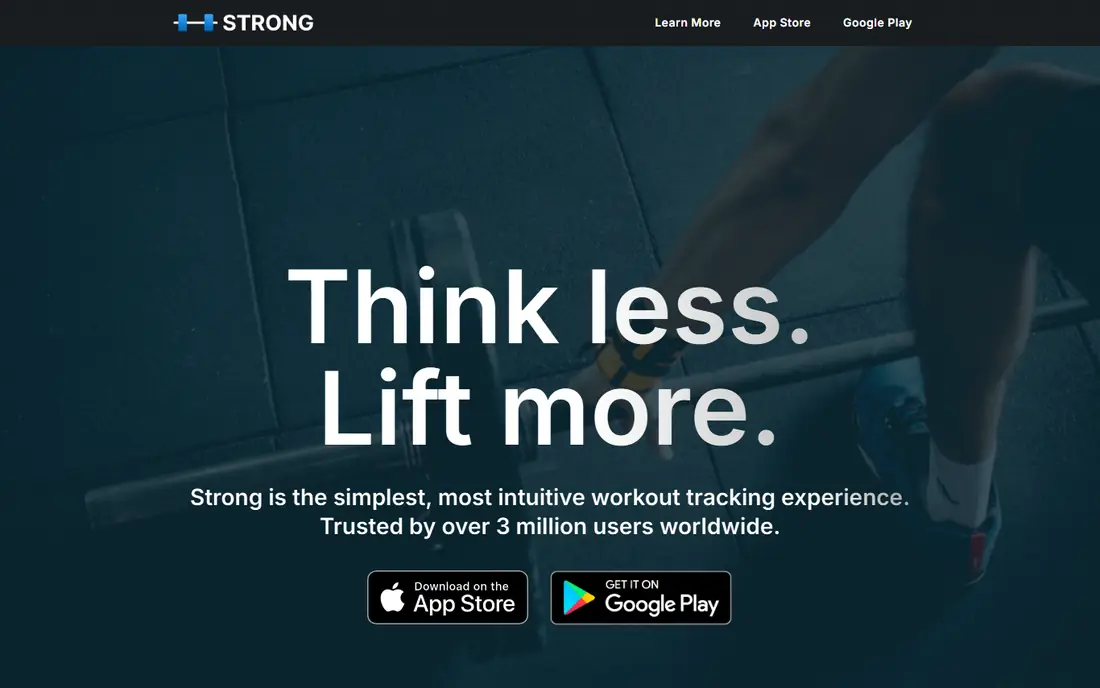
Strong is the minimalist logger on this list. It focuses on getting sets logged quickly, with routines, rest timers and progress charts that stay out of the way. Lifters who already have a program will value the speed, since a workout can be logged with a few taps between sets. The catch is the free cap. Custom routines are limited on the free tier, and some tools such as the plate calculator sit on the paid plan. For a lifter who wants a clean, fast log without social feeds or generated workouts, Strong remains a top pick, and the paid plan is modest for daily use.
- Very fast set logging
- Clear progress charts
- Simple routine setup
- Free routines are capped
- Plate calculator needs a paid plan
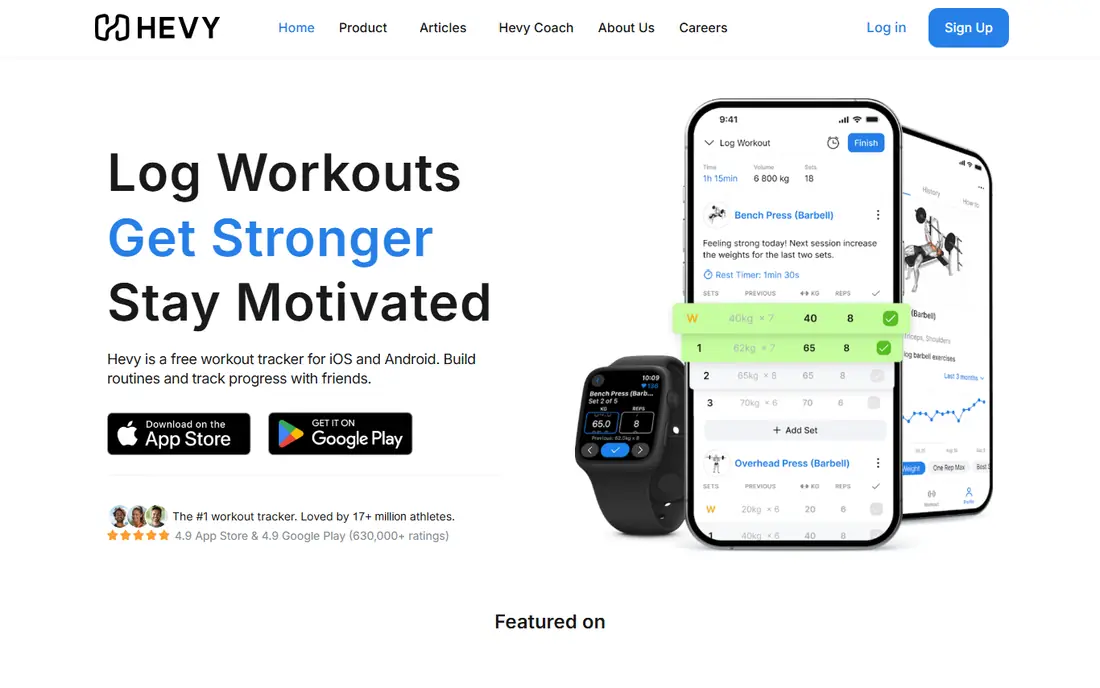
Hevy pairs solid gym logging with a social layer. Users can follow friends, share workouts, and see training in a feed, which helps some people stay consistent. The free tier covers core logging well, and routines, templates and history are easy to manage. The exercise library is smaller than JEFIT, and the social feed will not suit lifters who want a quiet, private log. Privacy settings help here. For most gym users who want a free logger with accountability built in, Hevy is the best starting point on this list.
- Generous free tier
- Social feed and friends
- Routine sharing
- Exercise library is smaller than JEFIT
- Social features may distract some users
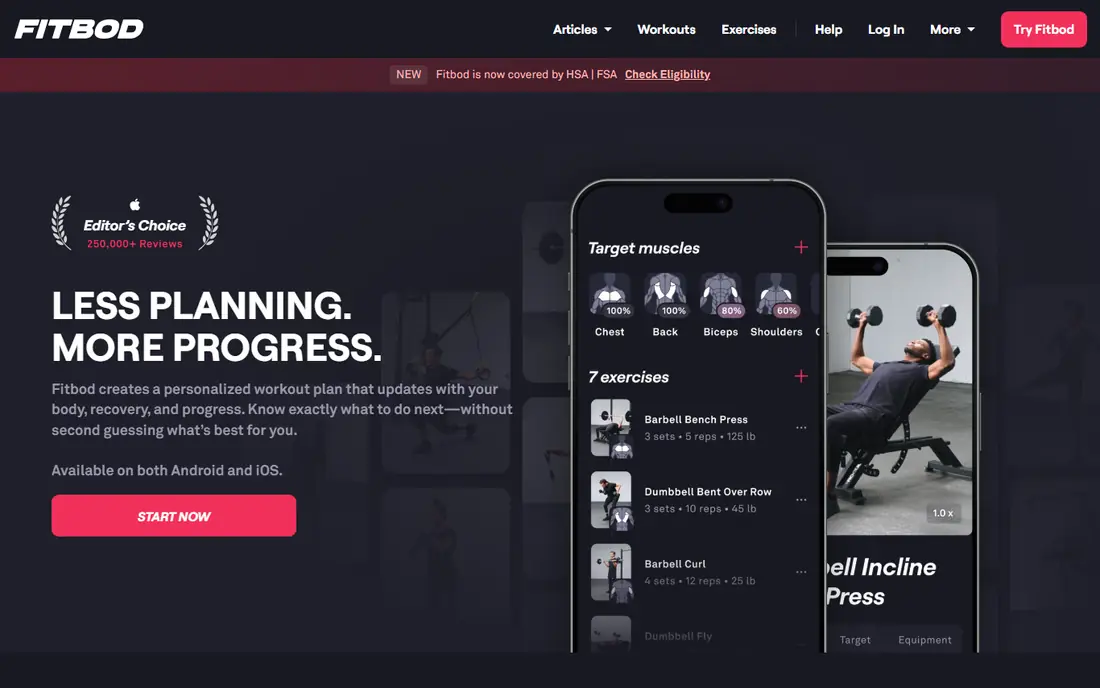
Fitbod is the pick for lifters who do not want to plan each session. It builds a workout from available equipment, training history and muscle recovery, then adjusts weights and exercises over time. That automation helps beginners and busy lifters who want to train without writing a program. The limit is freedom. Lifters following a strict program may find generated sessions too flexible, and there is no permanent free tier, only a trial. For users who want a ready workout each time they open the app, Fitbod is the most useful tool here, and the trial is worth using before paying.
- Generates each session from history
- Adapts to equipment
- Tracks muscle recovery
- No permanent free tier
- Generated sessions may not suit strict programs
JEFIT suits data driven lifters. The exercise library is among the largest in this category, with demos and details that help with form and variation. Analytics cover volume, personal records and progress over time, and community programs give a starting point for different goals. The free tier carries ads, and the interface packs a lot of information into each screen. Users who want a minimal logger may prefer Strong or Hevy. For lifters who want depth, a large library and detailed charts, JEFIT offers the most data for the price, especially on its free tier.
- Very large exercise library
- Detailed analytics
- Community programs
- Free tier is ad supported
- Interface can feel busy
Strava is the tracker for outdoor endurance. GPS routes, pace, distance and segments give runners and cyclists a clear record of each outing, and the social feed adds motivation through friends, clubs and challenges. Route planning and segment comparisons help athletes track progress on familiar courses. Strava is not a gym logger. Strength sessions can be recorded, but set by set lifting is not its focus. Many advanced features sit on a paid plan. For runners and cyclists, Strava is the default pick. For lifters, pair it with Strong, Hevy or JEFIT rather than expecting one app to cover both.
- Strong GPS tracking
- Routes and segments
- Social motivation
- Not a gym logger
- Many features need a paid plan
Nike Training Club is the best completely free option for guided training. Trainer led workouts cover strength, cardio, mobility and yoga, with plans for different levels and goals. The app is polished, the sessions are clear, and there is no paywall for core workouts. The trade-off is logging depth. Nike Training Club is a workout guide first and a tracker second, so lifters who want detailed set history and analytics will need a dedicated logger. For home training, beginners and anyone who wants guided sessions without a subscription, it is hard to beat.
- Fully free guided workouts
- Trainer led sessions
- Strength, cardio and mobility
- Limited custom logging depth
- No advanced program builder
Freeletics fits training without a gym. Bodyweight HIIT sessions can be done at home, in a park or while travelling, and coaching features adapt plans based on feedback and progress. That flexibility helps people who want short, intense sessions without equipment. Heavy barbell lifters will find Freeletics less suited to their training, since the focus is bodyweight and conditioning. Coaching also sits on paid plans, while the free tier covers basic training. For busy users who want structured home workouts, Freeletics is a strong and practical pick.
- Bodyweight workouts anywhere
- AI style coaching
- No equipment needed for many sessions
- Coaching features need a paid plan
- Less suited to heavy barbell programs
StrongLifts 5x5 is the simplest program on this list. It follows one well known beginner strength routine: five sets of five reps on core lifts, with steady progression. The app handles weights, rest and history, so a beginner can start without choosing exercises or building a plan. The limit is variety. Advanced lifters will outgrow a single program, and users who want many exercise options should pick JEFIT or Fitbod. For a beginner who wants one clear path and a simple log, StrongLifts 5x5 removes decision fatigue and builds a consistent habit, which matters more than variety at the start.
- One clear program to follow
- Simple progression
- Good for beginners
- Single program focus
- Limited variation for advanced lifters
How we picked these
We compared official feature pages, pricing pages, app store listings and public reviews for apps that track workouts in a usable way. We favoured apps that are actively maintained, that offer a free plan or trial, and that cover a distinct training style: gym logging, programmed workouts, outdoor endurance and guided home training. We also weighed exercise libraries, logging speed and export options, since a tracker that is slow to use will be abandoned. We did not claim hands-on testing for every app, and we did not rank by review scores that change often. Instead, we looked at training fit, free plan limits and what happens to workout history over time. Prices change, so check the vendor site or app store listing before paying, and trial an app for at least two weeks before committing.
Choosing the right workout tracker
Start with training style. A lifter needs fast set logging. A beginner needs a program. A runner needs GPS. A home trainer needs guided sessions. Buying a tracker for the wrong style leads to unused features and a log that stops after a few weeks.
Test logging speed in a real session
A tracker should be usable between sets or during a run without breaking focus. Trial the app during a normal workout, not just on the couch. If logging takes too long, or if the app needs too many taps for a simple set, it will not survive busy gym sessions.
Check history and export
Workout history is the real value of a tracker. Check progress charts, personal records and export options before committing months of data. A tracker that locks history behind a paid plan, or that makes export hard, should be weighed against a freer alternative, even if the interface looks better.
Keep health expectations realistic
Workout apps can support training, but they do not replace medical advice, coaching or safe progression. Increase weights gradually, rest when needed, and seek professional advice for pain, injury or a new health condition. Use the app to record training, and use judgement, not just the app, to decide what to do next.
Frequently asked questions
What is the best app for tracking workouts at the gym?
For gym tracking, Strong is best for fast, simple logging, Hevy is best for free logging with social features, and JEFIT is best for a large exercise library and analytics. Fitbod is best when the app should build each session. The right pick depends on whether you already have a program or need one built for you.
What is the best free workout tracking app?
Hevy offers a generous free tier for gym logging, JEFIT offers a large free library with ads, and Nike Training Club offers fully free guided workouts. Strong also offers a free tier with capped routines. For a permanent free logger, Hevy and JEFIT are the strongest starts, while Nike Training Club is best for guided sessions.
What is the best workout log app for beginners?
Beginners do best with a program built in, such as StrongLifts 5x5 for simple strength training, Fitbod for generated sessions, or Nike Training Club for guided home workouts. A simple program removes guesswork and builds consistency. Once a habit is set, a fast logger such as Strong or Hevy gives more freedom.
Can I track running and lifting in one app?
Some apps cover both, but most do one job better than the other. Strava leads for running and cycling, while Strong, Hevy and JEFIT lead for lifting. Many athletes use Strava for outdoor work and a gym logger for strength, with health app sync keeping a combined activity view. Check sync options before choosing.
Do workout apps work with smartwatches?
Most major workout apps sync with Apple Health, Google Health Connect or wearable platforms, and some offer direct watch apps for logging and heart rate. Sync depth varies, so check the app store listing and official support page for your watch model. A watch can help with timing and heart rate, but set logging still usually happens on the phone.
Sources we checked (8)

Online Jobs is an independent blog about careers, online work, learning new skills and the tools that help people earn. More about us.
Keep reading
All posts
Best workout apps for women
Compare the best workout apps for women in 2026, from free guided classes to structured strength plans, with current prices, free plans and honest trade-offs.
Best Yoga App
Find the best yoga app for home practice in 2026, with verified prices, free options, class styles, trials and honest limits for 10 yoga apps compared.
Best Workout Tracker App
We compared the best workout tracker app options for gym, home, and running training, checking prices, free plans, and logging tools in detail. See inside.