Best Apps for Memory Improvement in 2026: 9 Apps Compared

How we put this together: we compare official feature and pricing pages, app store listings, privacy policies and public user reviews. Prices change, so check the provider's site before you pay.
Key takeaways
- No app has been shown to prevent dementia, so treat these apps as practice and habit tools, not medical treatment.
- Anki is the strongest choice for remembering real material, because spaced repetition targets facts you actually need.
- BrainHQ has the deepest research base in this list, with a focus on processing speed and structured exercises.
- Elevate is the most practical pick for everyday work skills, including writing, reading, and math.
- Lumosity and Peak are best for a short daily habit, with a wide game library and a simple routine.
Quick comparison
| Name | Who it suits | Starting price | Free option | |
|---|---|---|---|---|
 Lumosity | Broad daily brain games | $12 per month | Yes | Visit |
 Elevate | Everyday writing and math skills | See website | Yes | Visit |
 BrainHQ | Research backed processing speed | $14 per month | Yes | Visit |
 Peak | Polished gamified training | See website | Yes | Visit |
 CogniFit | Assessment led training | See website | Yes | Visit |
 NeuroNation | Adaptive memory and focus | See website | Yes | Visit |
 Anki | Spaced repetition for real facts | Free | Yes | Visit |
 Duolingo | Language learning as brain exercise | Free | Yes | Visit |
 Brilliant | Logic, math, and reasoning | See website | Yes | Visit |
The best apps for memory improvement
We compared official product pages, pricing pages, and app listings for apps live in October 2026 that aim to improve memory, attention, or related skills. A plain health note first: these apps are not medical devices, and they do not prevent or treat dementia or other conditions. If you have worries about memory, sleep, mood, or a health condition, talk with a clinician rather than relying on an app score.
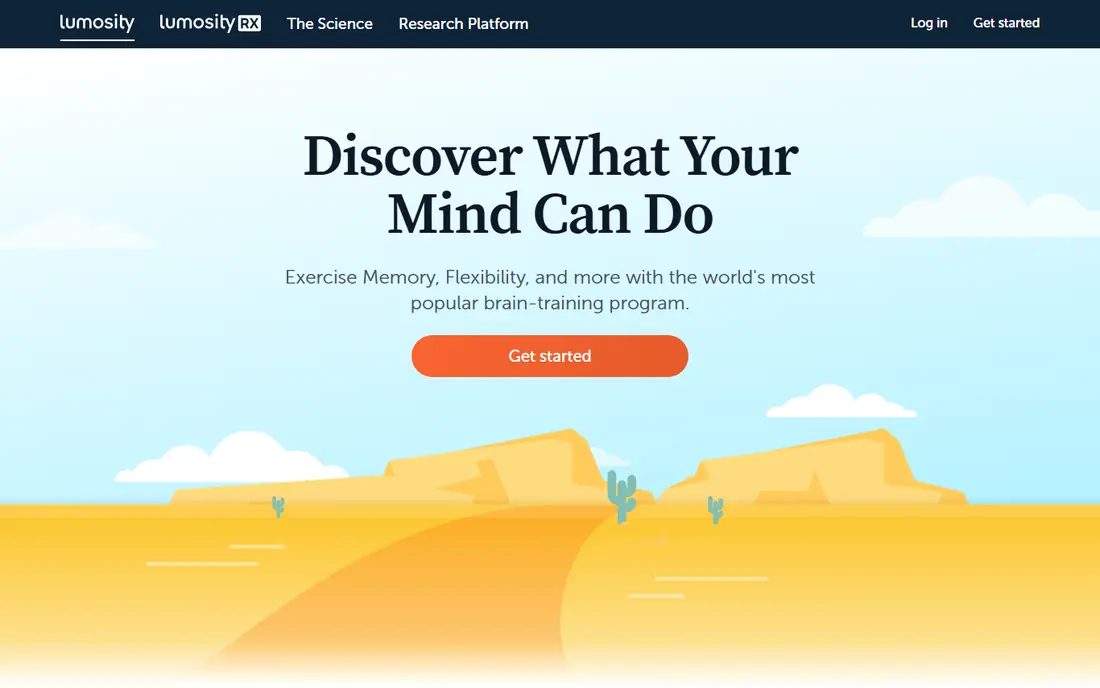
Lumosity remains the most recognizable brain training app, with dozens of games across memory, attention, flexibility, problem solving, and language. A baseline test gives you a starting point, and the daily workout keeps sessions short enough to fit into a break. For someone who wants variety without thinking about what to play next, that structure helps.
The honest limit is transfer. Getting better at a game does not always mean getting better at daily tasks, and the research on that point is mixed. The free plan gives a limited daily set, so full access needs a subscription starting at about $12 per month. Use Lumosity for a fun daily habit, not as a promise of a sharper brain in general.
- Large game library across memory, attention, and problem solving
- Baseline test for tracking
- Simple daily workout
- Free plan limits daily games
- Evidence for transfer to daily life is mixed
- Subscription adds up over a year
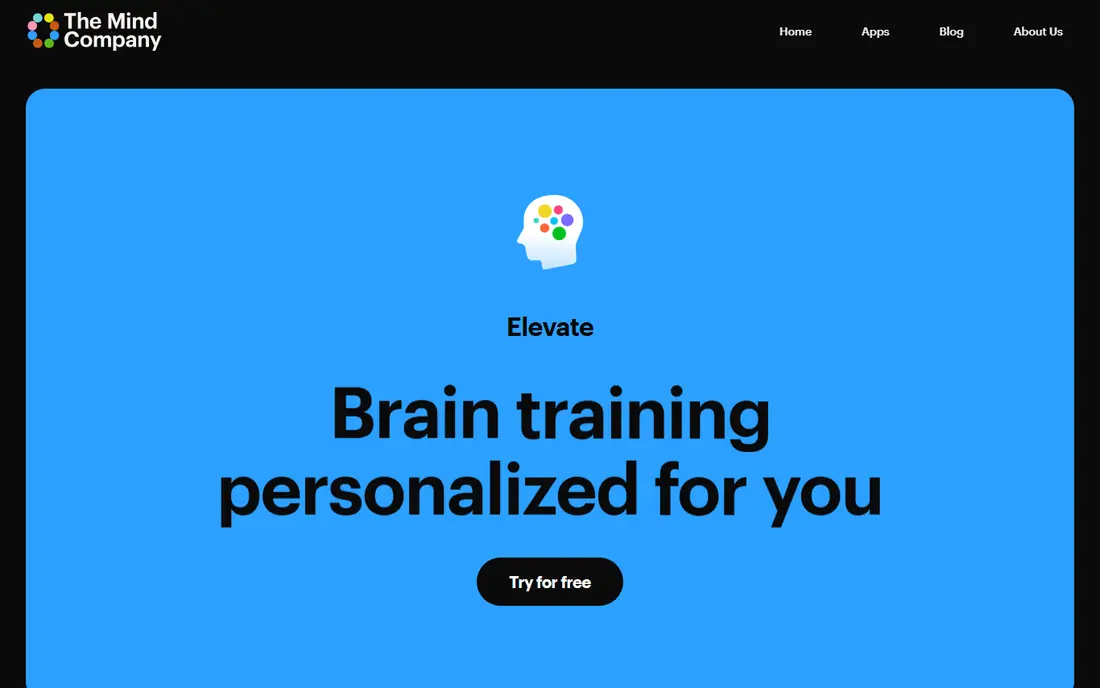
Elevate takes a different angle from Lumosity. Instead of abstract brain games alone, it builds a personalized daily program around skills you use at work and in daily life, including writing, reading comprehension, math, and processing speed. Sessions are short, which makes it easier to keep a daily habit during a work break.
That practical focus is also its limit for this topic. If your main goal is pure memory training, Elevate covers it only as part of a wider skill program. The free plan gives a daily workout with limited games, and the full library needs a paid plan, so check the current price in the app store before subscribing. For everyday mental sharpness at work, Elevate is our most practical pick.
- Personalized daily program
- Practical skills like writing and math
- Short sessions
- Less focused on pure memory games
- Paid plan needed for full library
- Pricing varies by store
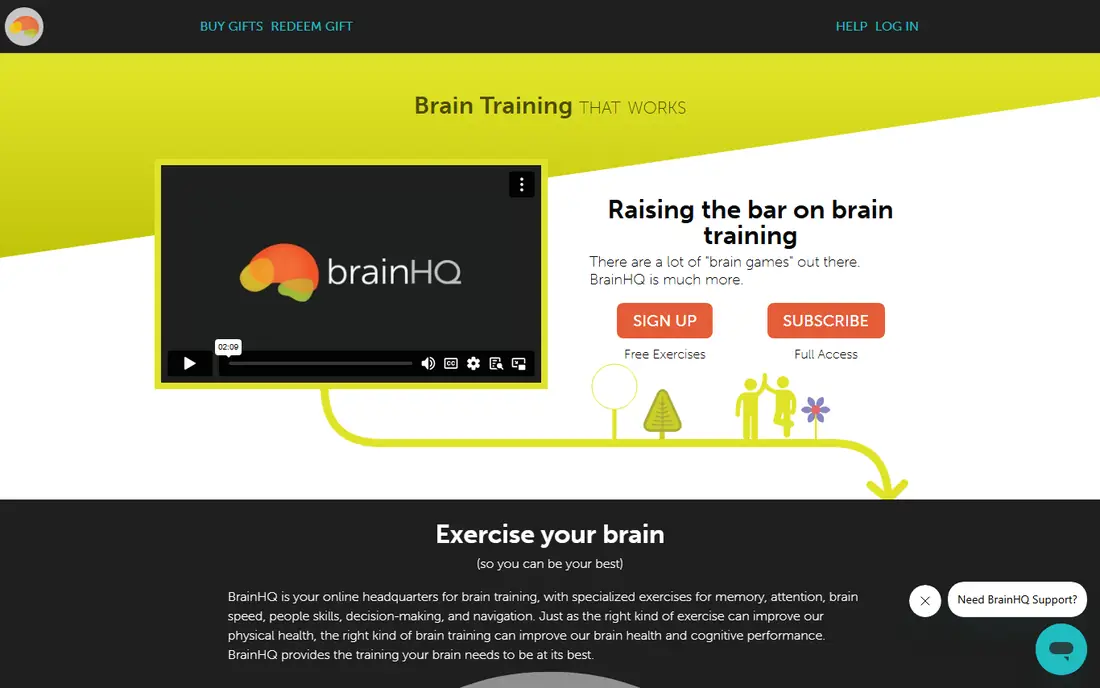
BrainHQ, from Posit Science, has the strongest research story in this list, with exercises designed to improve processing speed and attention, and a long history of published studies. That matters if you want an app chosen for evidence rather than for game design. Exercises are structured and adaptive, and the focus on speed is specific rather than vague.
The experience is less playful than Lumosity or Peak, which can make it harder to stick with if you prefer games. The free plan offers a daily exercise, while full access starts at about $14 per month or $96 per year. For older adults and for readers who value research over novelty, BrainHQ is the most serious choice here.
- Deep published research base
- Structured exercises for speed and attention
- Popular with older adults
- Interface feels less game like
- Monthly price is higher than some rivals
- Free plan is limited to a daily exercise
Peak is the most polished looking app on this list, with a clean design and a set of mini games covering memory, language, mental agility, and attention. It shows your strengths across categories and lets you compare progress with friends, which helps some people stay consistent. The daily routine is simple to follow, even for a new user.
Free access covers core games with limits, and a subscription adds a personalized training plan and fuller progress tools. Check the current price in the store, since it varies by plan and region. Peak is a good choice if design and daily streaks keep you going, but keep the same honest limit in mind, game scores are not a medical measure.
- Polished design
- Games for memory, language, and attention
- Progress comparison with friends
- Free sessions are capped in practice
- Subscription needed for personalized plans
- Game gains may not transfer widely
CogniFit starts with an assessment rather than a random game, then builds training around the results. That structure suits people who want a more measured approach, including older adults, professionals, and users working with a clinician or researcher. The exercises target memory, attention, perception, and reasoning in a systematic way.
The trade off is feel and price. CogniFit looks more clinical than Lumosity or Peak, and its pricing is higher than casual game apps, so check the current plans on the site. Free access covers an initial assessment and limited games. If you want assessment first and games second, CogniFit is the most structured option here.
- Initial cognitive assessment
- Targeted training programs
- Used in clinical and research settings
- Higher price than casual apps
- Interface feels clinical
- Free games are limited
NeuroNation adapts its exercises to your performance, with a focus on memory, concentration, and processing. An initial assessment sets the level, and training adjusts as you improve, which keeps sessions challenging without jumping too far ahead. Extra courses cover focus, relaxation, and related skills, which some users value alongside memory games.
Free access includes an assessment and core exercises, with fuller programs behind a subscription. Check the current price on the site, since plans vary by length. NeuroNation is a solid middle ground between a casual game app and a clinical tool, especially for users who want adaptive difficulty.
- Adaptive training for memory and concentration
- Assessment based start
- Courses for focus and relaxation
- Free plan is limited
- Pricing varies by plan
- Less game variety than Lumosity
Anki is the most effective memory tool on this list for real material, and it is also the least like a game. It uses spaced repetition, showing you a flashcard just before you are likely to forget it, which builds long term recall for vocabulary, exam facts, names, and procedures. You can make your own decks or use shared decks made by other users.
The interface is plain, and the iOS app is a one time purchase while Android and desktop versions are free, so check the current store price. Anki also needs good decks, because a badly written card teaches little. If your goal is to remember something specific, rather than to play brain games, Anki should be your first choice.
- Free on Android and desktop
- Spaced repetition for long term recall
- Huge shared deck library
- IOS app is a paid one time purchase
- Interface is plain
- You must create or choose good decks
Duolingo is not a brain training app, but it belongs here because learning a language is a genuinely useful cognitive activity. Short daily lessons build vocabulary, grammar, and recall through repetition, and the skill itself is useful for travel, work, and study. That real world value is a stronger reason to stick with it than a game score.
The free plan includes ads and limits, while a paid plan removes ads and adds offline and unlimited features. Duolingo will not train every kind of memory, and it should not replace spaced repetition for exam facts. As a daily brain healthy habit that also teaches something useful, it is one of the best free options on this list.
- Free with ads
- Language learning is a useful real skill
- Short daily lessons
- Not a memory training app as such
- Free plan has ads and limits
- Paid plan removes ads and adds features
Brilliant teaches math, logic, data, and science through interactive problems rather than quick games. That slower, reasoning based approach suits learners who want to think more clearly, not just react faster. Lessons build step by step, and the problems often connect to real situations, which helps the learning stick.
It is not a memory game app, so users who want short daily memory drills may find it too involved. Full access needs a subscription, so check the current price on the site. If your idea of memory improvement includes better reasoning and problem solving, Brilliant is a strong, thoughtful addition to a daily routine.
- Interactive lessons in math, logic, and science
- Builds reasoning rather than reflexes
- Good for curious learners
- Not focused on memory games
- Full access needs a subscription
- Lessons take more time than quick games
How we picked these
We compared official product pages, pricing pages, and app listings for apps live in October 2026 that target memory, attention, or related cognitive skills. We kept apps with a clear free plan or trial, and we included both game based training and practical tools like spaced repetition and language learning, because the evidence and the user goal differ. We weighed free access, training focus, research base, and whether the app teaches a real skill or only a game.
We did not claim hands-on testing that we did not do. We judged each app on the features and limits its vendor publishes, and we used See website where pricing was not cleanly verifiable at the time of writing. We also kept the evidence limits plain, because marketing claims in this category often go further than the research supports.
What to check before you pay
Decide what you actually want to remember
A game score, a language, and an exam syllabus are different goals. If you need to remember real facts, use Anki or Duolingo. If you want a short daily habit, use Lumosity, Peak, or Elevate. Matching the app to the goal matters more than picking the app with the most games.
Treat scores as practice, not a diagnosis
App scores measure performance on that app's tasks, not your general memory or brain health. A rising score can mean you got better at the game, learned its patterns, or simply practiced more. If memory worries persist, change suddenly, or affect daily life, talk with a clinician instead of trusting an app chart.
Build the habit around sleep, movement, and social life
Sleep, physical activity, and social engagement support memory more reliably than any single app. Use an app as a small daily habit, not as a replacement for those basics. A 10 minute session you actually do each day beats a subscription you open once a month.
Check free limits and cancellation before subscribing
Most apps on this list limit free games, sessions, or features, and paid plans renew automatically. Try the free plan for a full week, check whether the paid features change your routine, and set a reminder before any trial ends. Cancel cleanly if the app does not fit your week.
Frequently asked questions
What are the best brain training apps for memory?
Lumosity, Peak, and BrainHQ are the best known brain training apps, with Lumosity for variety, Peak for polished daily games, and BrainHQ for research backed speed training. For remembering real facts, Anki is stronger than any game app. The best choice depends on whether you want games or real recall.
What is the best free brain game app?
Anki and Duolingo are the strongest free options, because both teach real material without a subscription for core use. Lumosity, Elevate, and Peak also offer free daily games, but with limits. For a free brain game habit, start with a game app's free plan and add Anki if you have facts to learn.
Do brain training apps improve memory?
They improve performance on the trained tasks, and some structured training is linked to better everyday function in older adults over time. Evidence for broad transfer to all daily memory tasks is mixed, and no app prevents dementia. Use them as practice and habit tools, alongside sleep, exercise, and learning real skills.
What is the best brain app for seniors?
BrainHQ is a strong choice for seniors who value research and structured speed training, with a simple daily exercise on the free plan. Lumosity and Peak are easier and more game like, which suits some users better. Larger text, a tablet screen, and a short daily routine help more than a complex app.
How long should I use a brain training app each day?
Short, regular sessions of about 10 to 20 minutes are enough for most people, and consistency matters more than long sessions. If an app feels like a chore after a week, switch to a shorter routine or a different app. Pair the habit with sleep, movement, and a real learning goal for the best return.
Sources we checked (9)

Online Jobs is an independent blog about careers, online work, learning new skills and the tools that help people earn. More about us.
Keep reading
All posts
Best workout apps for women
Compare the best workout apps for women in 2026, from free guided classes to structured strength plans, with current prices, free plans and honest trade-offs.
Best Yoga App
Find the best yoga app for home practice in 2026, with verified prices, free options, class styles, trials and honest limits for 10 yoga apps compared.
Best Workout Tracker App
We compared the best workout tracker app options for gym, home, and running training, checking prices, free plans, and logging tools in detail. See inside.