Best Apps for Learning in 2026: 8 Apps Compared

How we put this together: we compare official feature and pricing pages, app store listings, privacy policies and public user reviews. Prices change, so check the provider's site before you pay.
Key takeaways
- Khan Academy is the best free learning app for school subjects and maths, with full courses at no cost and no subscription needed.
- Duolingo is the easiest free start for a new language, while Coursera and edX suit career courses and certificates from universities.
- Udemy suits single topic courses you buy once, while Skillshare suits creative projects on a subscription.
- Brilliant suits maths, science, and problem solving through interactive lessons, and Codecademy suits hands-on coding practice.
- The best learning platform depends on your goal, since a language app, a coding app, and a university course app do different jobs well.
Quick comparison
| Name | Who it suits | Starting price | Free option | |
|---|---|---|---|---|
 Khan Academy | Free school and maths learning | Free | Yes | Visit |
 Duolingo | Free language basics | Free | Yes | Visit |
 Coursera | University and career courses | See website | Yes | Visit |
 edX | University courses to audit | See website | Yes | Visit |
 Udemy | Single courses bought once | See website | No | Visit |
 Skillshare | Creative projects | See website | No | Visit |
 Brilliant | Interactive maths and science | See website | Yes | Visit |
 Codecademy | Hands-on coding | See website | Yes | Visit |
The best apps for learning
We compared official course catalogs, pricing pages, and app store listings for learning apps that work today in the United States. The best apps for learning are not all the same kind of app, so this list mixes free academic platforms, language apps, coding apps, and course marketplaces, with a clear note on what each one does best.
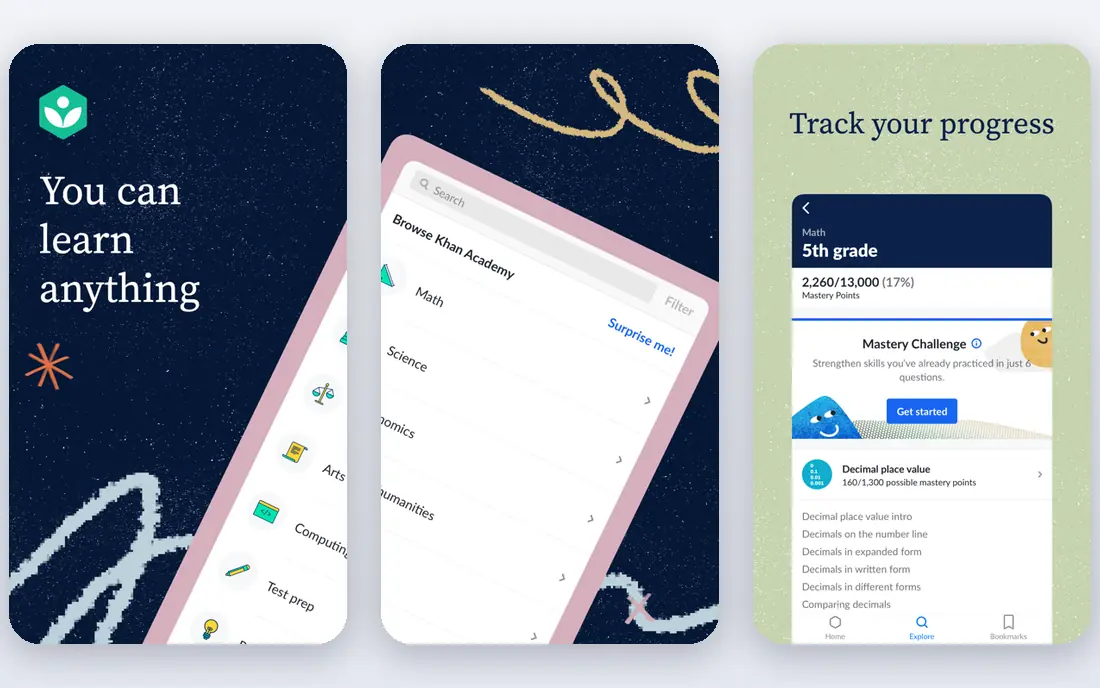
Khan Academy is the clearest free learning app in this list. Courses in maths, science, computing, history, and test preparation are free to use in full, with short videos, practice exercises, and progress tracking. There is no subscription wall for core content, which makes it ideal for students, parents, and adults brushing up on fundamentals.
The limit is scope. Khan Academy does not offer the same range of career certificates or professional courses as Coursera or edX, and its adult learning catalog is narrower. If your goal is school subjects, maths confidence, or a solid foundation before a harder course, start here. If you need a certificate for work, pair Khan Academy with a paid course platform.
- Fully free courses in maths, science, and humanities
- Practice exercises with feedback
- Trusted by schools
- Less suited to advanced career certificates
- Adult professional courses are thinner than Coursera
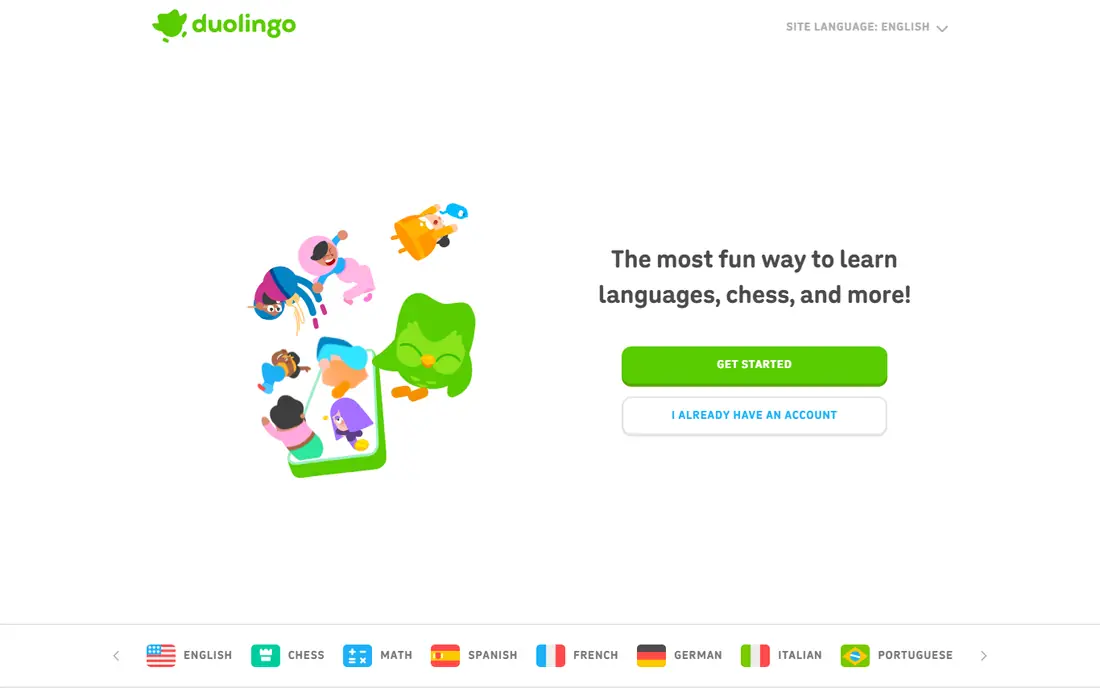
Duolingo is the easiest way to start a new language without paying. Short, gamified lessons fit into a few minutes a day, streaks and levels keep motivation up, and the free version covers full beginner courses in many languages. For a first month in Spanish, French, German, or another popular language, Duolingo is hard to beat for ease and fun.
Advanced learners will hit a ceiling. The app teaches vocabulary and grammar well, but real conversation, listening to native speakers, and writing longer texts need practice outside the app. A paid plan removes ads and some limits, but it does not turn Duolingo into a full language school. Use it as a daily habit builder, then add conversation practice when you are ready.
- Free gamified language lessons
- Short daily sessions
- Wide language choice
- Free version has ads and limits
- Advanced conversation needs real practice outside the app
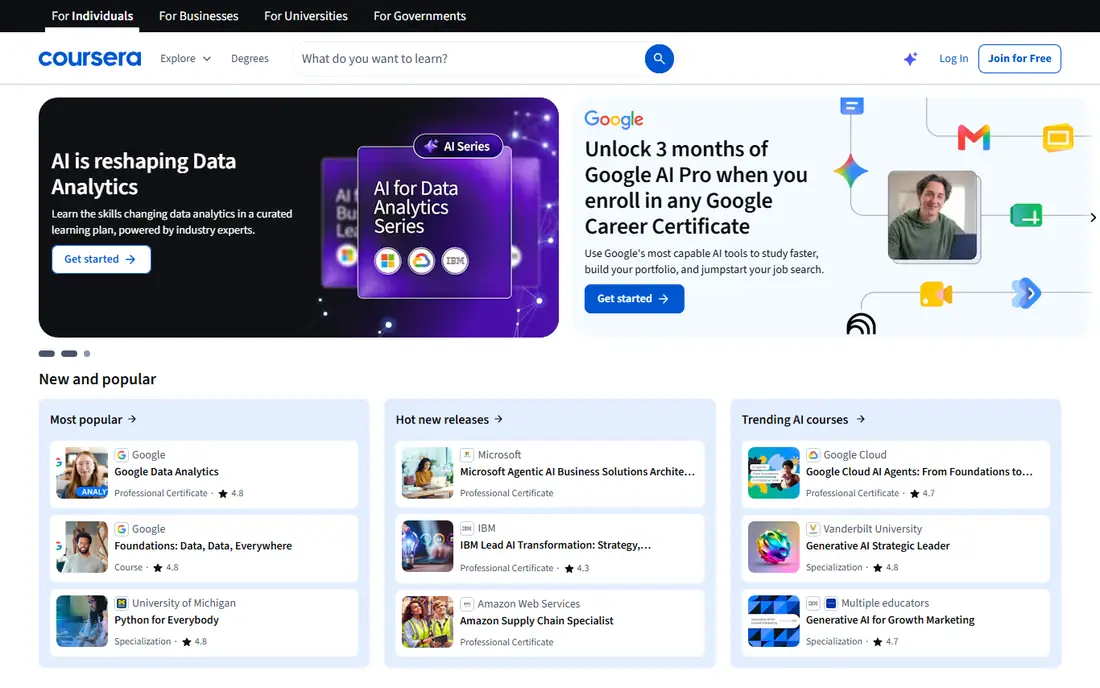
Coursera is the strongest choice for career learning with a credential. Courses, specializations, and degree programs come from universities and large companies, and many courses can be audited for free, with a fee for graded work and a certificate. That makes it possible to sample a course before paying, which is a useful check for a busy learner.
Cost and time are the trade-offs. A full specialization or professional certificate can take weeks or months, and the price adds up if you take several programs. Course quality also varies, so read the syllabus, the instructor background, and recent reviews before you enroll. For a best learning app that employers recognise, Coursera is a strong pick.
- Courses from universities and companies
- Certificates and degrees
- Audit option on many courses
- Certificates and full programs cost money
- Course quality varies by provider
edX, founded by Harvard and MIT and now part of 2U, offers university level courses across science, business, computing, humanities, and more. Many courses can be audited for free, which means you can watch lectures and read materials without paying, while a verified certificate requires a fee. That audit model is ideal for curious learners who want university content without a credential.
Fixed schedules on some courses can be a problem if you learn in bursts, and the learning experience varies by institution. Still, for a best free educational app experience at university level, edX audit mode is excellent. If you need a certificate for a resume, check the verified track price before you start, since it is not included in free audit access.
- University courses with audit access
- Verified certificates available
- Broad academic subjects
- Certificates cost money
- Some courses have fixed schedules
- Support varies by course
Udemy is a marketplace, not a single curriculum, and that shapes how you should use it. You buy one course at a time, often on sale, and keep access to it, which suits a specific skill such as Excel, photography, Python basics, or guitar. The catalog is enormous, so almost any niche topic has at least one course.
Quality varies, since anyone can publish a course, so check the instructor background, the course preview, the syllabus, and recent student reviews before you buy. Udemy certificates show completion, not university credit, so they are weaker for formal hiring than Coursera or edX certificates. For targeted, one off learning, Udemy is flexible and often cheap on sale.
- Huge catalog of single topic courses
- Buy once, keep access
- Frequent sales
- Quality varies a lot by instructor
- No subscription library
- Certificates are course completion only
Skillshare suits creative learners who want to make something, not just watch lectures. Classes in illustration, graphic design, photography, video, writing, and crafts are short and project based, with a class project to complete at the end. That structure helps if you learn by doing and want a finished piece to show for your time.
Skillshare is not an academic platform. It does not offer university certificates, and its business and technical catalog is thinner than Coursera. A subscription is required for full access, so it only makes sense if you will take several classes a month. For creative skills and side projects, Skillshare is one of the best education apps for regular practice.
- Short project based creative classes
- Strong design, illustration, and video topics
- Class projects
- Subscription only for full access
- Less suited to academic or technical certificates
Brilliant teaches by asking you to solve problems, not just watch. Lessons in maths, science, data, and computing build step by step, with interactive questions that check understanding as you go. That approach suits learners who find video lectures passive, and it works well for school maths, logic, and early programming concepts.
The free version is a sample, with full courses behind a subscription, so budget matters if you plan to use Brilliant long term. It also does not cover languages, history, or creative arts in the same depth. If you want a best learning app for analytical thinking, and you learn best by doing, Brilliant is a distinctive and effective choice.
- Interactive problem solving, not just video
- Strong maths, science, and computing paths
- Clear progression
- Paid plan needed for full access
- Less suited to languages or humanities
Codecademy is the most hands-on coding app in this list. You write code in the browser from the first lesson, with instant feedback, quizzes, and projects that build toward a portfolio piece. Paths for Python, web development, data science, and other topics give a clear order to follow, which helps beginners who do not know where to start.
The free tier covers basic lessons, while full paths, projects, and certificates require a paid plan. Even with a paid plan, you will need to build projects outside Codecademy to be job ready, since guided lessons are not the same as independent work. For a best app for learning skills in coding, Codecademy is a strong first step, especially when paired with free resources such as freeCodeCamp for extra practice.
- Hands-on coding in the browser
- Clear paths for Python, web, and data
- Projects and quizzes
- Full paths and certificates need a paid plan
- Real world projects need practice outside the platform
How we picked these
We compared official course catalogs, pricing pages, and app store listings for learning apps and platforms available in the United States today. We looked for real courses or lessons, a free way to try the service where claimed, clear progression, and content that is maintained. We left out apps that only offer short tips with no structured learning, and apps that were no longer maintained. Prices change often, so where we could not confirm a current price on the vendor site at the time of writing, we wrote See website.
How to choose a learning app
Start with the outcome, not the app. If you want a language for travel, Duolingo plus conversation practice is enough to start. If you want a job skill, Coursera, edX, or Codecademy with a certificate or portfolio project is a better fit. If you want a creative hobby, Skillshare or Udemy single courses will be more enjoyable.
Free versus paid learning
Free apps can take you surprisingly far. Khan Academy is fully free, Duolingo free covers beginner languages, and Coursera and edX audit modes cover university lectures. Paid plans add certificates, full paths, graded work, and offline access, which matter most when you need proof of learning for work. Try the free version for two weeks before paying, and check whether you actually use the app daily.
Sticking with it
Short daily sessions beat long weekend bursts for most learners. Pick one app as your main habit, set a realistic daily time, and add a second app only when the first becomes routine. Track progress in a simple way, such as lessons completed or projects finished, rather than hours watched, since completion is a better sign of learning than time spent.
Frequently asked questions
What are the best learning apps?
Khan Academy is best for free academic learning, Duolingo is best for language basics, Coursera is best for career courses, and Codecademy is best for coding. The best learning app for you depends on whether your goal is school, work, language, or a creative hobby.
What are the best free learning apps?
Khan Academy, Duolingo, and the audit modes on Coursera and edX are the strongest free options. Khan Academy is fully free, Duolingo free covers beginner languages, and audit modes let you learn university content without paying for a certificate.
What is the best learning app for skills?
Coursera and edX are best for career skills with certificates, Codecademy is best for coding skills, and Skillshare is best for creative skills. Udemy is best if you want a single course on a specific skill without a subscription.
What are the best apps for education for students?
Khan Academy is best for school subjects and maths, Brilliant is best for interactive maths and science, and Duolingo is best for language learning. Students who need exam preparation should check Khan Academy first, since it is free and structured by topic.
Are free educational apps good enough?
Yes, for foundations and sampling they often are. Free versions cover a lot of beginner content, and audit modes cover university lectures. Paid plans matter most for certificates, graded work, full paths, and offline access, so pay only when you need those extras.
What is the best learning platform for adults?
Coursera is the best learning platform for adults who want career courses and certificates, while Skillshare suits creative adults and Udemy suits adults who want a single topic course. Khan Academy also suits adults returning to maths or science fundamentals.
Sources we checked (8)

Online Jobs is an independent blog about careers, online work, learning new skills and the tools that help people earn. More about us.
Keep reading
All posts
Best Spanish Learning Apps
Looking for the best Spanish learning app? We compared eight leading apps for beginners, travelers, and serious learners to help you choose with confidence.
Best Quizlet Alternatives
Quizlet alternatives compared for 2026, including free options, learn mode, spaced repetition and classroom tools, with pros, cons and honest pricing notes.
Best Online Learning Platforms
We compared 9 best online learning platforms on price, certificates, and free access, so you can learn a new skill fast without paying for the wrong plan.