Best Apps for Anxiety in 2026: 8 Apps Compared

How we put this together: we compare official feature and pricing pages, app store listings, privacy policies and public user reviews. Prices change, so check the provider's site before you pay.
Key takeaways
- Insight Timer is the best free starting point, thanks to a very large library of guided meditations with no subscription needed.
- Headspace suits beginners who want structured courses that build skills step by step.
- Calm suits people who mainly want sleep stories and calming soundscapes alongside short anxiety sessions.
- MindShift CBT is a strong free option for people who want practical CBT-based tools for anxious thoughts.
- These apps do not replace medical advice or a clinician. If anxiety affects your daily life, talk to a doctor or mental health professional.
Quick comparison
| Name | Who it suits | Starting price | Free option | |
|---|---|---|---|---|
 Insight Timer | Free meditation library | Free | Yes | Visit |
 Headspace | Structured beginner courses | See website | Free trial | Visit |
 Calm | Sleep and calming content | See website | Free trial | Visit |
 Wysa | AI chat support | See website | Yes | Visit |
 Moodfit | Mood tracking and tools | See website | Yes | Visit |
 Sanvello | CBT tools and tracking | See website | Free trial | Visit |
 MindShift CBT | Free CBT tools | Free | Yes | Visit |
 Rootd | Quick relief in the moment | See website | Yes | Visit |
The best apps for anxiety
Anxiety apps offer different kinds of help, from guided meditation and breathing exercises to mood tracking and CBT-based tools. No app suits everyone, and no app can diagnose or treat anxiety on its own. These apps do not replace medical advice or a clinician, so use them as support alongside professional care when you need it.
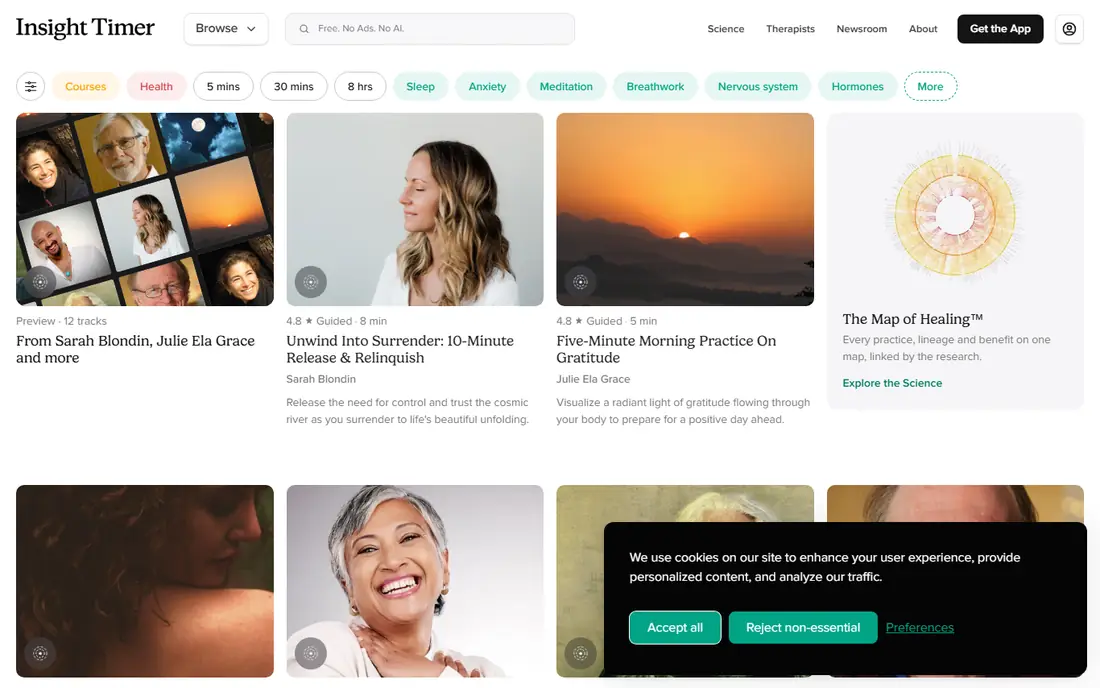
Insight Timer is our pick for people who want to start without paying, because its free library is far larger than rivals. You can find guided meditations for anxiety, sleep, stress, and focus, plus a timer for unguided sessions and live events through the day. That range lets you test different teachers and styles before you commit to any paid plan.
The size of the library is also its main drawback. Beginners may feel lost among so many options, so start with a search for beginner anxiety meditations and save the ones that help. Structured courses sit behind the Member Plus plan, but the free content alone is enough for a daily practice. If cost is a barrier, start here.
- Very large free meditation library
- Timer and live events included
- No ads in the free library
- Huge library can feel overwhelming
- Structured courses need a paid plan
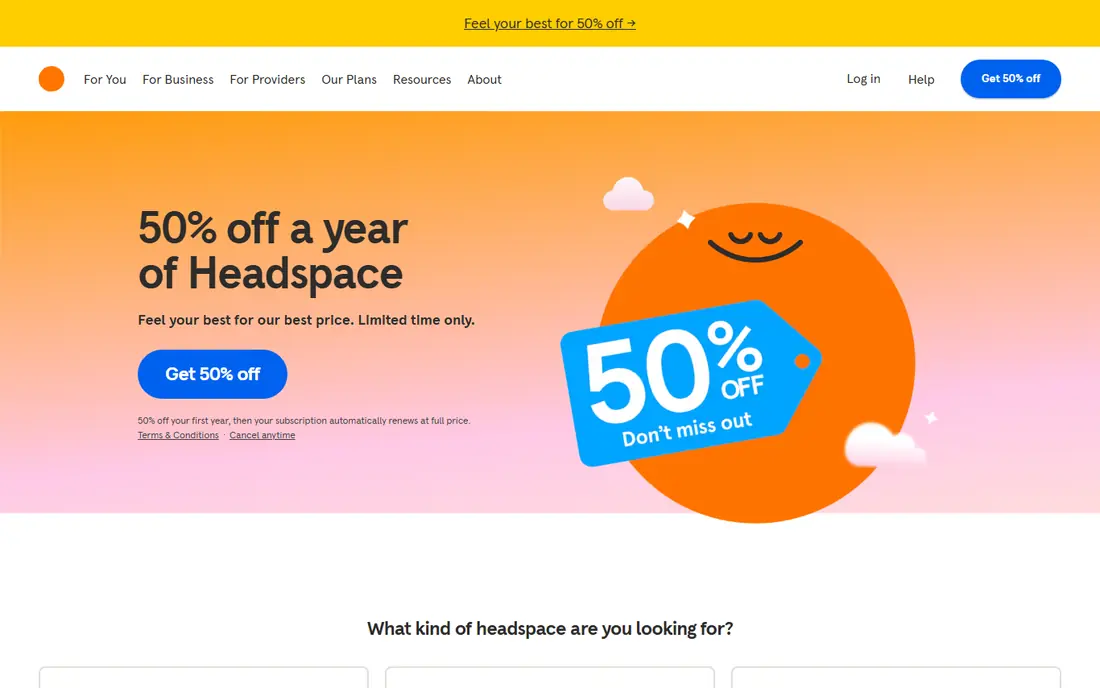
Headspace suits people who want guidance rather than a large library to browse. Its courses build skills in order, starting with short basics sessions and moving to anxiety, stress, and sleep topics. That structure helps beginners form a habit, since each session tells you what to do next instead of leaving you to choose.
Free content is limited to a basics course and a few samples, so most users will need a subscription for full access. Check the current price on the Headspace site, since monthly and annual plans differ. If you have tried meditation before and felt lost, Headspace's clear path is worth the trial.
- Clear step-by-step courses
- Beginner-friendly tone
- Sleep and focus content included
- Limited free content
- Full access needs a subscription
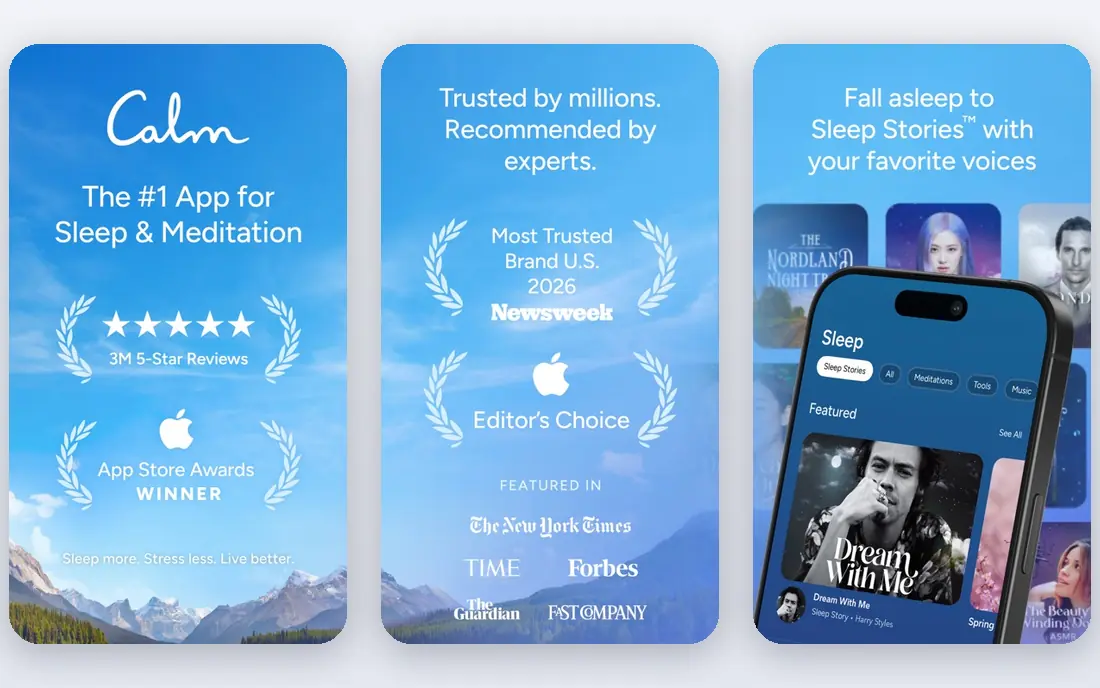
Calm is best known for sleep stories, and that content is genuinely strong. Narrated bedtime stories, soundscapes, and music help many people wind down at night, and the app also offers short sessions for anxiety, breathing exercises, and daily mindfulness. If poor sleep and anxiety feed each other for you, Calm addresses both in one app.
The free tier is very limited, so expect to pay for full access. Check the current price on the Calm site before you subscribe. The app can also feel crowded with content, so use the search and favourites to keep your daily practice simple. For sleep-led anxiety support, Calm is a strong pick.
- Large sleep story library
- Calming soundscapes
- Short anxiety sessions and breathing tools
- Very limited free tier
- Subscription needed for most content
- App can feel crowded
Wysa offers an AI chatbot that talks through anxious thoughts, low mood, and stress using CBT and mindfulness techniques. You can chat at any time, without booking an appointment, and the app suggests exercises based on what you share. That always-available format suits people who want support in the moment, especially late at night.
Wysa is clear that its AI chat is not therapy and does not replace a clinician. Human coaching and therapy options sit behind paid plans in some regions, so check what is available where you live. If you like writing out your thoughts and want guided exercises in return, Wysa is a useful, low-pressure starting point.
- Chat-based support available any time
- CBT and mindfulness exercises
- Anonymous use option
- AI chat is not therapy
- Deeper features need a paid plan
- Chat style will not suit everyone
Moodfit combines mood tracking with practical tools, which helps you spot patterns in your anxiety over time. You can log mood, sleep, and gratitude, set goals, and use CBT exercises and breathing tools when anxiety rises. Seeing a pattern, such as worse anxiety on low-sleep days, can help you and a clinician discuss what helps.
The app has many features, so it takes a little time to learn, and the most useful tools sit behind a paid plan. Start with the free tier and use it daily for two weeks before you judge it, since tracking only helps once you have enough entries to see a pattern. For people who like data alongside exercises, Moodfit is a good fit.
- Mood and gratitude tracking
- CBT tools and breathing exercises
- Customisable goals
- Interface takes time to learn
- Best features need a paid plan
Sanvello is built around CBT principles, with guided journeys, thought records, and coping tools for anxiety and low mood. It also tracks mood and health habits, so you can see how sleep, activity, and anxiety relate over time. Peer community features let users share experiences, though availability varies by region.
A subscription is needed for full access, so check the current price on the Sanvello site and use any trial to test a full journey before you pay. Sanvello suits people who want a structured, CBT-based programme rather than open meditation alone. It does not replace a clinician, and it should not be used as a substitute for professional care.
- CBT-based journeys and tools
- Mood and health tracking
- Peer community options
- Full access needs a subscription
- Community features vary by region
MindShift CBT, from Anxiety Canada, is a free app that teaches CBT tools for anxiety in a practical, direct way. It includes check-ins, thought challengers, coping cards, and tools for specific fears such as social anxiety and worry. Because it is free, there is no subscription barrier, and no trial clock pushing you to pay.
The design is simpler than Calm or Headspace, and it does not offer a large meditation library. That focus is also its strength: it teaches a small set of tools clearly, rather than offering endless content. For people who want free, practical CBT help, or for students and anyone on a tight budget, MindShift CBT is an excellent pick.
- Free to use
- CBT tools for anxious thoughts
- Check-ins and coping cards
- Simpler design than paid apps
- No meditation library
- Fewer guided sessions
Rootd is designed for the moment anxiety spikes. Its panic button opens breathing and grounding tools at once, with clear steps to follow when thinking feels hard. That simple, fast design is its main advantage over larger apps, where finding the right session can take too long in a difficult moment.
The feature range is narrower than a full meditation app, so Rootd works best alongside, rather than instead of, a daily practice app such as Insight Timer or Headspace. Some lessons and tools need a paid plan, so check the current price in your app store. For quick, in-the-moment support, Rootd is a thoughtful and easy-to-use option.
- Quick panic button for in-the-moment help
- Breathing and grounding tools
- Simple layout
- Narrower feature range than Calm or Headspace
- Some content needs a paid plan
How we picked these
We compared official app pages, app store listings, and pricing pages for leading anxiety and meditation apps, and we kept only apps with a clear anxiety-related function, whether meditation, CBT tools, mood tracking, or in-the-moment relief. We favoured apps with a free tier or trial, and we mixed meditation apps with CBT and tracking tools, since anxiety support is not one single method. We also noted where an app states it is not a substitute for professional care. These apps do not replace medical advice or a clinician. Prices change, so confirm the current price on each vendor site or app store listing before you subscribe.
How to choose an anxiety app that helps you
Start with the kind of help you actually want. If you want calm and sleep, pick Calm or Insight Timer. If you want structure, pick Headspace. If you want practical thought tools, pick MindShift CBT or Sanvello. If you want quick help in a spike, pick Rootd. Matching the app to your need matters more than picking the most popular name.
Try one app for two weeks
Use one app daily for two weeks before you judge it, since a single session rarely shows whether a habit helps. Note when you use it, how you feel after, and whether you return to it without prompting. An app you open daily beats a feature-rich app you ignore.
Watch for signs you need more support
If anxiety affects sleep, work, relationships, or daily tasks for more than a few weeks, or if you have thoughts of harming yourself, seek professional help promptly. Contact your doctor, a mental health professional, or a crisis line in your country. An app can support care, but it cannot replace it, and reaching out early is a strong step, not a failure.
Protect your privacy
Anxiety apps handle sensitive data, so read the privacy policy before you log mood or chat about personal topics. Check what data is stored, whether it is shared, and how to delete your account and data. Choose an app whose data practices you are comfortable with, and avoid sharing details you would not want stored.
Frequently asked questions
What is the best app for anxiety?
Insight Timer is the best free starting point, thanks to its large free library. Headspace suits beginners who want structure, Calm suits sleep-led anxiety, and MindShift CBT suits people who want free CBT tools. The best app is the one you will use daily.
Are anxiety apps free?
Some are. Insight Timer and MindShift CBT offer strong free tiers, while Calm and Headspace offer only limited free content and need a subscription for full access. Check the free tier before you pay, since free content varies widely.
Do anxiety apps replace therapy?
No. Anxiety apps offer support, exercises, and tracking, but they do not diagnose or treat anxiety, and they do not replace a clinician. If anxiety affects your daily life, talk to a doctor or mental health professional.
What is CBT in an anxiety app?
CBT, or cognitive behavioural therapy, is a structured approach that helps you notice unhelpful thought patterns and practise more balanced responses. Apps such as MindShift CBT and Sanvello teach CBT tools through check-ins, thought records, and coping exercises.
Can an app help during a panic attack?
An app such as Rootd can guide breathing and grounding steps in the moment, which some people find helpful. If panic attacks are frequent, severe, or new, seek medical advice to rule out other causes and to discuss treatment options.
How do I know if an anxiety app is helping?
Track how often you use it, how you feel after sessions, and whether anxiety affects daily life less over several weeks. If you see no change after consistent use, or if symptoms worsen, talk to a clinician about other options rather than switching apps endlessly.
Sources we checked (8)

Online Jobs is an independent blog about careers, online work, learning new skills and the tools that help people earn. More about us.
Keep reading
All posts
Best workout apps for women
Compare the best workout apps for women in 2026, from free guided classes to structured strength plans, with current prices, free plans and honest trade-offs.
Best Yoga App
Find the best yoga app for home practice in 2026, with verified prices, free options, class styles, trials and honest limits for 10 yoga apps compared.
Best Workout Tracker App
We compared the best workout tracker app options for gym, home, and running training, checking prices, free plans, and logging tools in detail. See inside.