Best Apps Data Analytics in 2026: 8 Platforms Compared


Teams already using Microsoft tools · Starting price: See website
How we put this together: we compare official feature and pricing pages, app store listings, privacy policies and public user reviews. Prices change, so check the provider's site before you pay.
Key takeaways
- Power BI is the value pick for Microsoft-based teams, while Looker Studio is the best free start.
- Tableau leads on visual depth, and ThoughtSpot leads on search-first, self-service questions.
- Qlik Sense suits teams that want to explore links in data without fixed dashboard paths.
- Domo and Sisense suit larger or embedded use cases, but both price by quote.
- Start with one real dataset and one real decision, and judge each tool on that test, not on demos.
Quick comparison
| Name | Who it suits | Starting price | Free option | |
|---|---|---|---|---|
| Microsoft Power BI | Teams already using Microsoft tools | See website | No | Visit |
 Tableau | Analysts wanting deep visual exploration | See website | Free trial | Visit |
 Looker Studio | Small teams and Google users | Free | Yes | Visit |
 Qlik Sense | Teams wanting associative exploration | See website | Free trial | Visit |
 ThoughtSpot | Search-first, AI-assisted analytics | See website | Free trial | Visit |
 Zoho Analytics | Small businesses wanting value | See website | Free trial | Visit |
 Domo | Enterprises with many data sources | See website | Free trial | Visit |
 Sisense | Embedded analytics for products | See website | Free trial | Visit |
The best data analytics tools
We compared the options below on fit for the topic, core features, pricing transparency and current availability. Prices change, so check the vendor page before you buy.
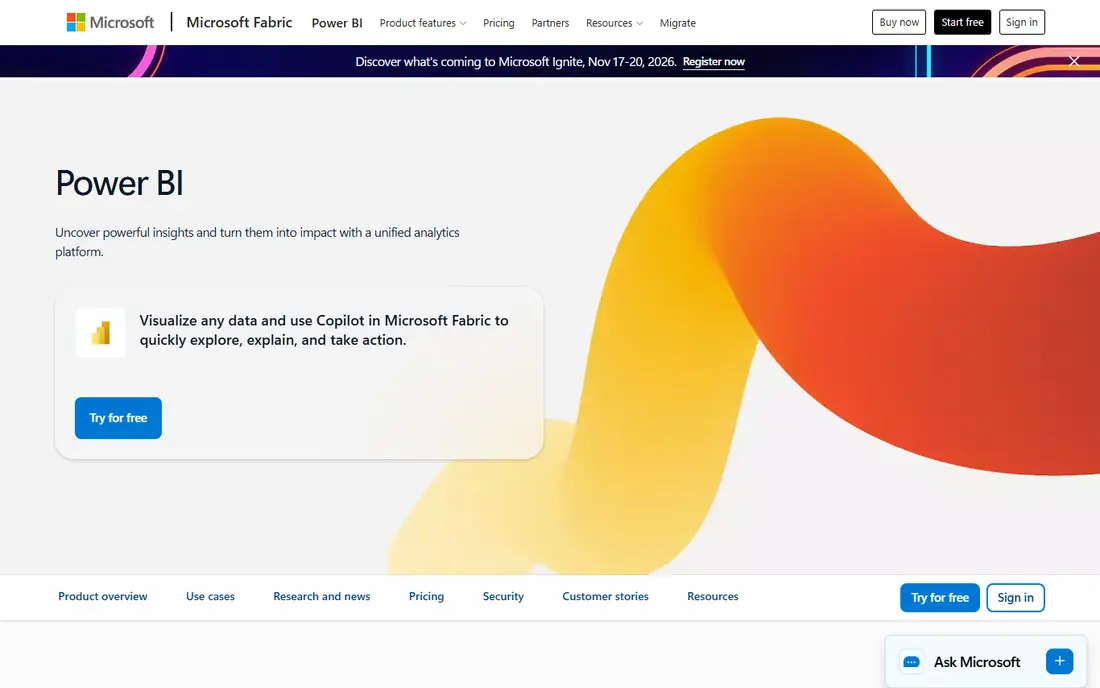
For readers who want a clear first choice, Microsoft Power BI deserves a close look. It is best for teams already using microsoft tools. The main strengths are strong microsoft integration and wide connector choice. In daily use, the core tools are easy to find, and the main tasks take few steps. In practice, mature dashboard tools helps with the work most buyers actually do week after week, rather than sitting unused in a menu. The honest catch is that learning curve for advanced modelling and full features need paid licences. That trade-off will matter more to some buyers than others, so weigh it against the price and the features you will use most, and test the free option or trial where one is offered before you commit.
- Strong Microsoft integration
- Wide connector choice
- Mature dashboard tools
- Learning curve for advanced modelling
- Full features need paid licences
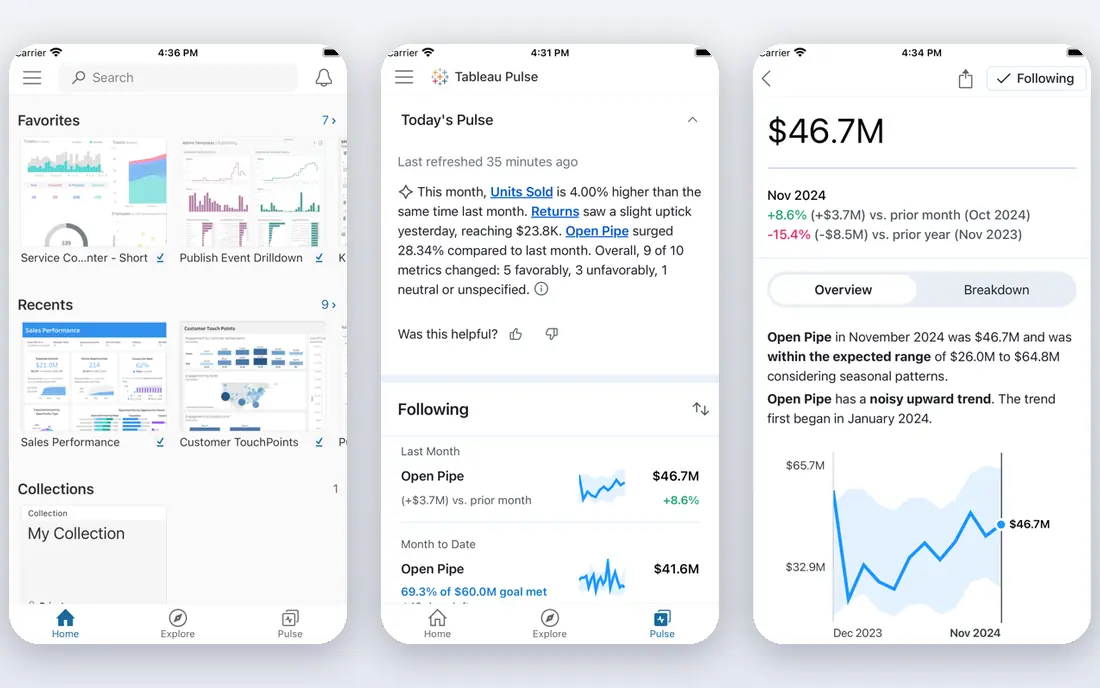
If your main concern is value for money, Tableau is worth putting near the top of the shortlist. It is best for analysts wanting deep visual exploration. The main strengths are excellent visual exploration and strong community and resources. The setup process is guided, and most users can get a working result without outside help. In practice, flexible dashboards helps with the work most buyers actually do week after week, rather than sitting unused in a menu. The honest catch is that pricing is higher than some rivals and advanced use needs data modelling skill. That trade-off will matter more to some buyers than others, so weigh it against the price and the features you will use most, and test the free option or trial where one is offered before you commit.
- Excellent visual exploration
- Strong community and resources
- Flexible dashboards
- Pricing is higher than some rivals
- Advanced use needs data modelling skill
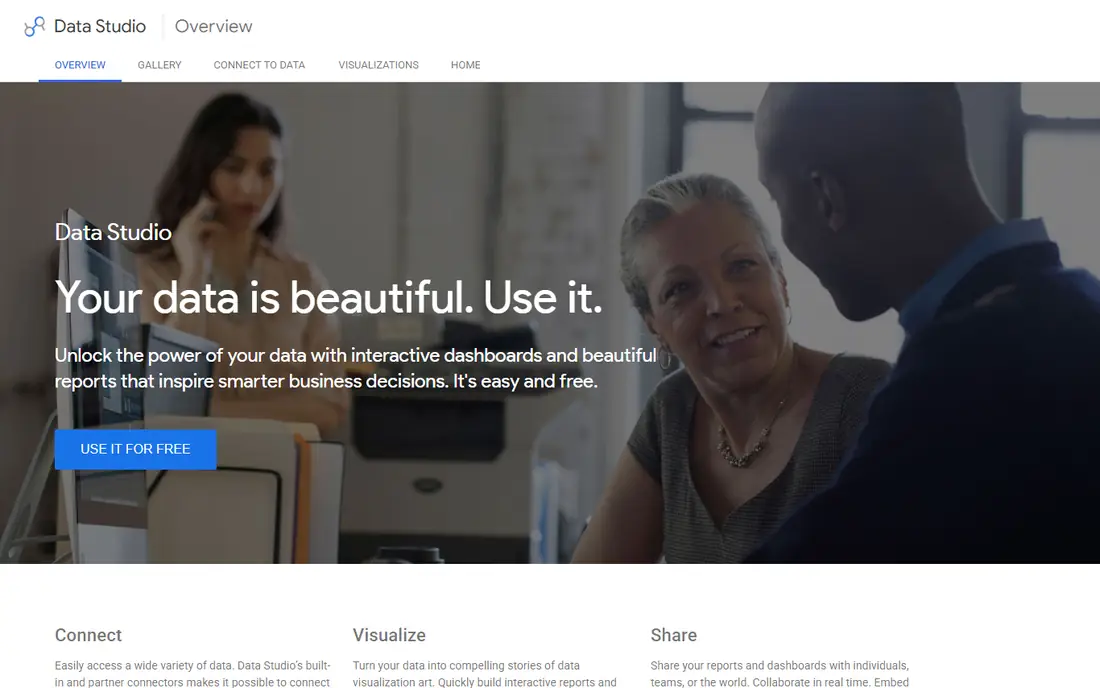
Where simplicity matters more than a long feature list, Looker Studio stands out. It is best for small teams and google users. The main strengths are free to start and easy google data connections. The interface keeps everyday tasks in one place, which cuts down on switching between tools. In practice, simple sharing helps with the work most buyers actually do week after week, rather than sitting unused in a menu. The honest catch is that less advanced governance than enterprise tools and large data needs may need looker itself. That trade-off will matter more to some buyers than others, so weigh it against the price and the features you will use most, and test the free option or trial where one is offered before you commit.
- Free to start
- Easy Google data connections
- Simple sharing
- Less advanced governance than enterprise tools
- Large data needs may need Looker itself
For a more complete, all-in-one option, Qlik Sense is a strong candidate. It is best for teams wanting associative exploration. The main strengths are associative engine for exploring links in data and strong dashboards. Once an account or project is set up, repeat tasks follow a familiar pattern. In practice, governed sharing helps with the work most buyers actually do week after week, rather than sitting unused in a menu. The honest catch is that pricing is by quote for many teams and setup needs planning for large models. That trade-off will matter more to some buyers than others, so weigh it against the price and the features you will use most, and test the free option or trial where one is offered before you commit.
- Associative engine for exploring links in data
- Strong dashboards
- Governed sharing
- Pricing is by quote for many teams
- Setup needs planning for large models
If you are comparing on depth rather than price alone, ThoughtSpot merits attention. It is best for search-first, ai-assisted analytics. The main strengths are natural-language search over data and ai-assisted answers. The reporting and export options cover the usual needs without forcing extra work. In practice, self-service focus helps with the work most buyers actually do week after week, rather than sitting unused in a menu. The honest catch is that needs well-modelled data to work well and pricing is by quote. That trade-off will matter more to some buyers than others, so weigh it against the price and the features you will use most, and test the free option or trial where one is offered before you commit.
- Natural-language search over data
- AI-assisted answers
- Self-service focus
- Needs well-modelled data to work well
- Pricing is by quote
For people who prefer a well-known name with broad support, Zoho Analytics fits that brief. It is best for small businesses wanting value. The main strengths are good value and many connectors. Collaboration features let more than one person work on the same project or account. In practice, ai-assisted insights and dashboards helps with the work most buyers actually do week after week, rather than sitting unused in a menu. The honest catch is that less depth than enterprise-only tools and advanced governance is more limited. That trade-off will matter more to some buyers than others, so weigh it against the price and the features you will use most, and test the free option or trial where one is offered before you commit.
- Good value
- Many connectors
- AI-assisted insights and dashboards
- Less depth than enterprise-only tools
- Advanced governance is more limited
Where flexibility and room to grow matter, Domo is a practical pick. It is best for enterprises with many data sources. The main strengths are very wide connector library and enterprise dashboards. The mobile and desktop experience cover the main tasks, so work is not tied to one device. In practice, mobile access helps with the work most buyers actually do week after week, rather than sitting unused in a menu. The honest catch is that pricing is by quote and can be high and smaller teams may not need its scale. That trade-off will matter more to some buyers than others, so weigh it against the price and the features you will use most, and test the free option or trial where one is offered before you commit.
- Very wide connector library
- Enterprise dashboards
- Mobile access
- Pricing is by quote and can be high
- Smaller teams may not need its scale
For a lower-cost or lighter-weight alternative, Sisense is worth considering. It is best for embedded analytics for products. The main strengths are strong embedded analytics and flexible modelling. Custom settings let you shape the output to fit a common use case rather than starting over. In practice, api options for product teams helps with the work most buyers actually do week after week, rather than sitting unused in a menu. The honest catch is that pricing is by quote and setup for embedded use needs developer time. That trade-off will matter more to some buyers than others, so weigh it against the price and the features you will use most, and test the free option or trial where one is offered before you commit.
- Strong embedded analytics
- Flexible modelling
- API options for product teams
- Pricing is by quote
- Setup for embedded use needs developer time
How we picked these
We compared official feature pages, pricing pages, app store listings, privacy policies and public reviews for each option. We kept only products that exist and work today and that fit the topic directly, and we left out options with unclear pricing or a poor fit even when they are well known in a nearby category. We did not claim hands-on testing for these picks. Instead, we weighed published features, plan limits and the kind of buyer each product serves, so the list works as a shortlist for further checks rather than a final verdict on its own.
How to pick a data analytics platform that teams actually use
Start with the question, not the chart type. Write down three decisions the team makes each month, and the data each decision needs. A tool that answers those three questions quickly is more useful than a tool with a longer feature list that nobody opens. Next, check data readiness. Search-first and AI tools need clean, modelled data, while dashboard tools can work with simpler sources but still need reliable connections. Ask who will own the data model, and how often it will be refreshed. Finally, test sharing and governance. Check who can see each dashboard, how access is controlled, and whether reports can be scheduled or embedded. A platform that is easy to share, but hard to govern, can create confusion as use grows.
Frequently asked questions
Which platform is best for data analytics?
Power BI suits Microsoft-based teams, Tableau suits visual analysts, and ThoughtSpot suits search-first self-service. The best platform is the one that matches your data, your team skills and your budget.
What are the best data analytics tools for small businesses?
Looker Studio is a strong free start, and Zoho Analytics offers good value with many connectors. Small teams should avoid enterprise pricing until they have a clear, regular reporting need.
What are the best data analytics platforms for large teams?
Power BI, Tableau, Qlik Sense and Domo all serve larger teams, with different strengths in governance, visuals and connectors. Test them on your own data and access rules before choosing.
What is the best platform for data analytics without coding?
ThoughtSpot, Looker Studio and Zoho Analytics all support low-code or no-code exploration. ThoughtSpot is the most search-led, while Looker Studio is the simplest for basic dashboards.
Are best data analytics apps the same as business intelligence tools?
The terms overlap heavily. Most modern tools cover both reporting on past results and exploring why results changed. Some add forecasting, but forecasting depth varies, so check that feature separately if you need it.
How much do best data analytics tools cost?
Costs range from free for Looker Studio to quote-based enterprise pricing for Domo and Sisense. Add user licences, data refresh needs and any embedded use to get a realistic yearly total.
Sources we checked (8)

Online Jobs is an independent blog about careers, online work, learning new skills and the tools that help people earn. More about us.
Keep reading
All posts
n8n Alternatives
n8n alternatives compared for 2026, with Zapier, Make, Activepieces, and more, covering visual builders, code steps, self-hosting, and pricing models.

ZoomInfo Alternatives
The best ZoomInfo alternatives in 2026, compared on price, free plans, data coverage, and which tool fits small teams or large sales teams best in detail.

Yotpo Alternatives
Find cheaper alternatives to Yotpo for reviews and loyalty, with Judge.me, Loox, Stamped, and more compared for Shopify stores in 2026, all in one guide.