Best API Security Platforms in 2026: 8 Tools Compared

How we put this together: we compare official feature and pricing pages, app store listings, privacy policies and public user reviews. Prices change, so check the provider's site before you pay.
Key takeaways
- Salt Security leads for runtime API threat detection based on behavioral analysis of API traffic.
- Wallarm and Imperva suit teams that want blocking at the edge or in front of existing apps, not just detection.
- 42Crunch is the strongest pick for contract-first testing, where OpenAPI specs drive security checks.
- Traceable, now part of Harness, suits teams that want deep tracing across microservices.
- Most of these platforms are priced by quote, so plan a proof of concept and check deployment options early.
Quick comparison
| Name | Who it suits | Starting price | Free option | |
|---|---|---|---|---|
 Salt Security | Runtime threat detection | See website | No | Visit |
 Wallarm | Real-time API protection | See website | Free trial | Visit |
 Traceable | Full lifecycle API security | See website | No | Visit |
 42Crunch | Contract-first API testing | See website | Free trial | Visit |
 Cequence Security | Bot and abuse protection | See website | No | Visit |
 Akamai API Security | Edge-scale API protection | See website | No | Visit |
 Imperva API Security | WAF plus API protection | See website | No | Visit |
 Cloudflare API Shield | Edge API protection | See website | Yes | Visit |
The best API security platforms
APIs now carry most traffic between apps, partners, and AI agents, which makes them a prime target. A good API security platform should find every API, including shadow and forgotten versions, test them before release, and block abuse at runtime. We compared official product pages and public reviews for platforms that cover discovery, testing, posture, and runtime protection, and we favored tools with clear deployment options and broad protocol support.
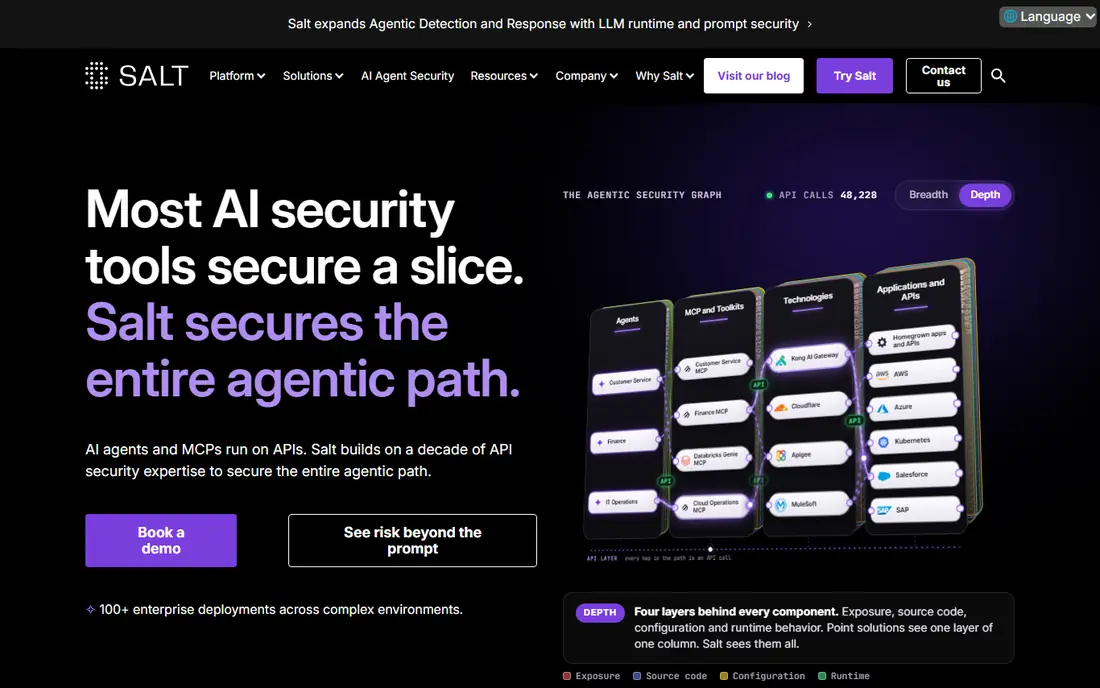
Salt Security is known for learning normal behavior for each API endpoint, then flagging attacks that rules alone would miss, such as slow data scraping or broken object level authorization. It discovers APIs from traffic, builds an inventory, and highlights exposed sensitive data and posture gaps. For security teams that already have a gateway or firewall, Salt adds the API-specific intelligence those tools lack.
The main drawback is that Salt has often been described as detection-first, so teams that want inline blocking should confirm how enforcement works with their gateway or WAF during a trial. Pricing is by quote, which means smaller teams may find it hard to budget without a sales conversation. Start with a proof of concept on your highest-risk APIs to judge value before a wider rollout.
- Behavioral detection of API abuse
- API discovery from traffic
- Broad integrations
- Enterprise pricing by quote
- Detection focus may need a separate blocking layer
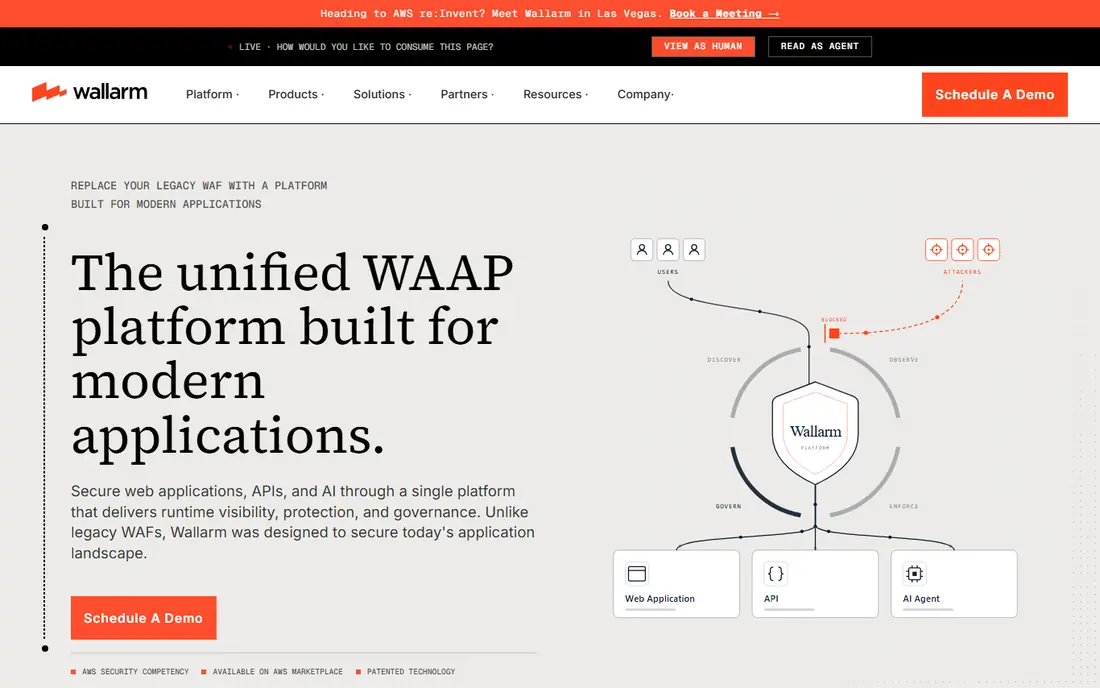
Wallarm combines API discovery, posture checks, and real-time blocking in one platform, with deployment options that suit cloud, on-prem, and hybrid estates. It supports REST, GraphQL, and other common protocols, and it can block attacks in line rather than only alerting after the fact. Teams that want a single platform for protection, rather than a detection tool plus a separate firewall, often shortlist Wallarm early.
Testing is less deep than a contract-first tool like 42Crunch, so teams with heavy pre-release testing needs may pair Wallarm with a testing tool. Pricing is by quote, with a trial available. Test blocking behavior on a staging API first, since aggressive rules can block legitimate traffic if tuned too tightly.
- Inline blocking
- Multi-protocol support
- SaaS, on-prem, and hybrid deployment
- Testing features are more limited than specialist testing tools
- Enterprise pricing
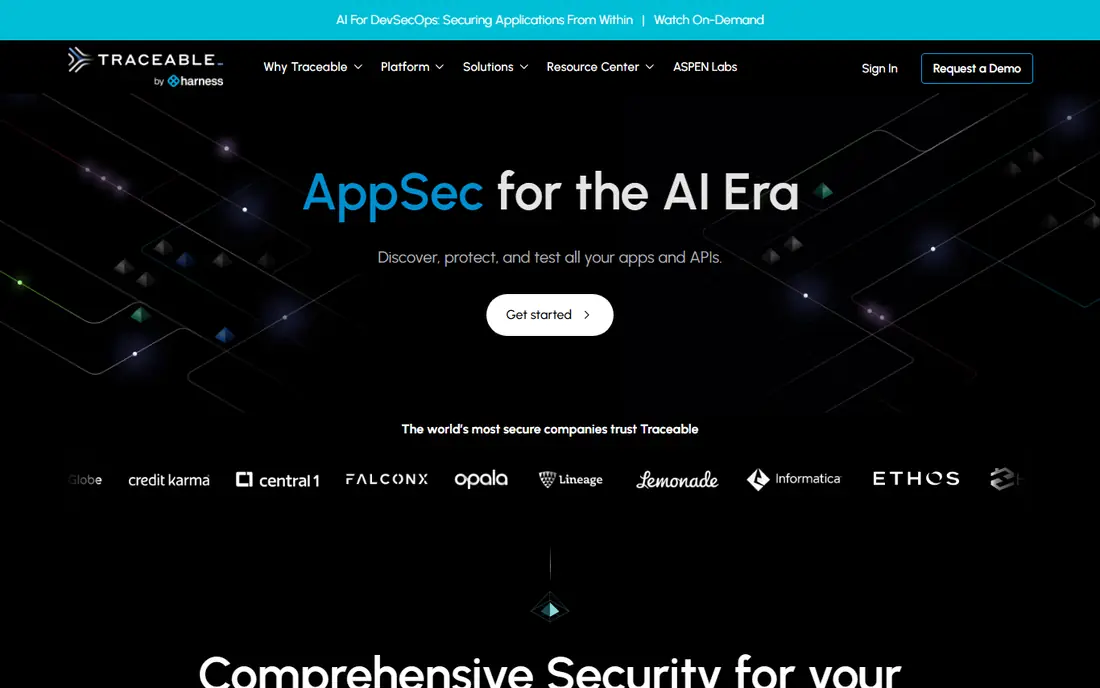
Traceable, now part of Harness, is built around tracing API requests across microservices, which helps teams follow a multi-step attack or fraud pattern that spans several services. It covers discovery, posture management, testing, and runtime protection, giving it a full lifecycle claim that many point tools lack. For complex microservice estates, that tracing view is a real advantage.
The Harness acquisition means buyers should confirm current packaging, support, and roadmap before signing a long contract. Pricing is by quote, and deployment is SaaS or hybrid. If your estate is mostly a few simple APIs, Traceable may be more than you need, but for distributed systems it is worth a trial.
- Distributed tracing across services
- Behavioral threat detection
- Posture and testing
- Now part of Harness, so check current product packaging
- Enterprise pricing
42Crunch takes a different starting point: the API contract itself. It audits OpenAPI specs for security flaws, runs conformance and fuzz testing in CI, and enforces the contract at runtime with a firewall that rejects traffic outside the spec. For teams that already write good OpenAPI specs, this catches design flaws early, when they are cheapest to fix.
The catch is that the approach depends on spec quality. Teams with undocumented or shadow APIs will need discovery from another tool first, or they will need to invest in writing specs. A trial is available, and pricing is by quote. Pair 42Crunch with a discovery tool if your inventory is incomplete.
- OpenAPI contract testing
- IDE and CI integration
- Runtime contract firewall
- Discovery from traffic is weaker than runtime platforms
- Needs good specs to shine
Cequence Security is best known for stopping automated abuse at scale, including credential stuffing, account takeover attempts, and business logic abuse through APIs. It discovers APIs, maps their risk, and applies runtime protection that distinguishes bots from real users. For public-facing APIs with login, signup, or checkout flows, that abuse focus matters more than generic scanning.
Pre-release testing is not its main strength, so teams should not buy Cequence as a sole testing tool. Pricing is by quote, with SaaS and hybrid deployment. Test its bot detection on your login and account flows during a trial, since false positives there can harm real users quickly.
- Strong bot and credential stuffing defense
- API discovery
- SaaS and hybrid deployment
- Less focused on pre-release testing
- Enterprise pricing
Akamai API Security, built in part from the Noname Security acquisition, brings API discovery and protection to the edge, where internet-facing traffic first arrives. For large public APIs, that edge position gives scale and low latency, and it pairs well with Akamai content delivery and web application firewall services. Teams already on Akamai often find integration straightforward.
The edge focus is also a limit. Traffic between internal services inside a private cluster may fall outside its main view, so internal APIs may need another tool. Pricing is by quote. If your risk is mainly public APIs, Akamai is a strong shortlist pick, but confirm internal coverage during evaluation.
- Edge-scale discovery and protection
- Strong for internet-facing APIs
- Broad platform
- East-west traffic inside private clusters is less visible
- Enterprise pricing
Imperva API Security suits teams that already run Imperva for web application firewall protection and want API security in the same control plane. It discovers APIs, applies positive security policies, and blocks common API attacks, with mature reporting for compliance programs. That single-vendor simplicity reduces tool sprawl for many enterprises.
Specialist discovery platforms may find more shadow APIs in complex cloud estates, so Imperva buyers should test discovery depth on their own traffic. Pricing is by quote, with SaaS and on-prem deployment. If you already use Imperva, a trial is low effort, but compare discovery results against a specialist before deciding.
- Unified WAF and API control plane
- Mature reporting
- SaaS and on-prem options
- Shadow API discovery is thinner than specialist platforms
- Enterprise pricing
Cloudflare API Shield protects APIs at the edge, with schema validation, abuse detection, and controls that sit alongside Cloudflare web application firewall and bot management. For teams already on Cloudflare, it is an easy addition, and a free tier covers basic use, which makes it the most accessible option in this list for smaller teams.
Deeper features, such as advanced discovery, testing, and detailed API analytics, sit on paid plans, and the platform is less of a full lifecycle API security suite than Salt or Traceable. Still, for internet-facing APIs where edge blocking and simple schema checks cover most risk, API Shield is a practical starting point. Check which features your Cloudflare plan includes before relying on it alone.
- Edge protection on a global network
- Schema validation
- Free tier for basic use
- Deeper API security features need higher plans
- Less full lifecycle depth
How we picked these
We compared official product pages, documentation, and public reviews for platforms that are available today and cover API discovery, testing, posture, or runtime protection. We favored tools with broad protocol support, clear deployment options, and a distinct strength, rather than listing every gateway with a basic API feature. Prices are by quote for most enterprise platforms, so we used See website where vendor pricing was not published. We did not claim hands-on testing of every platform, and we recommend a proof of concept on your own traffic before buying.
How to choose an API security platform
Start from your biggest gap, not from a vendor feature list. Discovery, testing, and runtime blocking solve different problems, and few teams need the same mix.
Find your APIs first
Run a discovery exercise before buying a blocking tool, since you cannot protect an API you do not know exists. Check traffic logs, gateway configs, and code repos for shadow, deprecated, and partner APIs. A platform that finds APIs from traffic is the right first step if your inventory is uncertain.
Test in CI, block at runtime
The strongest setups pair pre-release testing with runtime protection. Contract testing in CI catches design flaws early, while runtime detection and blocking catch abuse that only appears in production. Budget for both stages if your APIs handle sensitive data or money, and test blocking rules in staging to avoid breaking legitimate clients.
Run a proof of concept on real traffic
Ask each vendor for a trial on a copy of real traffic or a staging environment, and measure discovery coverage, false positives, and alert quality. Check deployment options, data residency, and how the tool integrates with your gateway, WAF, and incident response tools. A platform that looks strong in a demo can still fail on your specific protocols or traffic patterns.
Frequently asked questions
What is the best API security platform?
Salt Security is our pick for runtime threat detection, Wallarm for inline protection, and 42Crunch for contract-first testing. There is no single best platform for every team, since the right choice depends on whether your gap is discovery, testing, or runtime blocking. Most large teams end up combining a testing tool with a runtime platform.
What are the best API security tools for small teams?
Cloudflare API Shield is the most accessible starting point, since it offers a free tier and edge protection for teams already on Cloudflare. 42Crunch offers a trial for contract testing, which suits small teams with good OpenAPI specs. Enterprise platforms like Salt and Traceable are usually priced for larger estates, so get a quote before shortlisting them.
How is API security different from a WAF?
A web application firewall protects web apps against common web attacks, while API security adds API discovery, schema and contract checks, and detection of API-specific abuse such as broken authorization and data scraping. Many teams use both, with the WAF at the edge and an API platform adding deeper API intelligence. Some platforms, like Imperva and Cloudflare, combine both in one control plane.
Do I need API discovery if I already have a gateway?
Yes, in most cases. Gateways only see traffic that passes through them, so APIs deployed outside the gateway, old versions left running, and partner APIs can stay hidden. Discovery from traffic, code, and cloud configs finds those gaps. Run discovery regularly, not just once, since new APIs appear with every release.
What is the OWASP API Security Top 10?
It is a community list of the most common API risks, including broken object level authorization, broken authentication, and unrestricted access to sensitive business flows. Use it as a checklist when testing a platform, and ask vendors to show how they detect each risk in a proof of concept. A vendor that only talks about generic web attacks is probably not an API specialist.
Are API security platforms expensive?
Enterprise API security platforms are usually priced by quote, based on API volume, traffic, and deployment model, so costs vary widely. Free and trial options exist for smaller use cases, and edge tools on existing platforms can be cheaper than a standalone suite. Get quotes for your actual traffic volume, and compare total cost including deployment and tuning time, not just license fees.
Sources we checked (8)

Online Jobs is an independent blog about careers, online work, learning new skills and the tools that help people earn. More about us.
Keep reading
All posts
Surfshark Alternatives
Looking for Surfshark alternatives? We compare 8 VPN services on price, privacy, streaming, and device limits to help you find a VPN that fits your needs.
NordPass Alternatives
We compared NordPass alternatives for families, solo users and teams, checking pricing, free plans, passkeys and sharing, so you can switch safely today.
Best background check app
We compared the best background check app options in 2026 for employers, landlords and individuals, with published prices, coverage and compliance notes.