Best AI Tools for Market Research in 2026: 8 Tools Compared

How we put this together: we compare official feature and pricing pages, app store listings, privacy policies and public user reviews. Prices change, so check the provider's site before you pay.
Key takeaways
- Perplexity is our first stop for fast, cited secondary research, while survey tools still do the work of talking to real people.
- No single tool covers desk research, surveys, interviews, and social listening well, so most teams need two tools, not one.
- Free plans are useful for small checks, but larger studies, exports, and team seats usually sit behind paid plans.
- Always open the cited source before you quote a figure in a client deck, because AI summaries can misread a page.
Quick comparison
| Name | Who it suits | Starting price | Free option | |
|---|---|---|---|---|
 Perplexity | Fast cited web research | $20 per month | Yes | Visit |
 Semrush | Competitor and search intelligence | $139.95 per month | Free trial | Visit |
 SparkToro | Audience research | $50 per month | Yes | Visit |
 Attest | Consumer surveys at scale | See website | No | Visit |
 Brandwatch | Social listening and trends | See website | No | Visit |
 Pollfish | Fast targeted surveys | See website | No | Visit |
 SurveyMonkey | Everyday surveys for small teams | See website | Yes | Visit |
 Quantilope | Advanced quantitative studies | See website | No | Visit |
The best AI tools for market research
Market research now splits into two jobs: finding what is already published, and asking people directly. The tools below cover both sides, and we compared them on official feature pages, pricing pages, app listings, and public reviews.
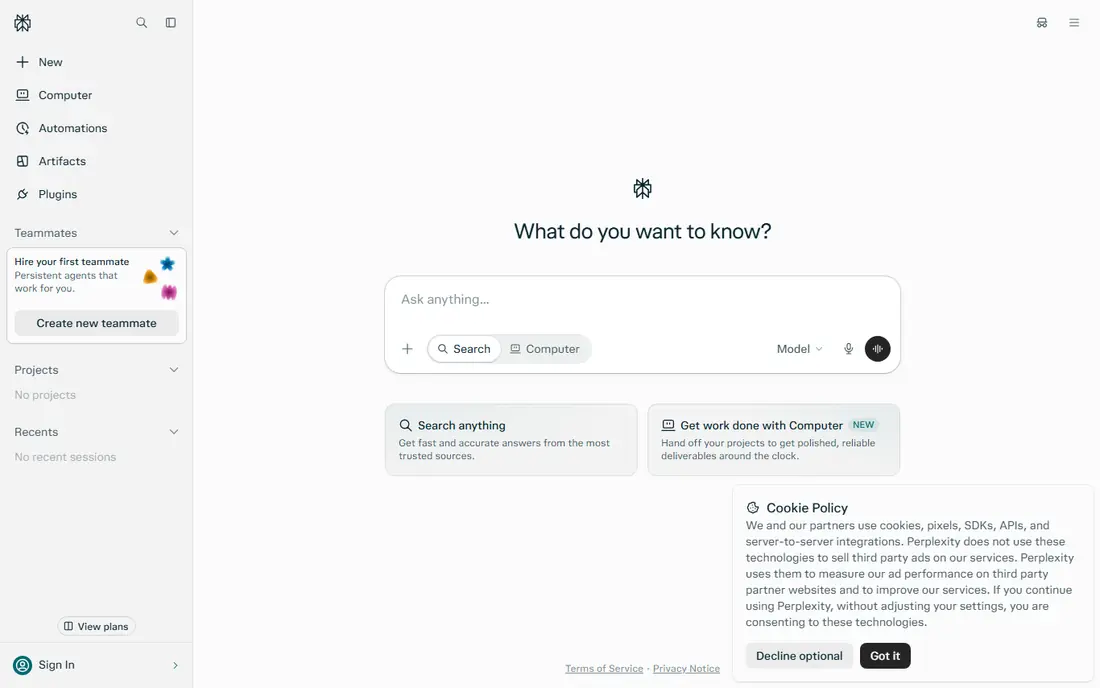
Perplexity fits the researcher who starts every project with a simple question: what is already known, and where is it written down. You type a plain question, you get a written answer with links, and you can follow those links to the original page. That habit matters more than the AI itself, because a cited answer is only useful when you check it. The free plan covers quick fact checks. Pro, at $20 per month, adds many more Pro searches per day, file uploads, and a choice of models. Deep Research turns a broad brief into a longer report with sources, which suits competitor scans and market sizing checks. The catch is discipline. If you copy an AI summary into a report without opening the source, you pass on any error the summary made.
- Cited answers you can check
- Deep Research for longer briefs
- Model choice on Pro
- Summaries can still misread a source
- Free plan limits Pro searches
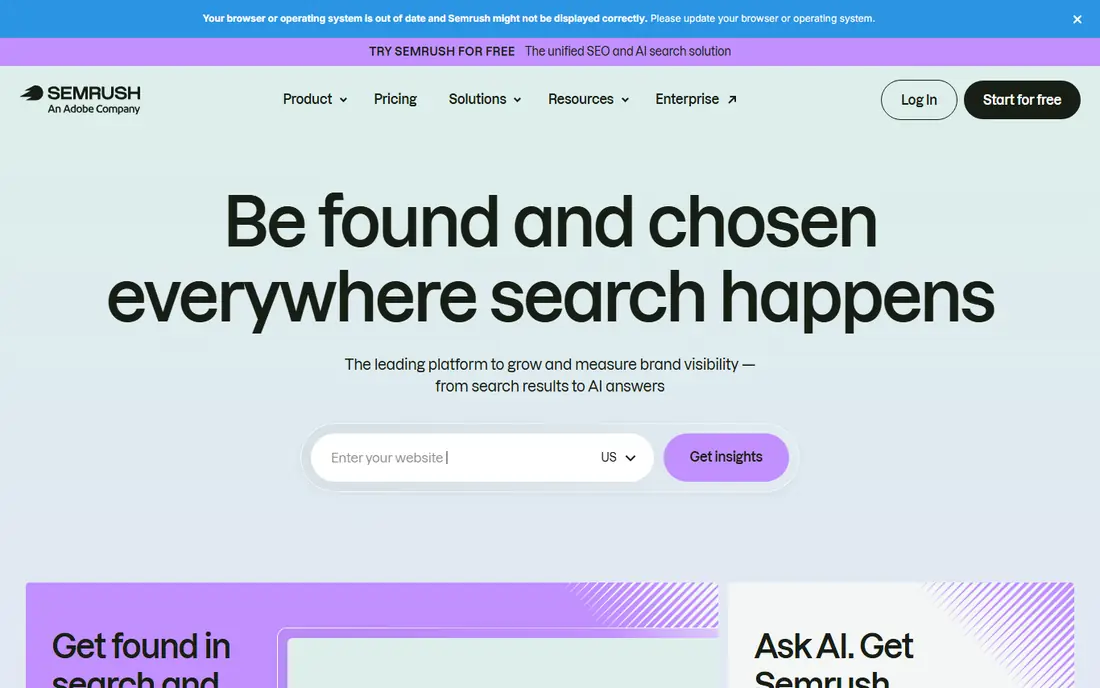
Semrush suits teams that want to see how competitors show up in search and what topics draw attention. You can look up a domain, see its top pages and keywords, and compare that picture with your own site. That view helps a research team spot gaps, such as a topic a rival covers well and you do not cover at all. The Pro plan starts at $139.95 per month, with a trial for new users. That price makes sense for an agency or a marketing team that uses the data weekly. It is harder to justify for a one-off project. Treat traffic figures as estimates, not audited counts, and pair them with your own analytics before you set a target.
- Broad competitor and keyword data
- Traffic and advertising views
- Regular reporting tools
- Price rises fast for small teams
- Some data is estimated, not exact
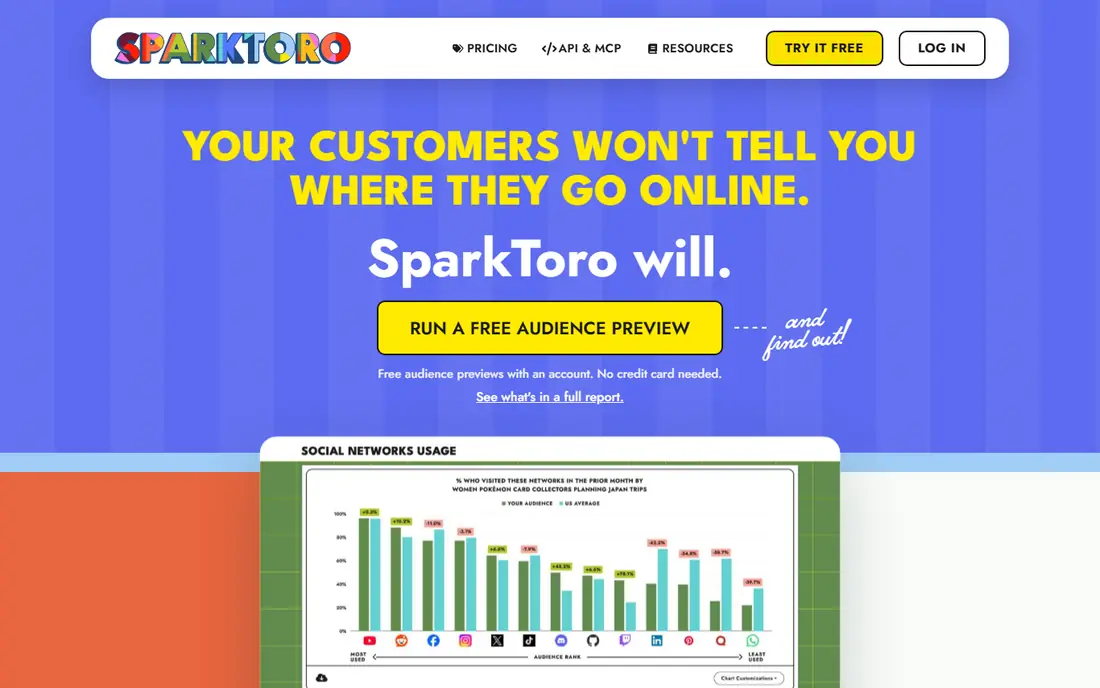
SparkToro answers a different question from Semrush: not what people search for, but who they listen to. You describe an audience, such as people who read a certain site or use a certain phrase in their profile, and SparkToro shows the podcasts, publications, social accounts, and websites that audience follows. That list is gold for outreach, partnerships, and message testing. The free plan lets you run limited searches, which is enough to test whether your audience is visible in the data. Paid plans start at $50 per month. The limit to watch is audience size. A large, clear audience returns a rich profile. A very small or vague audience returns thinner results, so spend time defining the audience before you pay.
- Shows where an audience spends time online
- Simple audience profiles
- Useful for media and influencer planning
- Paid plans start at $50 per month
- Data depth varies by audience size
Attest is built for teams that run consumer research on a regular basis, not for a single quick poll. You can run brand tracking, product tests, and concept checks with samples drawn from its audience panels. The platform guides survey design, which helps a team that knows its business question but does not write surveys every day. Pricing is quote based, so ask for a written quote tied to sample size, countries, and question count before you commit. That structure suits a brand or product team with a research budget and a calendar of studies. A solo founder who needs ten answers this week will find a simpler survey tool cheaper and faster.
- Built for consumer insights and brand tracking
- Guided survey setup
- Results aimed at decision makers
- Pricing is not published as a simple list price
- Best suited to teams with repeat research needs
Brandwatch watches what people say in public across social networks, news, blogs, and forums, then groups those mentions by topic, sentiment, and change over time. That view suits crisis checks, campaign measurement, and trend spotting. You can see a spike in mentions, read the posts behind it, and judge whether it is a real shift or a single viral post. The trade-off is scope and cost. Brandwatch is an enterprise tool with quote-based pricing, and a new team should plan time to set up queries, filters, and dashboards. If you only need to track one brand name on two networks, a smaller listening tool may do the job for less. If you track many brands, languages, and markets, Brandwatch earns its place.
- Large social and web listening coverage
- Sentiment and trend views
- Strong reporting for large teams
- Quote-based pricing
- Setup and training take time
Pollfish fits the team that needs answers this week from a defined group of people. Surveys run inside partner mobile apps, which gives fast access to respondents in many countries. You set targeting, such as age, location, and gender, and results arrive as responses come in. Speed is the strength and the risk. A short, clear survey with plain questions returns clean data fast. A long or confusing survey will lose respondents and muddy the results, so keep it short and test it on colleagues first. Ask for pricing by sample size and targeting before you launch, because costs rise with narrow targeting and larger samples.
- Fast respondent access through mobile apps
- Targeting by demographics
- Quick turnaround for short surveys
- Pricing depends on sample and targeting
- Quality checks matter on short surveys
SurveyMonkey is the safe default for a small team that runs surveys often but does not need a specialist research platform. The builder is simple, templates cover satisfaction, feedback, and event checks, and sharing by link or email takes minutes. Most colleagues can open a report and read it without training. The free plan covers basic surveys with limits on questions and responses. Paid plans add logic, exports, and deeper analysis, so check the plan page for the limits that matter to your study before you send it out. SurveyMonkey works best when you already have your own audience, such as customers or staff, rather than when you need to buy a fresh sample.
- Easy survey builder most teams already know
- Templates for common studies
- Simple sharing and reporting
- Advanced analysis and larger limits sit on paid plans
- AI features vary by plan
Quantilope suits an insights team that runs advanced quantitative work, such as segmentation, pricing studies, or ad testing, and wants those methods in one place. The platform automates much of the charting and analysis that would otherwise take days in a spreadsheet, which leaves the team more time to interpret results. That power comes with a learning curve and quote-based pricing. A team that runs one simple satisfaction survey a year will not need it. A team that runs repeated concept, pricing, and tracking studies will get more value, because the same setup and methods carry across studies and make results easier to compare.
- Advanced methods like segmentation and conjoint in one platform
- Automated charting
- Built for insights teams
- Quote-based pricing
- More setup than a basic survey tool
How we picked these
We compared official feature pages, pricing pages, app-store listings, privacy pages, and public reviews for each tool, and we checked that each homepage loads and matches the product named. We kept tools that cover a distinct research job, from cited web research to surveys, interviews, and listening, and we left out tools that only repackage a chatbot with no research workflow. Prices shown are starting list prices where the vendor publishes them, and we wrote See website where pricing is quote based or could not be verified on the vendor site at the time of writing.
What to check before you pay
Start with the question, not the tool. A desk research question needs a cited search tool. A question about what customers think needs a survey or interview tool. A question about public conversation needs listening. Buying the wrong type first wastes the budget, even if the tool itself is good.
Check the sample and the source
For surveys, ask who answers, how they were recruited, and what quality checks apply. For listening, ask which networks and languages are covered. For AI search, open the cited pages on any figure you plan to quote. A clean report rests on a clean source.
Run a small pilot first
Run one small study, one search brief, or one listening query before you sign an annual plan. Check response quality, export formats, and how long setup really takes. A pilot exposes limits that a sales demo hides, such as export caps or slow support.
Watch the total cost
List price is only part of the cost. Add sample costs for surveys, seats for team tools, and time for setup and training. A cheaper tool that needs weeks of setup can cost more than a pricier tool your team can use on day one.
Frequently asked questions
What is the best ai tool for market research?
There is no single best tool, because market research covers desk research, surveys, and listening. Perplexity suits fast cited desk research, SurveyMonkey suits everyday surveys, and Brandwatch suits large-scale listening. Pick by the question you need to answer first.
What are the best ai market research tools for small teams?
Small teams often do well with Perplexity for desk research plus SurveyMonkey or Pollfish for surveys. That pair covers most early questions at a modest cost, and you can add a listening tool later when public conversation becomes a regular need.
Which is the best ai market research platform for surveys?
Attest and Quantilope suit teams that run repeat consumer or advanced quantitative studies. Pollfish suits fast targeted samples, while SurveyMonkey suits teams that survey their own customers. The best platform depends on sample needs, method depth, and budget.
Are free AI market research tools good enough?
Free plans are good for small checks, such as a cited fact check or a short survey with a small audience. Larger samples, exports, team seats, and advanced methods usually need a paid plan. Test the free plan on a real task before you judge it.
How do I check AI research results before I use them?
Open the cited source, check the date and the publisher, and compare the figure with a second source when the claim matters. For surveys, read the questions and the sample description. If a result cannot be traced to a source or a sample, do not put it in a decision document.
What is the best market research ai tool for competitor research?
Semrush is a strong pick for competitor search and traffic views, and SparkToro adds audience insight that search data misses. Together they show both what competitors rank for and who their audience listens to, which gives a fuller picture than either view alone.
Sources we checked (8)

Online Jobs is an independent blog about careers, online work, learning new skills and the tools that help people earn. More about us.
Keep reading
All posts
n8n Alternatives
n8n alternatives compared for 2026, with Zapier, Make, Activepieces, and more, covering visual builders, code steps, self-hosting, and pricing models.

ZoomInfo Alternatives
The best ZoomInfo alternatives in 2026, compared on price, free plans, data coverage, and which tool fits small teams or large sales teams best in detail.
Yotpo Alternatives
Find cheaper alternatives to Yotpo for reviews and loyalty, with Judge.me, Loox, Stamped, and more compared for Shopify stores in 2026, all in one guide.