Best AI Search Visibility Tools Companies in 2026: 8 Tools Compared

How we put this together: we compare official feature and pricing pages, app store listings, privacy policies and public user reviews. Prices change, so check the provider's site before you pay.
Key takeaways
- Profound is the deepest enterprise option for prompt-level tracking and reporting across AI engines.
- Otterly is the most accessible entry point for small teams that want regular AI visibility monitoring.
- Peec AI suits agencies and mid-market teams that want clean competitor comparisons and unlimited seats.
- Scrunch stands out for persona-level analysis, showing whether different buyer types get different AI answers.
- AthenaHQ is the best first test for many teams, because it offers a free tier with monthly credits.
Quick comparison
| Name | Who it suits | Starting price | Free option | |
|---|---|---|---|---|
 Profound | Enterprise prompt tracking | See website | No | Visit |
 Peec AI | Agencies and competitor tracking | See website | No | Visit |
 Otterly | Low-cost entry point | See website | No | Visit |
 Scrunch | Persona and brand safety analysis | See website | No | Visit |
 AthenaHQ | Trying AI visibility free first | See website | Yes | Visit |
 Semrush AI Visibility Toolkit | Existing Semrush users | See website | No | Visit |
 Ahrefs Brand Radar | SEO-led AI research | See website | No | Visit |
 Goodie AI | Small teams that want action lists | See website | No | Visit |
The best AI search visibility tools companies
AI search visibility tools track how your brand appears when people ask ChatGPT, Gemini, Perplexity, Copilot, or Google AI Overviews a question, rather than how you rank on a classic results page. They record mentions, citations, sentiment, and competitor share, so you can see whether AI answers recommend you, ignore you, or cite a rival. We compared official feature pages, pricing pages, and public reviews, and we focused on engine coverage, prompt handling, citation detail, and price fit.
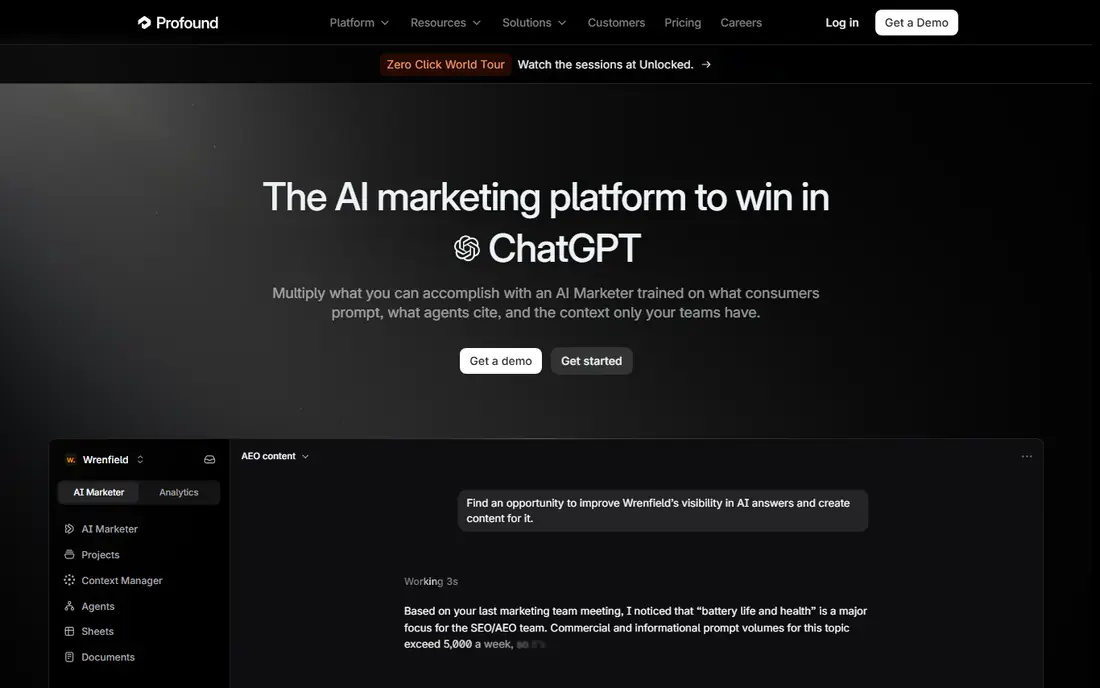
Profound is the tool most often named for serious, enterprise-scale AI visibility work. It tracks prompts across major AI engines, surfaces how answers mention and cite your brand, and turns that into reporting a large marketing team can actually use. If you manage many prompts, many markets, and many stakeholders, that depth matters.
The trade-off is cost and complexity. Profound is not a casual trial tool, and you will need to design a sensible prompt set before the data becomes useful. For a large brand that needs board-level reporting and high prompt volume, it is the strongest pick here. For a small team with twenty prompts, a cheaper tracker will give you most of the value.
- Deep prompt-level analytics
- Wide engine coverage
- Reporting suited to large teams
- Priced for enterprise budgets
- Setup and prompt design take time
- Smaller teams may not use its full depth
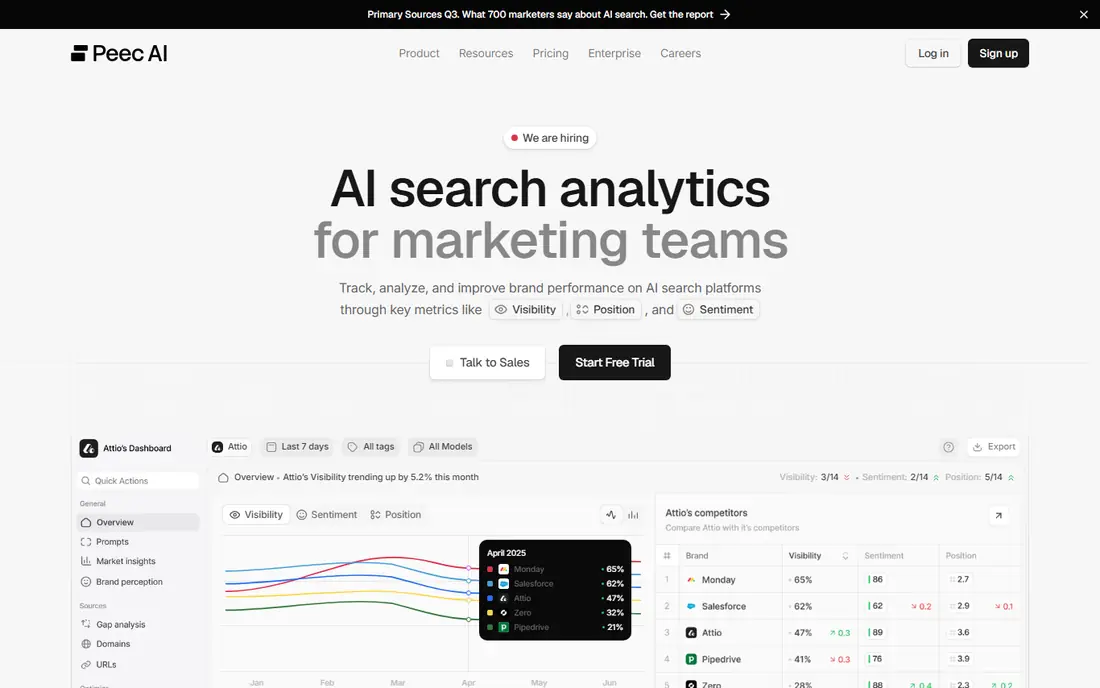
Peec AI is built for teams that want to watch rivals as closely as themselves. Its dashboards make it easy to compare your brand against three or four competitors on the same prompts, which is exactly the view an agency needs for a client report. Unlimited seats also help, because clients and colleagues can look at the same data without seat-count arguments.
Engine coverage needs checking on your plan, since some engines sit behind higher tiers or add-ons. US buyers should also confirm the price in dollars, as Peec AI prices in euros on some pages. If competitor share of voice is your main question, Peec AI is one of the clearest tools for answering it.
- Clean competitor side-by-side views
- Unlimited seats on plans
- Straightforward daily tracking
- Extra engines can cost more
- Prompt limits vary by plan
- European pricing needs currency checking for US buyers
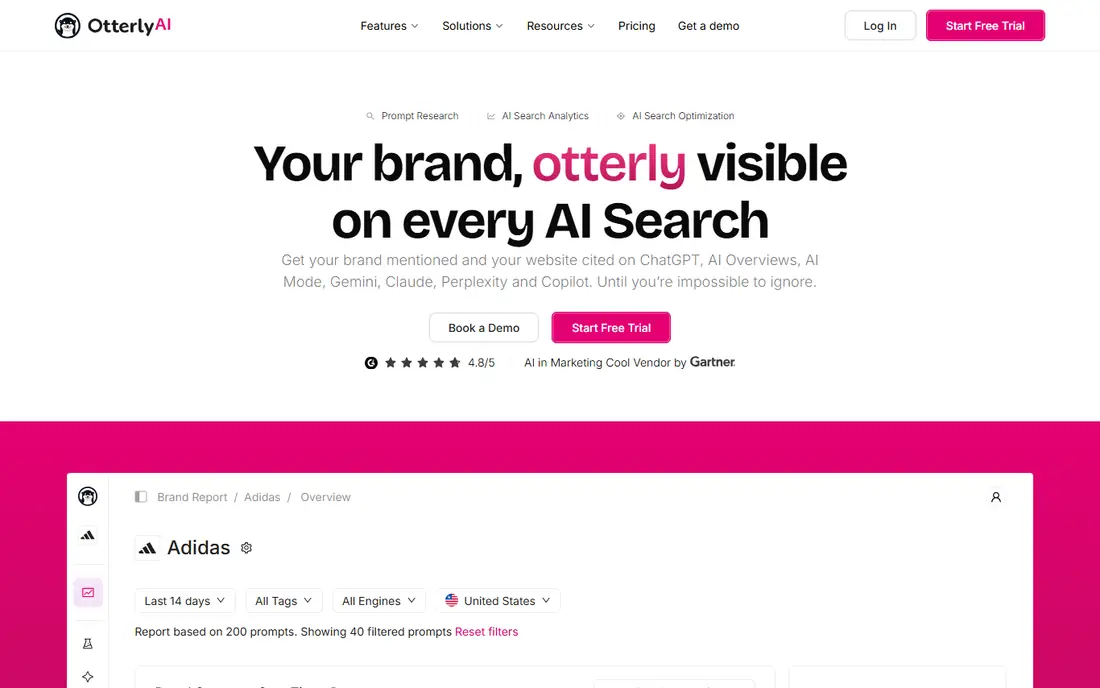
Otterly is the sensible first paid step for a small team. It monitors the core engines, tracks citations, and adds a content audit with recommendations, so you get more than a mention count for your money. Its entry price has been the lowest credible option in several 2026 comparisons, which makes it easy to justify as a test.
Entry plans do limit prompts, so a team tracking hundreds of questions will need a higher tier or a different tool. Google AI Mode coverage also needs checking on your plan, as it has been offered as an add-on in some tiers. For a small business that wants to know, week by week, whether AI answers mention it at all, Otterly is the best value starting point.
- Low entry price for ongoing monitoring
- Covers core AI engines
- Content audit and recommendations included
- Prompt limits on entry plans
- AI Mode may need an add-on
- Less enterprise depth than Profound or Scrunch
Scrunch answers a question other trackers often miss: do different kinds of buyers get different AI answers about your brand? By testing prompts through different personas and customer journeys, it shows whether an answer changes for a first-time buyer, a technical buyer, or a price-sensitive shopper. That view is useful for brand teams that care about narrative, not just mention counts.
Scrunch is priced for mid-market and enterprise teams, and its full value depends on thoughtful prompt and persona design. If you only need a simple mention tracker, it is more tool than you need. If you manage brand safety, agency clients, or a complex buyer journey, Scrunch offers analysis the simpler trackers do not.
- Persona-level answer analysis
- Multi-engine monitoring
- Agency workflows and audits
- Enterprise-leaning price
- Setup needs a clear prompt and persona plan
- Smaller teams may find it heavy
AthenaHQ is the best way to test AI visibility before you spend. Its free tier gives you monthly credits rather than a short trial window, so you can run a small prompt set, see real answers, and judge whether the data is useful for your team. Paid plans then add broader coverage and recommendations for improving how AI engines describe you.
Free credits will not cover a large prompt set, and paid entry is higher than Otterly, so AthenaHQ is a test-first tool rather than the cheapest long-term tracker. If you are unsure whether AI visibility data will change any decision, start here, run your most important ten or twenty prompts, and only then compare paid plans.
- Genuine free tier with monthly credits
- Broad model coverage
- Recommendations alongside tracking
- Paid plans are mid-market priced
- Free credits limit prompt volume
- Newer brand than Semrush or Ahrefs
Semrush AI Visibility Toolkit
Who it suits: Existing Semrush users
Semrush AI Visibility Toolkit makes sense if your team already lives in Semrush. It tracks brand mentions across AI engines, adds sentiment and competitor context, and sits next to your existing keyword, backlink, and site audit data. The AI Search Site Audit is a useful extra, because it checks whether AI crawlers can actually reach and read your pages.
The catch is that it is an add-on, not a standalone product, so total cost depends on your Semrush plan plus the toolkit fee, and prompt allowances are limited per domain. A team with no Semrush history will usually get better value from a dedicated tracker. A team already paying for Semrush should test the toolkit before buying a second platform.
- AI visibility next to classic SEO data
- Site audit for AI crawler access
- Familiar workflow for SEO teams
- Paid add-on on top of Semrush
- Prompt limits per domain
- Less focused than a dedicated GEO tool
Ahrefs Brand Radar suits researchers more than weekly trackers. Its large prompt database helps you discover how people actually ask questions in your category, and citation data shows which pages AI engines reference. For an SEO team that already uses Ahrefs for keywords and links, that research depth is a real advantage.
Cost is the watch point: the AI visibility features sit on higher tiers and add-ons, so the headline Ahrefs price is not the full price for this use case. If your main need is a simple weekly mention report, a dedicated tracker is simpler and cheaper. If you need market-wide AI research alongside SEO data, Brand Radar is worth a careful pricing check.
- Very large prompt database for research
- Citation discovery
- Strong fit for SEO-led teams
- Full AI visibility features need higher tiers or add-ons
- Total cost can rise sharply
- Less of a pure tracking workflow
Goodie AI tries to close the gap between tracking and fixing. Instead of only showing where you appear in AI answers, it gives research, monitoring, optimisation steps, and attribution in one workflow, which suits a small team that has no separate GEO specialist. Clear action lists help a busy marketer decide what to publish or fix next.
Its entry price sits above the cheapest trackers, so a team on a tight budget should compare it directly with Otterly and AthenaHQ. Action lists are also only as good as the prompts you feed the tool. If you want a tracker that tells you what to do next, not just what happened, Goodie AI is a practical mid-priced option.
- End-to-end tracking plus optimisation guidance
- Clear action lists for small teams
- Research and monitoring in one tool
- Entry price is higher than Otterly
- Smaller brand with less public pricing history
- Action quality depends on prompt design
How we picked these
We compared official feature pages, pricing pages, and public reviews, and we checked engine coverage, citation detail, prompt limits, and whether a tool helps you act or only report. Prices in this category change often and are often quoted per domain, per prompt, or per engine, so we wrote See website where a single starting price would mislead. We also favoured tools with a clear free tier or trial path, because a team should test AI data on its own prompts before committing.
How to choose an AI visibility tool
Start with your prompt list, not the tool. Write down the twenty to fifty questions your buyers actually ask, including comparison questions where a rival might be recommended instead of you. A tool that tracks the wrong prompts will give you neat charts and no useful decisions.
Next, check engine coverage for your market. If most of your buyers use ChatGPT and Google AI answers, coverage of those two matters more than a long list of minor engines. Then check citation detail: you need to know which pages get cited, not just whether your brand is mentioned, because citations point to the content you should improve.
Finally, test the workflow for a month. Can one person run the tracker, read the report, and turn it into two or three content fixes? If the answer is yes, the tool fits. If the report is impressive but nobody acts on it, a simpler and cheaper tracker is the better buy.
Frequently asked questions
What is AI search visibility?
AI search visibility is how often, and how favourably, AI engines mention or cite your brand when they answer a question. It covers ChatGPT, Gemini, Perplexity, Copilot, and Google AI Overviews and AI Mode, and it matters because more buyers now get answers without clicking a classic search result.
Which AI visibility tool is best for a small business?
Otterly is the best low-cost starting point for a small business, while AthenaHQ is the best free first test thanks to its monthly credits. A small team should start with one of those, track its most important prompts for a month, and only move to a larger tool if the data changes real decisions.
Do I still need classic SEO if I track AI visibility?
Yes, AI engines cite and summarise web pages, so classic SEO still matters for the content they draw on. Tools like Semrush and Ahrefs help here, because they connect AI visibility data to the pages, links, and technical fixes that influence what AI answers can cite.
How many prompts should I track?
Start with twenty to fifty prompts that reflect real buyer questions, including comparison and recommendation questions. Tracking hundreds of prompts too early creates noise, while tracking only your brand name misses the category questions where AI engines choose between you and a rival.
Can an AI visibility tool improve my rankings in AI answers?
A tool can show you where you are missing, which pages get cited, and what content to improve, but it cannot force an AI engine to recommend you. Improvement comes from clearer pages, better facts, stronger citations, and content that directly answers the prompt, not from the tracker alone.
What is the difference between GEO and AEO?
GEO, or generative engine optimisation, focuses on being cited and recommended in AI-generated answers, while AEO, or answer engine optimisation, is the broader practice of optimising for direct answers in search and assistants. In practice, most tools on this list cover both, and the label matters less than prompt coverage and citation detail.
Sources we checked (8)

Online Jobs is an independent blog about careers, online work, learning new skills and the tools that help people earn. More about us.
Keep reading
All posts
n8n Alternatives
n8n alternatives compared for 2026, with Zapier, Make, Activepieces, and more, covering visual builders, code steps, self-hosting, and pricing models.

ZoomInfo Alternatives
The best ZoomInfo alternatives in 2026, compared on price, free plans, data coverage, and which tool fits small teams or large sales teams best in detail.

Workday Alternatives
We compared the best workday alternatives for HR, payroll, and global hiring, from BambooHR and Gusto to Rippling, Deel, and HiBob for growing teams in 2026.