Best AI Search Checking Tools in 2026: 8 Tools Compared


enterprise AI visibility and citations · Starting price: $499 per month
How we put this together: we compare official feature and pricing pages, app store listings, privacy policies and public user reviews. Prices change, so check the provider's site before you pay.
Key takeaways
- An AI search checking tool is a rank tracker for AI answers: it sends fixed prompts to engines and records mentions, citations, and competitors.
- Profound suits enterprise scale, Peec AI suits mid-market agencies, and Otterly.AI suits small teams starting on a budget.
- Engine coverage is the key price driver: entry plans often cover only two or three engines, with the rest as add-ons.
- Prompt choice matters more than dashboard polish, since a poor prompt set produces a clean chart about the wrong questions.
Quick comparison
| Name | Who it suits | Starting price | Free option | |
|---|---|---|---|---|
| Profound | enterprise AI visibility and citations | $499 per month | Free trial | Visit |
 Peec AI | mid-market brands and agencies | $95 per month | Free trial | Visit |
 Otterly.AI | startups and small agencies | $29 per month | Free trial | Visit |
 Semrush AI Visibility Toolkit | SEO teams wanting one platform | $99 per month | Free trial | Visit |
 Ahrefs Brand Radar | existing Ahrefs users and research | $199 per month | No | Visit |
 Scrunch | AI visibility with content action | See website | Free trial | Visit |
 Rankeo | small businesses needing SEO plus GEO | $39 per month | Yes | Visit |
 MentionBird | mention tracking with ranking advice | $79 per month | Free trial | Visit |
The best AI search checking tools
AI search checking tools answer a new question for marketers: when buyers ask an AI engine about your category, does it mention your brand, cite your pages, and present you fairly. These tools send a fixed set of prompts to engines such as ChatGPT, Gemini, Perplexity, and Google AI Overviews on a schedule, then record mentions, citations, sentiment, and competitor presence. The list below compares tools by engine coverage, prompt volume, price, and whether they help you act on what they find.
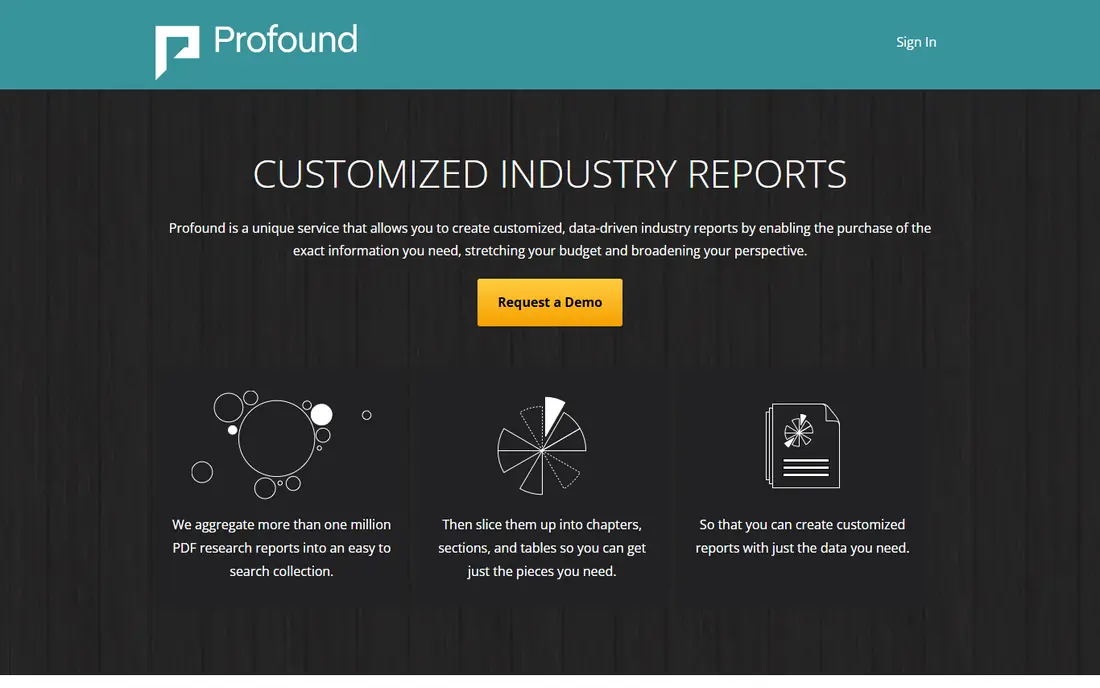
Profound is built for enterprise teams that need to track how brands appear across many AI answer engines at scale. Its dashboards show mentions, citations, sentiment, and share of voice, with prompt libraries large enough for multi-brand programs. We would pair it with a clear weekly routine rather than relying on the tool alone to carry progress.
The catch is price and tiering: the entry plan covers only part of the engine range, so most teams need a higher tier for full benchmarking. Pricing also deserves a careful check before you commit, because the headline price and the price for the features you actually need can differ. We suggest starting on the free option or the shortest paid term where one exists, testing it with real work for two weeks, and only then deciding whether a longer plan makes sense.
- Citation and mention tracking across engines
- Large prompt libraries
- Enterprise reporting
- Entry tier is limited
- Price rises sharply for full coverage
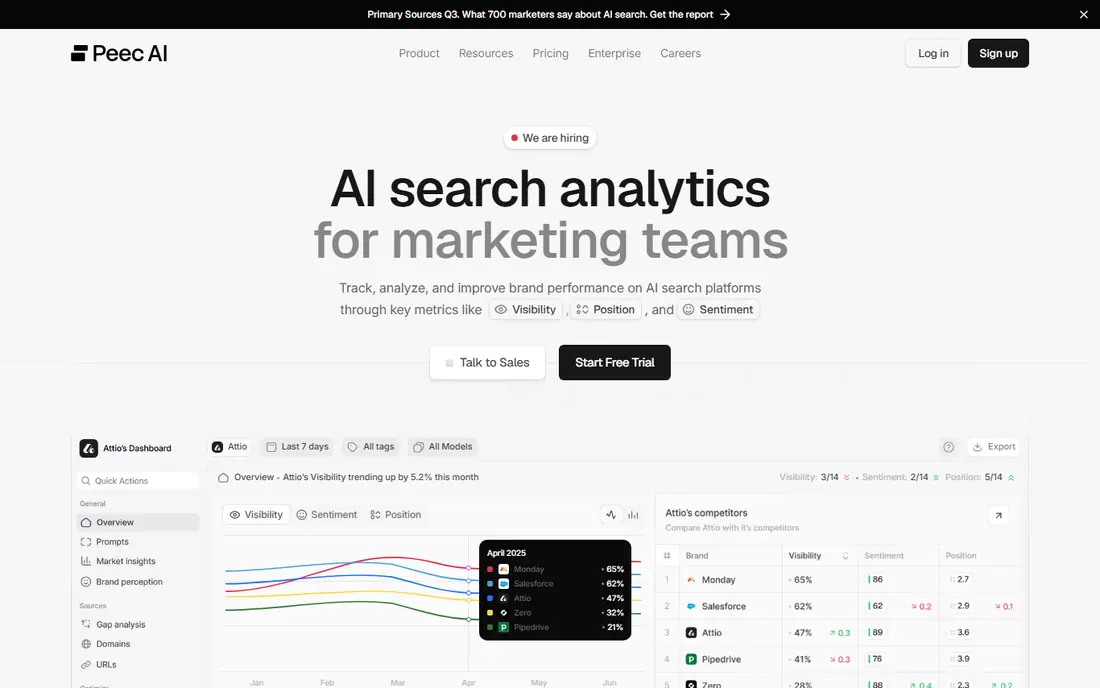
If your main goal is mid-market brands and agencies, Peec AI deserves a close look. Peec AI focuses on prompt-level analytics for brands and agencies, with competitor benchmarking and sentiment tracking in one dashboard. Teams can pick engines to track, compare visibility against rivals, and spot which sources drive competitor mentions. We would pair it with a clear weekly routine rather than relying on the tool alone to carry progress.
The catch is engine choice: self-serve plans let you pick three models, so teams that need wide coverage should budget for add-ons. Pricing also deserves a careful check before you commit, because the headline price and the price for the features you actually need can differ. We suggest starting on the free option or the shortest paid term where one exists, testing it with real work for two weeks, and only then deciding whether a longer plan makes sense.
- Competitor citation share
- Sentiment tracking
- Unlimited seats on paid plans
- Self-serve plans cover three engines
- Adding engines raises price
Otterly.AI stands out for learners and teams who want startups and small agencies. Otterly.AI offers the lowest-cost credible start for AI visibility, with brand mention and citation tracking plus page audits. Its audits point to pages that may help AI engines cite a brand, which gives small teams a next step beyond a chart. We would pair it with a clear weekly routine rather than relying on the tool alone to carry progress.
The catch is breadth: entry coverage is narrow, and each extra engine is an add-on, so total cost grows with coverage. Pricing also deserves a careful check before you commit, because the headline price and the price for the features you actually need can differ. We suggest starting on the free option or the shortest paid term where one exists, testing it with real work for two weeks, and only then deciding whether a longer plan makes sense.
- Low entry price
- ChatGPT, Perplexity, and AI Overviews tracking
- GEO page audits
- Only a few engines at entry level
- Add-ons needed for Claude, Gemini, and AI Mode
Semrush AI Visibility Toolkit
Who it suits: SEO teams wanting one platform
For many people, Semrush AI Visibility Toolkit is the practical choice for seo teams wanting one platform. Semrush adds AI visibility to a familiar SEO platform, so teams can link AI mentions to search, content, and technical data. Its large prompt database helps teams see which questions buyers ask and which brands AI engines surface for them. We would pair it with a clear weekly routine rather than relying on the tool alone to carry progress.
The catch is scope: it is priced per domain and works best for teams already using Semrush for SEO, rather than as a standalone tracker alone. Pricing also deserves a careful check before you commit, because the headline price and the price for the features you actually need can differ. We suggest starting on the free option or the shortest paid term where one exists, testing it with real work for two weeks, and only then deciding whether a longer plan makes sense.
- Large prompt database
- ChatGPT, Gemini, Perplexity, and AI Mode coverage
- Links to SEO data
- Price is per domain
- Needs a Semrush plan context for full value
Start with what Ahrefs Brand Radar does well. Ahrefs Brand Radar suits research-heavy teams that want AI mentions connected to the link and content data Ahrefs already collects. That link helps explain why a competitor gets cited, not just that it does, which makes the next content step clearer. We would pair it with a clear weekly routine rather than relying on the tool alone to carry progress.
The catch is cost structure: Brand Radar is an add-on per index, on top of a base plan, so total price needs careful calculation. Pricing also deserves a careful check before you commit, because the headline price and the price for the features you actually need can differ. We suggest starting on the free option or the shortest paid term where one exists, testing it with real work for two weeks, and only then deciding whether a longer plan makes sense.
- AI mentions linked to backlink data
- Share of voice by demand
- Web, YouTube, and Reddit signals
- Add-on price plus a base Ahrefs plan
- No free trial
Scrunch pairs AI visibility tracking with content suggestions, so teams get a recommended next article or page update, not just a score. Its persona-based prompts help teams test how different buyer types see a brand in AI answers. We would pair it with a clear weekly routine rather than relying on the tool alone to carry progress.
The catch is transparency: pricing is not fully public, so teams should request a quote and a trial with their own brand prompts before committing. Pricing also deserves a careful check before you commit, because the headline price and the price for the features you actually need can differ. We suggest starting on the free option or the shortest paid term where one exists, testing it with real work for two weeks, and only then deciding whether a longer plan makes sense.
- AI search monitoring plus content recommendations
- Competitor tracking
- Persona-based prompts
- Pricing is not fully public
- Newer vendor with smaller track record
There is a clear reason Rankeo keeps appearing on shortlists for small businesses needing seo plus geo. Rankeo suits small businesses and freelancers who need SEO fixes and AI visibility together, without paying for two tools. Its dashboard combines a site audit, an AI engine probe, and a schema generator, which covers the basics for a small site in one place. We would pair it with a clear weekly routine rather than relying on the tool alone to carry progress.
The catch is scale: reporting and prompt volume suit small portfolios, so larger agencies will likely need a higher tier or a specialist tool. Pricing also deserves a careful check before you commit, because the headline price and the price for the features you actually need can differ. We suggest starting on the free option or the shortest paid term where one exists, testing it with real work for two weeks, and only then deciding whether a longer plan makes sense.
- SEO audit plus AI visibility in one dashboard
- Five-engine probe
- Schema generator
- Enterprise reporting is lighter than Profound
- Free tier is limited
Consider MentionBird first if mention tracking with ranking advice matters most to you. MentionBird tracks AI answers and ranking advice across eight engines, with competitor mention rates and position data. Its advice layer tries to turn a visibility gap into a concrete page or content change, which helps teams that know they are behind but not why. We would pair it with a clear weekly routine rather than relying on the tool alone to carry progress.
The catch is setup: results depend heavily on choosing the right prompts, so teams should invest time in prompt selection at the start. Pricing also deserves a careful check before you commit, because the headline price and the price for the features you actually need can differ. We suggest starting on the free option or the shortest paid term where one exists, testing it with real work for two weeks, and only then deciding whether a longer plan makes sense.
- Eight-engine tracking
- Competitor mention rates
- Data-backed ranking advice
- Advice quality depends on prompt setup
- Mid-market price for small teams
How we picked these
We compared official feature pages, pricing pages, and product documentation for each tool, and we checked public reviews where they clarified engine coverage, prompt limits, and trial terms. We gave weight to engine breadth, citation detail, competitor benchmarking, and honest pricing, and we used See website where a vendor does not publish a simple starting price. Because this category changes fast, confirm engine lists and prompt limits on the vendor page before buying.
How to set up an AI search check that gives useful answers
Start with prompts your buyers actually ask, not generic brand queries. Include comparison questions, problem questions, and best-of questions for your category, plus a few prompts for each main competitor. Next, choose engines by audience: ChatGPT and Google AI Overviews matter for most consumer and business buyers, while Perplexity, Gemini, and Copilot add coverage for research-heavy audiences. Run a baseline for two to four weeks before changing content, so you can tell a real shift from normal variation. Then act on citation gaps: improve the pages AI engines cite, add clear facts and comparisons, and fix technical issues that block crawling. Re-check monthly, and treat a single prompt result as a clue, not a verdict.
Frequently asked questions
What is the best AI search checking tool for a small business?
Otterly.AI and Rankeo suit small businesses because entry prices are low and setup is simple. Rankeo adds an SEO audit, which helps if technical fixes are still needed. Small teams should start with a small prompt set and expand only after a baseline is clear.
What are the best AI search checking tools for agencies?
Peec AI and Profound suit agencies, with Peec AI offering unlimited seats and competitor benchmarking at mid-market prices, and Profound offering scale and reporting for enterprise clients. Agencies should check multi-site pricing and client reporting before choosing. Prompt volume per client is the key cost driver.
How do AI search checking tools work?
They send a fixed set of prompts to AI engines on a schedule, then record whether your brand is mentioned, which pages are cited, how sentiment reads, and which competitors appear. That repeated testing turns one-off AI answers into a trend. Results vary by prompt wording, so prompt design matters.
Do I need an AI search tool if I already track SEO rankings?
Traditional rank tracking shows where you appear in search results, but AI answers often cite different pages and present a summary without a click. An AI checking tool shows that answer layer, which SEO tools do not cover fully. Teams that depend on AI-driven discovery usually need both views.
Can a free AI search checking tool be enough?
A free tier can baseline whether AI engines know your brand at all, but free plans usually limit prompts, engines, and history. Paid plans suit ongoing tracking, competitor comparison, and reporting. Start free to validate the need, then pay for the coverage you actually use.
Sources we checked (8)

Online Jobs is an independent blog about careers, online work, learning new skills and the tools that help people earn. More about us.
Keep reading
All posts
Moz Pro Alternatives
Compare Moz Pro alternatives for SEO, from free tools to full suites, including Semrush, Ahrefs, SE Ranking, and budget options for small teams today.
Constant Contact Alternatives
Compare the best constant contact alternatives for small businesses, creators and nonprofits, with free plans and automation notes to guide your switch.
Best keyword difficulty tool
Looking for the best keyword difficulty tool? We compare 9 SEO tools on difficulty scores, SERP data, price, and ease of use for sites of all sizes in 2026.