Best AI Sales Enablement Software in 2026: 8 Tools Compared

How we put this together: we compare official feature and pricing pages, app store listings, privacy policies and public user reviews. Prices change, so check the provider's site before you pay.
Key takeaways
- Seismic, Showpad, and Mindtickle suit larger sales teams that need content control, training, and coaching in one system.
- Spekit and Allego suit teams that want answers and learning inside the tools reps already use each day.
- Gong suits teams that want coaching from real calls, while HubSpot suits smaller teams that want enablement inside a CRM they already use.
- Most enterprise tools are quote based, so get a written quote tied to user count, content volume, and AI features before you compare.
Quick comparison
| Name | Who it suits | Starting price | Free option | |
|---|---|---|---|---|
 Seismic | Enterprise content enablement | See website | No | Visit |
 Showpad | Buyer experience and content | See website | No | Visit |
 Mindtickle | Training and readiness | See website | No | Visit |
 Spekit | In-workflow answers and learning | See website | No | Visit |
 Allego | Learning and coaching in one app | See website | No | Visit |
 Gong | Call coaching and deal insight | See website | No | Visit |
 Salesloft | Sales engagement and cadences | See website | No | Visit |
 HubSpot Sales Hub | Small team enablement in CRM | See website | Yes | Visit |
The best AI sales enablement software
AI sales enablement software helps reps find the right content, prepare for calls, practice pitches, and follow up with buyers, without leaving their daily workflow. The tools below differ in focus: some lead with content, some with training, and some with call insight. We compared official feature pages, pricing pages, and public reviews.
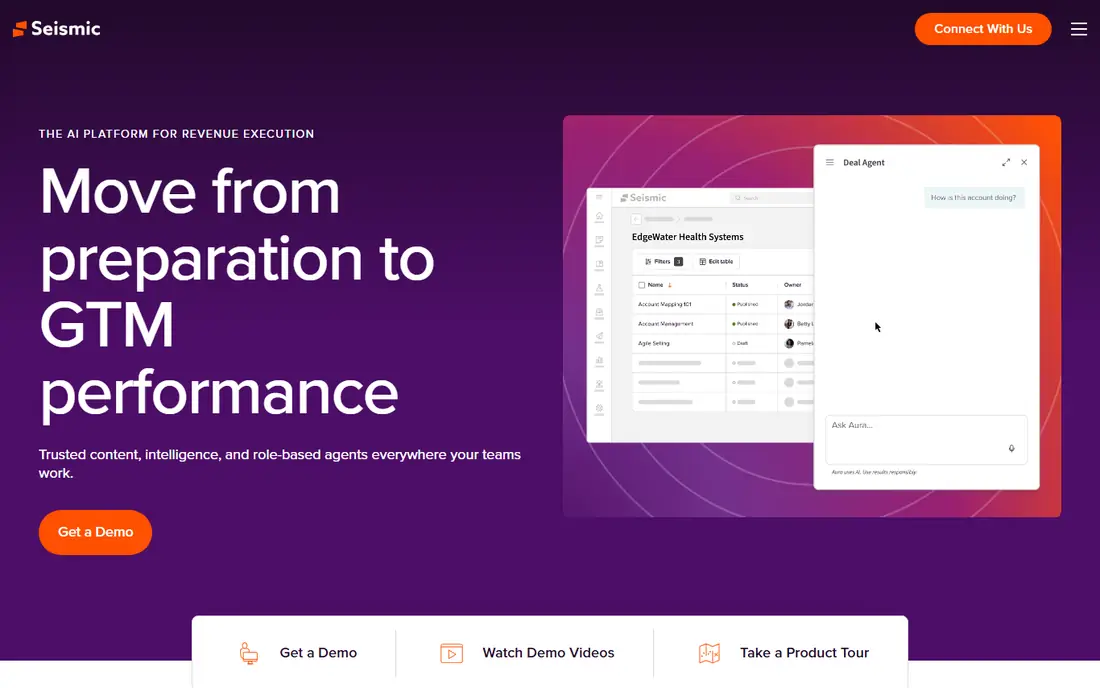
Seismic suits a large sales team that struggles to find the right deck, case study, or one-pager before a call. Content lives in a governed library with permissions and version control, and AI recommendations surface material that fits the deal stage, industry, and buyer role. Reps can personalize content for a buyer without breaking brand rules. The trade-off is scope. Seismic is an enterprise purchase with quoted pricing, and a team needs owners for content, permissions, and integrations. That work pays off when hundreds of reps use the same library daily. A ten-person team with a small content set may find a lighter tool faster to adopt.
- Strong content management and personalization
- AI content recommendations
- Broad CRM and app integrations
- Quote-based enterprise pricing
- Setup and governance take planning
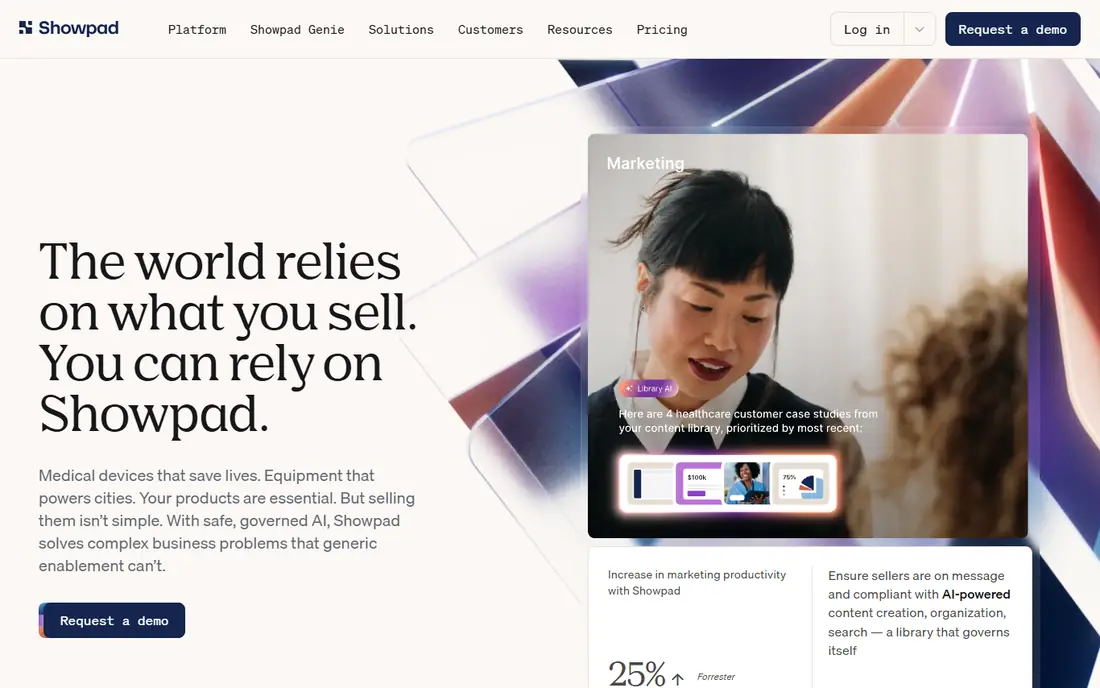
Showpad fits a B2B team that wants buyers to have a clear, branded place to review content after a call. Reps share decks, videos, and documents in a shared space, track what each buyer opens, and follow up based on real engagement rather than guesswork. Coaching features help managers review practice and live performance. The catch is content upkeep. A shared space only helps when content is current, tagged well, and easy to find. Plan who owns each content type and how often it is reviewed. Pricing is quoted, so ask for a quote tied to users, content volume, and coaching seats before you sign.
- Strong buyer-facing shared spaces
- Content analytics
- Coaching tools for managers
- Quote-based pricing
- Value depends on content quality and upkeep
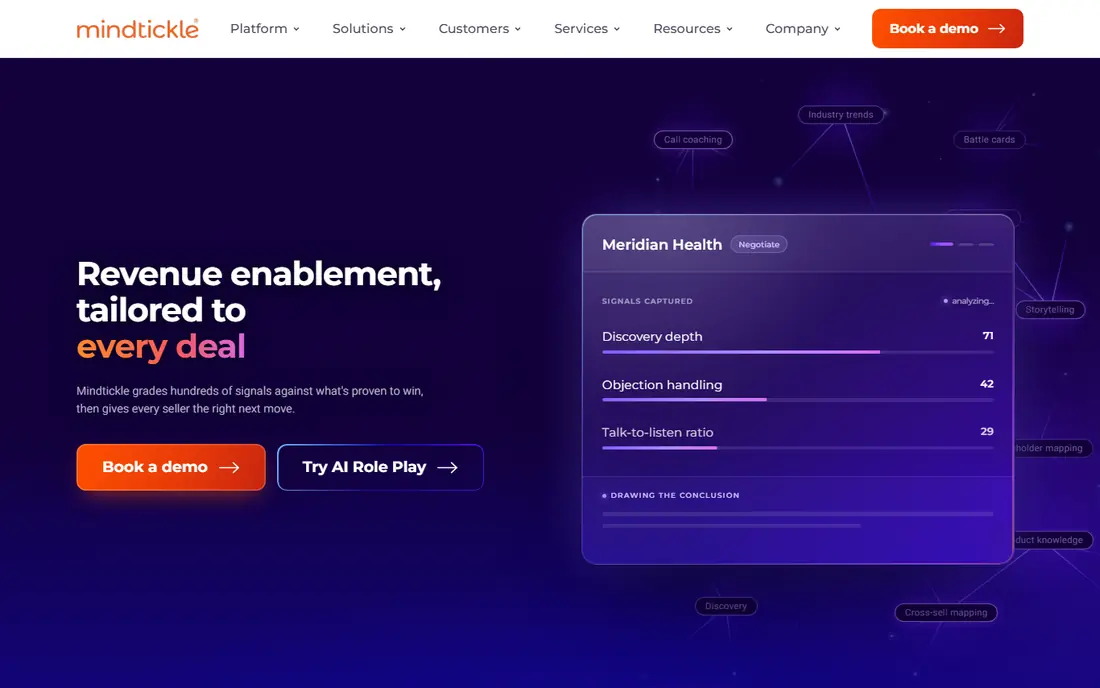
Mindtickle suits a revenue team that needs to train, certify, and coach reps at scale. Learning paths, quizzes, and certifications check product knowledge, while AI role play lets reps practice pitches and handle objections with instant feedback. Managers see readiness scores by rep, team, and topic, which helps target coaching. That depth suits enterprises with onboarding cohorts and regular product launches. A small team that mainly needs a content library will find Mindtickle more than needed. Pricing is quoted by team size, so confirm what is included for role play, coaching, and content seats in the quote.
- Strong training, certification, and AI role play
- Readiness scoring
- Built for large revenue teams
- Quote-based pricing
- Heavier than a simple content library
Spekit fits a team whose reps waste time searching for answers across docs, drives, and chat threads. The AI Sidekick surfaces approved answers, recommended content, and next steps inside the tools reps already use, grounded in a governed library with ownership and version history. Deal Rooms give buyers a single place to review material and track next steps. The risk is stale source content. If the library holds old pricing or retired decks, the AI will surface old answers with confidence. Assign owners and review dates for each key document. Pricing is quoted, so ask how Sidekick, learning paths, and Deal Rooms are priced per user.
- AI Sidekick answers inside Salesforce, Gmail, Slack, and other tools
- Governed content library
- Deal Rooms for buyers
- Quote-based pricing
- Value depends on keeping source content current
Allego suits a team that wants onboarding, ongoing learning, and coaching in one app rather than three separate tools. Reps complete learning paths, practice pitches by video, receive manager feedback, and find content in the same place. That single app helps field teams who work mainly from a phone. The trade-off is planning. Allego works best when enablement defines learning paths by role and stage, not when content is uploaded without structure. Pricing is quoted, so confirm user tiers, practice features, and content limits. Allego earns its place when coaching frequency and onboarding speed matter as much as content access.
- Combines learning, content, and collaboration
- Practice and coaching tools
- Mobile-friendly for field teams
- Quote-based pricing
- Setup needs a clear learning plan
Gong fits a team that wants coaching based on real calls, not on what reps report after calls. It records and transcribes calls where consent and local rules allow, flags deal risks, and shows talk patterns, topics, and next steps. Managers can coach a specific moment in a call, and reps can learn from calls that closed well. Gong is not a full content library, so pair it with a content tool if reps also struggle to find decks. Privacy and consent rules matter here: check recording laws for each region and set clear policies before you roll it out. Pricing is quoted, so ask for per-user pricing and what AI features are included.
- Call recording and AI insight from real conversations
- Deal warnings
- Coaching based on actual calls
- Quote-based pricing
- Needs call volume to show full value
Salesloft suits an outbound team that runs structured cadences across email, calls, and social touches. Reps follow a clear sequence, managers see reply and meeting rates, and AI features help prioritize accounts and draft follow-ups. CRM sync keeps activity in the system of record. The limit is focus. Salesloft leads with engagement, not with governed content libraries or deep training paths. A team that needs both should pair Salesloft with a content or learning tool, or pick a broader platform. Pricing is quoted, so confirm seat types for reps, managers, and admin users.
- Cadence and engagement tools for outbound teams
- AI help with messaging and prioritization
- CRM sync
- Quote-based pricing
- Best for outbound motion, less for content governance
HubSpot Sales Hub suits a smaller team that already uses HubSpot CRM and wants enablement basics without a second enterprise purchase. Free tools cover contact and deal tracking, while paid plans add sequences, email templates, playbooks, document tracking, and calling tools. That single system keeps setup simple. The catch is depth. HubSpot covers everyday enablement well, but a large team that needs advanced content governance, certification, and AI coaching will likely need a specialist tool alongside it. Check the current plan page for which features sit on Starter, Professional, and Enterprise, because that split drives the real cost.
- Free CRM tools to start
- Sequences, templates, and playbooks on paid plans
- Single system for CRM and enablement basics
- Advanced enablement depth is less than specialist platforms
- Costs rise with hubs and seats
How we picked these
We compared official feature pages, pricing pages, and public reviews, and we checked that each homepage loads and matches the product named. We kept tools with a clear AI enablement feature, such as content recommendations, AI coaching, or in-workflow answers, and we left out generic CRMs and chatbots without a sales workflow. Where pricing is quote based, we wrote See website rather than repeating a third-party estimate as a list price.
What to check before you buy
Start with the rep workflow, not the feature list. Watch how a rep prepares for a call today, finds content, follows up, and asks a manager for help. The tool that shortens that workflow wins, even if its feature list is shorter.
Test with real content and real calls
Load your top twenty decks and one-pagers, then ask a rep to find the right one for a sample deal. For coaching tools, test with real calls under your consent policy. A demo with perfect sample content hides search, tagging, and upkeep problems.
Assign content owners early
Name an owner, a review date, and an expiry rule for each key document. AI recommendations are only as good as the library behind them. A tool with stale content will teach reps to ignore it, and that habit is hard to reverse.
Compare total seats, not headline price
Add rep seats, manager seats, admin time, and integration work. A quote that covers reps but not managers, or content but not coaching, will grow after signing. Ask for a full seat and feature breakdown in writing.
Frequently asked questions
What ai platform is best for sales enablement?
The best platform depends on your main gap. Seismic suits enterprise content, Mindtickle suits training and readiness, Spekit suits in-workflow answers, and Gong suits call coaching. Start with the gap that costs the most deals today.
What are the best ai sales enablement tools for small teams?
HubSpot Sales Hub suits small teams that already use HubSpot, and Spekit suits teams that want answers inside daily tools. Larger enterprise platforms may be more than a small team needs, so test a lighter tool first.
What is the best ai sales enablement platform for content management?
Seismic and Showpad lead on content management, with governed libraries, personalization, and buyer engagement tracking. Showpad adds stronger buyer-facing spaces, while Seismic adds broader enterprise content control.
How much does AI sales enablement software cost?
Most enterprise tools in this list are quote based, with pricing tied to users and features. HubSpot offers free CRM tools with paid plans above that. Always get a written quote for your user count and feature set before you compare totals.
Do I need AI coaching or just a content library?
If reps already know the product but cannot find content, a library is enough. If reps struggle with pitch quality, objections, or onboarding speed, coaching and role play add real value. Many teams need both, but buy the library first if content chaos is the bigger problem.
What is the best ai tool for sales enablement for outbound teams?
Salesloft suits outbound teams that run cadences and need engagement tracking. Pair it with a content tool when reps also need governed decks and playbooks, because Salesloft leads with engagement rather than content governance.
Sources we checked (8)

Online Jobs is an independent blog about careers, online work, learning new skills and the tools that help people earn. More about us.
Keep reading
All posts
n8n Alternatives
n8n alternatives compared for 2026, with Zapier, Make, Activepieces, and more, covering visual builders, code steps, self-hosting, and pricing models.

ZoomInfo Alternatives
The best ZoomInfo alternatives in 2026, compared on price, free plans, data coverage, and which tool fits small teams or large sales teams best in detail.
Yotpo Alternatives
Find cheaper alternatives to Yotpo for reviews and loyalty, with Judge.me, Loox, Stamped, and more compared for Shopify stores in 2026, all in one guide.