Best AI Sales Automation Tools in 2026: 9 Products Compared

How we put this together: we compare official feature and pricing pages, app store listings, privacy policies and public user reviews. Prices change, so check the provider's site before you pay.
Key takeaways
- Apollo.io is the best all-in-one starting point for small teams, since it combines contact data, enrichment and sequences in one plan.
- Clay suits teams that need deep research and enrichment workflows, with many data sources combined in one list build.
- Outreach and Salesloft suit larger outbound teams that need cadences, coaching and CRM discipline at scale.
- Gong and Clari add value after the meeting and in the forecast, rather than replacing prospecting tools.
Quick comparison
| Name | Who it suits | Starting price | Free option | |
|---|---|---|---|---|
 Apollo.io | All-in-one prospecting | Free | Yes | Visit |
 Clay | Enrichment workflows | See website | Yes | Visit |
 Outreach | Enterprise sequences | See website | No | Visit |
 Salesloft | Revenue orchestration | See website | No | Visit |
 HubSpot Sales Hub | CRM plus sequences | Free | Yes | Visit |
 Gong | Conversation intelligence | See website | No | Visit |
 Clari | Forecasting and pipeline | See website | No | Visit |
 Lavender | Email coaching | Free | Yes | Visit |
 Lemlist | Personalised cold outreach | See website | Free trial | Visit |
The best ai sales automation tools
AI sales automation covers several different jobs, and buying the wrong type wastes money fast. Some tools find and enrich leads, some run email and call sequences, some coach reps on calls and emails, and some forecast pipeline. The tools below are grouped by the job they do best, so you can build a stack that fits your team size and sales motion rather than buying one tool to do everything badly.
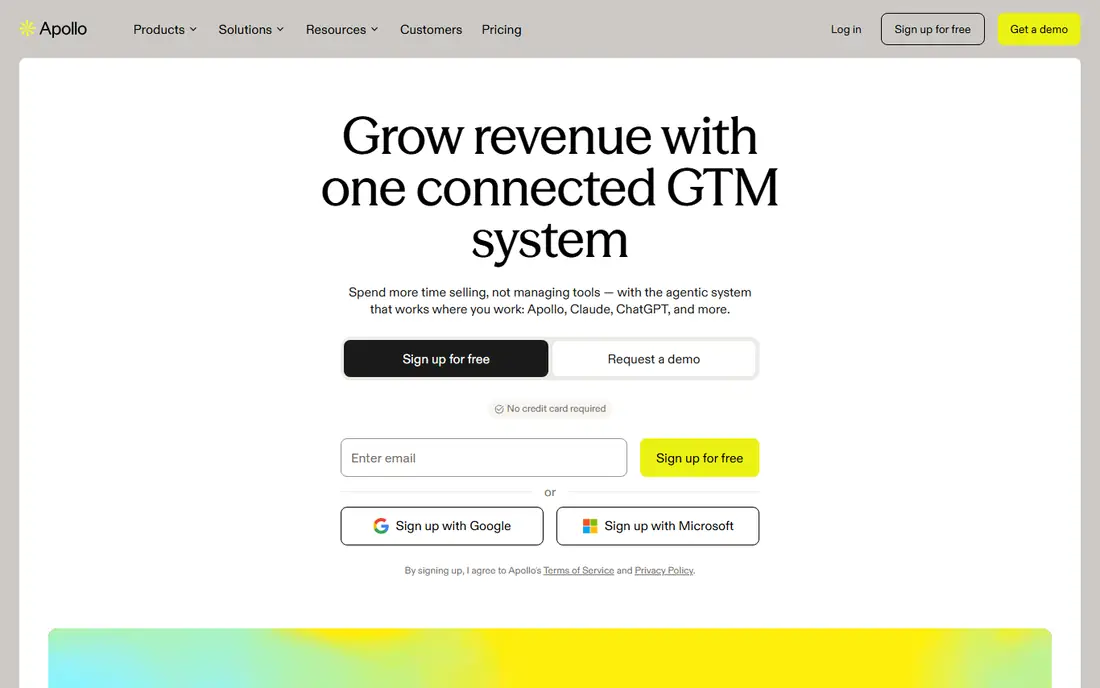
Apollo.io is the easiest place for a small team to start with AI sales automation. You search a large contact database, filter by role, industry, company size and technology, enrich the list, then run email sequences and calls from the same platform. AI features help with lead scoring, research angles and email drafts, while deliverability tools help protect your sending domain.
The catch is data quality. No database is perfect, and Apollo accuracy varies, especially for mobile numbers and for smaller companies outside major markets. Verify key contacts before a large campaign, and watch credit use for exports and mobile numbers. For a team that needs data plus outreach in one affordable plan, Apollo remains the best value starting point.
- Contact database plus sequences in one tool
- Free plan for solo users and small tests
- Built-in dialer and deliverability controls
- Data accuracy varies by region and role
- Credit limits can surprise heavy users
Clay is not a simple database. It is a workspace where you build a lead table, then run enrichment steps in a waterfall, so a lookup falls through to the next provider only when the first one fails. AI steps can research a company, find a relevant trigger, write a personalised opening line, and score the lead, all at the scale of a full list. That makes Clay the tool RevOps teams use to build high quality lists for other tools to send from.
The power comes with complexity. Clay takes time to learn, and enrichment credits add up when you run many providers on large lists. Teams that only need a simple list and a sequence will find Apollo or Lemlist faster. Teams that live or die by list quality, and that send personalised outreach at scale, will find Clay hard to replace.
- Waterfall enrichment across many data providers
- AI research and personalisation at list scale
- Flexible tables for scoring and segmentation
- Learning curve is steep for new users
- Costs rise with enrichment volume
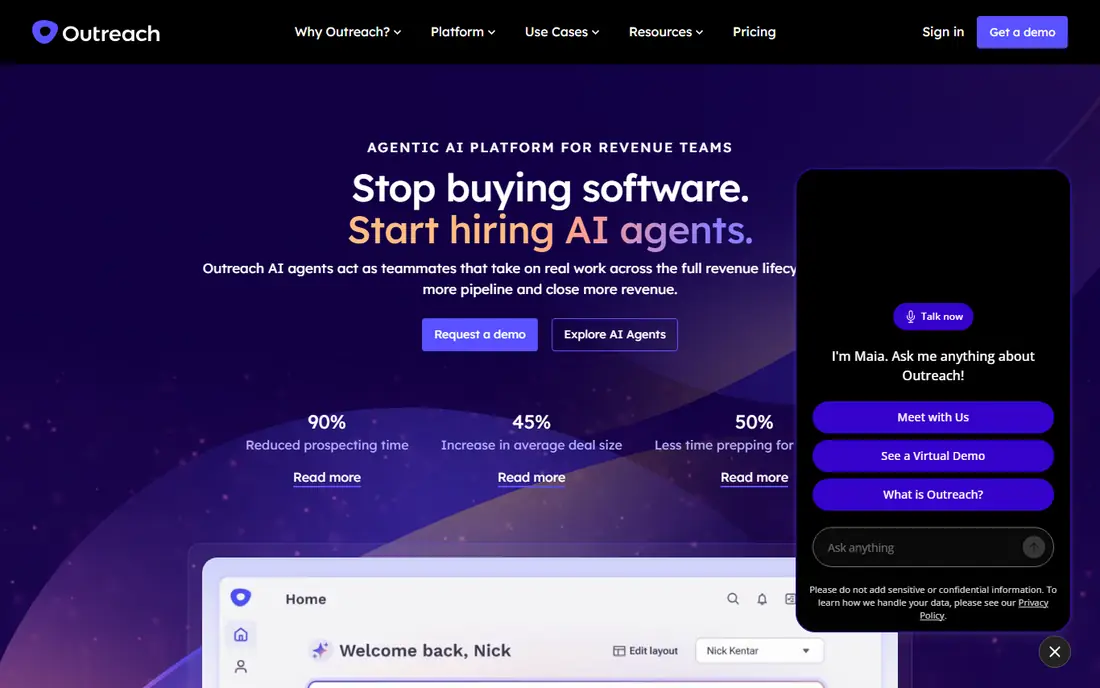
Outreach is the enterprise standard for sales engagement. Reps work through sequences of emails, calls and tasks, managers see activity and pipeline signals in one place, and CRM data stays in sync without manual updates. AI features help with call summaries, deal risk flags and suggested next steps, while governance controls keep large teams on process.
Pricing is quoted, and Outreach suits teams with enough reps to justify the admin work. A five person team may find it heavy, while a 50 person outbound team will use its reporting, coaching and forecasting links fully. If your sales motion is high volume outbound with strict process, Outreach is a proven, if pricey, choice.
- Deep sequencing, tasks and CRM sync
- AI assistance for deal risks and next steps
- Strong reporting for large teams
- Quoted pricing
- Needs admin time to set up well
Salesloft is the main mid-market and enterprise alternative to Outreach. It runs multichannel cadences, tracks calls and meetings, and adds conversation intelligence to coach reps from real calls. Managers can see which cadences work, which reps need coaching, and where deals stall, without pulling data from several tools.
Salesloft has merged with Clari in recent years, which brings forecasting closer to engagement, but also means product plans can change as the combined company settles. Pricing is quoted, so budget time for a sales process. For teams that want a full engagement suite with strong coaching, Salesloft is a credible rival to Outreach, and the choice often comes down to CRM fit and existing contracts.
- Cadences across email, calls and social steps
- Conversation intelligence and coaching analytics
- Strong CRM links
- Quoted pricing
- Now part of a larger group, so roadmaps can shift
HubSpot Sales Hub suits teams that want sales automation inside their CRM, not bolted onto it. Sequences, email templates, meeting booking, deal pipelines and reporting all live in the same record as the contact and company. AI features draft emails, summarise notes and help with prospecting research, without moving data between tools.
The free CRM tier is genuinely useful for small teams, while paid Sales Hub tiers add sequences, automation and reporting depth. Costs grow as seats, contacts and hubs increase, so check the total HubSpot bill, not just the Sales Hub line. For HubSpot based teams, Sales Hub is usually the simplest automation choice, even when a specialist tool is stronger in one narrow job.
- CRM, sequences, inbox and reporting in one system
- AI drafts and summaries inside the CRM
- Free CRM tier for small teams
- Costs rise as you add seats and hubs
- Advanced AI features need higher tiers
Gong does not find leads or send sequences. It records sales calls and meetings, transcribes them, and turns them into coaching and deal insights. Managers can see which deals lack next steps, which competitors appear, and which reps need help with discovery or pricing talk. Reps get post-call summaries and follow-up prompts, which saves note taking time.
Gong needs call volume to pay off. A team with few calls, or managers who never review insights, will waste the licence. A team with five or more reps on regular calls, with managers who coach weekly, will find Gong changes how coaching works. Price is quoted and enterprise level, so treat Gong as a coaching and deal tool, not as a prospecting tool.
- Records and analyses calls and meetings
- Deal risk signals and coaching insights
- Helps managers coach from real conversations
- Quoted enterprise pricing
- Value depends on call volume and manager use
Clari helps sales leaders answer the question that matters at quarter end: will we hit the number, and which deals are at risk. It pulls pipeline data from the CRM, adds activity and engagement signals, and shows forecast, slippage and deal health in one place. Managers can inspect deals, spot missing steps and coach reps on the deals that matter, rather than relying on spreadsheet forecasts.
Clean CRM data is essential. If reps do not update stages, close dates and amounts, Clari will forecast from messy inputs and produce confident but wrong numbers. Clari also sits at enterprise pricing, so it suits leaders whose forecast keeps missing and who need a single source of truth. Smaller teams can often forecast well enough from their CRM alone.
- Pipeline inspection and forecasting in one view
- AI signals for deal risk and slippage
- Links to CRM and engagement data
- Quoted pricing
- Needs clean CRM data to forecast well
Lavender coaches reps while they write cold emails. It scores an email for length, clarity, tone and personalisation, suggests shorter phrasing, and flags mobile preview problems before sending. Reps who send many cold emails a day learn faster with instant feedback than with a weekly review, and managers can see team email habits without reading every draft.
Lavender cannot fix a bad list, a weak offer or poor deliverability, and it works best when paired with a data tool and a sequence tool. The free plan lets solo reps try the coaching, while paid plans add team analytics and deeper personalisation help. For teams whose reply rates are low despite decent lists, Lavender is a cheap, focused fix.
- Real-time email coaching as reps write
- Scores clarity, tone and length
- Works inside Gmail and Outlook
- Coaching alone does not fix bad lists
- Advanced features need paid plans
Lemlist suits small and mid-sized teams that run personalised cold outreach across email and LinkedIn. It adds AI generated personalisation, image and video personalisation, inbox warm-up and deliverability checks, with a visual builder for multichannel campaigns. The focus is on reply rates from well targeted lists, rather than on sheer volume.
Lemlist is not a CRM, so you will still need a CRM for pipeline and reporting. Personalisation also depends on the data you feed it, so pair Lemlist with Clay or Apollo for list quality. For teams that want a focused outreach tool without enterprise complexity, Lemlist offers a good balance of features, price and ease of use.
- AI personalisation for email and LinkedIn steps
- Inbox warm-up and deliverability tools
- Visual campaign builder for multichannel outreach
- Not a full CRM
- Personalisation depth depends on data quality
How we picked these
We looked for tools that are live in October 2026, that clearly automate a sales job such as prospecting, enrichment, sequencing, coaching or forecasting, and that publish enough detail to judge fit. We grouped them by job rather than ranking every tool on the same checklist, since a forecasting tool and a prospecting tool should not be scored the same way. Price clarity, CRM fit, team size fit and data quality were weighted for each group.
We did not test reply rates, since those depend on list, offer and market far more than on tool choice. Where pricing is quoted, we say so, and where a free plan exists we note its limits. Trial your shortlist with a real list and a real campaign, and measure replies and meetings, not just sends, before you commit to a yearly plan.
What to check before you buy
Start with your bottleneck. If you lack good leads, buy data and enrichment first. If you have leads but no replies, fix personalisation, deliverability and offer before buying a larger sequence tool. If you have meetings but lose deals, invest in conversation intelligence and coaching. Buying a sequence tool when your list is the problem will only send bad emails faster.
Next, check deliverability and CRM fit. Your sending domains, mailbox warm-up, bounce handling and unsubscribe handling affect whether emails reach inboxes. Your CRM sync affects whether activity, replies and meetings appear in the right record. Ask vendors to show both working with your exact CRM and email setup, and test with a small list before scaling.
AI claims to test
Many tools call themselves AI agents, but most automate rules rather than making independent decisions. Ask three questions: does the tool act on live signals without a manual trigger, does it adapt when a prospect replies differently, and does it learn from outcomes. If the answer is no, you are buying automation with AI drafting, which can still be useful, but should be priced as automation, not as an autonomous rep.
Cost and credits
Sales tools charge by seat, by credits, by contacts or by a mix, and credit use for enrichment and mobile numbers can dwarf seat costs. Model the total monthly cost at your real list size and send volume, including enrichment credits. A tool that looks cheap per seat can become costly when every lookup consumes credits.
Frequently asked questions
What is the best AI sales automation tool overall?
Apollo.io is the best starting point for most small teams, since it combines data, enrichment and sequences in one affordable plan. Larger teams often pair Clay for enrichment with Outreach or Salesloft for sequences, plus Gong for coaching.
Do AI sales tools replace sales reps?
No, they replace repetitive work such as list building, research, drafting and CRM updates. Reps still need to handle discovery, objection handling, negotiation and relationships, which are the parts of selling that close deals.
How much do AI sales automation tools cost?
Free plans exist for Apollo, HubSpot, Clay and Lavender, while paid plans range from low monthly fees for small tools to quoted enterprise pricing for Outreach, Salesloft, Gong and Clari. Model seat costs plus enrichment credits for a true total.
Is cold email still effective in 2026?
Yes, when lists are targeted, personalisation is real, and deliverability is protected. High volume generic email performs poorly and risks domain reputation, so focus on fewer, better targeted campaigns with clear relevance to each prospect.
What is the difference between Outreach and Salesloft?
Both run multichannel sequences with coaching and CRM sync. Outreach leans toward enterprise governance and forecasting links, while Salesloft leans toward cadence ease and conversation coaching. The best pick often depends on your CRM, team size and existing contracts.
Should I buy Clay or Apollo first?
Buy Apollo first if you need data plus sequences in one tool at a low price. Buy Clay first if list quality and personalisation are your bottleneck and you already have a sending tool. Many teams use both, with Clay building lists that Apollo or another tool sends from.
Sources we checked (9)

Online Jobs is an independent blog about careers, online work, learning new skills and the tools that help people earn. More about us.
Keep reading
All posts
9 Best AI Sales Tools for Teams That Want Better Pipeline
We compared the best ai sales tools for prospecting, outreach, coaching, and forecasting, including Gong, Apollo, Clay, Outreach, Salesloft, and Clari.

ZoomInfo Alternatives
The best ZoomInfo alternatives in 2026, compared on price, free plans, data coverage, and which tool fits small teams or large sales teams best in detail.
Zoom Alternatives
Zoom alternatives compared for 2026: Google Meet, Microsoft Teams, Webex, Jitsi and more for free calls, large meetings and webinars for teams and classrooms.