Best AI Investing App for Beginners in 2026: 9 Apps Compared


Hands-off diversified portfolios · Starting price: See website
How we put this together: we compare official feature and pricing pages, app store listings, privacy policies and public user reviews. Prices change, so check the provider's site before you pay.
Key takeaways
- For most beginners, a managed portfolio from Wealthfront or Betterment is simpler than picking stocks with an AI research tool.
- Magnifi is the strongest pick if you want to research your own ideas and ask questions about a portfolio you already own.
- Composer suits beginners who like rules and automation but want to understand the strategy before money goes in.
- Fees matter more than features at small balances, so check the annual fee and the minimum before you sign up.
- No app on this list can promise returns, and every one of them carries market risk.
Quick comparison
| Name | Who it suits | Starting price | Free option | |
|---|---|---|---|---|
| Wealthfront | Hands-off diversified portfolios | See website | No | Visit |
 Betterment | Goal-based automated investing | See website | No | Visit |
 Magnifi | AI research and portfolio checks | See website | Free trial | Visit |
 Acorns | Small automatic round-ups | See website | No | Visit |
 Fidelity Go | Low-cost managed investing | See website | Yes | Visit |
 Schwab Intelligent Portfolios | No advisory fee portfolios | See website | No | Visit |
 Composer | Rule-based automated strategies | See website | Free trial | Visit |
 Danelfin | AI stock scores for research | See website | Yes | Visit |
 SoFi Automated Investing | Simple all-in-one money app | See website | No | Visit |
The best AI investing apps for beginners
We compared managed portfolios, research assistants, and rule-based builders, and we kept only tools a beginner can use without learning to trade first. This is not financial advice; trading carries risk, and you can lose money.
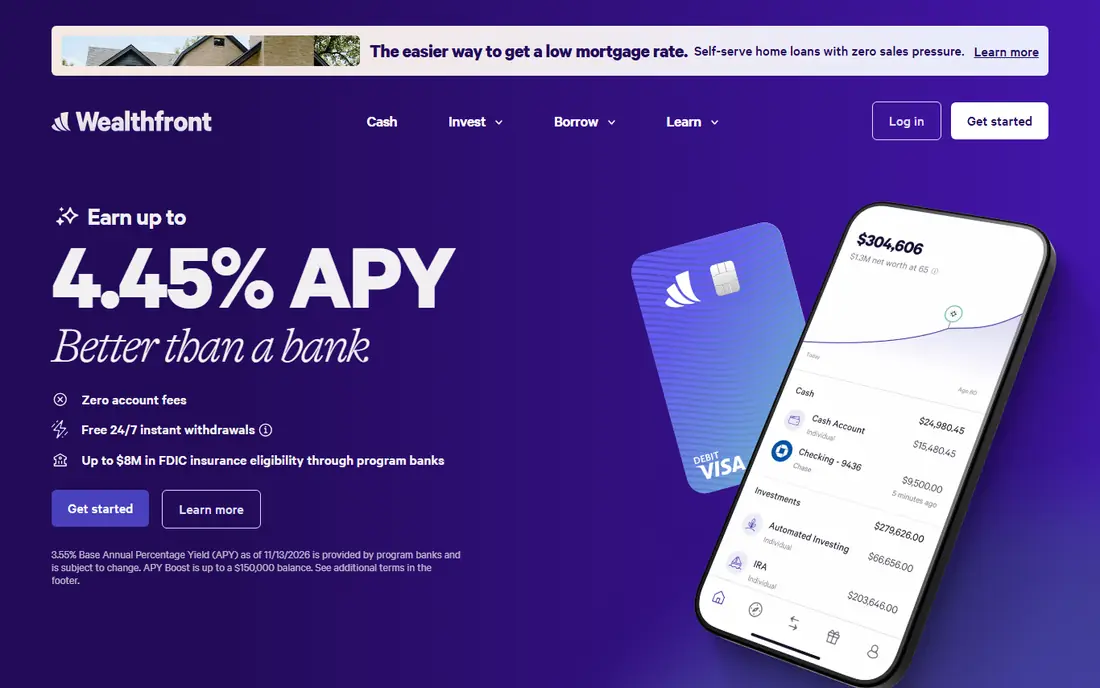
Wealthfront is our pick for beginners who want to set a plan and then step back. You answer questions about your goals and risk comfort, and the app builds a diversified portfolio from low-cost funds. It then rebalances for you, reinvests dividends, and looks for tax-loss harvesting chances where that feature applies. The trade-off is control. You do not pick each stock, and that is the point for many new investors. Its homepage states a 0.25 percent annual advisory fee for its main managed portfolio and a 500 dollar minimum, so check those terms against your balance before you start. If you want to learn by picking stocks, pair it with a research tool rather than forcing it to be one.
- Automated rebalancing
- Tax-loss harvesting on eligible accounts
- Clear goal planning tools
- Managed portfolios carry an annual advisory fee
- Self-directed trading still needs your own decisions
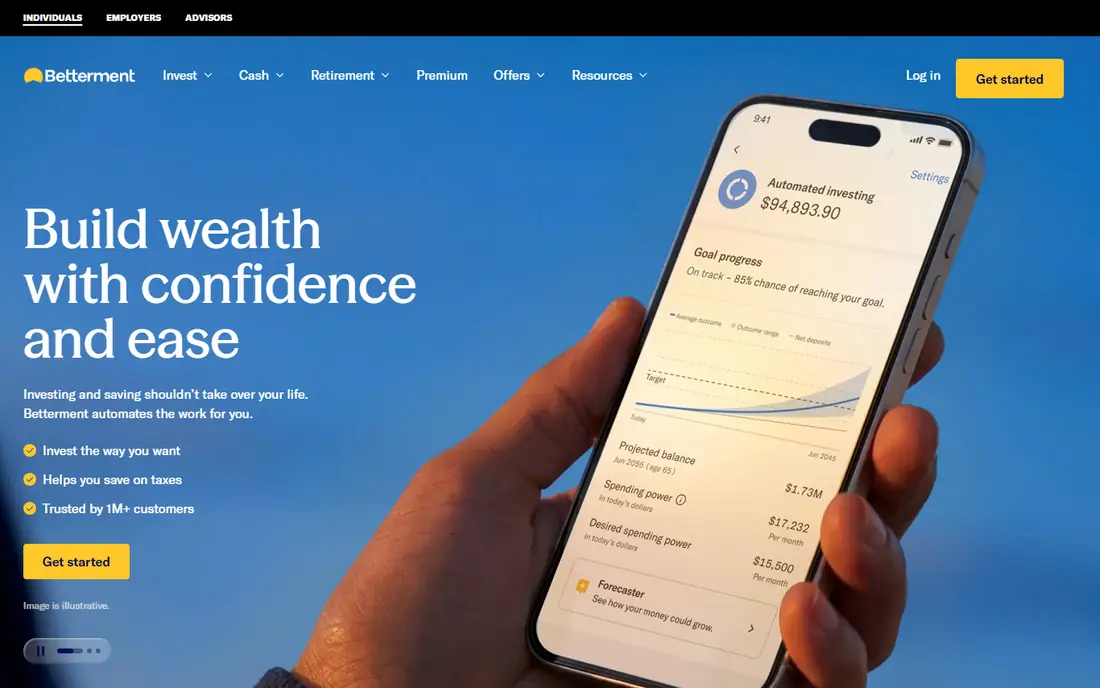
Betterment starts with the goal, not the ticker. You can set up separate goals for retirement, a home deposit, or a holiday fund, and each one gets its own risk level and timeline. That structure helps beginners avoid the common mistake of treating every dollar the same way. Its homepage notes you can start with 10 dollars, which keeps the first step small. The app also handles rebalancing and tax-aware moves for you. The catch is that human advice and deeper planning tools are not on the basic tier, so read the plan comparison carefully if you want regular access to a person.
- Simple goal setup
- Automated rebalancing
- Retirement and cash accounts in one place
- The most useful advice features sit on higher tiers
- Fees apply to managed accounts
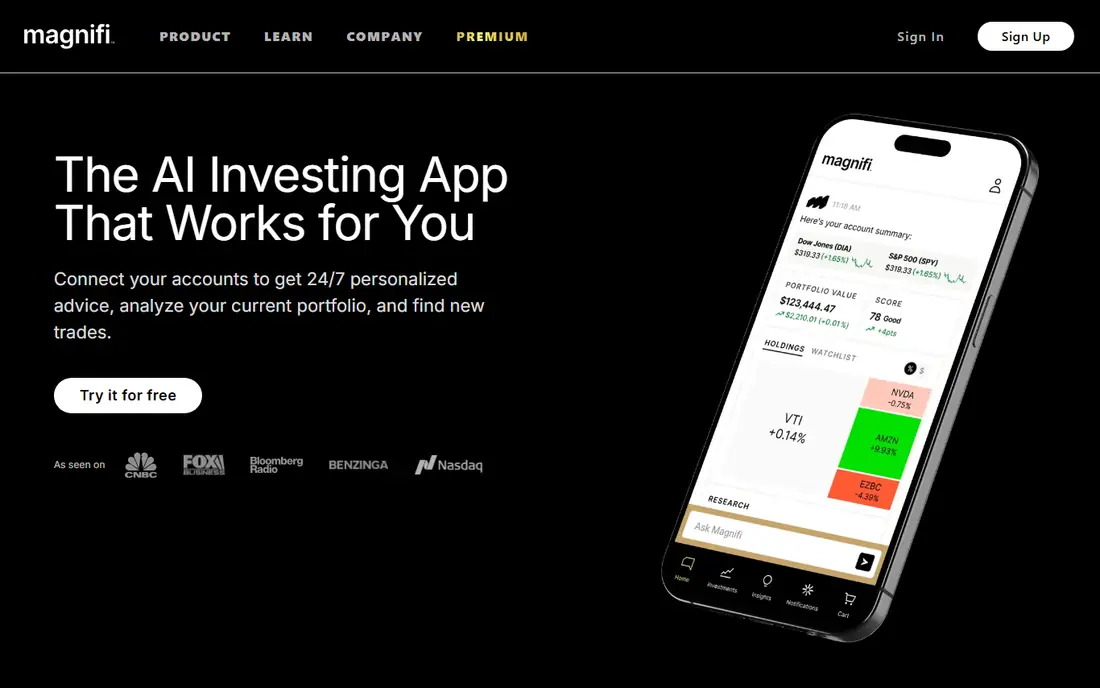
Magnifi works best as a research companion. You can type a question in plain language, compare funds, and check whether a holding overlaps with something you already own. Linking outside accounts lets it look at your whole picture, including retirement accounts, rather than one brokerage balance in isolation. Beginners should treat its answers as a starting point for research, not as a verdict. Use it to narrow a shortlist, read the fund details, and check fees and risk before you act. If you prefer someone else to manage the portfolio, choose a robo-advisor from this list and use Magnifi only if you also enjoy the research side.
- Plain-language investment search
- Portfolio analysis across linked accounts
- Backtesting for ideas
- It is a research tool, not a managed portfolio
- Subscription cost adds up if you rarely use it
Acorns is built for people who struggle to start. It rounds up card purchases and invests the spare change, so investing becomes a habit rather than a monthly decision you keep putting off. The portfolios are diversified and managed, which keeps the day-to-day work low. The honest catch is the monthly fee. On a very small balance, a flat monthly charge takes a larger share than a percentage fee would, so it makes most sense once round-ups and any recurring deposit add up. Check the current plan prices on its site, and set a recurring deposit if round-ups alone feel too slow.
- Round-ups turn spare change into investing habit
- Simple portfolios
- Banking and retirement options available
- Monthly subscription can outweigh tiny balances
- Limited control over individual holdings
Fidelity Go gives beginners a managed route inside a broker many people already know. You answer a short questionnaire, Fidelity builds and manages the portfolio, and you can add retirement accounts as your plans grow. For small starters, the fee-free threshold on lower balances is a real advantage, but confirm the current limit on the Fidelity site because thresholds change. The downside is less hand-holding than some rivals offer at the entry level. If you want regular coaching, check what is included in your tier before you assume it is part of the deal. For a low-cost, set-and-forget start, it is hard to beat.
- Managed portfolios from a large established broker
- No advisory fee below a stated balance threshold
- Wide account choice
- Coaching and deeper advice may cost extra
- The app is best if you are comfortable inside the Fidelity system
Schwab Intelligent Portfolios
Who it suits: No advisory fee portfolios
Schwab Intelligent Portfolios charges no advisory fee, which sounds like a clear win, but beginners should look at the whole design. The portfolios hold a cash allocation that earns interest for Schwab, and that cash share can drag on long-term growth compared with a fully invested portfolio. Schwab states a 5,000 dollar minimum for this service, so it fits savers who already have a lump sum rather than someone starting from zero. If you already bank or invest with Schwab, the convenience is strong. Accounts, research, and support sit in one place. If you are starting small, Betterment or Fidelity Go will let you begin sooner.
- No advisory fee and no commissions on the managed portfolios
- Large broker support
- Automatic rebalancing
- Cash allocation can be higher than some rivals
- Minimum balance is higher than beginner-friendly rivals
Composer takes a different path. Instead of handing you a ready-made portfolio, it lets you describe a strategy in plain language, test it against past data, and then run it automatically. That appeals to beginners who want to learn how rules work without writing code. Past test results are not a promise about the future, and a strategy that looked good in one market period can struggle in the next. Start with a simple idea, use a small amount you can afford to leave invested, and review the rules regularly. If that sounds like homework, a managed portfolio is a better first step.
- Build strategies without coding
- Backtesting before you invest
- Automatic rebalancing to your rules
- Rule-based strategies can still lose money
- Beginners need time to understand each rule they add
Danelfin scores stocks and exchange-traded funds on a simple scale and explains the factors behind each score. That clarity helps beginners who feel lost in earnings reports and analyst notes. You can screen for ideas, compare two funds side by side, and spot where a stock looks strong or weak on the factors Danelfin tracks. Treat a high score as a prompt to research further, not as a buy signal. Check the company, the fund fees, and how the holding fits your existing portfolio. The free tier is enough to learn the system, and the paid tier only makes sense if you research often.
- Simple AI scores for stocks and funds
- Explanations behind the scores
- Free tier for basic research
- Scores are research signals, not advice
- The full feature set sits behind a paid plan
SoFi suits beginners who want investing next to their bank account, not in a separate app they forget about. You complete a short profile, SoFi builds a diversified portfolio, and it rebalances for you. Having cash, investing, and other money products in one place makes it easier to move money in regularly. The catch is depth. If you later want detailed tax tools, direct indexing, or a wide range of specialist portfolios, a dedicated robo-advisor may serve you better. As a first managed account, though, SoFi keeps the steps short and the jargon low.
- Managed portfolios alongside banking and lending in one app
- Simple onboarding
- No advisory fee stated for automated investing
- Portfolio choice is limited compared with specialist brokers
- Advice depth is lighter than premium rivals
How we picked these
We compared official feature pages, pricing pages, app-store listings, privacy policies, and public reviews for each product. We kept tools that are live in October 2026, that a beginner can open and use without a trading background, and that state their fees and minimums in plain terms. We left out tools that promised guaranteed returns, hid their pricing, or required a large minimum with no beginner route. Prices change, so we used "See website" where a plan price could not be confirmed on the vendor page at the time of writing, and we named the fee only where the vendor homepage stated it clearly.
What to check before you pick
Start with the job, not the app
Decide first whether you want a managed portfolio, a research helper, or a rule builder. Managed portfolios suit most beginners. Research tools suit people who want to pick their own holdings. Rule builders suit people who enjoy testing ideas and accept the extra learning time.
Check fees, minimums, and taxes
Compare the annual advisory fee, any monthly subscription, and the minimum balance. A flat monthly fee hurts small balances most. Also check whether tax-loss harvesting is included, since it only helps in taxable accounts and only under the rules the provider states.
Keep risk in view
AI tools can find patterns and organise research, but they cannot remove market risk. Avoid putting money you need soon into stock portfolios, and avoid borrowing to invest. A simple diversified portfolio held for years beats a clever strategy you abandon after the first fall.
Frequently asked questions
What is the best ai investment tool for a complete beginner?
A managed portfolio from Betterment, Wealthfront, or Fidelity Go is usually the safest first step, because the provider builds and rebalances a diversified portfolio for you. Research tools like Magnifi are better as a second step, once you want to pick holdings yourself.
Which is the best ai investing platform for beginners with a small amount of money?
Fidelity Go and Betterment let you start with a small balance, while Schwab Intelligent Portfolios needs a larger minimum. If you plan to invest only a few dollars at a time, check the minimum and the fee type first, since a flat monthly fee can eat into a tiny account.
Are there good best ai investing apps for beginners that are free?
Fidelity Go offers no advisory fee below its stated balance threshold, and Danelfin and Magnifi offer free tiers or trials for research. Fully managed portfolios are rarely free at every balance, so read the fee terms rather than trusting the word free on its own.
What is the best free ai investing app for beginners?
For managed investing, Fidelity Go is the closest free starting point below its threshold. For research, Danelfin has a free tier and Magnifi offers a trial. Neither route removes market risk, and free research tools still require you to make the final decision yourself.
Can an AI investing app guarantee better returns?
No. AI can organise data, test rules, and flag risks, but markets move for reasons no model can predict with certainty. Any app that promises guaranteed returns should be avoided, and past performance should never be treated as a promise about the future.
Should beginners use AI stock picks or a diversified portfolio?
Most beginners do better with a diversified portfolio first, because one stock pick can fall sharply even when the wider market holds up. Use AI picks for learning and small research positions only after your core portfolio is in place.
Sources we checked (9)

Online Jobs is an independent blog about careers, online work, learning new skills and the tools that help people earn. More about us.
Keep reading
All posts
Top AI Financial Software
Searching for top AI financial software? We compared 9 AI finance tools for AP, spend, close, forecasting and bookkeeping to help teams choose wisely.
Quicken Alternatives
Compare the best quicken alternatives for Mac, Windows, and small business owners, from Monarch Money and YNAB to Copilot, Tiller, and Banktivity in 2026.
QuickBooks Online Alternatives
Looking for quickbooks online alternatives? We compared 8 accounting tools on invoicing, bank feeds, payroll, pricing and fit for small businesses today.