Best AI Brand Visibility Checking Software in 2026: 8 Tools Compared

How we put this together: we compare official feature and pricing pages, app store listings, privacy policies and public user reviews. Prices change, so check the provider's site before you pay.
Key takeaways
- Brand visibility tools measure mentions, sentiment, and share of voice, while search visibility tools focus more on which pages get cited for a query.
- Peec AI and AthenaHQ give the clearest share-of-voice views at mid-range prices, with Peec AI from $95 per month and AthenaHQ from a free tier.
- Brand24 remains the best traditional mention tracker, but its AI features sit alongside social and news monitoring rather than replacing a dedicated AI tool.
- Profound and Brandlight suit larger brands that need executive reporting, while Otterly.AI suits small teams that need a low-cost start.
Quick comparison
| Name | Who it suits | Starting price | Free option | |
|---|---|---|---|---|
 Peec AI | Share of voice for SEO teams | $95 per month | No | Visit |
 AthenaHQ | Brand sentiment across many models | Free | Yes | Visit |
 Profound | Enterprise brand reporting | See website | Free trial (7 days) | Visit |
 Brandlight | Brand mention quality and citations | $199 per month | No | Visit |
 Otterly.AI | Budget brand mention tracking | $29 per month | Free trial (7 days) | Visit |
 Goodie | Brand visibility for product brands | $295 per month | Free trial (7 days) | Visit |
 Scrunch AI | Brand audits and competitor gaps | $250 per month | Free trial (7 days) | Visit |
 Brand24 | Social, news, and web mentions plus AI | $199 per month | Free trial (14 days) | Visit |
The best AI brand visibility checking software
Brand visibility inside AI answers is a different job from tracking a single search ranking. A brand can rank well on Google yet barely appear when someone asks ChatGPT for a recommendation, and that gap is what these tools measure. We compared official pricing pages and published plan limits, and we focused on mention tracking, sentiment, and share of voice rather than page-level citation counts alone.
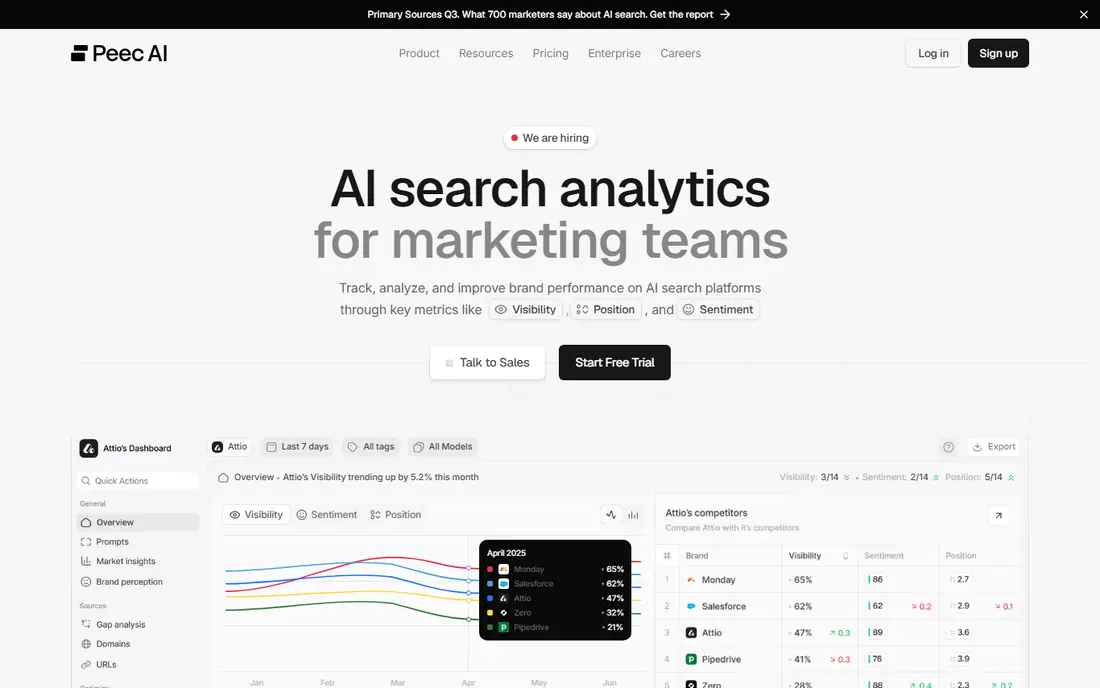
Peec AI is our pick for teams that want a single share-of-voice number they can track week to week. Starter tracks 50 prompts daily on three models of your choice, and Pro at $245 per month adds sentiment analysis and raises the count to 150 prompts. Seeing your share next to named competitors turns vague worry about AI into a trend line you can report to a manager.
The limits are familiar from the wider category. There is no free tier, and prices are shown in euros on some pages, so check the currency at checkout. Peec AI also reports more than it fixes, so a team still needs someone to update content when a competitor pulls ahead. For brand teams that already think in share of voice, it is a natural first buy.
- Clear competitor share-of-voice views
- Daily tracking
- Unlimited users
- No free tier
- API access is enterprise only
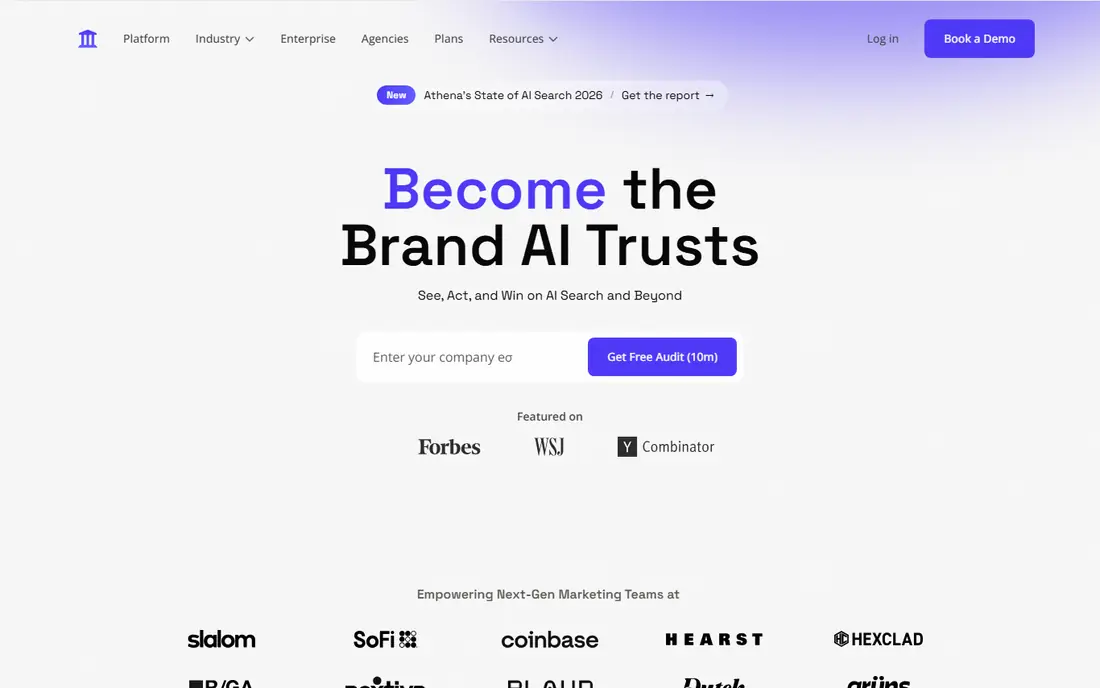
AthenaHQ pairs brand mention tracking with sentiment, so you learn not only how often AI tools name you but whether the tone is positive, neutral, or negative. Its free tier gives a genuine first read, and paid plans cover a broad model list, including Claude on a self-serve plan. Unlimited topics and seats on paid plans help larger brand teams share one workspace.
Credit-based pricing is the catch to model before you commit, since a heavy prompt month can consume an allowance quickly. AthenaHQ is also stronger on dashboards and action lists than on done-for-you content. For a brand team that wants to test AI sentiment before asking for budget, it is the lowest-risk start in this list.
- Free tier
- Sentiment tracking
- Source-level citation attribution
- Paid plans start at $295 per month
- Credit-based pricing needs careful modeling
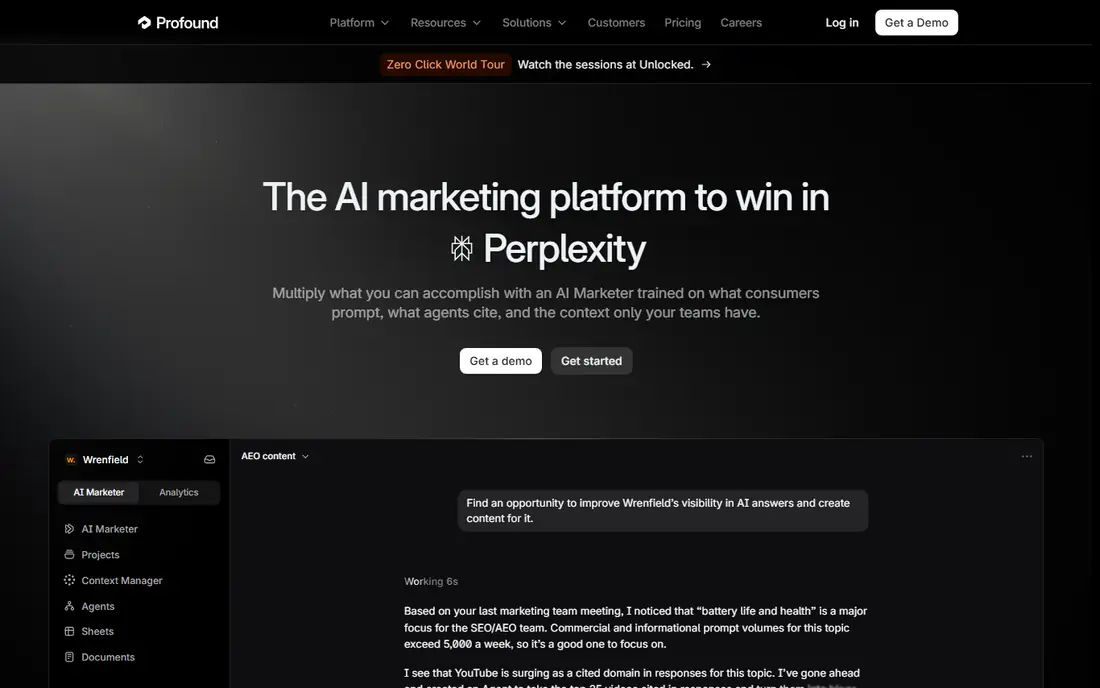
Profound treats brand visibility as a board-level question. Its enterprise platform tracks up to nine answer engines and adds narrative analysis, showing how AI tools describe your brand, not only whether they mention it. Prompt volume data helps large teams size which brand questions matter most, and compliance features such as SSO and SOC 2 suit regulated companies.
Access is the barrier. Brands start with a free 7-day trial on three engines and 50 prompts daily, then need a custom quote. That rules Profound out for most small businesses, and the sales process takes time. For a large brand with several markets and a PR team that needs executive-ready reporting, the depth justifies the effort.
- Deep narrative and sentiment reporting
- Prompt volume data
- Enterprise compliance
- Custom enterprise pricing only for brands
- No published self-serve plan
Brandlight focuses on the quality of a brand mention, not only the count. It assigns weight to citations and shows which sources AI answers rely on when they name you, which helps PR teams decide where earned coverage matters most. Pricing from $199 per month puts it between budget trackers and enterprise platforms, a sensible middle ground for a growing brand.
The trade-off is breadth. Brandlight is less of a general SEO suite than Semrush or Ahrefs, so teams that want keyword and backlink data as well will need a second tool. It also has no free tier listed, so a trial or demo is the way to test fit. For brand teams that care about which sources shape their reputation, it is a strong pick.
- Focus on citation quality
- Clear brand-level reporting
- Ecommerce-friendly views
- No free tier published
- Higher price than budget trackers
Otterly.AI suits a small brand that wants to know whether AI answers mention it at all, without a large monthly bill. Lite at $29 per month tracks 15 prompts across ChatGPT, Google AI Overviews, Perplexity, and Microsoft Copilot, with daily updates and scheduled reports. That is enough to spot a sudden drop or a competitor surge.
Sentiment and deep brand analysis are thinner here than on Peec AI or AthenaHQ, and extra engines cost more. Otterly.AI is best seen as an early-warning tool: it tells you something changed, and your team then investigates why. At this price, that is a fair deal.
- Lowest entry price here
- Daily tracking
- Unlimited team members
- Claude, Gemini, and AI Mode are paid add-ons
- Lighter sentiment features
Goodie is the brand tool for companies that sell products through AI shopping answers. It tracks brand and SKU visibility across ChatGPT Shopping, Perplexity Shopping, Google AI Mode Shopping, Alexa for Shopping, and Walmart Sparky, so a brand team can see whether shoppers meet the brand or a rival first. Core at $295 per month includes 110 prompts, 50 optimization actions, and strategist support.
Service brands will find much of the shopping suite surplus to their needs, and the entry price is high for a small team. Goodie also gates Claude, Meta AI, DeepSeek, and Grok behind enterprise plans. For product brands, though, the link between brand mentions and product pages is exactly the view that matters.
- Product and brand visibility in shopping answers
- Strategist support
- Unlimited seats
- High entry price
- Full model list needs enterprise tier
Scrunch AI helps a brand team answer a harder question: why does a competitor win a mention you should own? Core at $250 per month tracks 125 prompts, reports share of voice, and adds site audits and crawler data that show which pages AI bots actually visited. That diagnostic layer turns a brand report into a work list for content and technical teams.
The price is the main barrier, and smaller brands may prefer Otterly.AI or Peec AI for simple tracking. Scrunch AI also rewards teams with staff to act on audit findings. If your brand problem is a visibility gap you cannot explain, Scrunch AI is worth the premium.
- Share-of-voice reporting
- Site audits
- Crawler data behind citations
- Entry price above budget tools
- Some engines need higher tiers
Brand24 is the veteran in this list, and it remains useful because brand reputation does not live only in AI answers. It collects mentions from social media, news, blogs, forums, podcasts, and reviews, and its AI features sit alongside that wider net. Individual at $199 per month on annual billing covers 3 keywords and 2,000 mentions a month, with a 14-day trial and no card required.
The catch is focus. Brand24 is not a dedicated AI prompt tracker, so teams that want deep prompt-level AI data should pair it with a tool such as Peec AI or AthenaHQ. Keyword and mention caps also bite fast for a brand with several product names. For PR teams that need one inbox for every kind of mention, Brand24 still earns its place.
- Broad mention sources beyond AI
- Influencer and crisis alerts
- Long track record
- AI tracking is one part of a wider tool
- Entry plan limits keywords and mentions
How we picked these
We compared official pricing pages, published plan limits, and the brand features each vendor lists, such as sentiment, share of voice, and competitor comparison. We favored tools that track AI answers directly and that offer a trial or free tier, and we kept one traditional monitor, Brand24, because brand reputation still spans social and news sources. Prices were checked against vendor and comparison pages in October 2026 and should be confirmed before purchase.
How to use brand visibility data well
Start with share of voice, not raw counts
Raw mention counts rise and fall with model updates, which makes them noisy on their own. Share of voice, your share of all brand mentions in a prompt set, is steadier and easier to report. Set a baseline over four weeks before you judge any change.
Separate sentiment from volume
A spike in mentions can be good news or a crisis, and only sentiment tells you which. Check negative mentions first each week, and give one person ownership of the response, whether that means a corrected fact, a press response, or a content update.
Fix the pages behind weak mentions
When a competitor wins a prompt you should own, look at the cited sources. Often the winner has a clearer comparison page, a stronger FAQ, or a source the AI trusts more. Updating that page usually beats adding more prompts to track.
Frequently asked questions
What is the difference between brand visibility and search visibility software?
Search visibility tools focus on which pages get cited for a query, while brand visibility tools focus on how often and how favorably a brand is named across many prompts. The two overlap, and many teams use one tool for both jobs at first.
How do I measure share of voice in AI answers?
Pick a fixed set of prompts, run them daily, and divide your mentions by all brand mentions in that set. Keep the prompt set stable for at least a month, or the trend will reflect your edits rather than real change.
Does sentiment tracking work reliably?
Sentiment gives a useful signal, but it is an automated judgment and can misread sarcasm, mixed reviews, or nuanced claims. Treat large shifts as a prompt to read the underlying answers, not as a final verdict.
Should a small brand pay for an enterprise tool?
Usually no. Start with a free tier or a budget tracker, prove which prompts matter, and upgrade only when the prompt count or reporting needs exceed the cheaper plan. Enterprise depth helps large brands with many markets, not a single-product business.
How often do AI brand mentions change?
They can shift quickly when models update or when a news story changes the source material. Weekly trend checks, with daily tracking in the background, suit most teams better than reacting to one day of data.
Can brand visibility tools replace social listening?
Not fully. AI answers draw on web sources, but social listening catches conversations, complaints, and crises that never reach an AI answer. Tools such as Brand24 cover both, while dedicated AI trackers usually do not.
Sources we checked (8)

Online Jobs is an independent blog about careers, online work, learning new skills and the tools that help people earn. More about us.
Keep reading
All posts
n8n Alternatives
n8n alternatives compared for 2026, with Zapier, Make, Activepieces, and more, covering visual builders, code steps, self-hosting, and pricing models.

ZoomInfo Alternatives
The best ZoomInfo alternatives in 2026, compared on price, free plans, data coverage, and which tool fits small teams or large sales teams best in detail.

Workday Alternatives
We compared the best workday alternatives for HR, payroll, and global hiring, from BambooHR and Gusto to Rippling, Deel, and HiBob for growing teams in 2026.