Best AI Automation Testing Tools in 2026: 8 Tools Compared

Agile teams that want low-code end-to-end testing with auto-healing · Starting price: See website
How we put this together: we compare official feature and pricing pages, app store listings, privacy policies and public user reviews. Prices change, so check the provider's site before you pay.
Key takeaways
- mabl suits agile teams that want low-code end-to-end testing with auto-healing.
- Testim suits teams that want stable web UI tests with codeless and coded options.
- Katalon suits mixed-skill teams that want web, API, mobile and desktop testing in one platform.
- Applitools suits teams that need visual AI testing for UI regressions.
- Testsigma, Tricentis Tosca, Functionize and ACCELQ cover low-code, enterprise, natural-language and codeless enterprise testing.
Quick comparison
| Name | Who it suits | Starting price | Free option | |
|---|---|---|---|---|
| mabl | Agile teams that want low-code end-to-end testing with auto-healing | See website | See website | Visit |
 Testim | Stable web UI tests for product and QA teams | See website | See website | Visit |
 Katalon | Mixed-skill teams that want web, API, mobile and desktop testing in one place | See website | Yes | Visit |
 Applitools | Visual AI testing for UI regressions across devices | See website | See website | Visit |
 Testsigma | Low-code test creation with natural-language style steps | See website | See website | Visit |
 Tricentis Tosca | Enterprise testing for packaged apps such as SAP and Salesforce | See website | No | Visit |
 Functionize | Natural-language test creation with AI maintenance | See website | See website | Visit |
 ACCELQ | Codeless enterprise testing with business-logic focus | See website | See website | Visit |
The best AI automation testing tools
We compared AI automation testing tools for web, mobile, API and visual testing, with a focus on how each tool creates tests, handles UI changes and fits into delivery pipelines. The best automated testing software for your team depends on app type, team coding skill, test volume and how often the UI changes. A low-code tool can speed up a small QA team, while an enterprise suite may suit a large team testing packaged apps.
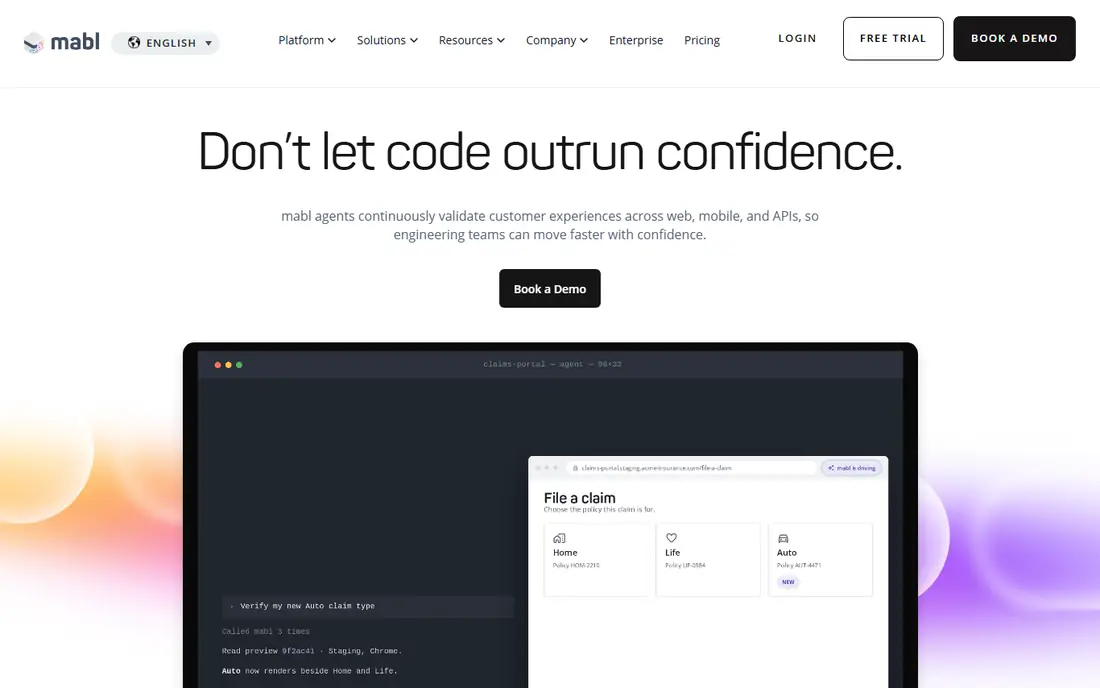
mabl is a low-code, cloud-based testing platform for end-to-end web testing, with API and visual checks alongside UI flows. Teams record or build tests without heavy coding, then run them in delivery pipelines with results that point to the failing step. Auto-healing helps tests survive small UI changes, which reduces the maintenance burden that often slows UI automation. The trade-off is control and cost. Teams that want a fully custom code framework may find mabl less flexible, and pricing is quote-based, so check the vendor page for your test volume and parallel runs. For an agile team that wants fast, maintainable end-to-end tests without a large framework build, mabl is a strong first test.
- Low-code test creation, auto-healing for UI changes, CI/CD integration, visual and API checks, clear test results
- Pricing needs a quote, less suited to heavy custom code frameworks, trial limits need checking
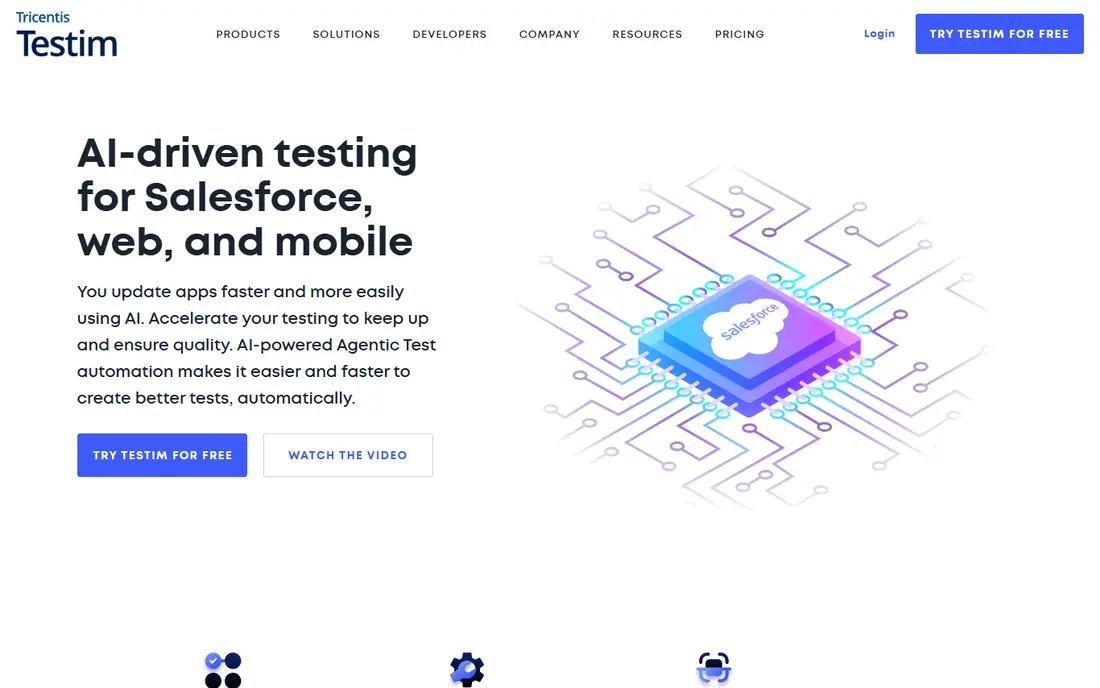
Testim, now part of Tricentis, focuses on stable end-to-end web tests. Smart locators use multiple attributes to find UI elements, so a small change to one attribute does not break the whole test. Teams can build tests codelessly, add code where needed, and run tests in parallel across browsers. That mix suits product teams that want speed plus the option to code complex steps. The focus is web UI, so mobile and API testing may need another tool or a broader Tricentis setup. Pricing is quote-based, so model your test count, runs and parallel needs before a trial. For a web team fighting flaky UI tests, Testim offers a practical stability-first approach.
- Smart locators for stability, codeless plus coded options, cross-browser runs, CI integration, test cloud options
- Pricing needs a quote, web UI focus, enterprise features need higher plans
Katalon
Who it suits: Mixed-skill teams that want web, API, mobile and desktop testing in one place
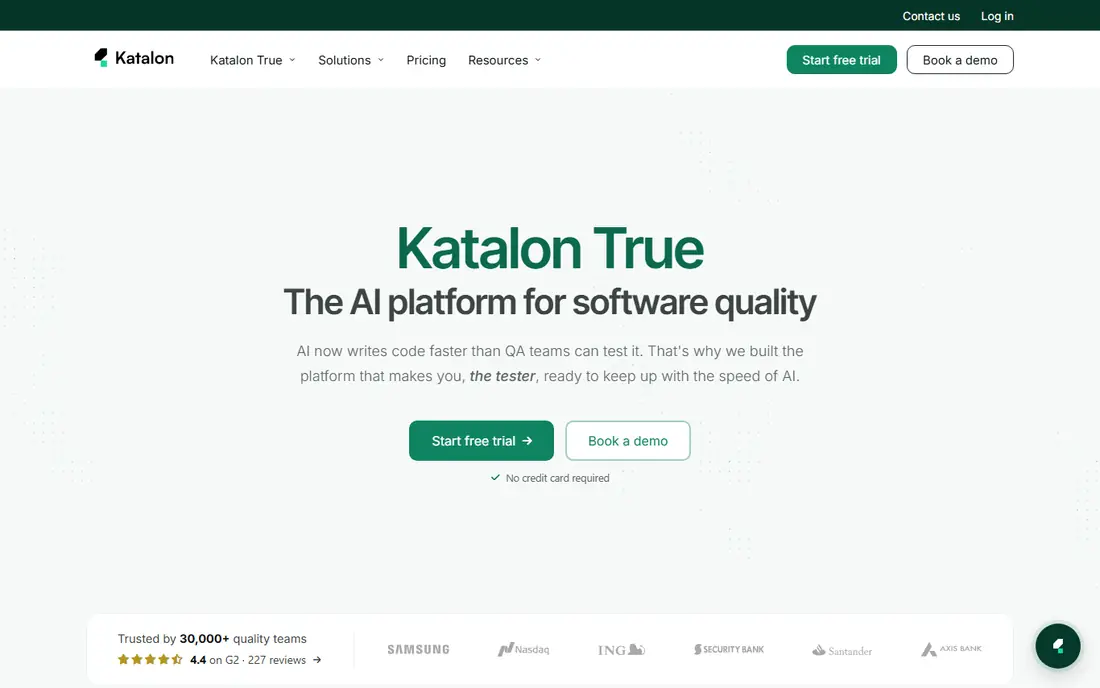
Katalon Studio brings web, API, mobile and desktop testing into a single platform, which helps a mixed-skill QA team avoid juggling several tools. Low-code recording suits manual testers moving into automation, while scripting suits testers who want more control. AI-assisted object capture and self-healing features help reduce breakage when the UI changes. The free tier covers core testing, while advanced analytics and enterprise features need paid plans. The broad scope also means the interface packs in many options, so new users should start with one test type first. For a team that needs broad coverage at a moderate cost, Katalon is a strong value pick.
- Web, API, mobile and desktop testing, low-code plus scripting, AI-assisted object capture, reporting and CI links
- Advanced features need paid plans, interface can feel broad, custom framework flexibility is lower than code-only tools
Applitools focuses on visual testing: it compares app screens against baselines and uses visual AI to flag layout, style and content changes that functional tests may miss. That approach suits teams with design-sensitive UIs, many screen sizes, or frequent visual regressions. It integrates with common test frameworks, so teams can add visual checks to existing suites rather than rebuilding them. Visual testing needs discipline. Baselines must be reviewed, approved and updated carefully, or teams will chase false positives. Pricing is quote-based and depends on visual checkpoints and users. For a UI-heavy team that needs to catch visual breaks before release, Applitools is the specialist to test first.
- Visual AI for layout and style checks, cross-browser and device coverage, integrates with existing frameworks, baseline management
- Pricing needs a quote, visual testing needs baseline discipline, not a full test management suite on its own
Testsigma lets teams write tests in plain, step-based language without heavy coding, then run them on cloud browsers and devices. That low-code style suits QA teams with mixed coding skills and product teams that want readable tests. Web, mobile and API coverage in one platform reduces tool sprawl, and CI integration keeps tests in the delivery flow. At scale, test design, data management and maintenance still need discipline, and highly custom logic may need code or workarounds. Check plan limits for parallel runs, users and cloud minutes. For a team that wants readable, low-code automation across web and mobile, Testsigma is a practical option.
- Low-code test steps, web, mobile and API coverage, cloud runs, CI integration, test data and reporting
- Pricing needs a quote, advanced custom code needs checking, learning curve for test design at scale
Tricentis Tosca
Who it suits: Enterprise testing for packaged apps such as SAP and Salesforce
Tricentis Tosca is an enterprise, model-based testing suite built for large organisations, especially those testing SAP, Salesforce and other packaged apps. Model-based design lets teams build tests from business models rather than code, which can help non-coding testers and large teams share a common test approach. Scale, governance and integration options suit complex enterprise programs. Setup and cost reflect that enterprise focus, and a small web team will find Tosca heavier than mabl or Katalon. Training and model design take time, so a pilot with a real packaged-app workflow is essential. For a large enterprise with packaged apps and complex test data needs, Tosca is a leading suite to evaluate.
- Model-based, codeless testing, packaged app support, enterprise scale, test data and service virtualisation options
- Enterprise pricing and setup, learning curve, overkill for a small web team
Functionize lets teams create tests using plain English steps, with AI assistance to build, run and maintain those tests as the app changes. That natural-language approach suits teams where product managers, manual testers and QA engineers all contribute to test design. Cloud execution and reporting keep results visible to the wider team. As with other AI tools, maintenance claims need testing on your own app, since UI complexity and dynamic content affect stability. Pricing is quote-based, so check runs, users and support levels. For a team that wants accessible test creation without a code-first framework, Functionize is worth a trial.
- Plain-English test creation, AI-assisted maintenance, cloud execution, visual and functional checks, team collaboration
- Pricing needs a quote, enterprise features vary by plan, custom framework users may want more code control
ACCELQ is a cloud-based, codeless testing platform for enterprise teams, with a focus on business logic and end-to-end processes. Tests are designed from business flows rather than code, which helps teams test complex journeys across UI and API layers. Integrations with CI tools and test management systems suit larger delivery programs. The modelling approach takes learning, and the platform is built for enterprise scale rather than a tiny team with a simple app. Check plan terms for users, runs and support, and run a pilot on a real business process. For an enterprise team that wants codeless automation for complex workflows, ACCELQ is a strong candidate.
- Codeless test design, business-process modelling, API and UI coverage, CI and test management links, enterprise support
- Pricing needs a quote, learning curve for modelling, less suited to a tiny team with a simple web app
How we picked these
We picked tools that cover low-code, codeless, visual AI, enterprise and natural-language testing, since QA teams differ on coding skill and app type. We included both specialist tools, such as Applitools for visual testing, and broad platforms, such as Katalon and Tosca, so the list covers web, mobile, API and packaged apps. We noted where a tool is a specialist companion rather than a full suite. Where pricing was not published on the vendor site at the time of writing, we used See website. Testing tool pricing often depends on users, parallel runs, cloud minutes and visual checkpoints, so request a quote based on your suite size and release frequency. Always run a pilot on your own app before committing, since UI stability varies by app.
What to look for when choosing an AI automation testing tool
Start with app type and team skill. A web-only team needs different coverage from a team testing mobile, API and packaged apps, and a low-code team needs different tooling from a code-first team. List your must-have test types, browsers, devices and CI tools, then test the candidate on a real, changing part of your app. A tool that passes a demo app may still struggle with your dynamic UI. Next, test maintenance, not just creation. Change a label, move a button and update a flow, then see how many tests break and how easy they are to fix. Check reporting, flaky test handling, parallel runs and how results link to defects. A tool that creates tests quickly but breaks often will cost more over time than a slower tool with stable maintenance.
Frequently asked questions
What is the best AI automation testing tool?
mabl suits agile low-code end-to-end testing, Testim suits stable web UI tests, and Katalon suits broad web, API, mobile and desktop coverage. Applitools suits visual testing. The best AI tools for automation testing depend on app type, team coding skill and how often your UI changes.
What is the best automated testing software for UI testing?
For UI testing, mabl and Testim suit low-code and stable web UI work, while Applitools adds visual checks for layout regressions. Katalon and Testsigma cover UI plus API and mobile in one platform. Choose based on whether you need visual checks, mobile coverage, or a code-first framework alongside UI tests.
Do AI testing tools really self-heal tests?
Some tools offer auto-healing or smart locators that adapt to small UI changes, such as a changed attribute or label. That can reduce breakage, but it does not remove maintenance entirely, especially for large redesigns or dynamic content. Test auto-healing on your own app during a pilot, and review healed changes before trusting them in a release pipeline.
Is Katalon free?
Katalon offers a free tier for core testing, with paid plans for advanced analytics and enterprise features. Check the current Katalon pricing page for free tier limits, since paid features, users and support levels affect total cost for a team. A free start is useful for learning the platform before a paid rollout.
What is the best QA automation tool for enterprise teams?
Tricentis Tosca suits large enterprises testing packaged apps such as SAP and Salesforce, while ACCELQ suits codeless enterprise workflows. mabl, Testim and Katalon can also scale for product teams, depending on app type. Enterprise choice should follow app stack, governance needs and integration with existing test management and CI tools.
Can AI testing tools replace manual QA?
No. AI testing tools speed up repeatable checks and catch regressions, but manual QA still matters for exploratory testing, usability, edge cases and judgment calls. A good QA mix uses automation for stable, repeatable flows and manual testing for new features, user experience and areas where automation would be brittle or costly.
Sources we checked (8)

Online Jobs is an independent blog about careers, online work, learning new skills and the tools that help people earn. More about us.
Keep reading
All posts
ZoomInfo Alternatives
The best ZoomInfo alternatives in 2026, compared on price, free plans, data coverage, and which tool fits small teams or large sales teams best in detail.
Zoom Alternatives
Zoom alternatives compared for 2026: Google Meet, Microsoft Teams, Webex, Jitsi and more for free calls, large meetings and webinars for teams and classrooms.

Workday Alternatives
We compared the best workday alternatives for HR, payroll, and global hiring, from BambooHR and Gusto to Rippling, Deel, and HiBob for growing teams in 2026.