Best ABM Tools in 2026: 8 Platforms Compared

How we put this together: we compare official feature and pricing pages, app store listings, privacy policies and public user reviews. Prices change, so check the provider's site before you pay.
Key takeaways
- Demandbase and 6sense lead for enterprise teams that need deep intent data and account-based advertising in one suite.
- RollWorks is the most accessible third-party platform for mid-market teams starting account-based marketing.
- HubSpot suits teams already on HubSpot, since its ABM tools sit inside the CRM they already use.
- Most ABM platforms price by quote, so budget for onboarding, ad spend, and data costs on top of the platform fee.
- Small teams should start with target account lists and measurement before buying an enterprise platform.
Quick comparison
| Name | Who it suits | Starting price | Free option | |
|---|---|---|---|---|
 Demandbase | Enterprise ABM suites | See website | No | Visit |
 6sense | Predictive intent data | See website | Free trial | Visit |
 Terminus | Multi-channel ABM ads | See website | No | Visit |
 RollWorks | Mid-market ABM | See website | No | Visit |
 HubSpot | Teams already on HubSpot | See website | Yes | Visit |
 ZoomInfo Marketing | Data-led ABM | See website | No | Visit |
 Influ2 | Contact-level advertising | See website | No | Visit |
 Mutiny | Website personalization | See website | No | Visit |
The best ABM tools
Account-based marketing flips the usual funnel: instead of chasing many leads, you pick target accounts and coordinate ads, content, and sales outreach around them. We compared official feature pages, pricing signals, and public reviews to rank the platforms that support that work in 2026.
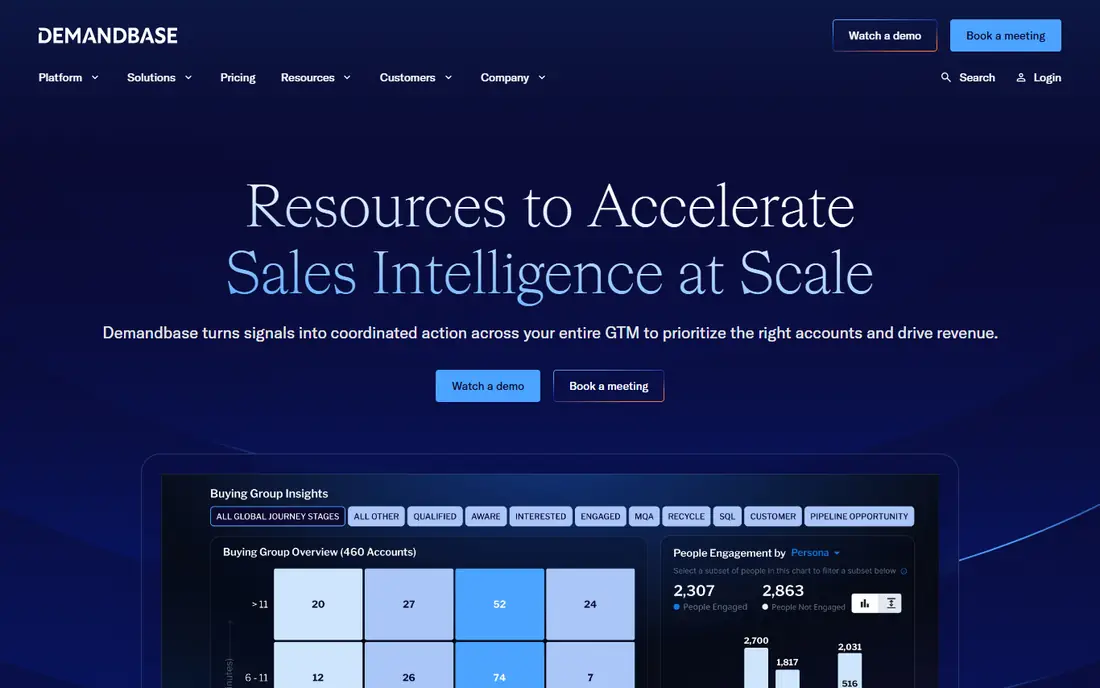
Demandbase is the enterprise default for account-based marketing, and it covers the full loop in one place. It identifies target accounts, surfaces intent signals, runs account-based advertising through its own demand-side platform, and ties engagement back to pipeline. For teams running ABM across hundreds of accounts, that breadth matters.
The cost and complexity are the catch. Pricing is quote-based and sits at enterprise levels, onboarding can add a large fee, and the platform rewards teams with dedicated operations staff. Smaller teams will find it heavy. If your deal sizes justify the spend and you have the people to run it, Demandbase is the safe enterprise pick.
- Account identification, intent data, and advertising in one suite
- Strong Salesforce integration
- Mature reporting
- Enterprise pricing with onboarding costs
- Needs a dedicated team to run well
- Contracts are usually annual
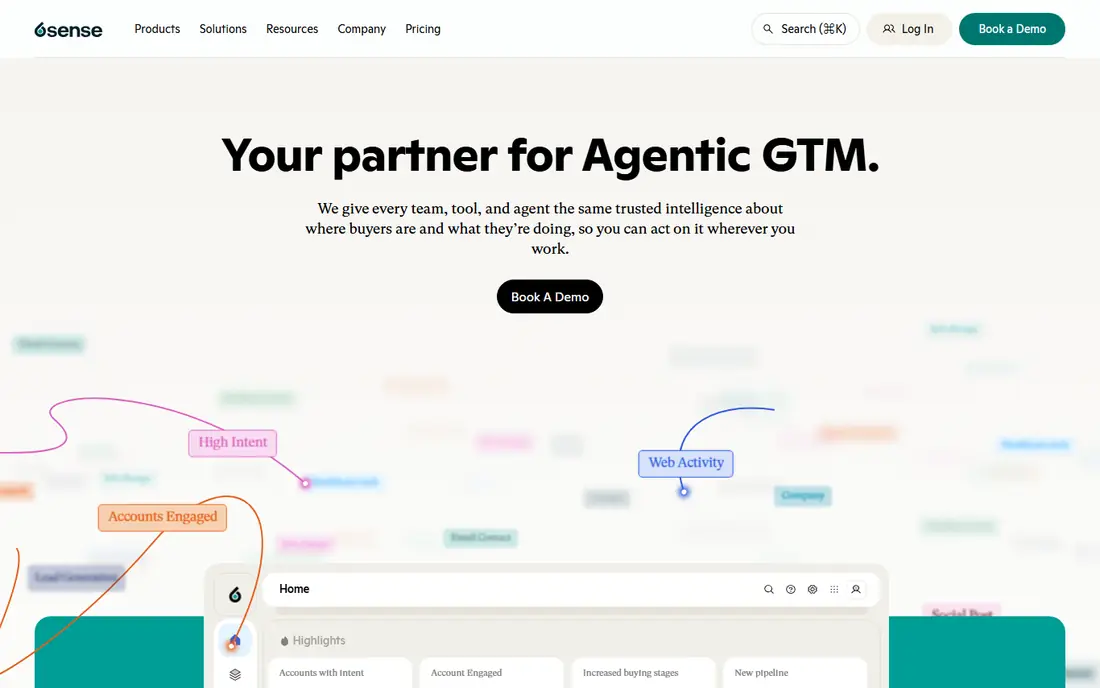
6sense built its name on predicting which accounts are in market, using large volumes of intent and behavioral signals. That prediction engine drives account identification, prioritization, and orchestration, so sales teams can focus on accounts showing real buying activity rather than guessing from firmographics alone.
Users consistently praise the intent data and consistently warn about the learning curve. The platform is quote-priced at enterprise levels, and getting full value usually needs RevOps help and clean CRM data. Teams with the staff to operate it get a powerful system; teams without that staff may pay for depth they never use.
- Strong predictive intent engine
- Account identification and orchestration
- CRM integration
- Steep learning curve
- Enterprise pricing
- Needs RevOps support to get full value
Terminus, now part of DemandScience, focuses on getting your message in front of target accounts across channels. Display advertising, LinkedIn campaigns, and account-level engagement tracking form the core, with orchestration tying those touches together. It sits in a useful middle ground: more capable than entry-level tools, less overwhelming than the biggest suites.
Pricing is quote-based, and the DemandScience transition means buyers should confirm exactly which product and contract they are signing. Intent data leans on partnerships rather than a proprietary engine as deep as 6sense. For mid-market teams that want solid multi-channel activation, Terminus remains a strong shortlist candidate.
- Strong display and LinkedIn advertising
- Account engagement tracking
- Multi-channel orchestration
- Quote-based pricing
- Transition to DemandScience branding confuses buyers
- Less deep on intent than 6sense
RollWorks grew out of AdRoll and has become the most accessible serious ABM platform for mid-market teams. It offers account targeting, advertising, and measurement without enterprise contract sizes, and its HubSpot integration is genuinely two-way, which matters for teams that live in HubSpot. Bidding tools help small teams run account ads without a media specialist.
Reporting takes more manual work than Demandbase or 6sense, and intent data relies on third-party partnerships rather than a proprietary engine. Ad spend adds to the platform fee, so budget for both. For a first ABM platform, RollWorks is the easiest place to start among dedicated tools.
- Most accessible third-party ABM platform
- Good HubSpot integration
- Account-based advertising with bidding tools
- Reporting is more manual than enterprise rivals
- Intent data comes from partners
- Ad spend sits on top of platform fees
HubSpot suits teams that want ABM without adding a whole new platform. Its Marketing Hub includes target account lists, company scoring, buying-role tracking, ABM workflows, and account-level reporting, all inside the CRM where contacts and deals already live. That native fit cuts integration work and keeps sales and marketing on the same data.
The depth does not match Demandbase or 6sense, and the strongest ABM features sit on Enterprise tiers, which carry enterprise prices. Contact-based pricing can also climb quickly. If your team already runs on HubSpot, though, starting ABM there is the path of least resistance, and you can add a dedicated platform later if you outgrow it.
- ABM tools inside the CRM you already use
- Target account lists and scoring
- Native reporting
- ABM features are less deep than dedicated platforms
- Best ABM tools need Enterprise tiers
- Contact-based pricing scales fast
ZoomInfo Marketing builds ABM on top of one of the strongest B2B data foundations available. Contact and company data, plus intent signals, feed targeting and orchestration, and the platform can push audiences into advertising channels. Teams that already buy ZoomInfo for sales data get a natural extension into marketing.
ABM here is a bolt-on rather than a purpose-built suite, so orchestration depth trails dedicated platforms. Pricing is quote-based and starts at enterprise levels, and buyers should negotiate renewal terms carefully. Data-led teams that value contact accuracy above all else should shortlist it.
- Strong contact and company data foundation
- Intent signals
- Advertising and orchestration add-ons
- ABM is an add-on to a data platform
- Entry pricing is enterprise-level
- Renewal increases are a known complaint
Influ2 solves a real frustration with account-level ABM: knowing that a company engaged tells you little about which person to call. Influ2 targets specific contacts inside target accounts and reports which individuals saw and engaged with ads, so sales teams know who to follow up with. For high-value deals with small buying committees, that precision matters.
The platform is quote-priced and focused on contact-level advertising, so it complements rather than replaces a wider ABM suite for many teams. It also depends on accurate contact data, and weak data means weak targeting. If your deals hinge on five to ten named people, Influ2 deserves a close look.
- Targets specific people, not just accounts
- Shows which contacts engaged with ads
- Good for small buying committees
- Quote-based pricing
- Limited to contact-level ad channels
- Needs accurate contact data to work
Mutiny handles the moment a target account actually visits your site. It changes headlines, content, and calls to action based on the visiting account or segment, turning a generic homepage into a relevant one for each prospect. No-code editing means marketers can launch tests without waiting on developers.
Mutiny covers only the website layer, so it pairs with an advertising or intent platform rather than replacing one, and low-traffic sites will see slower results. Pricing is quote-based. For teams whose site already draws target accounts, personalization can lift conversion without more ad spend.
- Personalized website experiences by account or segment
- No-code page editing
- Useful analytics on account visits
- Quote-based pricing
- Covers only the website layer
- Needs traffic volume to show value
How we picked these
We compared official feature pages, pricing signals, and public reviews for the leading ABM platforms, and we favored tools with real account targeting, intent or engagement data, and advertising or personalization activation. Each platform had to serve account-based programs specifically, not just general marketing automation, and come from a vendor we could verify. We did not claim hands-on testing we did not do, and we treated third-party price estimates as signals, not list prices, since most vendors price by quote.
How to choose an ABM platform
Start with your account list and deal size. ABM platforms make sense when a few dozen or a few hundred accounts drive most revenue, and when deal values cover platform fees plus ad spend. If your average deal is small, a CRM-based approach in HubSpot plus targeted LinkedIn ads will teach you more, for less money, than an enterprise suite.
Next, separate intelligence from activation. Some platforms excel at finding in-market accounts, others at running ads or personalizing your site, and few do everything equally well. Shortlist by your weakest layer, then check CRM integration, data quality in your market, and reporting that ties engagement to pipeline. Finally, get the full first-year cost in writing, including onboarding, data, ad spend, and any headcount the platform assumes, before signing an annual contract.
Pilot before you commit
Run a limited pilot on a defined account list with clear success measures, such as meetings booked or pipeline created, not just ad impressions. A pilot exposes data gaps, integration work, and team effort before an annual contract locks you in. If a vendor will not support a scoped pilot, treat that as useful information about the partnership.
Frequently asked questions
What is the best ABM platform?
Demandbase and 6sense lead for enterprise teams, with Demandbase stronger on full-suite breadth and 6sense stronger on predictive intent. RollWorks leads for mid-market teams, and HubSpot leads for teams already on HubSpot. The best platform depends on team size, deal value, and whether you need intelligence, activation, or both.
What is the best ABM software for small teams?
Small teams should usually start with HubSpot ABM tools or targeted LinkedIn advertising rather than an enterprise platform. RollWorks is the most accessible dedicated platform once you have a defined account list and budget for ad spend. Start small, prove pipeline, then scale the platform.
How much do ABM tools cost?
Most ABM platforms price by quote, with entry points often in the low five figures per year for mid-market tools and six figures for enterprise suites. Add onboarding, ad spend, and data costs to the platform fee for a true first-year total. Always get a written quote at your account volume before budgeting.
What is the difference between ABM software and marketing automation?
Marketing automation nurtures many individual leads, while ABM software targets whole accounts, coordinates touches across a buying committee, and measures account engagement and pipeline. The two overlap, and many teams use both, with automation handling lead follow-up and ABM handling named strategic accounts.
Do I need intent data for ABM?
Intent data helps prioritize accounts showing buying activity, but it is not required to start. Firmographics, past engagement, and sales knowledge can define a solid first target list. Add intent data when your list grows beyond what sales can prioritize by hand, or when timing matters more than coverage.
Sources we checked (8)

Online Jobs is an independent blog about careers, online work, learning new skills and the tools that help people earn. More about us.
Keep reading
All posts
n8n Alternatives
n8n alternatives compared for 2026, with Zapier, Make, Activepieces, and more, covering visual builders, code steps, self-hosting, and pricing models.

ZoomInfo Alternatives
The best ZoomInfo alternatives in 2026, compared on price, free plans, data coverage, and which tool fits small teams or large sales teams best in detail.

Yotpo Alternatives
Find cheaper alternatives to Yotpo for reviews and loyalty, with Judge.me, Loox, Stamped, and more compared for Shopify stores in 2026, all in one guide.