Best 401k Companies in 2026: 9 Companies Compared

How we put this together: we compare official feature and pricing pages, app store listings, privacy policies and public user reviews. Prices change, so check the provider's site before you pay.
Key takeaways
- This article is general information only and is not financial advice, so check plan fees and fund choices with a qualified adviser for your situation.
- Fidelity, Vanguard and Charles Schwab suit many solo and small business plans thanks to low cost funds and broad investment choice.
- Empower, T. Rowe Price, Principal and Merrill suit larger employer plans with more complex administration, advice and recordkeeping needs.
- Guideline and Human Interest suit small employers that want automated administration and compliance support at a clearer monthly price.
- The best 401k company depends on whether you are an employee choosing funds, a self employed person opening a solo plan, or an employer running a company plan.
Quick comparison
| Name | Who it suits | Starting price | Free option | |
|---|---|---|---|---|
 Fidelity | Solo and small business plans | See website | No | Visit |
 Vanguard | Low cost index funds | See website | No | Visit |
 Charles Schwab | Low cost solo plans | See website | No | Visit |
 Empower | Large employer recordkeeping | See website | No | Visit |
 T. Rowe Price | Target date and active funds | See website | No | Visit |
 Principal | Mid size employer plans | See website | No | Visit |
 Merrill | Bank linked retirement planning | See website | No | Visit |
 Guideline | Automated small business plans | See website | No | Visit |
 Human Interest | Small employer support | See website | No | Visit |
The best 401k companies
A 401k company can mean a recordkeeper for an employer plan, a provider for a solo 401k, or a fund manager inside a plan. The companies below cover those roles in different ways, so read each write up for the plan type it fits best. No ranking here promises returns, and fund performance in the past does not guarantee future results.
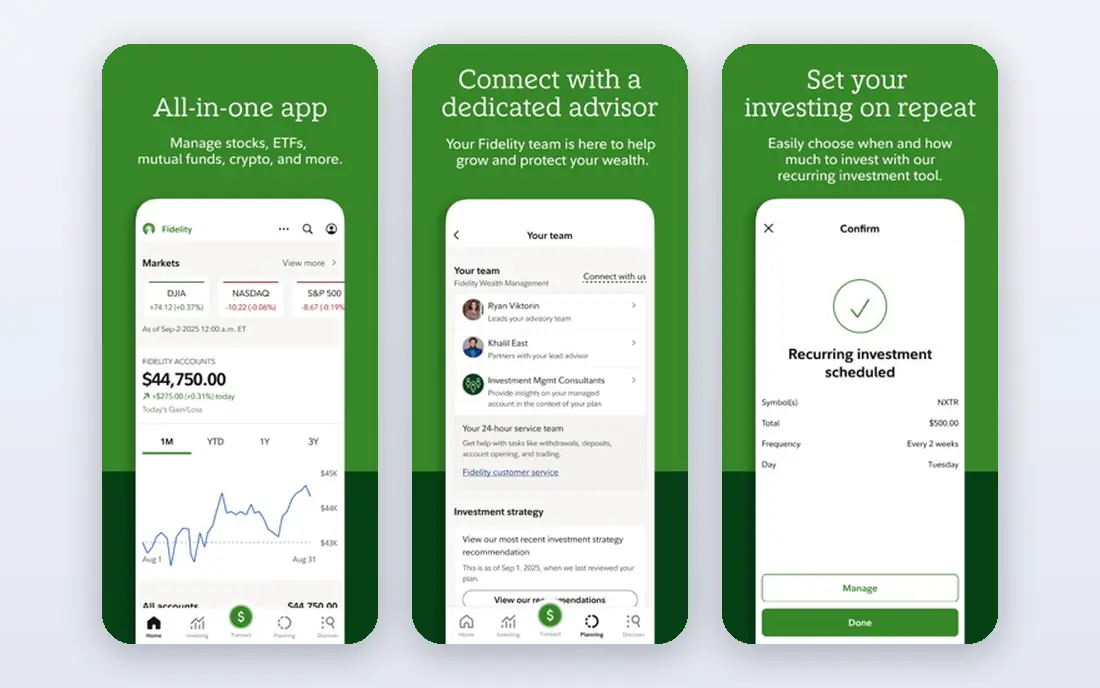
Fidelity is a strong default for self employed people and small businesses because its solo 401k has no opening or annual account fee and offers a wide range of low cost funds, ETFs and individual investments. Its planning tools, calculators and customer support help users who manage retirement saving without an employer benefits team. That combination of low cost and broad choice is hard to beat for a solo plan. Employer plans are a different purchase. Fees for a company plan depend on size, fund menu, recordkeeping and advice services, so a large employer quote will differ from a solo account. Fidelity also does not support loans in its solo 401k, which matters for users who want that option.
- No setup or annual fee for its solo 401k
- Broad fund and ETF choice
- Strong planning tools and support
- Solo plan does not support loans
- Employer plan fees depend on plan size and design
Vanguard built its reputation on low cost index investing, and that strength carries into retirement plans. Its index funds and target date funds give employees and solo savers a simple, diversified core holding without needing to pick many individual funds. For long term savers who want to keep fund costs low and avoid frequent trading, Vanguard is a natural fit. The platform experience is simpler than Fidelity or Schwab, with fewer trading tools and a more basic interface. Some solo plan details, such as per fund account fees that can be waived in certain cases, need checking on the current Vanguard page. Vanguard suits savers who prioritise low fund costs and a hands off approach over a feature rich brokerage platform.
- Low cost index funds and ETFs
- Strong target date funds
- Long focus on keeping fund costs low
- Solo plan account fees can apply per fund in some cases
- Platform tools feel simpler than Fidelity
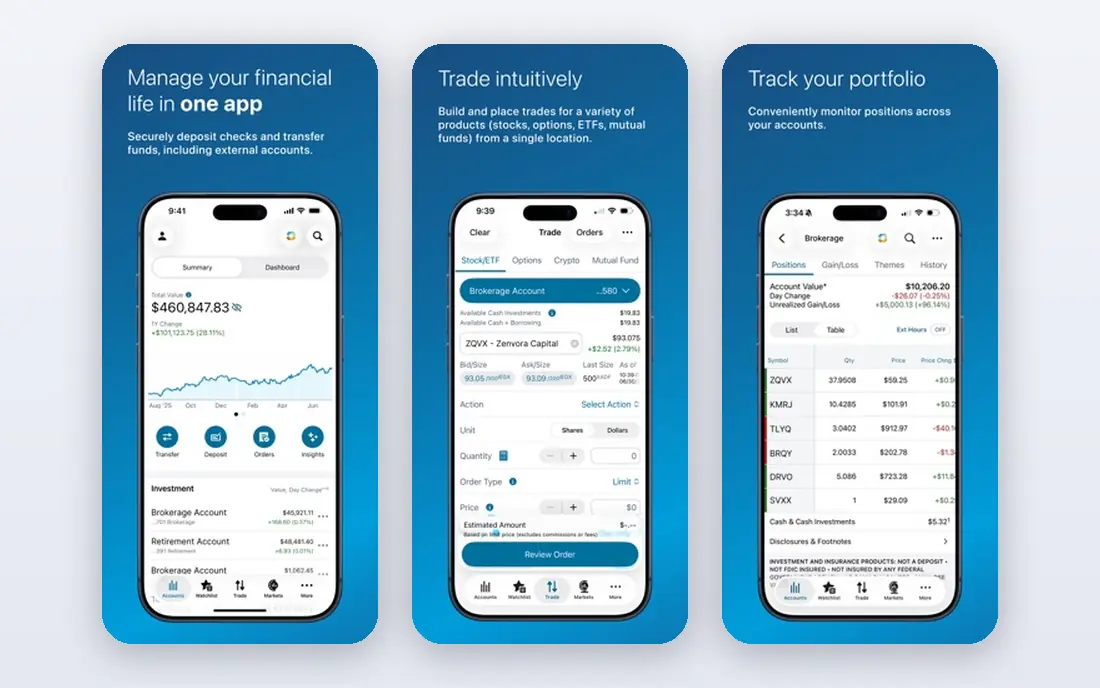
Charles Schwab matches Fidelity closely for solo 401k savers, with no opening or maintenance fee and a large range of no load, no transaction fee mutual funds alongside commission free stock and ETF trades. Its brokerage platform, research tools and branch access appeal to users who want a full service broker as well as a retirement account. Roth contributions are supported, which gives solo savers useful tax choice. Like Fidelity, Schwab solo plans do not support loans, so users who need loan access must look at other plan designs. Employer plan costs also vary by size and services, so small business owners should request a quote rather than assuming solo account terms apply. For a low cost solo plan with a strong platform, Schwab is a leading option.
- No setup or maintenance fee for its individual 401k
- Large no transaction fee fund range
- Strong brokerage platform
- Solo plan does not support loans
- Employer plan pricing depends on plan design
Empower is one of the largest recordkeepers for employer sponsored retirement plans in the US, which means many employees will meet Empower because their employer chose it, not because they shopped for it themselves. Its platform covers plan administration, participant tools, advice services and retirement income planning, which suits large employers with complex payroll, compliance and reporting needs. The drawback for comparison shoppers is transparency. Employer plan fees depend on plan size, asset level, fund menu and services, and participant fee disclosures can be hard to parse. Employees in an Empower plan should read their own plan fee disclosure and fund list, because the brand name alone does not tell you the cost of your specific plan. Empower fits large employers best, rather than solo savers looking for a simple account.
- Large scale recordkeeping for employer plans
- Planning and advice tools
- Broad employer client base
- Pricing is plan specific and can be hard to compare
- Individual savers cannot simply open an Empower employer plan
T. Rowe Price is known for target date funds and actively managed funds, which appeal to savers who want professional fund management rather than a pure index approach. Its retirement date funds adjust asset mix over time, giving employees a single fund option that changes as retirement nears. Active management brings higher fund costs than index funds in many cases, so savers should compare expense ratios for the exact funds in their plan. T. Rowe Price also serves employer plans where pricing and fund menus vary, so the experience for an employee depends on their employer plan design. It suits savers who value active research and target date simplicity and who accept the cost trade off.
- Well known target date funds
- Active fund research depth
- Retirement planning support
- Active fund costs can exceed index fund costs
- Employer plan pricing is plan specific
Principal serves many mid size and larger employers with retirement plan recordkeeping, administration and participant services. Its strength is combining retirement plans with other employer benefits and insurance products, which can simplify administration for HR teams that already use Principal for other benefits. Participant tools and education support help employees understand saving, investing and retirement income. As with other large recordkeepers, the cost and fund quality in a Principal plan depend on the employer plan, not just on the brand. Employees should check their plan fee disclosure, fund expense ratios and available advice services, because two Principal plans can differ a lot. Principal is best judged as an employer plan partner, not as a retail account a solo saver can open directly.
- Broad employer plan services
- Retirement and benefits integration
- Planning tools for participants
- Plan pricing is custom and varies by employer
- Fund menu depends on employer choices
Merrill, part of Bank of America, suits savers who already bank with Bank of America and want retirement planning linked to their wider finances. Adviser access, planning tools and integrated banking views help users who prefer a relationship based approach over a purely digital account. For employees in a Merrill served plan, that integration can make retirement saving feel part of a broader financial picture. Cost is the watch point. Adviser led and managed options can add fees on top of fund costs, so users should ask for a clear breakdown of advice, account and fund fees. Merrill plan availability also depends on employer or account type, so solo savers should check current solo and small business options before assuming Merrill fits their need. It suits users who value adviser access and bank integration enough to pay for it.
- Bank of America integration for banking clients
- Adviser access
- Broad investment choice in suitable plans
- Advice and managed options can add cost
- Plan availability depends on employer or account type
Guideline is built for small employers that want a 401k without hiring a benefits team to run it. Its monthly pricing, automated administration, compliance testing and payroll integrations reduce the admin burden that stops many small firms from offering a plan at all. For a startup or small business owner, that simplicity can be more valuable than the widest possible fund menu. The investment menu is more guided than a full brokerage solo plan, so users who want to trade individual stocks or build a custom fund list may find it limiting. Larger employers with complex plan designs, multiple entities or special testing needs may also need a larger recordkeeper. Guideline is best for small employers that want a compliant plan running with minimal admin time.
- Clear monthly pricing for small employers
- Automated administration and compliance
- Easy payroll integration
- Investment menu is more guided than a full brokerage
- Larger complex plans may need a larger recordkeeper
Human Interest targets small and mid size employers that want automation plus human help. Its plans handle administration and compliance, offer a broad investment menu, and provide concierge style guidance for employers setting up and running a plan. Spanish language support is a useful extra for diverse workforces that other small plan providers do not always offer. Monthly pricing means total cost grows with headcount, so very small teams should compare Human Interest with Guideline and with solo plan options where relevant. Larger employers may also find a large recordkeeper more cost effective at scale. Human Interest is best for small employers that want automation but still want a person to call when a plan question arises.
- Automated plans with concierge style support
- Broad investment options
- Spanish language support
- Monthly pricing adds up for very small teams
- Larger plans may compare better with large recordkeepers
How we picked these
We compared provider pages, solo plan terms, employer plan services, fund menus and public reviews, and we kept only companies that are actively offering 401k services in October 2026. We included solo plan providers, large recordkeepers and small employer specialists, because the best 401k company question means different things for employees, self employed savers and employers. We did not rank companies by past returns, because past performance does not predict future results and because fund menus differ by plan. Pricing in this article is kept general with See website where plan pricing depends on size, design and services, which is the honest approach for employer plans. Solo plan fee claims were checked against provider and public comparison pages, and readers should confirm current fees on the provider site before opening an account. This article is not financial advice, and tax and investment choices should be checked with a qualified adviser.
Choosing the right 401k company for your situation
Start by naming your role, because an employee, a solo saver and an employer need different things. An employee usually cannot choose their recordkeeper, but can choose funds inside the plan. A solo saver can choose a provider directly. An employer must weigh admin burden, compliance support, fund costs and participant tools together.
If you are an employee in a company plan
Read your plan fee disclosure and fund list first, before worrying about the provider brand. Look at total plan cost, fund expense ratios, and whether low cost index or target date funds are available. Contribute enough to get any employer match where offered, because a match is a large part of total return for many employees, then choose a diversified fund mix that fits your time horizon and risk tolerance.
If you are self employed or run a small business
Compare solo 401k terms from Fidelity, Schwab and Vanguard first, then compare employer plan providers such as Guideline and Human Interest if you have employees. Check setup and annual fees, Roth support, loan support, fund choice and admin burden. A provider that looks cheap on fees but creates hours of admin work may cost more in time than a slightly dearer automated plan.
Questions to ask any provider
Ask for total fees, including recordkeeping, advice, fund expenses and any per participant charges. Ask how compliance testing, payroll integration and participant support work, and ask what happens if you change providers later. Get answers in writing for an employer plan, because verbal quotes are hard to compare and harder to enforce.
Frequently asked questions
What is the best 401k company?
There is no single best 401k company for everyone. Fidelity and Charles Schwab suit many solo savers, Vanguard suits low cost index savers, Empower and Principal suit larger employer plans, and Guideline and Human Interest suit small employers that want automation. The best company for 401k depends on whether you are an employee, a solo saver or an employer, and on fees and fund choice in your specific plan.
Which 401k company has the lowest fees?
Solo plans from Fidelity and Charles Schwab have no setup or maintenance fee, and Vanguard is known for low cost index funds, but employer plan fees vary widely by plan size and design. Always check total fees, including fund expense ratios and per participant charges, rather than judging by one headline fee. This is general information only and is not financial advice.
Can I choose my own 401k company as an employee?
Usually no, because your employer chooses the recordkeeper and plan provider, while you choose funds inside the plan menu. If your plan fund choices are expensive or limited, you can ask HR about the plan fee disclosure and whether lower cost index or target date funds are available. Solo and self employed savers, by contrast, can choose their provider directly.
What is the difference between a solo 401k and an employer 401k?
A solo 401k is for self employed people with no employees other than a spouse in many cases, and it allows both employee and employer contributions within IRS limits. An employer 401k covers a company workforce, with recordkeeping, compliance testing, payroll integration and a fund menu chosen by the employer. Tax rules, contribution limits and deadlines differ, so check current IRS guidance or an adviser for your situation.
Are 401k returns guaranteed?
No. Investment returns depend on market performance and fund choice, and past performance does not guarantee future results. Target date and index funds can fall in value, and fees reduce returns over time. This article does not promise any return, and readers should not choose a provider based on a past return claim alone.
Should I get financial advice before choosing a 401k plan?
Yes, for tax, contribution and investment decisions that affect your retirement, especially if you run a business plan or have a complex tax situation. A qualified adviser can help with contribution limits, Roth versus pre tax choice, fund selection and employer plan design. This article is general information only and is not financial advice.
Sources we checked (9)

Online Jobs is an independent blog about careers, online work, learning new skills and the tools that help people earn. More about us.
Keep reading
All posts
n8n Alternatives
n8n alternatives compared for 2026, with Zapier, Make, Activepieces, and more, covering visual builders, code steps, self-hosting, and pricing models.

eBay Alternatives
Looking for ebay alternatives? We compared 9 marketplaces for sellers on fees, buyer reach, categories and ease of listing, to help you sell with confidence.

ZoomInfo Alternatives
The best ZoomInfo alternatives in 2026, compared on price, free plans, data coverage, and which tool fits small teams or large sales teams best in detail.