Alternatives to Rollup in 2026: 8 Bundlers Compared

How we put this together: we compare official feature and pricing pages, app store listings, privacy policies and public user reviews. Prices change, so check the provider's site before you pay.
Key takeaways
- Rollup is still a strong choice for libraries, but most app teams will move faster with Vite or webpack.
- esbuild is the pick when raw build speed matters most, while Parcel is the pick when you want as little configuration as possible.
- Rspack is the most direct path for teams that already know webpack and want a faster build.
- All eight options here are open source, so the real cost is setup time and maintenance, not a monthly fee.
- If you publish a library, check output formats and tree shaking before you judge a bundler by dev server speed alone.
Quick comparison
| Name | Who it suits | Starting price | Free option | |
|---|---|---|---|---|
 esbuild | Fast builds and simple tooling | Free | Yes | Visit |
 webpack | Large and complex applications | Free | Yes | Visit |
 Vite | Modern web apps and framework projects | Free | Yes | Visit |
 Parcel | Prototypes and small projects with no setup | Free | Yes | Visit |
 Rspack | Webpack compatible projects that need speed | Free | Yes | Visit |
 Turbopack | Next.js applications | Free | Yes | Visit |
 Rolldown | Library builds with Rollup style output | Free | Yes | Visit |
 Bun | Teams that want runtime, bundler, and package tools together | Free | Yes | Visit |
The best alternatives to Rollup
The name Rollup is used for more than one product, so we state our focus plainly here. This guide covers Rollup.js, the JavaScript module bundler used to package code for browsers and libraries. If you meant a different product called Rollup, the tools below will not be a direct match, and you should compare that product area separately.
Rollup is known for clean output and precise tree shaking, which is why so many libraries use it. The alternatives below trade some of that control for speed, simpler setup, or a fuller app workflow. We compared official documentation, plugin ecosystems, and the kind of project each tool is built for.
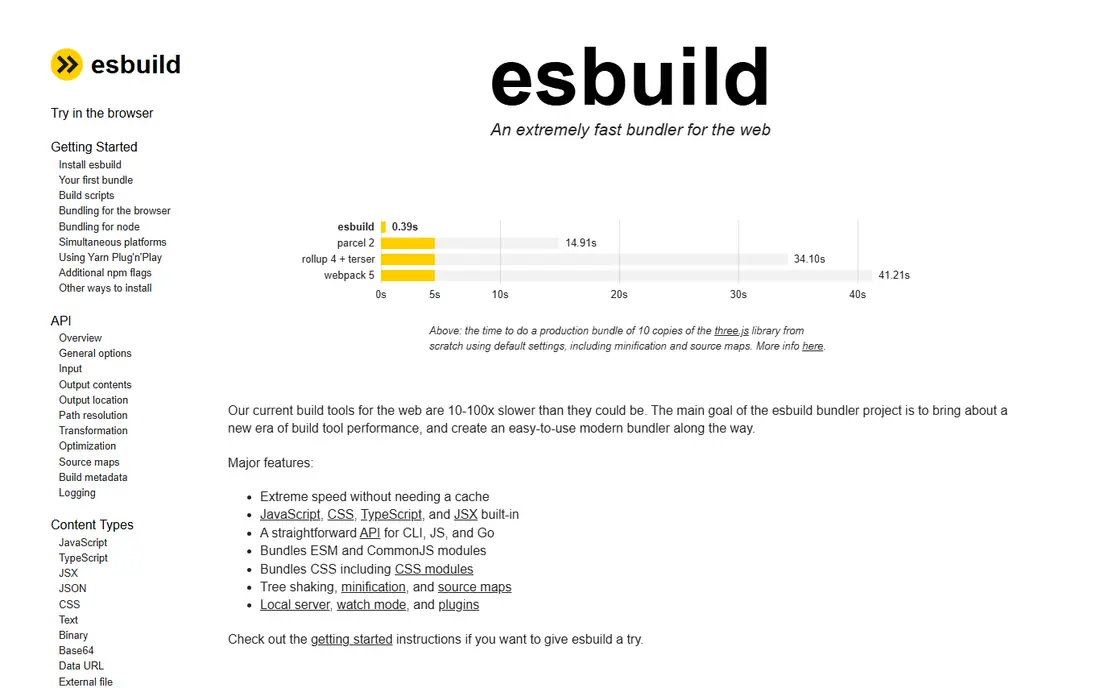
For many small jobs, esbuild is the tool we reach for first. It bundles and minifies JavaScript and TypeScript quickly, and it does so with a short list of options rather than a large configuration file. That simplicity makes it easy to add to a build script, a continuous integration pipeline, or a small command line tool.
The catch is that esbuild is a bundler, not a full app framework. You will need to add your own dev server, hot reloading setup, or framework tooling if you want those features. Teams that already have a clear build step and just want speed will like that trade. Teams that want a complete dev experience in one package will usually prefer Vite.
- Very fast builds
- Simple command line use
- Handles TypeScript and JSX without a long setup
- Smaller plugin ecosystem than webpack
- Fewer built in app features than Vite
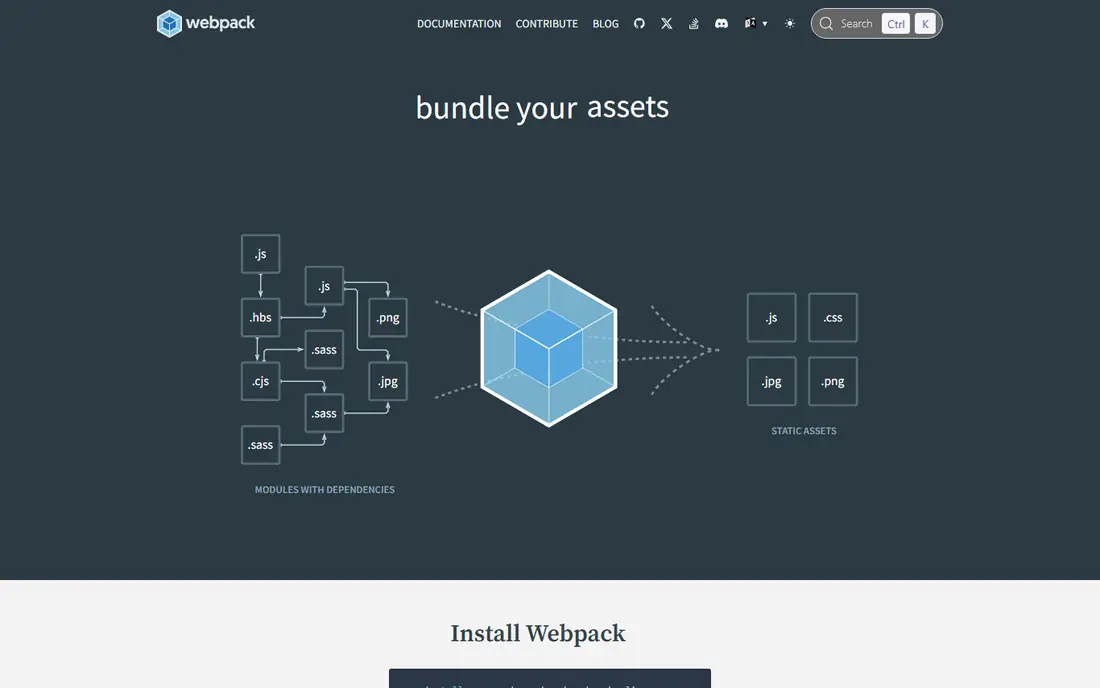
Webpack remains the most flexible option in this list, and that flexibility is both its strength and its cost. Loaders handle styles, images, fonts, and other assets, while plugins cover code splitting, caching, and output control. If your app has unusual asset needs or a long history, webpack probably already has a way to handle it.
New projects should weigh that power against setup time. A webpack configuration can grow into a file that only one or two people on a team fully understand. For a fresh app with standard needs, Vite gives you most of the result with far less setup. For a large existing app, staying on webpack or moving to Rspack is often safer than a full rewrite.
- Huge loader and plugin ecosystem
- Fine control over output
- Long track record on large codebases
- Configuration can get long
- Slower builds than newer Rust and Go based tools
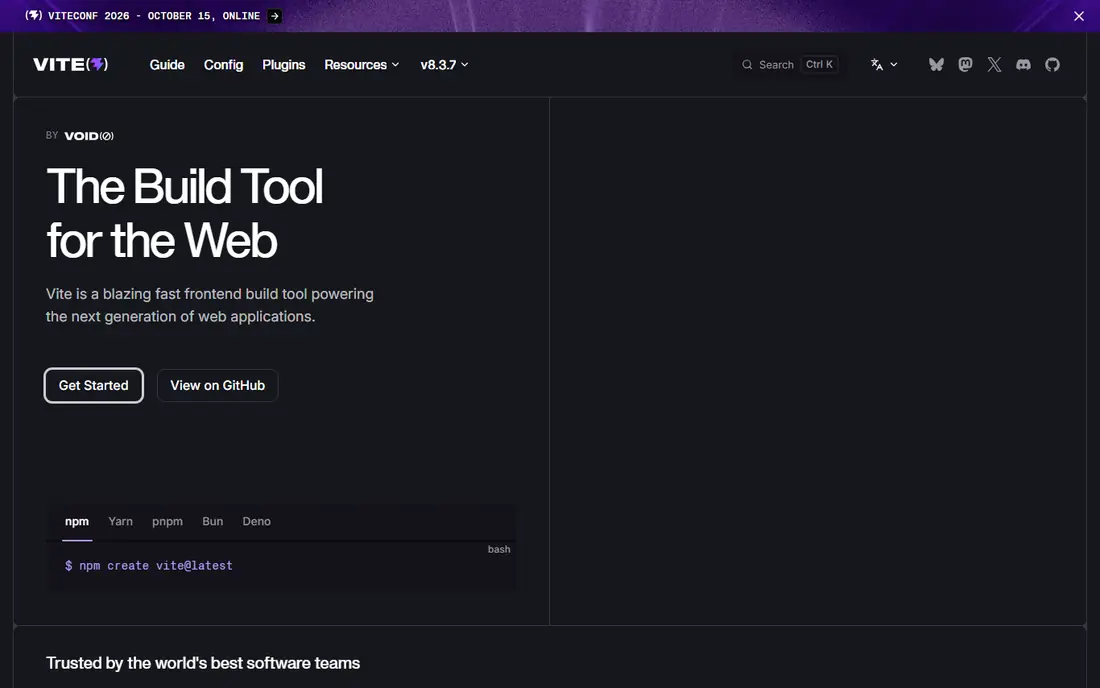
Vite is our pick for most people starting a new web app. In development it serves code as native modules, so startup feels quick even as a project grows. It works well with React, Vue, Svelte, and other frameworks, and its plugin system builds on the Rollup ecosystem that many developers already know.
It is worth noting that Vite does not fully leave Rollup behind. Production builds use Rollup under the hood, so if your main complaint about Rollup is its production output, Vite may not solve that part. What Vite does solve is the day to day dev experience, with fast refresh, sensible defaults, and far less configuration for a standard app.
- Fast dev server with native modules
- Strong framework support
- Uses Rollup for production builds
- Production builds still use Rollup, so Rollup plugin issues can carry over
- Less suited to very unusual legacy setups
Parcel takes a different approach from webpack. You point it at an entry file and it figures out dependencies, transforms, and output with minimal input from you. That makes it a good fit for a prototype, a small marketing site, or a team where not everyone wants to learn bundler configuration.
The trade is control. When you need a very specific output, a custom transform, or a complex code splitting plan, Parcel can be harder to bend than webpack or Rollup. For projects where speed of starting matters more than fine tuning, that trade is easy to accept. For a library with strict output requirements, Rollup or Rolldown remains a better fit.
- Works with little or no configuration
- Handles many asset types automatically
- Easy entry point for mixed skill teams
- Less control over fine details
- Can feel opaque when a build behaves in an unexpected way
Rspack is designed for teams that like webpack but dislike its build times. It aims for compatibility with webpack configuration and many plugins, while running the core build in Rust for speed. That combination makes migration less risky than switching to a tool with a wholly different model.
We would still test a migration on a copy of the real project before committing. Plugin coverage is good and growing, but it is not identical to webpack, and edge cases in loaders or custom plugins can surface late. If your webpack setup is standard, Rspack can be a clear win. If it relies on rare plugins, check each one first.
- Webpack compatible configuration and plugins in many cases
- Much faster builds
- Built in Rust
- Some webpack plugins may not work yet
- Newer ecosystem than webpack itself
Turbopack is the bundler built by the Next.js team, and it shows. It is tuned for large Next.js apps, with incremental compilation that keeps rebuilds short as you edit. If you already build with Next.js, Turbopack is the path of least resistance, and it is now the default direction for that framework.
Outside Next.js, the case is weaker. Turbopack is not a general replacement for Rollup in a library workflow, and its plugin story is still narrower than webpack. Use it where it fits best, which is a Next.js app, and pick a different tool for a standalone library or a non Next.js site.
- Fast incremental builds
- Built for Next.js workflows
- Rust based performance
- Best value inside Next.js
- Less general purpose than webpack or Vite
Rolldown is the closest option here to a direct Rollup replacement. It is written in Rust and aims to match Rollup behavior, including its plugin interface, while building far faster. It also powers newer versions of Vite, which gives it a real user base beyond early adopters.
That closeness is the appeal for library authors. You keep the Rollup style output and tree shaking approach, but you spend less time waiting on builds. The risk is maturity. Check that the plugins you rely on work with Rolldown, and test output bundles carefully before you publish a release built with it.
- Rollup compatible plugin approach
- Much faster than Rollup in many builds
- Clean module output
- Newer project, so some Rollup plugins may need updates
- Docs and examples are still catching up
Bun is broader than a bundler alone. It runs JavaScript and TypeScript, manages packages, runs tests, and bundles code, all from one binary. For a new project that does not depend on a long list of Node specific behavior, that consolidation can remove several tools from your setup.
The catch is compatibility. Most common packages work, but a project with deep Node dependencies should be tested rather than assumed to work. Bun is best viewed as a strong option for new scripts, tools, and apps where you control the stack, rather than a forced migration for a large existing codebase.
- Bundler, runtime, and test runner in one tool
- Fast startup
- Simple for scripts and small apps
- Not a drop in replacement for every Node workflow
- Some Node specific packages may behave differently
How we picked these
We compared official documentation, plugin ecosystems, and published project descriptions for each bundler, and we focused on tools that are actively maintained and truly fit the job of packaging JavaScript modules. We left out generic build scripts and tools that only transpile code without bundling it, since they do not replace Rollup on their own. We also weighed the difference between library output and app development, because a tool that is fast in development is not always the best choice for a published package.
What to check before you switch bundlers
Start with the output, not the dev server. Build a small version of your real project with the new tool and inspect the bundle size, the module format, and how unused code is handled. A fast dev server feels good in week one, but bundle size and output correctness affect every user who loads your code.
Next, list every plugin and loader you rely on today. Check whether each one has an equivalent, a compatible version, or a workaround in the new tool, and note any that would need a rewrite. Code splitting, asset handling, and environment variables are common places where a migration stalls, so test those paths early rather than at the end.
For libraries
If you publish a package, prioritize clean ES module output, support for multiple formats where you need them, and precise tree shaking. Rollup and Rolldown lead here. Vite can also work for libraries through its library mode, but check the output before you rely on it.
For apps
If you build an app, prioritize dev server speed, framework support, and how easy it is for a new team member to run the project. Vite, Parcel, and Turbopack lead here, depending on your framework. Rspack is the safer move for a large webpack app that needs speed without a new mental model.
Migration checklist
Keep your old build working until the new build passes the same checks. Compare bundle output, run your test suite, and ship the new build to a small share of traffic if you can. Keep a note of any plugin you replaced, so the next person who touches the config can see why a choice was made.
Frequently asked questions
What is the best alternative to Rollup?
For most app teams, Vite is the best starting point, because it pairs a fast dev server with Rollup based production builds and strong framework support. For library authors who want to stay close to Rollup, Rolldown is the most direct alternative. For raw speed in scripts and pipelines, esbuild is hard to beat.
Are rollup alternatives free?
Yes, all eight tools in this guide are open source and free to use. The cost comes in setup time, learning time, and maintenance, not in a license fee. Some teams pay for support or for hosted build services around these tools, but the bundlers themselves do not require a paid plan.
Is Vite a replacement for Rollup?
Vite uses Rollup for production builds, so it is better described as a fuller workflow around Rollup than a clean break from it. If you like Rollup output but want a faster dev experience, Vite is a good fit. If you want to leave Rollup output behind entirely, look at esbuild, Rspack, or Rolldown instead.
Should I switch from webpack to Rspack?
Rspack is worth testing if webpack build times are slowing your team down and your plugin set is standard. Run it on a copy of your project, compare build times and output, and check each plugin. If everything passes, the speed gain is real. If rare plugins fail, staying on webpack may still be the safer choice.
Is esbuild good for large apps?
esbuild is excellent for bundling speed, and many large projects use it as part of their pipeline. As a sole app tool, it needs more surrounding setup than Vite, since it does not include a full dev server and framework workflow out of the box. Pair it with a framework tool or use it for libraries, scripts, and CI jobs where speed matters most.
What about Rollup for libraries in 2026?
Rollup remains a sound choice for libraries, thanks to its clean output and tree shaking. The reason to look elsewhere is usually build speed or a fuller app workflow, not a flaw in Rollup output itself. Rolldown is the main alternative to watch if you want Rollup style output with faster builds.
Sources we checked (8)

Online Jobs is an independent blog about careers, online work, learning new skills and the tools that help people earn. More about us.
Keep reading
All posts
Replit Alternatives
Replit alternatives for 2026 compared: browser coding, AI app builders and team workspaces, with free plans, limits and honest trade-offs for developers.
Docker Alternatives
Compare Docker alternatives for 2026, with Podman, Rancher Desktop, OrbStack, containerd, Colima, Finch, Portainer and Kubernetes on cost, fit and licensing.

Custom AI Agent Tools Best Practices
Learn custom ai agent tools best practices with tools for building custom AI agents, from frameworks to low-code builders, plus safety and testing notes.