Best Alternatives to Nuxt in 2026: 9 Frameworks Compared

How we put this together: we compare official feature and pricing pages, app store listings, privacy policies and public user reviews. Prices change, so check the provider's site before you pay.
Key takeaways
- Most Nuxt alternatives are free and open source, so hosting and team skill matter more than license cost.
- Next.js is the closest match for teams that already work in React and want a large ecosystem.
- Astro is our pick for content sites, docs, and marketing pages that should ship very little JavaScript.
- SvelteKit suits teams that want a smaller, simpler codebase and fast server-rendered pages.
- React Router, Gatsby, Angular, SolidStart, Vue, and Eleventy each fit a narrower job, and we explain which one that is below.
Quick comparison
| Name | Who it suits | Starting price | Free option | |
|---|---|---|---|---|
 Next.js | React teams building full apps | Free | Yes | Visit |
 Astro | Content sites and marketing pages | Free | Yes | Visit |
 SvelteKit | Compact Svelte apps | Free | Yes | Visit |
 React Router | React apps with web-first routing | Free | Yes | Visit |
 Gatsby | GraphQL content sites | Free | Yes | Visit |
 Angular | Large enterprise apps | Free | Yes | Visit |
 SolidStart | Fast Solid apps | Free | Yes | Visit |
 Vue | Flexible Vue projects | Free | Yes | Visit |
 Eleventy | Simple static sites | Free | Yes | Visit |
The best alternatives to Nuxt
Nuxt gives Vue developers routing, server rendering, and a module system in one package. The options below cover the same ground in other ecosystems, plus two Vue paths for teams that want to stay close to Nuxt without using it.
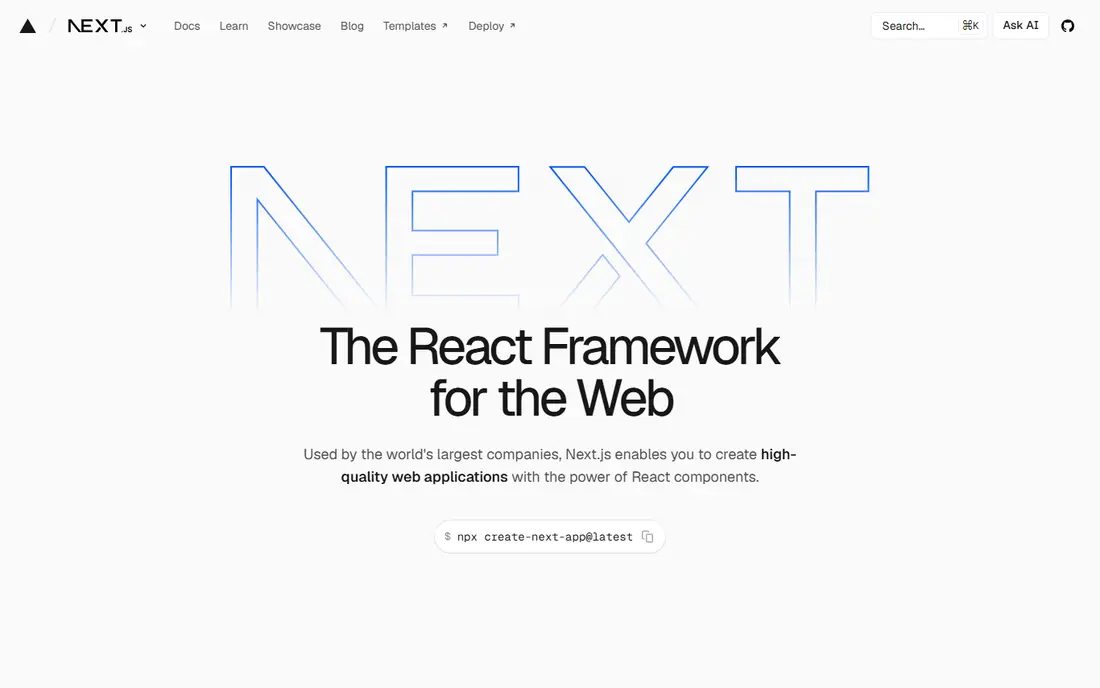
Next.js is the default answer for React teams, and that popularity is a practical benefit. Almost every common problem already has a documented pattern, a library, or a forum thread. Routing, data fetching, image handling, and deployment are built in, so a team spends less time wiring parts together.
The catch is complexity. The App Router model rewards teams that learn server components properly, and it can confuse developers who expect a simple page model. For a small marketing site, Next.js is often more machinery than the job needs. For a product with accounts, dashboards, and dynamic pages, it earns its place.
- Huge ecosystem and hiring pool
- Server components and static rendering in one framework
- Strong Vercel and self-hosting options
- App Router has a learning curve
- Server-heavy pages can raise hosting costs
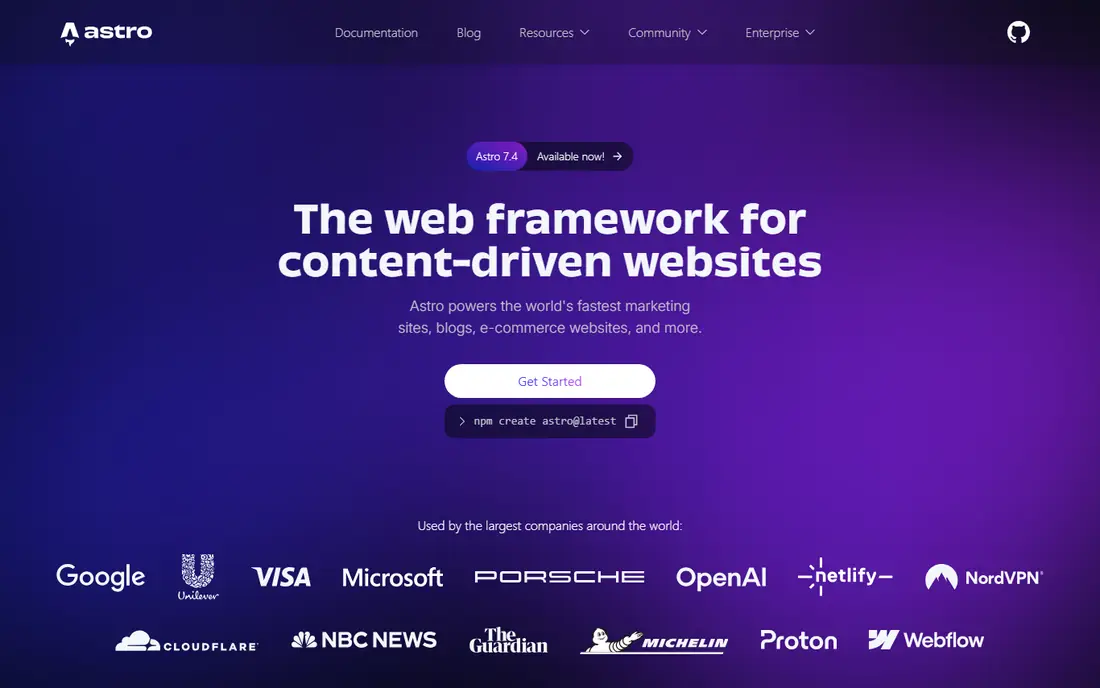
Astro starts from a different question than Nuxt. Instead of asking how to hydrate a whole app, it asks how little JavaScript a page truly needs. Content pages render to plain HTML, and interactive parts load only where they are used. That keeps pages fast and hosting cheap.
This is our pick for blogs, docs, portfolios, and marketing sites. It is less natural for a dashboard with constant state changes, where a framework built around app state fits better. Teams that mix content and app pages can still use Astro for the content side and link to a separate app.
- Ships almost no JavaScript by default
- Works with React, Vue, Svelte, and Solid components
- Content collections suit blogs and docs
- Less built in for complex app state
- Interactive apps need extra planning
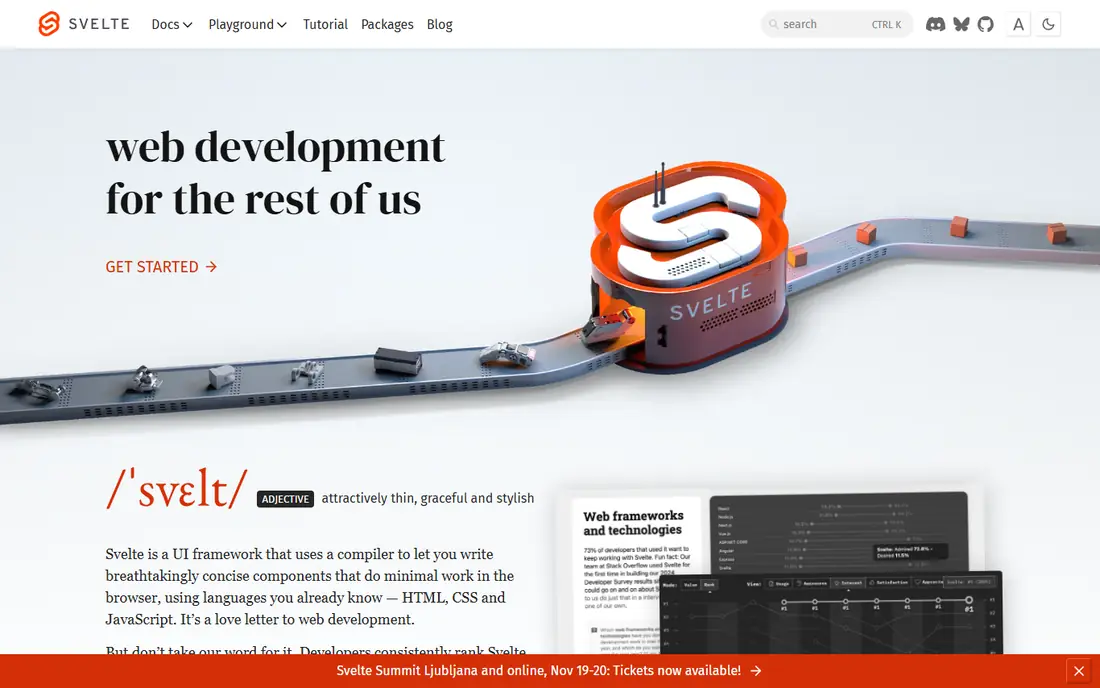
SvelteKit is the closest feeling match to Nuxt for developers who like Vue but are open to Svelte. Svelte compiles components to plain JavaScript, so the output stays small and the code stays readable. Routing, server loading, and form actions come built in.
The honest limit is ecosystem size. A React team can find a library for almost anything. A Svelte team may need to build a small piece or adapt one. For a small or mid-size team that values readable code over library choice, that trade is often worth it.
- Less boilerplate than most rivals
- Server rendering by default
- Vite-based development feels fast
- Smaller ecosystem than React or Vue
- Fewer ready-made component libraries
React Router, formerly Remix, suits React developers who want control without leaving the React world. It leans on standard web behavior for forms, caching, and navigation, which makes its apps easier to reason about once the model clicks. It deploys to many hosts, including edge platforms.
Compared with Next.js, it gives less out of the box for image handling and some app features. That freedom helps experienced teams and slows newer teams. Pick it when your team already knows React well and wants a framework that stays close to the web platform.
- Built on web standards and plain fetch patterns
- Good data loading model
- Flexible deployment
- Less hand-holding than Next.js
- Some features need manual setup
Gatsby fits teams that pull content from a CMS, a headless store, or several sources at once. Its GraphQL layer lets a page ask for exactly the content it needs, and plugins cover many common sources. The result is a fast static site with a familiar React workflow.
Build time is the main watch point. Small and mid-size sites build quickly, but very large catalogs need care and caching. Teams that do not need GraphQL may find Astro simpler. Teams that already use GraphQL will feel at home here.
- Strong data layer for CMS content
- Large plugin library
- Fast static output
- Build times can grow on very large sites
- GraphQL adds a learning step
Angular is the choice when a large team needs shared rules and long-term structure. It includes routing, forms, HTTP, and testing guidance, so different teams build in compatible ways. TypeScript is central, not an add-on, which helps on codebases that many people touch.
For a small site, Angular is heavy. The setup, concepts, and boilerplate take longer to learn than SvelteKit or Astro. For an enterprise product with strict standards and a long life, that structure is the point, and it pays back over years of maintenance.
- Complete, opinionated structure
- TypeScript by default
- Strong tooling for large teams
- Steep learning curve
- More ceremony for small projects
SolidStart is the meta-framework for Solid, and it will appeal to React developers who want better runtime performance without learning a new template language. Solid updates only the exact parts of the page that change, rather than re-rendering whole components. That can make interactive pages feel quick.
The trade is maturity. The community is smaller, so answers and libraries are thinner than in React or Vue. It is a good pick for performance-focused teams that are comfortable reading docs and building small utilities themselves.
- Fine-grained reactivity keeps updates cheap
- React-like JSX syntax
- Small output
- Smaller community than React or Vue
- Fewer learning resources
Plain Vue is the simplest way to stay in the Vue world without Nuxt. It suits single-page apps, embedded widgets, and projects where a team wants to pick its own router and state library. Vue itself is well documented and easy to learn.
The cost is assembly. Nuxt makes decisions for you, while plain Vue asks you to choose a router, a build setup, and a rendering strategy. That is fine for experienced Vue teams. Teams that want those decisions made should look at Nuxt itself or accept the extra setup here.
- Gentle learning curve
- Flexible rendering options
- Huge Vue ecosystem
- Routing, state, and server rendering need separate choices
- More assembly than Nuxt
Eleventy is the quiet option on this list. It turns templates and data into static HTML, with no framework runtime to learn. That makes it a strong pick for docs, small marketing sites, and personal sites that rarely change.
It is not an app framework. There is no built-in routing for dynamic pages, no server state, and no component system like Vue or React. If your site is mostly content, that simplicity is a strength. If you need accounts and live data, pair Eleventy with separate services or pick a full framework above.
- Very simple and fast
- Works with many template languages
- Tiny output
- No built-in app features
- Dynamic behavior needs separate services
How we picked these
We compared official feature pages, docs, and pricing for each framework, and we focused on how each one handles routing, rendering, and deployment. We included frameworks that cover the same jobs Nuxt covers, from content sites to full apps, and we kept the list to tools that are actively maintained and free to use. We did not claim hands-on testing, and we avoided speed or size claims that depend on a specific project, since those vary with code and hosting.
How to choose the right Nuxt alternative
Start with your team, not the feature list. A React team will move fastest with Next.js or React Router, a Vue team with Vue or Nuxt-style structure, and a team open to a new language with SvelteKit or SolidStart. Changing ecosystems costs more than any feature saves, so weigh hiring and training before switching.
Match the framework to the site type
Content sites, docs, and marketing pages do best with Astro or Eleventy. Dashboards and products with accounts fit Next.js, SvelteKit, React Router, Angular, or SolidStart. A site that mixes both can split the work, with a content framework for public pages and an app framework behind login.
Check rendering and hosting early
Decide which pages need server rendering, which can be static, and where the site will host. Static output is cheap and fast for content. Server-rendered pages suit personal or changing data but use more compute. Test a realistic page on your chosen host before committing, since hosting cost is where free frameworks differ most.
Plan for the long term
Look at docs, release pace, and community size. A large community helps with hiring and problem solving. A smaller framework can still be right if your team is comfortable with it and the project is contained. Avoid picking a framework only because it is new, and avoid staying with a poor fit only because it is familiar.
Frequently asked questions
Is Nuxt free?
Nuxt itself is free and open source. The frameworks on this list are also free, so your main costs are hosting, developer time, and any paid services you add, such as a CMS or database.
What is the closest alternative to Nuxt for React developers?
Next.js is the closest match in spirit, since it adds routing, rendering, and deployment conventions to React in the same way Nuxt does for Vue. React Router is a lighter, more web-standards option for teams that want more control.
Which Nuxt alternative is best for a blog?
Astro is our pick for most blogs and docs sites, because it ships very little JavaScript and handles content collections well. Eleventy is a simpler choice for a small blog with no interactive features.
Can I migrate from Nuxt to Astro or Next.js easily?
Migration is rarely a copy-and-paste job, since components, routing, and data loading differ between ecosystems. Vue teams moving to Astro can reuse some Vue components, while a move to Next.js means rewriting components in React. Budget time for routing and content migration.
Do I need a framework at all for a small site?
Not always. A small static site can work well with plain HTML or Eleventy, and a simple interactive page may only need Vue or React on its own. A meta-framework earns its place when you need routing, server rendering, and shared conventions across many pages.
Sources we checked (9)

Online Jobs is an independent blog about careers, online work, learning new skills and the tools that help people earn. More about us.
Keep reading
All posts
Best Alternatives to pnpm
Alternatives to pnpm for JavaScript projects include npm, Yarn, Bun, and Deno. We compare speed, disk use, workspaces, and best fit.

Best Alternatives to Qwik
Alternatives to Qwik for fast, low-JavaScript sites include Astro, SvelteKit, SolidStart, Next.js, and Nuxt. We compare speed focus and fit.

Best AI Tools for Web App Development
Compare the best ai tools for web app development, from prompt-to-app builders to AI code editors, with pricing, free plans and honest trade-offs for 2026.