Best Alternatives to Duolingo in 2026: 8 Apps Compared

How we put this together: we compare official feature and pricing pages, app store listings, privacy policies and public user reviews. Prices change, so check the provider's site before you pay.
Key takeaways
- The best Duolingo alternatives fix a specific gap: Babbel for grammar, Busuu for feedback, Pimsleur for speaking, and italki for live conversation.
- No app alone makes you fluent. The strongest results come from app practice plus real speaking, reading or listening outside the app.
- Free tiers vary widely, so check whether your language has a full course at your level, not just a long language list.
- A structured course suits learners who want a clear path, while a tutor marketplace suits learners who want flexible, human conversation.
Quick comparison
| Name | Who it suits | Starting price | Free option | |
|---|---|---|---|---|
 Babbel | Structured grammar and dialogue | $8.95 per month | No | Visit |
 Busuu | Community feedback and courses | Free | Yes | Visit |
 Rosetta Stone | Immersion-based learning | See website | Free trial | Visit |
 Memrise | Vocabulary and native clips | Free | Yes | Visit |
 Pimsleur | Audio listening and speaking | See website | Free trial | Visit |
 italki | Live one-to-one tutoring | See website | No | Visit |
 LingQ | Reading and listening input | Free | Yes | Visit |
 Mondly | Quick daily lessons | Free | Yes | Visit |
The best alternatives to Duolingo
Duolingo is strong for habit building and short daily practice, but many learners leave it because grammar is thin, speaking practice is scripted, or courses end at a lower level. The apps below solve different parts of that problem, so we note the skill each one serves best.
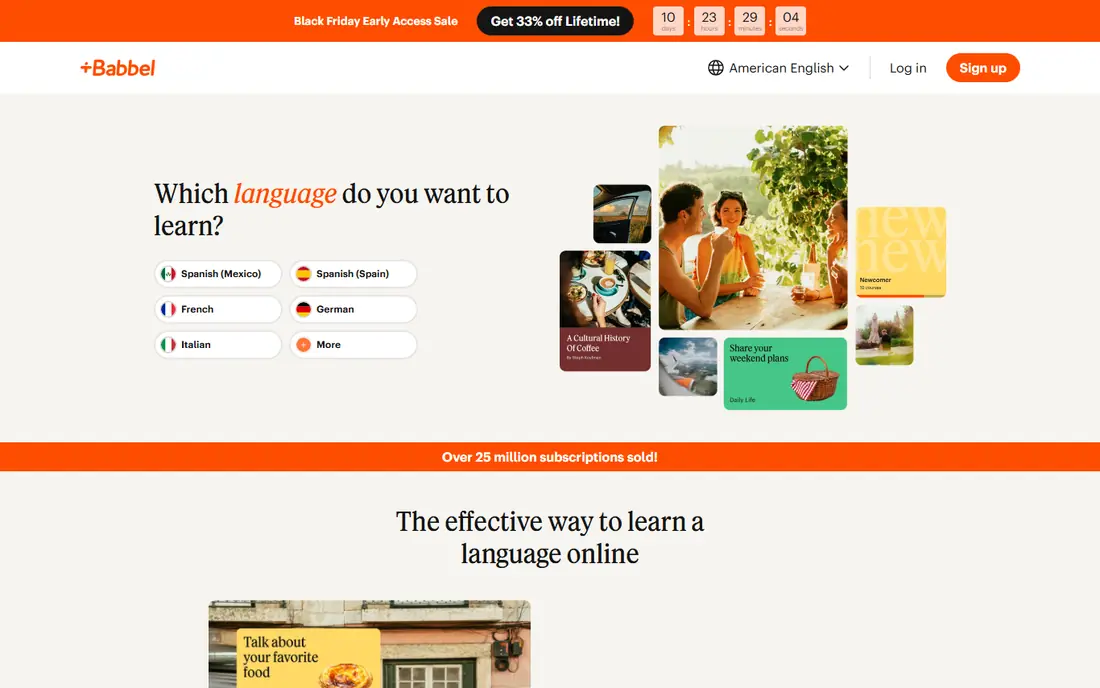
Babbel is the best structured alternative for learners who want to understand why a sentence works, not just repeat it. Lessons build around dialogues, explain grammar in context, and review vocabulary with spaced repetition. The course path is clear, which helps learners who felt lost in Duolingo's game-style progression.
The trade-off is price and scope. Babbel has no full free plan, though the first lesson in a course is often free to try, and live classes cost extra. If you want a self-study course with grammar explanations and a steady path, Babbel is the most direct upgrade from Duolingo. If you want free practice, pair a free app with Babbel's trial first.
- Grammar explained in lessons
- Dialogue-based courses
- Clear course path
- No full free plan
- Live classes are a separate product
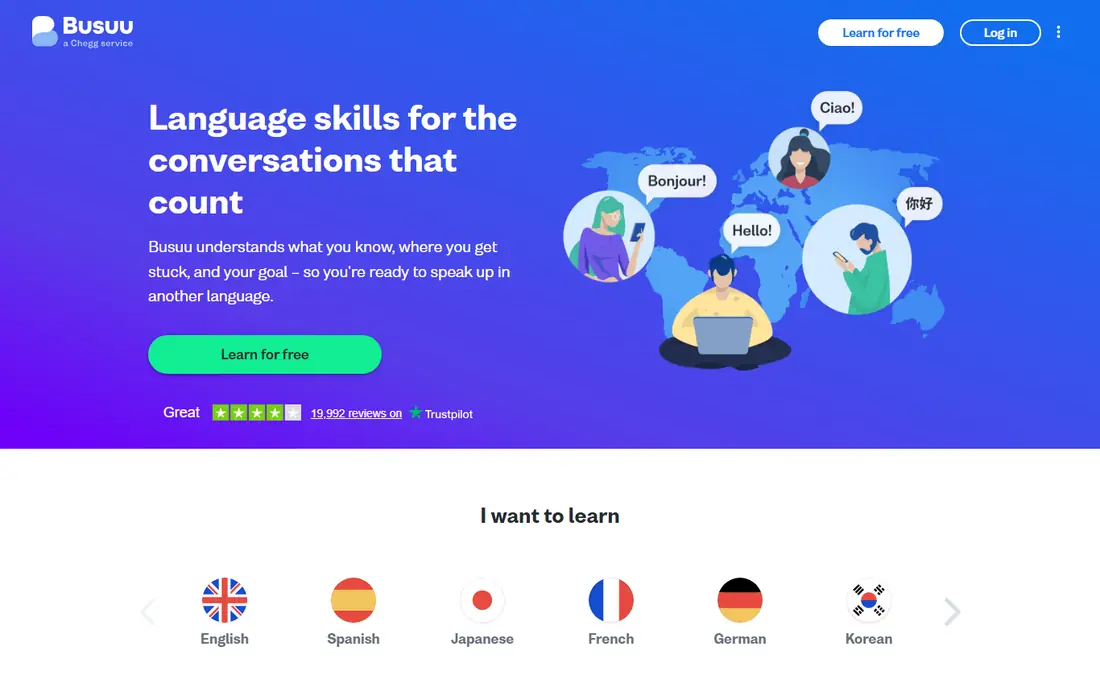
Busuu combines structured courses with human feedback, which is its main edge over Duolingo. Lessons follow CEFR levels, and community members who speak your target language can correct your written and spoken exercises. That feedback catches errors that an automated checker misses, especially in word choice and natural phrasing.
The free tier covers core lessons, while Premium adds more courses, offline mode and AI conversation features on higher plans. Course depth varies by language, so check your language before paying. For learners who want a course plus real human corrections without booking a tutor, Busuu is a strong, low-cost pick.
- Free tier
- Structured CEFR-mapped courses
- Native speaker corrections
- Premium needed for full features
- Course depth varies by language
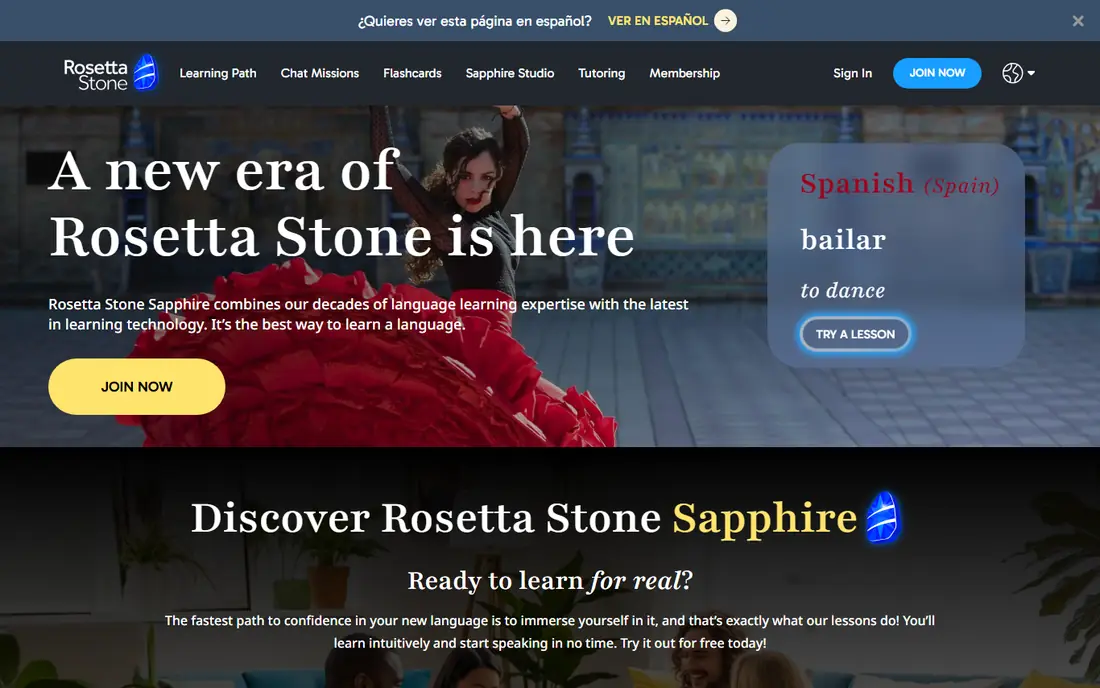
Rosetta Stone teaches through images, audio and context, with little use of your first language. That immersion style suits learners who want to think in the new language from the start, and its TruAccent pronunciation tool gives feedback on spoken words. A lifetime option exists for some plans, which can suit long-term learners who dislike subscriptions.
The limit is grammar. Rosetta Stone explains less grammar explicitly than Babbel, so some learners feel unsure about rules even when they can repeat phrases. It is also not the cheapest option. If immersion and pronunciation matter most to you, and you are happy to learn grammar through examples, Rosetta Stone is worth a trial.
- Immersion method
- Pronunciation feedback
- Lifetime option for some plans
- Little grammar explanation
- Pricing varies by plan and language
Memrise is the vocabulary pick. It uses spaced repetition to build word knowledge, and native-speaker clips show how words sound in real speech, not just in a synthetic voice. That combination helps learners who know grammar basics but lack the words to say what they mean.
It is not a full replacement course on its own. Grammar and conversation structure are lighter than Babbel or Busuu, so Memrise works best alongside a course or tutor. The free tier covers core courses, while Pro removes ads and adds more features. If vocabulary is your bottleneck, Memrise is the fastest way to widen it.
- Free core courses
- Vocabulary with spaced repetition
- Native-speaker video clips
- Less structured as a full course
- Paid Pro needed for full features
Pimsleur is the audio pick, and it shines for commuters. Lessons are around 30 minutes, built around listening and speaking, with graduated recall that prompts you to answer before you hear the correct phrase. That method builds speaking confidence faster than tap-and-match drills, because you practise producing language, not just recognising it.
Reading, writing and grammar depth are lighter than a full course app, and pricing is subscription or per-level, so check current plans. If your main goal is to speak and understand in conversation, and your study time is mostly audio time, Pimsleur is one of the best Duolingo alternatives you can choose.
- Audio-first lessons
- Graduated recall method
- Good for commutes and driving
- Subscription or per-level cost
- Reading and writing are lighter
italki is the speaking pick for learners who are ready for real conversation. You book one-to-one lessons with professional teachers or community tutors, choose lesson length and price, and practise speaking with a human who can correct you in real time. That live practice is the missing piece in most app-only learning, and it adapts to your level and interests.
It is not a course by itself. You need a tutor plan, or an app for vocabulary and grammar between lessons, to make the most of it. Prices vary widely by tutor and language, often from a few dollars to much more per hour. If speaking is your goal, even one lesson a week with italki, plus daily app practice, will move you faster than app practice alone.
- Live human tutors
- Pay per lesson
- Many languages and price points
- No structured course by itself
- Quality varies by tutor
LingQ is the input pick for intermediate learners. It offers a library of reading and listening lessons, lets you click unknown words to save them, and tracks vocabulary as you read and listen. That input-heavy method suits learners who already know basics and want to move from textbook sentences to real content, such as stories, news and podcasts.
The interface packs many features, and speaking practice is not its strength, so pair it with a tutor or speaking app if conversation is your goal. The free plan has limits, while Premium adds more lessons and features. If you enjoy reading and listening, and you want to learn from content you actually care about, LingQ is a strong next step after Duolingo.
- Free plan with limits
- Large library of reading and listening content
- Vocabulary tracking
- Interface can feel busy
- Speaking practice needs another tool
Mondly is the light daily alternative for learners who want Duolingo-style brevity with a different feel. It offers short lessons, daily practice, vocabulary builders and speech recognition, across many languages. The chatbot and augmented reality features in some versions add variety, though they are not a substitute for human conversation.
Depth is the limit. Grammar explanations are lighter than Babbel, and course quality varies by language, so check your language before committing to a paid plan. For a free, low-pressure daily habit, Mondly is a pleasant change from Duolingo. For serious study, use it as a supplement to a structured course, not as your only tool.
- Free app version
- Short daily lessons
- Speech recognition
- Many languages
- Depth varies by language
- Grammar explanations are light
How we picked these
We compared official feature pages, pricing pages and public reviews for Duolingo alternatives, and we favoured apps with current availability, a clear learning method and a stated free or trial entry where available. We checked course structure, grammar depth, speaking practice, vocabulary tools and tutor options, and we noted where a language course may be shorter than the marketing suggests. We did not claim hands-on testing, and where pricing varies we wrote See website.
How to choose the right Duolingo alternative
Start with your weakest skill. If grammar confuses you, choose Babbel. If you cannot find words, choose Memrise or LingQ. If you understand but cannot speak, choose Pimsleur or italki. If you want feedback from real people, choose Busuu or italki. That single choice matters more than the app with the longest language list.
Next, check your language and level. Open the course for your language, not just the homepage, and see whether it goes beyond beginner level and covers the topics you need. Then set a realistic daily time. A 10-minute habit you keep beats a 60-minute plan you drop, and a weekly tutor lesson plus daily app practice often beats either alone. Finally, test the free tier or trial for a week with real study, and keep the app you actually open, not the one with the best marketing.
Frequently asked questions
What are the best alternatives to Duolingo?
Babbel, Busuu, Rosetta Stone, Memrise, Pimsleur, italki, LingQ and Mondly are among the best alternatives to Duolingo. Babbel suits grammar, Busuu suits feedback, Pimsleur suits speaking, italki suits live tutoring, and Memrise and LingQ suit vocabulary and input.
What is the best free alternative to Duolingo?
Busuu, Memrise, LingQ and Mondly all offer free tiers, though full features need paid plans. For a free start, test Busuu for structured lessons and Memrise for vocabulary, then pay only for the skill you still lack.
Can an app replace a language tutor?
No, not fully. Apps build vocabulary, grammar and listening, but live conversation with a tutor or native speaker builds fluency, confidence and real-time correction. The best results usually combine app practice with regular speaking, whether through italki, a class or a language exchange.
Which Duolingo alternative is best for speaking?
Pimsleur is best for audio speaking practice on the go, and italki is best for live human conversation. Busuu also helps, because community members correct spoken exercises, though it is not a live lesson.
How long does it take to learn a language with an app?
It depends on the language, your starting level, study time and speaking practice. Most learners need months of regular study to hold a basic conversation, and longer to reach intermediate level. An app alone, without speaking or reading outside it, will take longer than a mixed routine.
Should I use more than one language app?
Yes, if each app serves a different skill. A common mix is a structured course for grammar, a vocabulary app for words, and a tutor for speaking. Avoid using three similar apps for the same job, because that splits your progress and wastes review time.
Sources we checked (8)

Online Jobs is an independent blog about careers, online work, learning new skills and the tools that help people earn. More about us.
Keep reading
All posts
Best Vocabulary Apps
We compare 8 vocabulary apps in 2026, free and paid, for English learners, students, and test prep, with honest notes on what each one does best for daily use.
Best Udemy Alternatives
Explore the best Udemy alternatives for 2026, including Coursera, Skillshare, and LinkedIn Learning, with pricing, certificates, and who each platform suits.
Best Tools for Virtual Tutoring
Compare the best tools for virtual tutoring, from one-to-one tutor marketplaces to free self-paced learning, with pricing, subjects and honest limits.