Best Walking Apps in 2026: 9 Apps Compared

How we put this together: we compare official feature and pricing pages, app store listings, privacy policies and public user reviews. Prices change, so check the provider's site before you pay.
Key takeaways
- Strava suits walkers who want social motivation and route tracking in one app.
- MapMyWalk suits beginners who want simple GPS tracking with Under Armour's ecosystem.
- Pacer suits step counters who want challenges and community without complex features.
- AllTrails and Komoot suit walkers who explore trails and plan routes, not just count steps.
- The best walking app follows the goal: fitness tracking, trail exploration, step counting, or charity motivation each point to a different winner.
Quick comparison
| Name | Who it suits | Starting price | Free option | |
|---|---|---|---|---|
 Strava | Social walking and routes | $11.99 per month | Yes | Visit |
 MapMyWalk | Simple GPS tracking | See website | Yes | Visit |
 Pacer | Step counting and challenges | See website | Yes | Visit |
 AllTrails | Trail walking | See website | Yes | Visit |
 Komoot | Route planning | See website | Yes | Visit |
 Walkmeter | Detailed walk stats | See website | Yes | Visit |
 Footpath | Custom route drawing | See website | Yes | Visit |
 Charity Miles | Walking for charity | Free | Yes | Visit |
 Sweatcoin | Rewards for steps | Free | Yes | Visit |
The best walking apps
Walking apps track steps, routes, distance, and pace, with some adding trails, challenges, or rewards. The options below cover fitness walkers, hikers, and casual step counters. We compared official feature pages and pricing pages to sort them by tracking style and motivation.
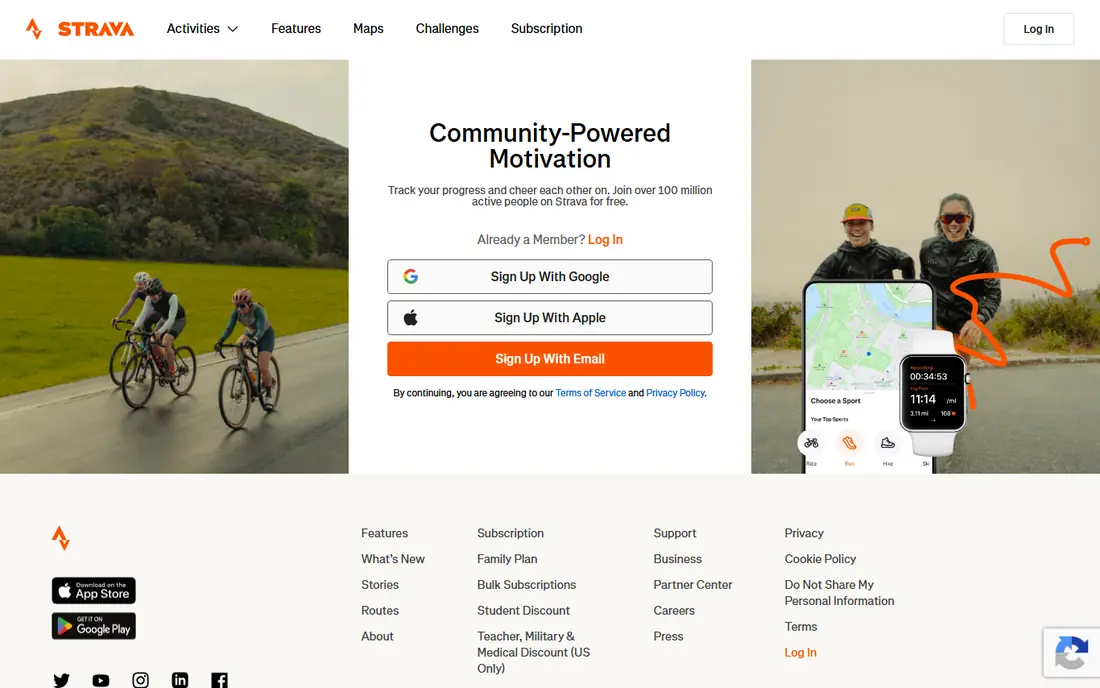
Strava is best known for running and cycling, but its walking tracking, route planning, and social feed suit walkers who want motivation from friends and clubs. A free tier covers GPS tracking and basic stats, with a subscription at 11.99 dollars per month adding route planning, segment leaderboards, and advanced analytics.
Premium features matter less for casual walkers, and the social feed can feel competitive. For a walker who stays motivated through friends, clubs, and challenges, Strava's community is unmatched.
- Social feed and challenges
- Route planning
- Huge walking and running community
- Subscription costs 11.99 dollars per month
- Features beyond tracking need premium
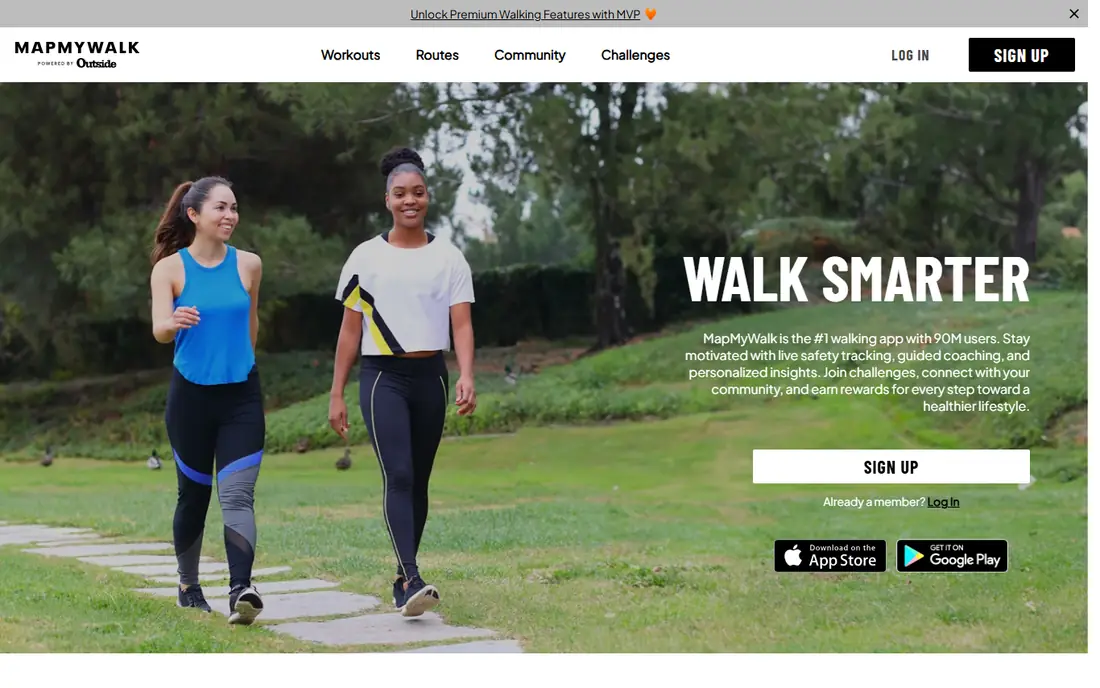
MapMyWalk offers simple GPS tracking for walks, with distance, pace, calories, and a route library for finding popular walks nearby. It integrates with Under Armour's fitness apps, and a free tier covers core tracking, with a premium plan priced on MapMyWalk's site for advanced analytics and no ads.
Ads appear on the free tier, and advanced analytics need premium. For a beginner who wants straightforward walk tracking without social pressure, MapMyWalk is the easiest option.
- Simple GPS tracking
- Route library
- Integrates with Under Armour apps
- Ads on the free tier
- Premium needed for advanced analytics
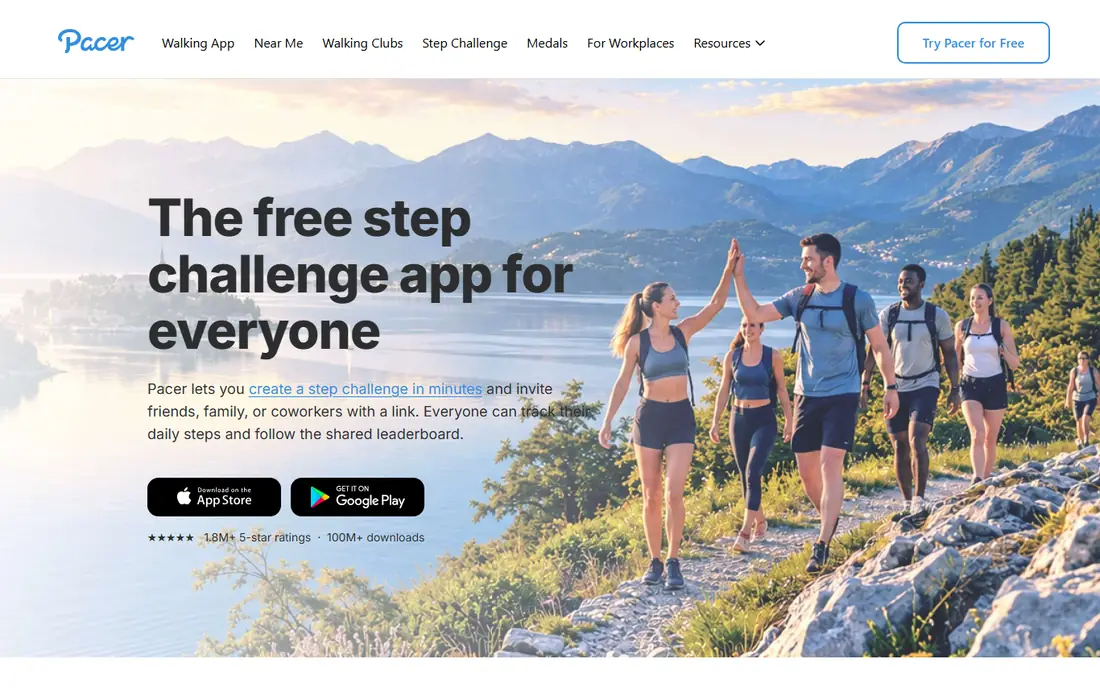
Pacer focuses on step counting, using phone sensors to track daily steps without a wearable, with challenges and groups for motivation. Its interface is simple, and a free tier covers core step tracking, with a premium plan priced on Pacer's site for guided plans and advanced stats.
GPS route features are basic next to Strava or Komoot. For a walker whose main goal is hitting a daily step target with friends, Pacer's simplicity and challenges are ideal.
- Accurate step counting
- Challenges and groups
- Works with phone sensors alone
- GPS route features are basic
- Premium needed for full plans
AllTrails suits walkers who explore trails, with a huge database of hiking and walking routes, reviews, photos, and difficulty ratings. Its app tracks walks on trails and navigates with maps, and a free tier covers browsing and basic tracking, with a paid plan priced on AllTrails' site for offline maps and extra features.
City walking fits less well, and offline maps need premium. For a walker who heads to parks, hills, and nature trails, AllTrails' route database is the best resource here.
- Huge trail database
- Reviews and photos
- Offline maps on paid plans
- Best for trails, not city walks
- Offline maps need premium
Komoot excels at route planning, building walking and hiking routes with surface types, elevation, and turn-by-turn voice navigation. Its planning tools suit walkers who design their own routes rather than following others. A free tier covers basic use, with region bundles and a premium plan priced on Komoot's site for offline maps.
Offline maps use region-based pricing, and the interface takes learning. For a walker who plans routes carefully and walks off the beaten path, Komoot's planning is the best on this list.
- Excellent route planning for walking and hiking
- Turn-by-turn navigation
- Offline maps
- Region-based pricing for offline maps
- Interface takes learning
Walkmeter offers deep statistics for walkers who love data, with graphs, splits, intervals, and training plans, plus strong Apple Watch support. Its free tier covers core tracking, with an Elite plan priced on Walkmeter's site for advanced features and no ads.
The interface feels dated, and it is iPhone-focused. For a data-driven walker who wants detailed stats over social features, Walkmeter delivers the most numbers.
- Deep statistics and graphs
- Interval training
- Apple Watch support
- Interface feels dated
- IPhone-focused
Footpath lets walkers draw custom routes with a finger, snapping to paths and roads automatically, then follow them with navigation. Its simplicity suits walkers planning a specific route, like a charity walk or a sightseeing loop, without complex planning tools. A free tier covers basic use, with a premium plan priced on Footpath's site.
Tracking features are basic, and the community is small. For a walker who wants to draw a route quickly and follow it, Footpath is the fastest tool here.
- Draw routes with a finger
- Snap-to-path routing
- Simple and fast
- Tracking features are basic
- Smaller community
Charity Miles turns walks into donations, with corporate sponsors funding charities based on distance walked, run, or cycled. Walkers pick a charity, track their walk, and earn donations at no cost to themselves. The app is free, with no subscription.
Donation rates are modest per mile, and social features are fewer than Strava's. For a walker motivated by giving back, Charity Miles adds purpose to every step.
- Earns charity donations from walks
- Free
- Simple tracking
- Donation rates are modest
- Fewer social features
Sweatcoin rewards steps with coins redeemable in its marketplace for offers, discounts, and products. Its free app tracks outdoor steps through phone sensors, with a premium tier for higher earning rates, priced on Sweatcoin's site. The reward loop motivates walkers who like tangible goals.
Rewards are modest per step, and verification needs outdoor phone tracking. For a walker who wants a small reward for hitting step goals, Sweatcoin's marketplace adds fun to daily walking.
- Earns rewards for steps
- Marketplace for offers
- Free
- Rewards are modest
- Step verification needs phone sensors
How we picked these
We compared official feature pages and pricing pages for walking apps that operate today. We favored apps with real GPS or step tracking and active use, and we included fitness, trail, route-planning, and reward options rather than only one style. Prices are the standard published rates from each vendor's own site, and where pricing varies by plan we say so rather than guessing.
What to check before you choose
Start with the walking goal. Fitness tracking suits Strava or MapMyWalk, step goals suit Pacer, trails suit AllTrails or Komoot, and motivation suits Charity Miles or Sweatcoin. Goal decides the app faster than any feature table.
Check phone and wearable compatibility
Confirm the app works with your phone and any watch or tracker you own, since step and GPS accuracy depend on sensors. Some apps favor iPhone, others Android, and wearable sync varies. Trial tracking on a known route to check distance accuracy before trusting the numbers.
Test battery use on a long walk
GPS tracking drains batteries, so test the app on a long walk before relying on it for a hike. Offline maps, screen-on navigation, and background tracking all affect battery differently. Carry a power bank for walks over two hours, especially on trails.
Start with a realistic step goal
A sudden 10,000-step target frustrates beginners, while a gradual goal builds habit. Start from your current average, add 500 to 1,000 steps, and raise the target weekly. Apps with challenges help, but the habit matters more than the number.
Frequently asked questions
What is the best walking app?
Strava is our pick for social walking and routes, MapMyWalk for simple tracking, and Pacer for step counting. AllTrails and Komoot suit trail walkers, while Charity Miles and Sweatcoin suit motivation through charity and rewards. The best app follows your walking goal.
What is the best free walking app?
Strava, MapMyWalk, Pacer, AllTrails, and Komoot all offer free tiers covering core tracking, while Charity Miles and Sweatcoin are free. Start with a free tier and upgrade only for offline maps, advanced analytics, or route planning features you actually use.
Is Strava good for walking?
Yes, Strava tracks walks with GPS, offers route planning, and adds social motivation through friends, clubs, and challenges. A free tier covers tracking, with a subscription at 11.99 dollars per month for advanced features. Casual walkers may prefer simpler apps like MapMyWalk or Pacer.
What app counts steps most accurately?
Accuracy depends on phone sensors and placement, with Pacer and phone health apps performing well for daily steps. Wearables like Apple Watch or Fitbit improve accuracy over phones alone. Compare counts against a known walk to check your setup.
Can walking apps help me lose weight?
Walking apps support weight loss by tracking activity, distance, and calories, especially paired with a food diary. Consistent daily walking plus modest dietary changes works better than any single app feature. Treat calorie estimates as rough guides, not precise measurements.
Do I need a smartwatch for walking apps?
No, phone sensors track steps and GPS routes well for most walkers. A smartwatch adds convenience, heart rate data, and wrist glanceability, but it is not required. Start with your phone, and add a watch only if you walk often enough to want it.
Sources we checked (9)

Online Jobs is an independent blog about careers, online work, learning new skills and the tools that help people earn. More about us.
Keep reading
All posts
Zoom Alternatives
Zoom alternatives compared for 2026: Google Meet, Microsoft Teams, Webex, Jitsi and more for free calls, large meetings and webinars for teams and classrooms.

Workday Alternatives
We compared the best workday alternatives for HR, payroll, and global hiring, from BambooHR and Gusto to Rippling, Deel, and HiBob for growing teams in 2026.

WordPress Alternatives
WordPress alternatives guide: we compare 8 platforms for builders, designers, stores, and publishers to leave WordPress without losing your full site content.