Best Supply Chain Management Software in 2026: 8 Tools Compared


End to end operations across regions · Starting price: See website
How we put this together: we compare official feature and pricing pages, app store listings, privacy policies and public user reviews. Prices change, so check the provider's site before you pay.
Key takeaways
- Most enterprise suites in this guide are priced by quote, so budget talks need to cover licences, implementation, and support together.
- Oracle, SAP, and Blue Yonder cover the widest end to end scope, from planning through warehouse and transport work.
- Kinaxis and o9 Solutions stand out for scenario planning, where teams test several futures before committing to one plan.
- Manhattan Associates is the strongest pick for warehouse and distribution execution, while E2open and Infor add network and partner visibility.
- Small and mid-size teams should check scope first, since several tools here are built for large, multi-site operations.
Quick comparison
| Name | Who it suits | Starting price | Free option | |
|---|---|---|---|---|
| Oracle SCM | End to end operations across regions | See website | No | Visit |
 SAP IBP | Planning inside a SAP centred operation | See website | No | Visit |
 Blue Yonder | Retail and manufacturing planning | See website | No | Visit |
 Kinaxis Maestro | Concurrent scenario planning | See website | No | Visit |
 Manhattan Associates | Warehouse and distribution execution | See website | No | Visit |
 Infor SCM | Industry specific supply chain suites | See website | No | Visit |
 o9 Solutions | AI assisted planning with digital twin models | See website | No | Visit |
 E2open | Multi enterprise visibility and logistics | See website | No | Visit |
The best supply chain management software
Supply chain software earns its keep when plans, stock, and shipments stay in step. The tools below cover different parts of that job, so the right choice depends on whether planning, warehousing, or partner networks cause the most pain.
Oracle SCM sits inside Oracle Fusion Cloud, which gives planners, buyers, warehouse staff, and logistics teams a shared set of records. That shared base matters when a forecast change needs to flow into purchasing, production, and shipping without manual rework. Oracle also covers order management, procurement, inventory, manufacturing, and transport in one family of applications.
The trade off is scope. A broad suite can replace several point tools, but it also asks for more time during setup, data cleanup, and training. Teams already using Oracle finance or human resources tools will find the fit easier, since much of the master data already exists. Teams outside that world should still compare it, but they should budget for integration work with existing systems.
- Broad suite coverage, strong global operations support, cloud delivery
- Quote based pricing, long implementation for large rollouts
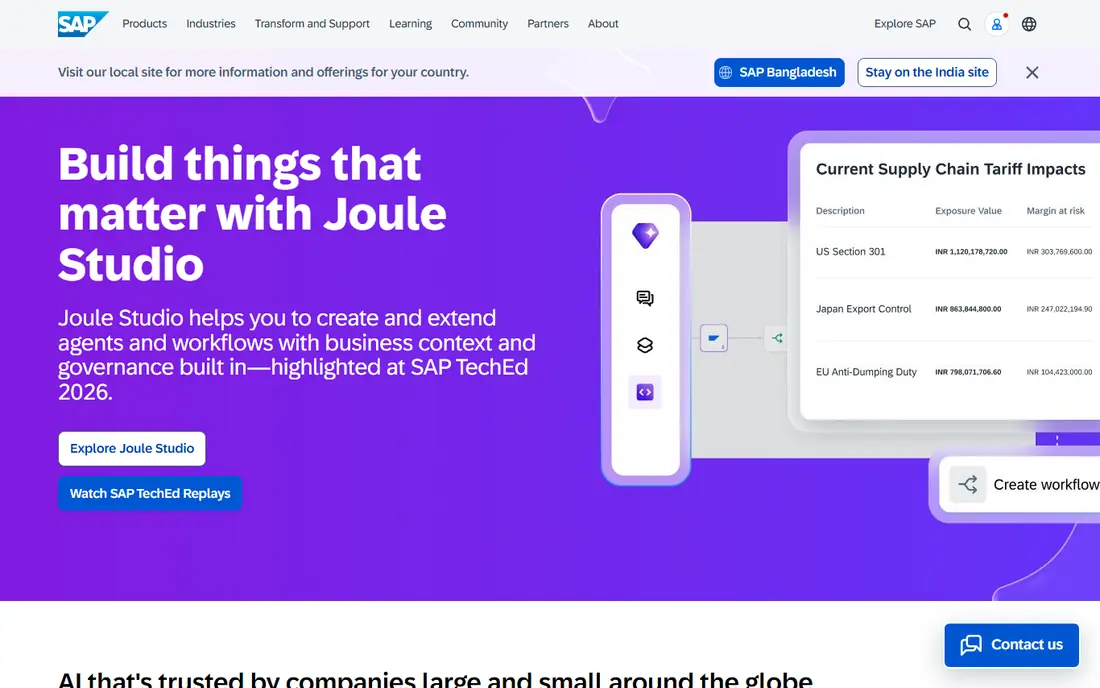
SAP Integrated Business Planning, often shortened to SAP IBP, focuses on demand planning, supply planning, inventory optimisation, and sales and operations planning. Planners can test demand shifts and supply limits in one model, then share a single plan across sales, finance, and operations. That shared plan reduces the chance that each department works from a different set of numbers.
For companies already running SAP ERP, the appeal is clear. Product, location, and order data move between systems with less custom work. For companies on other ERPs, the value is still real, but integration becomes a project of its own. SAP IBP suits large operations with dedicated planning staff, and it is usually more than a small team needs.
- Deep demand and supply planning, tight SAP ERP fit, mature forecasting tools
- Quote based pricing, complex setup for smaller teams
Blue Yonder built its name on planning for retailers, consumer goods makers, and manufacturers with complex networks. Its Luminate platform brings together demand forecasting, inventory planning, warehouse management, and transport work. When a promotion, a supplier delay, or a transport disruption hits, planners can see the knock on effects in one place.
Retail teams tend to value the forecasting depth and the way plans connect to store replenishment and fulfilment. Manufacturing teams value supply planning and the ability to balance capacity against changing orders. The main cost is time. Blue Yonder projects often run for months, and teams should plan for training and process change alongside the software work.
- Strong demand forecasting, retail and manufacturing depth, planning and execution links
- Quote based pricing, long implementations reported by users
Kinaxis Maestro, formerly known as RapidResponse, is built around one idea: everyone plans from the same live data at the same time. When demand, supply, or capacity changes, the effects show up across the plan without waiting for a nightly batch run. That speed helps during disruptions, when a decision made on Friday may already be stale by Monday.
Scenario work is where Kinaxis shines. Planners can run several what if cases, compare service levels and costs, and pick a course that the whole team can see. The tool fits manufacturers with complex bills of material and multi tier supplier networks best. Simpler operations may find the depth more than they need, and the price reflects the enterprise focus.
- Fast what if analysis, concurrent planning across functions, control tower visibility
- Quote based pricing, needs process change to get full value
Manhattan Associates focuses on the part of the chain where goods actually move: warehouses, stores, and orders. Its Manhattan Active platform unifies warehouse management, order management, and transport work on one cloud base. For distributors and retailers, that unity helps with ship from store orders, split shipments, and returns.
The strength here is execution rather than long range planning. A company that already plans well but struggles with picking accuracy, labour planning, or fulfilment speed will get more from Manhattan than from a planning heavy suite. Companies that need deep demand forecasting as well may pair it with a planning tool, which adds cost and integration work to the project.
- Leading warehouse management, strong order fulfilment, cloud native platform
- Quote based pricing, planning depth is narrower than suite rivals
Infor takes an industry first approach. Its CloudSuites bundle ERP and supply chain tools tuned for manufacturing, distribution, food and beverage, healthcare, and other sectors. That tuning can shorten setup, since workflows, terms, and reports already reflect how a given industry works. Infor Nexus adds a supplier network layer, connecting buyers with suppliers and logistics partners.
Buyers should be careful with names. Infor sells several related products, and the right fit depends on industry and company size. Ask for a demo using your own product and order data, and confirm which modules are included in the quote. For mid-size manufacturers and distributors, Infor often lands in a useful middle ground between point tools and the largest suites.
- Industry specific CloudSuites, broad SCM and ERP coverage, supplier network tools
- Quote based pricing, product naming can confuse buyers
o9 Solutions offers the Digital Brain platform, which models the whole operation as a connected planning system. Demand, supply, inventory, and financial plans sit in one model, so a change in one area shows its effect elsewhere. The platform also supports digital twin style modelling, where teams test decisions against a virtual copy of their operation.
This approach suits large companies that run integrated business planning as a formal process, with finance and operations in the same room. Smaller teams may find the platform heavy, and the implementation needs clean data and clear ownership. When those pieces are in place, o9 gives planners a strong way to compare futures and explain the reasoning behind a chosen plan.
- Strong forecasting and scenario models, integrated business planning, enterprise knowledge graph
- Quote based pricing, enterprise focus and implementation effort
E2open connects companies with their suppliers, logistics providers, and channel partners on one network. That network view helps when goods pass through several hands, since each partner can share forecasts, orders, and shipment status in the same system. Coverage spans planning, supply, logistics, global trade, and channel work.
The practical benefit is fewer blind spots. A delay at a supplier or a port shows up earlier, and teams can adjust orders or transport plans before customers feel the effect. As with other suites, the quote depends on modules, partners, and volume, so buyers should scope the network carefully. E2open fits companies whose supply chain pain comes from coordination across many outside partners.
- Wide partner network, logistics and global trade coverage, connected planning
- Quote based pricing, broad scope needs careful scoping
How we picked these
We compared official feature pages, pricing pages, product documentation, and public reviews for each vendor, and we checked each homepage to confirm it belongs to the product named. We favoured tools with clear planning, execution, or network coverage, a track record with large operations, and documentation that explains what is included. We did not claim hands on testing, and we treated any price not shown on a vendor page as quote based.
We also weighed fit by company size and by problem type. A warehouse led buyer needs different strengths from a planning led buyer, so this list mixes suite vendors with specialists rather than ranking one shape of tool above all others. Prices change often, so confirm the current quote and module list with the vendor before signing.
Questions to ask before you buy
Start with the problem, not the product list. Write down the three decisions that go wrong most often, such as late forecasts, stock outs, or missed shipments, and ask each vendor to show how their tool improves those exact decisions. Next, ask about data. Clean product, supplier, and order data matters more than any single feature, and vendors should explain what cleanup work falls on your team.
Integration deserves its own round of questions. Confirm how the tool connects to your ERP, warehouse systems, and transport providers, and whether those links are standard or custom built. Finally, ask about rollout time, training, and support. A tool that takes eighteen months to bed in may still be right, but only if the business can wait that long for the benefit.
Frequently asked questions
What is the best supply chain management software for a large enterprise?
Oracle SCM, SAP IBP, Blue Yonder, and Kinaxis all serve large enterprises, but they lead in different areas. Oracle and SAP fit companies that want planning inside a wider ERP world. Blue Yonder fits retail and manufacturing planning depth. Kinaxis fits fast scenario work across complex networks. Shortlist by your main pain point, then run a demo on your own data.
What is the difference between a supply chain suite and a point tool?
A suite covers several areas, such as planning, procurement, warehousing, and transport, in one system. A point tool covers one area in depth, such as warehouse management or demand forecasting. Suites reduce integration work but cost more and take longer to roll out. Point tools start faster but may need extra links to other systems.
How much does supply chain management software cost?
Most enterprise tools in this guide are priced by quote, based on users, modules, and scale. Mid-market options can start in the tens of thousands per year, while large enterprise suites often run into six or seven figures per year plus implementation services. Always ask for the full cost, including implementation, training, and support, before comparing quotes.
Which tool is best for warehouse and distribution?
Manhattan Associates is the strongest warehouse and distribution specialist in this list, with cloud warehouse management and order fulfilment at its core. Blue Yonder and Oracle also cover warehouse work inside wider suites. Choose Manhattan when execution speed and accuracy matter most, and choose a suite when planning and execution must share one plan.
How long does implementation take?
Mid-market implementations often run three to nine months, while enterprise suite deployments often run nine to eighteen months, with global rollouts taking longer. Data migration, integration, and change management usually drive the timeline more than software setup. Ask vendors for a phased plan with dates for each site or module.
Should we choose a suite or best of breed tools?
Choose a suite when your teams need one shared plan and you can fund a longer rollout. Choose best of breed tools when one problem, such as warehouse execution or scenario planning, dominates and the rest of the operation already works. Many companies mix the two, pairing a planning specialist with a warehouse specialist and linking them carefully.
Sources we checked (8)

Online Jobs is an independent blog about careers, online work, learning new skills and the tools that help people earn. More about us.
Keep reading
All posts
Best Warehouse Management Software
Looking for the best warehouse management software in 2026? We compare nine systems for picking, packing, inventory accuracy and scale, so you choose well.

n8n Alternatives
n8n alternatives compared for 2026, with Zapier, Make, Activepieces, and more, covering visual builders, code steps, self-hosting, and pricing models.

eBay Alternatives
Looking for ebay alternatives? We compared 9 marketplaces for sellers on fees, buyer reach, categories and ease of listing, to help you sell with confidence.