Best Streaming Platform for Gaming in 2026: 8 Platforms Compared

How we put this together: we compare official feature and pricing pages, app store listings, privacy policies and public user reviews. Prices change, so check the provider's site before you pay.
Key takeaways
- Twitch remains the largest dedicated live gaming community, with the deepest chat culture, emotes, raids and esports coverage.
- YouTube is the best long-term bet for new streamers, because search discovery and permanent videos keep working after a live stream ends.
- Kick offers the most generous subscription split for creators with an existing audience, but its audience is smaller than Twitch or YouTube.
- Most successful streamers use more than one platform, with live streams on one service and clips or videos on others to bring in new viewers.
Quick comparison
| Name | Who it suits | Starting price | Free option | |
|---|---|---|---|---|
 Twitch | Live gaming communities | Free | Yes | Visit |
 YouTube | Discovery and long-term growth | Free | Yes | Visit |
 Kick | Subscription income for established creators | Free | Yes | Visit |
 TikTok Live | Short-form discovery and new audiences | Free | Yes | Visit |
 Facebook Gaming | Social discovery through Facebook | Free | Yes | Visit |
 Trovo | Smaller community streaming | Free | Yes | Visit |
 DLive | Blockchain-based rewards streaming | Free | Yes | Visit |
 SOOP | Korean and global live gaming | Free | Yes | Visit |
The best streaming platform for gaming, compared
The best gaming streaming platform depends on your goal. Some streamers want the biggest live audience tonight, others want a library of videos that keeps growing, and others want the best pay per subscriber. The platforms below cover those goals, and the differences in discovery, monetisation and community matter more than any single feature.
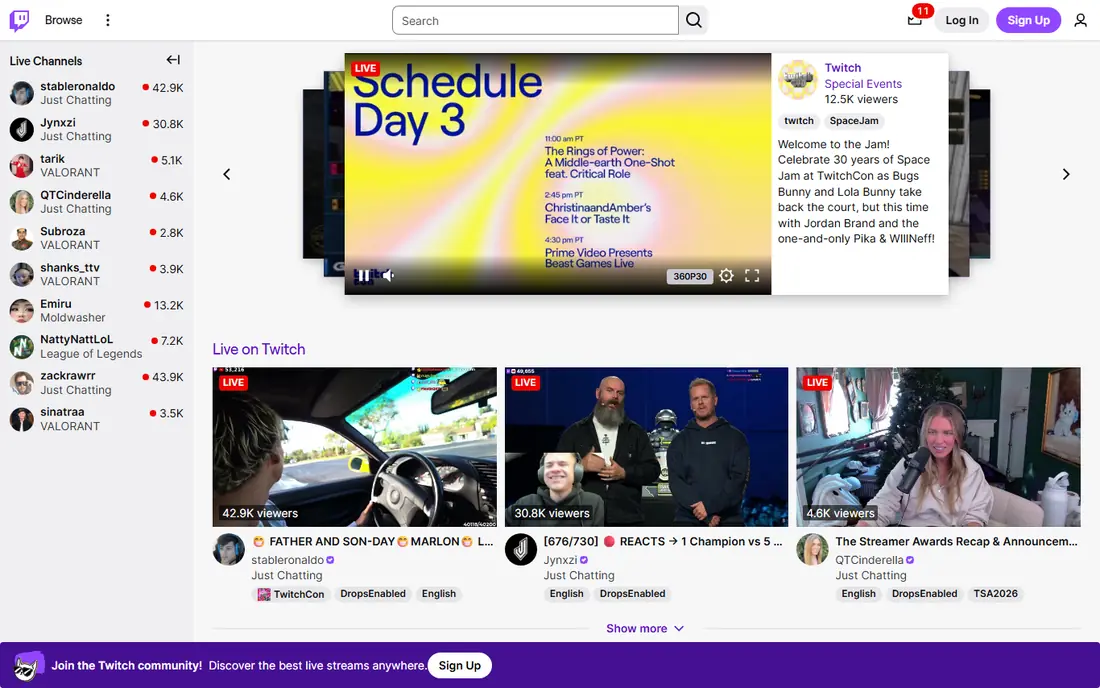
Twitch is still the home of live gaming culture. Viewers expect live chat, emotes, channel points, raids, hype trains and community events, and streamers get a set of tools built for that live moment. Esports broadcasts, charity events and game launches also draw large live audiences to Twitch, which helps gaming streamers find viewers who are already in a live mindset. The main weakness is discovery. Twitch does not recommend small streamers well through an algorithm, so growth usually comes from clips and videos on other platforms, plus community word of mouth. The standard subscription split is also 50/50, with better splits for some Partners. For streamers who value live community above all else, Twitch remains the first platform to consider.
- Largest dedicated live gaming audience
- Rich chat tools, emotes, channel points and raids
- Strong esports and event coverage
- Weak discovery for small streamers
- Standard subscription split is 50/50
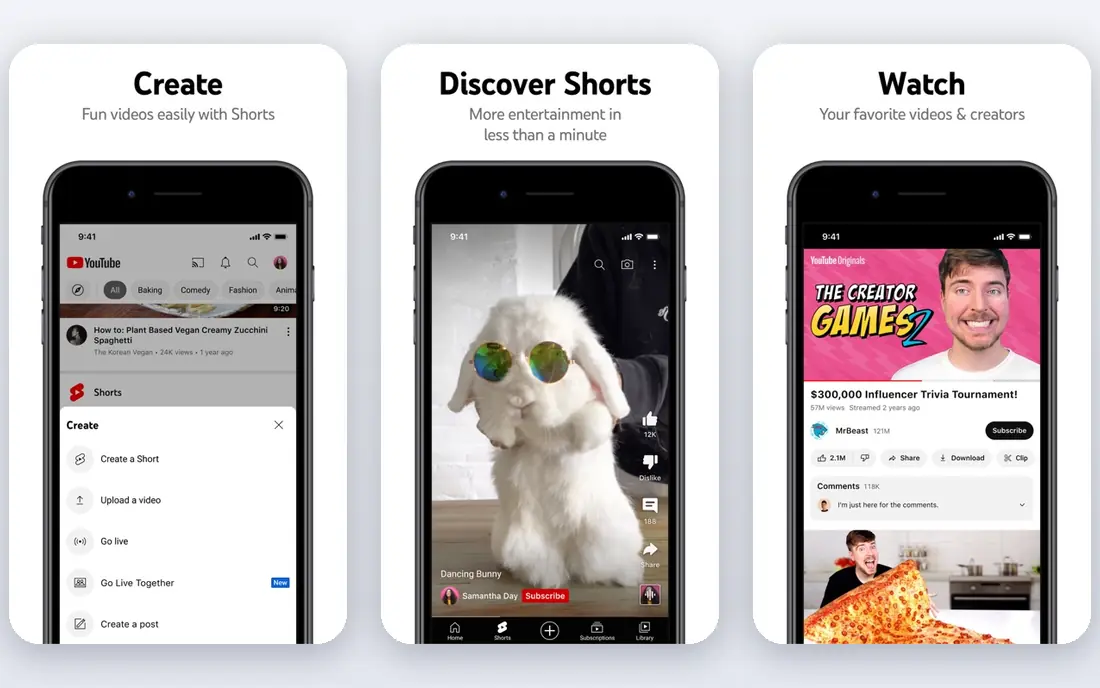
YouTube Gaming, as part of YouTube, offers something no live-only platform can match: a stream can become a permanent video that keeps being found through search and recommendations. A tutorial, a guide or a funny moment from a stream can bring in new viewers weeks later, and those viewers can then join future live streams. Memberships, Super Chat, Super Stickers and ad revenue give streamers several income paths. The trade-off is the path to monetisation. YouTube Partner Program thresholds for subscribers and watch hours take time, especially for new channels, and live chat feels less like a dedicated gaming community than Twitch. For new streamers building from zero, though, the long-term discovery advantage makes YouTube the strongest overall bet.
- Search and recommendation discovery
- Videos keep earning after live streams end
- Memberships, Super Chat and ads
- Partner Program thresholds take time to reach
- Live chat culture is less focused than Twitch
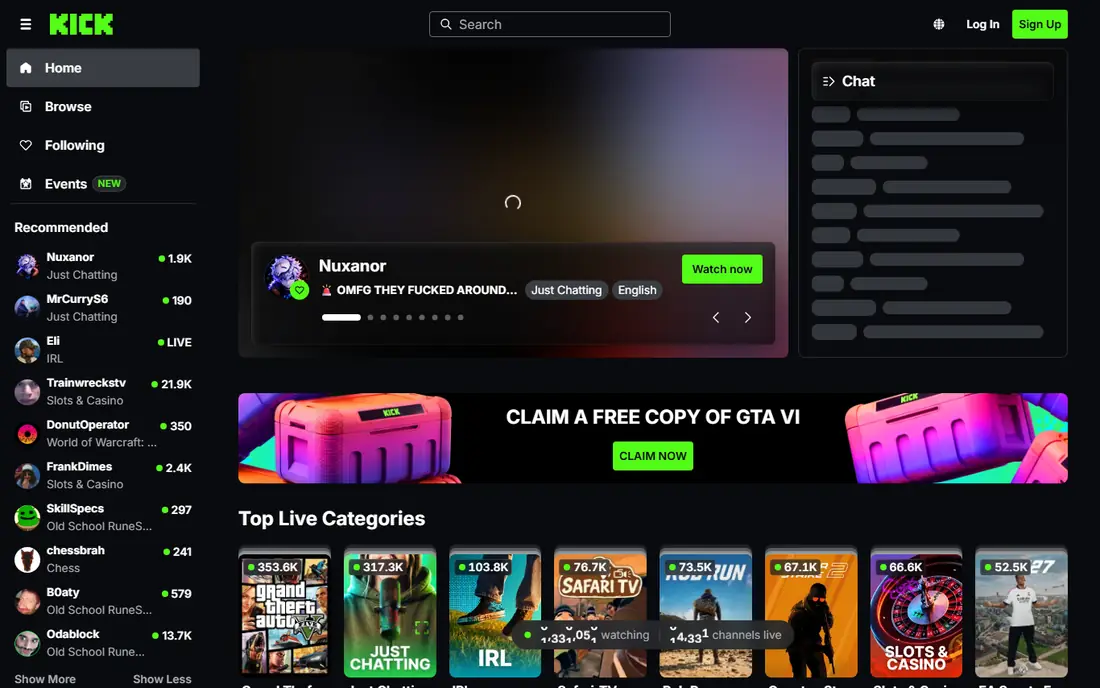
Kick grew fast by offering creators a much larger share of subscription revenue than rivals, with a widely reported 95/5 split and weekly payouts. For a creator with an existing audience willing to follow, that difference can be worth thousands of dollars a year compared with a standard Twitch split. Kick also sets a lower barrier to subscriptions for many creators, with hours streamed mattering more than a large follower count. The audience is still smaller, so a new streamer starting from zero may struggle to be found on Kick alone. Brand safety, moderation and content mix also vary more by category than on Twitch or YouTube. Kick works best as a calculated move for creators with an audience to bring, or as a second platform beside YouTube or Twitch.
- Widely reported 95/5 subscription split in favour of creators
- Weekly payouts
- Low barrier to subscriptions for many creators
- Smaller live audience than Twitch or YouTube
- Content and moderation reputation varies by category
TikTok Live is not a dedicated gaming platform, but it can be a powerful discovery tool for gaming streamers. Short clips can reach large new audiences through the For You feed, and live streams let those viewers watch gameplay, ask questions and send gifts in real time. For mobile games, casual games and personality-led streams, TikTok Live fits naturally. The limit is depth. TikTok Live sessions tend to be shorter and less community-structured than Twitch streams, with fewer long-term community tools like raids and channel points. Monetisation also depends on gifts, creator programs and brand work rather than a simple subscription model. Use TikTok Live to find new viewers, then guide them to your main live platform for longer streams.
- Strong short-form discovery that can send viewers to live streams
- Mobile-first viewing
- Gifts and live shopping features
- Live streams are shorter and less community-focused
- Gaming discovery is mixed with many other topics
Facebook Gaming lets streamers reach people through Facebook feeds, groups and pages, which can help creators whose audience is already on Facebook. Viewers can follow a page, get notified of live streams, send Stars and subscribe, without learning a new platform. That social link is useful for casual, family-friendly and community gaming streams. The drawback is scale and focus. Facebook Gaming does not match Twitch for dedicated live gaming viewers, and its gaming strategy has changed over time, which makes long-term planning harder. For streamers with a strong Facebook page or group, it is a useful extra channel. As a sole platform for competitive gaming growth, it is less strong than Twitch or YouTube.
- Built into Facebook for easy sharing
- Stars and subscriptions for creators
- Familiar to non-gaming audiences
- Smaller dedicated gaming audience than Twitch or YouTube
- Gaming focus has shifted over time
Trovo is a gaming-focused live platform with channels, subscriptions, spells for viewer interaction and community features that will feel familiar to Twitch users. Because it is less crowded, a new streamer may stand out more easily than on Twitch, and community building can feel more personal in smaller channels. Trovo also supports mobile and PC streaming. The clear limit is audience size. Trovo has far fewer viewers than Twitch, YouTube or Kick, so growth potential is lower and brand deals are rarer. It is best viewed as a community platform for streamers who value a smaller, closer audience, or as a secondary platform for testing new formats. Most streamers will still need a larger platform for main growth.
- Gaming-focused live platform
- Spells, subscriptions and community tools
- Less crowded than larger rivals
- Much smaller audience
- Fewer brand and esports opportunities
DLive is a live streaming platform that uses a blockchain-based reward system, where viewers can support streamers with lemons and other rewards. The platform has promoted a model where creators keep a larger share of rewards, with no platform cut on some forms of support. For streamers interested in that model, DLive offers a different way to think about viewer support. The audience is small compared with mainstream platforms, and reward value depends on platform rules and token systems that can change. Discovery, brand work and esports coverage are also limited. DLive suits streamers who want to experiment with alternative rewards or build a small loyal community, rather than streamers seeking the largest possible audience.
- Creator-friendly reward model with no platform cut on some earnings
- Gaming and community categories
- Low barrier to start
- Small audience
- Reward value depends on token and platform rules
SOOP, formerly AfreecaTV, is a major live streaming platform in South Korea, with gaming, esports, music and talk content, and a global service that has grown in recent years. It offers live chat, subscriptions, donations and community tools, with a strong esports presence in Korean leagues and events. For streamers interested in Korean gaming audiences or esports, SOOP is a relevant choice. Outside Korea, the English-speaking audience is smaller than Twitch or YouTube, and discovery for new international streamers is still developing. SOOP works best for streamers with a Korean audience, Korean language skills, or esports content that fits its community. For most English-speaking gaming streamers, it is a niche extra platform rather than a main home.
- Strong in Korean live streaming and esports
- Gaming, music and talk categories
- Global service growing outside Korea
- Smaller English-speaking audience than Twitch or YouTube
- Discovery outside Korea is still developing
How we picked these
We compared official platform pages, creator program information and public audience and monetisation reporting for live streaming platforms that support gaming in October 2026. We favoured platforms with live gaming categories, chat, subscriptions or donations, and a real creator base, rather than general video sites with no live gaming focus. Monetisation splits and thresholds change, so check each platform creator pages before you plan income around them.
Choosing the best streaming platform for new streamers
New streamers should start with discovery, not just live features. YouTube gives you search and video longevity, Twitch gives you live community, and TikTok Live gives you short-form reach. A practical setup is one main live platform plus clips on TikTok and YouTube Shorts, so new viewers can find you even when you are not live.
Compare monetisation honestly
Look at subscription splits, ad shares, donation cuts, payout minimums and payout timing, not just the headline split. A high split on a small audience may pay less than a lower split on a large audience, and ad revenue on permanent videos can beat live-only income over time. Keep records of income from each source, and do not rely on one platform for all earnings.
Build community where viewers already are
Choose a platform your target viewers already use, and learn its chat norms, moderation tools and community features before you go live regularly. Set clear chat rules, use moderators as you grow, and save highlights or clips for viewers who missed the live show. Community habits, more than gear, decide whether viewers return for the next stream.
Frequently asked questions
Which platform is best for streaming for new streamers?
YouTube is the best long-term choice for most new streamers, because search discovery and permanent videos keep bringing in viewers after a stream ends. Twitch is better if you want a dedicated live gaming community right away, but you will need clips on other platforms to grow. Kick can work for new streamers with an audience to bring, but it is harder to grow from zero there.
What is the best platform for live streaming games?
Twitch is the best dedicated platform for live gaming, with the largest live gaming audience and the deepest live community tools. YouTube is close, with better discovery and video longevity, while Kick offers better subscription economics for established creators. The best live streaming platform depends on whether you value live community, discovery or subscription income most.
What are the best platforms to stream on for gaming income?
Income depends on audience size, subscription split, ads, donations and brand work, not on one split alone. Kick reports the highest subscription split, YouTube adds video ad income after streams, and Twitch offers subscriptions, Bits, ads and strong brand opportunities at scale. Diversifying across platforms and income types is safer than relying on one platform alone.
Is Twitch or YouTube better for gaming streamers?
Twitch is better for live community, esports and interactive chat culture, while YouTube is better for discovery, search and long-term video income. Many streamers use both, streaming live on Twitch and posting edited videos and clips on YouTube, or streaming on YouTube and using Twitch for community events. Your main platform should match where your viewers already spend time.
Can I stream on multiple platforms at once?
Yes, many streamers simulcast to Twitch, YouTube, Kick or TikTok Live using multistream tools, but check each platform rules first, because some partner or affiliate agreements limit exclusivity. Simulcasting can grow reach, but it can also split chat and community, so use a combined chat tool or pick one main chat to manage. Test audio, video and chat before simulcasting a major event.
Sources we checked (8)

Online Jobs is an independent blog about careers, online work, learning new skills and the tools that help people earn. More about us.
Keep reading
All posts
Best YouTube SEO software
Best YouTube SEO software and tools compared for creators, covering keyword research, title scoring, tags, channel audits, and thumbnail testing in 2026.
Best Platforms for Content Creators
We compared best platforms for content creators for 2026, from YouTube and Substack to Patreon and Teachable, on audience growth, monetisation and cost.
Best Link in Bio Tools
Compare the best link in bio tools for creators and brands. See free plans, paid prices, selling fees, and which page builder fits your goals best today.