Best Roth IRA companies in 2026: 9 Companies Compared

How we put this together: we compare official feature and pricing pages, app store listings, privacy policies and public user reviews. Prices change, so check the provider's site before you pay.
Key takeaways
- Fidelity, Charles Schwab and Vanguard offer $0 account fees and $0 stock and ETF commissions for self-directed Roth IRAs.
- Fidelity stands out for zero-expense index funds and $0 minimums, while Schwab stands out for service, branches and fund choice.
- Vanguard suits long-term index investors who want its own low-cost funds and who accept a simpler app experience.
- Betterment and Wealthfront suit hands-off investors, with managed portfolios for an annual advisory fee.
- This is not financial advice, and contribution limits, income limits and tax rules should be checked on the IRS site before you open an account.
Quick comparison
| Name | Who it suits | Starting price | Free option | |
|---|---|---|---|---|
 Fidelity | Best overall Roth IRA | Free | Yes | Visit |
 Charles Schwab | Service and fund choice | Free | Yes | Visit |
 Vanguard | Low-cost index investing | Free | Yes | Visit |
 E*TRADE | Advanced trading tools | Free | Yes | Visit |
 Betterment | Hands-off managed portfolios | $4 per month | No | Visit |
 Wealthfront | Automated investing | See website | No | Visit |
 M1 Finance | Custom portfolio pies | Free | Yes | Visit |
 Robinhood | Simple app investing | Free | Yes | Visit |
 Merrill Edge | Bank-linked investing | Free | Yes | Visit |
The best Roth IRA companies
We compared official fee schedules, account pages, fund information and public reviews for companies that offer Roth IRAs in the US in October 2026. This is not financial advice. A Roth IRA grows tax-free when rules are met, but the right company depends on whether you want to pick investments yourself or have a portfolio managed for you.
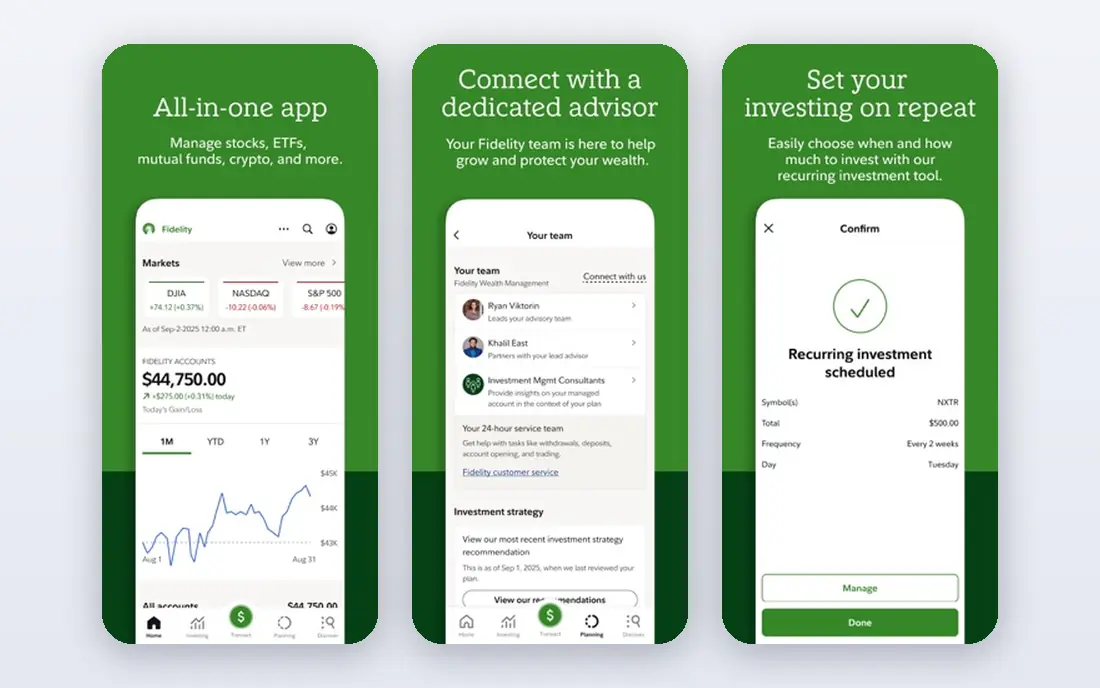
Fidelity offers a Roth IRA with no account fee, no minimum to open, and $0 commissions for stocks and ETFs. Its Fidelity ZERO index funds carry a 0.00% expense ratio, which is a clear cost advantage for long-term index investors. Fidelity Go, its robo-advisor, is free for balances under $25,000 and charges 0.35% above that level.
The platform also offers strong research, fractional shares and a well-rated mobile app. The main trade-off is that some investors may find the research tools busy at first, and the commission-free mutual fund list is smaller than Schwab in places. For most self-directed Roth IRA savers, Fidelity is our pick for most people.
- $0 account fee and $0 minimum
- Zero-expense index funds
- Free robo option under $25,000
- Fund choice is narrower than Schwab in some areas
- Research tools can feel dense
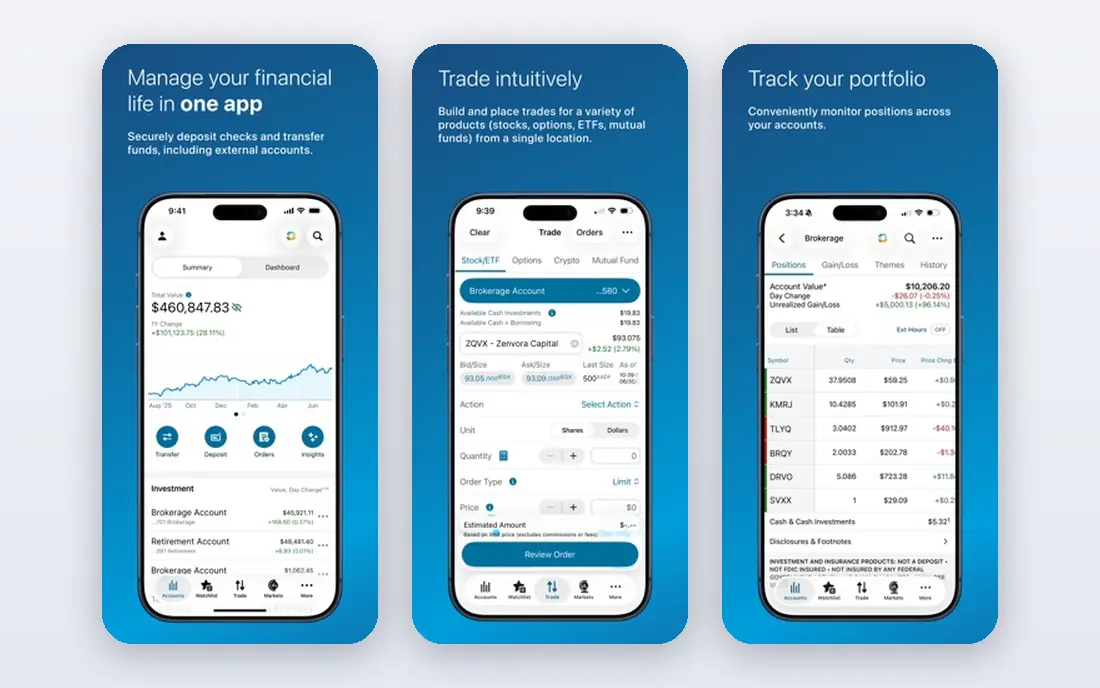
Charles Schwab offers a Roth IRA with no account fee, no minimum to open, and $0 stock and ETF commissions. Its index funds, such as SWPPX at a 0.02% expense ratio, are low cost, and its list of no-transaction-fee mutual funds is wide. Branches and phone support suit investors who want help in person as well as online.
Schwab Intelligent Portfolios, its robo option, charges no advisory fee, but it holds a cash allocation that can drag returns compared with a fully invested portfolio. That detail matters for hands-off investors, even though the headline fee is $0. For service, fund choice and a full-service feel, Schwab is a strong all-round choice.
- $0 account fee and $0 minimum
- Wide commission-free fund list
- Branches and strong service
- Robo portfolios hold a cash allocation
- Some index funds cost slightly more than Fidelity ZERO funds
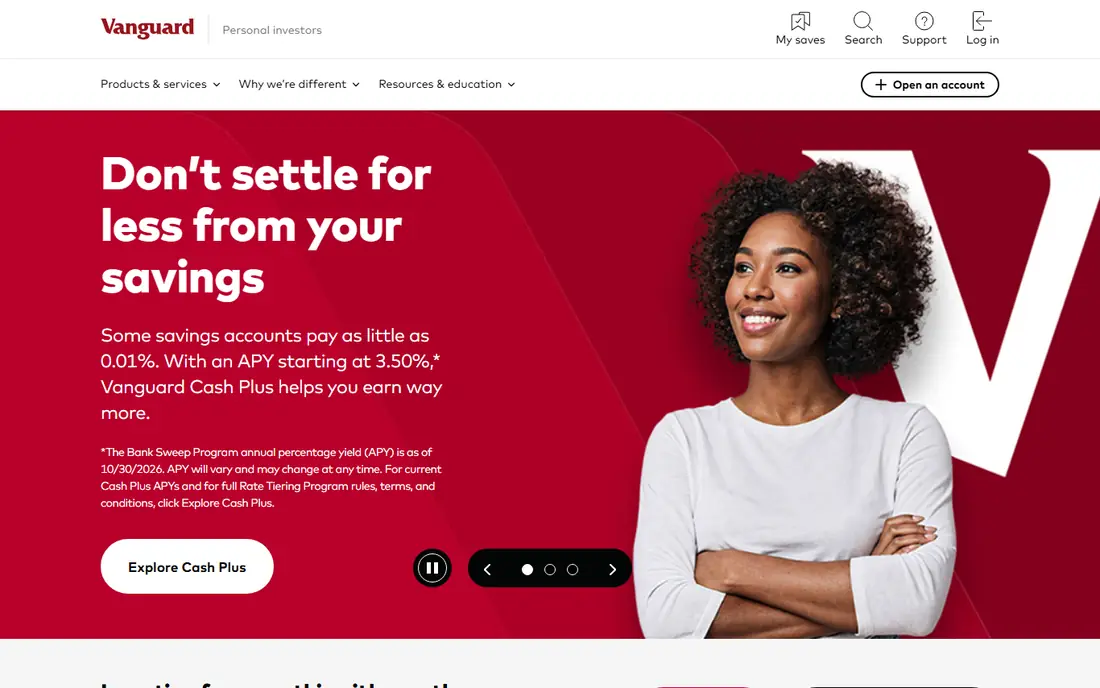
Vanguard built its name on low-cost index investing, and its ETFs such as VOO carry a low expense ratio of about 0.03%. A Roth IRA can hold Vanguard funds, ETFs and stocks, with $0 stock and ETF commissions and no minimum for ETF purchases beyond the share price. That structure suits buy-and-hold investors who plan to keep costs low for decades.
The app and website feel less modern than Fidelity or Schwab, and some Vanguard mutual funds still need a $3,000 minimum, though ETF versions avoid that rule. Vanguard Digital Advisor offers managed portfolios for a fee, with its own minimums. Choose Vanguard if you want its funds and a long-term, low-cost approach, and you do not need the slickest app.
- Low-cost index funds and ETFs
- Long history in index investing
- No account fee for many accounts
- App and website feel dated
- Some mutual funds need a $3,000 minimum
E*TRADE, part of Morgan Stanley, offers a Roth IRA with no account fee, no minimum to open, and $0 commissions for stocks and ETFs. Its trading platforms suit active investors who want charts, screeners and options tools inside a retirement account. The fund list includes many no-transaction-fee mutual funds.
Beginners may find the platforms dense, and E*TRADE does not offer a clear cost edge over Fidelity or Schwab for a simple index portfolio. It suits investors who already trade actively and want the same tools inside a Roth IRA, rather than investors who want the simplest possible setup.
- $0 account fee and $0 stock commissions
- Strong trading platforms
- Wide fund list
- Tools can overwhelm beginners
- No standout robo advantage over rivals
Betterment builds and manages a diversified ETF portfolio for you, based on your goals and risk level, and it rebalances automatically. That hands-off model suits savers who do not want to pick funds or watch markets. Plans start at $4 per month for smaller balances, with a 0.25% annual advisory fee on higher-tier plans, so check the current pricing page for your balance.
The trade-off is control and cost. You cannot pick individual stocks inside a Betterment portfolio, and the advisory fee, while modest, adds up over decades compared with a self-directed index portfolio. Choose Betterment if you will save more consistently with a managed portfolio than with a self-directed account you rarely touch.
- Managed ETF portfolios
- Automatic rebalancing
- Goal-based planning tools
- Advisory fee applies
- Less control over individual holdings
Wealthfront offers automated investing with diversified ETF portfolios, automatic rebalancing and planning tools for retirement and other goals. It suits hands-off savers who want a set portfolio and a clear plan, without picking funds themselves. Tax-loss harvesting is a feature of its taxable accounts, though it does not apply in the same way inside a Roth IRA.
Wealthfront charges an advisory fee, and managed accounts have a minimum balance, so check the current fee page before you open an account. The Roth IRA itself can be opened through Wealthfront, but the value lies in the managed service, not in free self-directed trading. Choose Wealthfront if automation and planning matter more than picking each holding.
- Automated ETF portfolios
- Tax-loss harvesting in taxable accounts
- Planning tools
- Advisory fee applies
- Minimum balance for managed accounts
M1 Finance lets you build a custom portfolio pie from stocks and ETFs, set target weights, and invest automatically toward those targets. That design suits self-directed investors who want a clear, long-term portfolio without daily trading. Roth IRAs carry $0 commissions, and automatic deposits help build a saving habit.
M1 uses trading windows rather than live intraday trading for most orders, so it does not suit active traders who need instant execution. Some features, such as extra trading windows, sit behind a paid Plus plan. Choose M1 if you like the pie model and a disciplined, automatic approach to a Roth IRA.
- Custom pies for portfolio design
- Automatic investing
- $0 commissions
- Trading windows limit intraday control
- Premium features need a paid plan
Robinhood offers a Roth IRA with $0 commissions, no minimum to open, and a simple mobile app that suits new investors. It offers stocks and ETFs, fractional shares and, for eligible users, a contribution match, with a higher match for Gold members. That match is unusual among brokers, and it can add value for regular contributors.
The limits matter. Robinhood IRAs do not offer mutual funds, and research tools are lighter than Fidelity or Schwab. The match also comes with terms, so read the current offer page carefully. Robinhood suits simple stock and ETF investing in a Roth IRA, not investors who want a wide mutual fund range.
- $0 commissions and no minimum
- Simple mobile app
- IRA contribution match for eligible users
- No mutual funds in IRAs
- Research and fund choice are limited
Merrill Edge, from Bank of America, offers a Roth IRA with $0 stock and ETF commissions and no minimum to open in many cases. It suits Bank of America customers who want banking and investing in one login, with research, planning tools and branch access. Preferred Rewards members may also qualify for fee waivers and other benefits.
For a pure low-cost index portfolio, Merrill does not beat Fidelity or Schwab on fund costs or simplicity. It wins on integration for existing bank customers. Choose Merrill Edge if you bank with Bank of America and value one relationship, and check the current fee schedule for your account type.
- $0 stock and ETF commissions
- Bank of America integration
- Research access
- Less standout for pure low-cost index investing
- App experience varies by account
How we picked these
We compared official fee schedules, account pages, fund expense ratios and public reviews for Roth IRA providers that are live in October 2026. We kept providers with $0 or low account fees, a clear Roth IRA offering and a real choice of investments or managed portfolios. We dropped providers that had closed, that only offered employer plans, or that charged high account fees without a clear benefit.
We weighed account fees, fund costs, minimums, investment choice and managed options, because those factors affect long-term returns more than app design alone. Prices and fees come from vendor pages where a figure was clear, and we wrote See website where a vendor did not publish a simple starting price. We did not claim hands-on testing, and this article is not financial advice.
Choosing a Roth IRA company
Decide self-directed or managed first
If you want to pick funds and ETFs yourself, Fidelity, Schwab, Vanguard, E*TRADE, M1, Robinhood or Merrill will serve you, with $0 commissions for most trades. If you want a portfolio built and managed for you, Betterment or Wealthfront, or the robo options at Fidelity, Schwab and Vanguard, are the direct route. That choice narrows the list more than any fee table.
Check total cost, not just the account fee
A $0 account fee does not mean a $0 portfolio. Fund expense ratios, advisory fees and cash allocations all affect returns over time. Compare the expense ratio of the funds you will actually hold, plus any advisory fee, before you open an account. A 0.25% advisory fee on a large balance costs far more over decades than a $0 account fee saves.
Check contribution and income rules
Roth IRA contribution limits and income phase-outs change over time, and they depend on your filing status and income. For 2026, check the IRS figures for your situation before you contribute, and note the deadline for contributions for a tax year. If your income is above the direct contribution limit, talk to a tax professional about options, rather than guessing from a blog post.
Frequently asked questions
What is the best company for a Roth IRA?
Fidelity is our pick for most people, because it offers $0 account fees, $0 minimums, $0 stock and ETF commissions and zero-expense index funds. Charles Schwab is close behind for service and fund choice, and Vanguard is strong for long-term index investors. The best company depends on whether you want self-directed or managed investing.
What is the best company to open a Roth IRA for beginners?
Fidelity and Charles Schwab both suit beginners, with $0 minimums, simple account opening and strong support. Betterment suits beginners who want a managed portfolio and do not want to pick funds. Start with a provider whose app and support you find clear, because you are more likely to keep contributing.
How much can I contribute to a Roth IRA in 2026?
Contribution limits and income phase-outs are set by the IRS and can change each year, so check the IRS site for the 2026 figures that apply to your age and filing status. The general rule is that you need earned income to contribute, and contributions for a tax year must be made by the tax filing deadline for that year. This article is not tax advice.
Is a Roth IRA better than a traditional IRA?
It depends on your tax situation now and in retirement. Roth contributions are made with after-tax money, and qualified withdrawals in retirement are tax-free, while traditional IRA contributions may be tax-deductible now and taxed on withdrawal. Talk to a tax professional about your income, tax bracket and retirement plans before you choose.
Can I open a Roth IRA with no money?
Yes, at Fidelity, Schwab, Vanguard, E*TRADE and several others, you can open an account with $0 and fund it later. Some managed services, such as Wealthfront, have minimums for managed portfolios, and some mutual funds have their own minimums. ETF versions of index funds often avoid those fund minimums.
Do Roth IRAs have fees?
Many brokers charge no account fee and no stock or ETF commission, but fund expense ratios still apply, and managed portfolios charge an advisory fee. Read the fee schedule for the provider and the funds you hold, because those two costs together form the real price of your Roth IRA. This is not financial advice.
Sources we checked (9)

Online Jobs is an independent blog about careers, online work, learning new skills and the tools that help people earn. More about us.
Keep reading
All posts
Who Is the Best Company to Get Travel Insurance
Compare the best travel insurance companies, including World Nomads, Allianz Travel, SafetyWing and AXA, with coverage types, limits and who each suits.
Top AI Financial Software
Searching for top AI financial software? We compared 9 AI finance tools for AP, spend, close, forecasting and bookkeeping to help teams choose wisely.
Quicken Alternatives
Compare the best quicken alternatives for Mac, Windows, and small business owners, from Monarch Money and YNAB to Copilot, Tiller, and Banktivity in 2026.