Best Orderflow Trading Platform in 2026: 9 Platforms Compared

How we put this together: we compare official feature and pricing pages, app store listings, privacy policies and public user reviews. Prices change, so check the provider's site before you pay.
Key takeaways
- This is not financial advice, and trading carries risk, including the risk of losing money, especially with futures traded on margin and short-term strategies.
- Orderflow tools show where buying and selling actually happened, through footprint charts, depth of market, and volume profiles, rather than price alone.
- Bookmap and ATAS are our picks for dedicated orderflow work, while Sierra Chart suits traders who want deep customisation at a lower ongoing cost.
- NinjaTrader is the easiest route for many US futures traders, because orderflow tools, brokerage, and a large community sit in one place.
- Check data feed costs separately from platform costs, because live orderflow data is often the larger monthly expense.
Quick comparison
| Name | Who it suits | Starting price | Free option | |
|---|---|---|---|---|
 Bookmap | Live depth and heatmap trading | See website | Free trial | Visit |
 ATAS | Footprint and volume profile trading | See website | Free trial | Visit |
 Sierra Chart | Customisable orderflow charts | See website | Free trial | Visit |
 NinjaTrader | US futures traders in one platform | Free | Yes | Visit |
 Jigsaw Trading | Depth of market ladder trading | See website | Free trial | Visit |
 Quantower | Multi-asset orderflow charts | See website | Free trial | Visit |
 MotiveWave | Orderflow with broader charting | See website | Free trial | Visit |
 Volfix | Volume analysis for futures | See website | Free trial | Visit |
 TradingView | Accessible charts with orderflow add-ons | Free | Yes | Visit |
The best orderflow trading platform
We focused on platforms that show real orderflow data, not just volume bars: footprint charts that split buying and selling inside each candle, depth of market ladders, cumulative delta, and volume profiles. Every platform below supports live futures data through a supported feed or broker, but data costs and platform costs are separate, so check both before you commit.
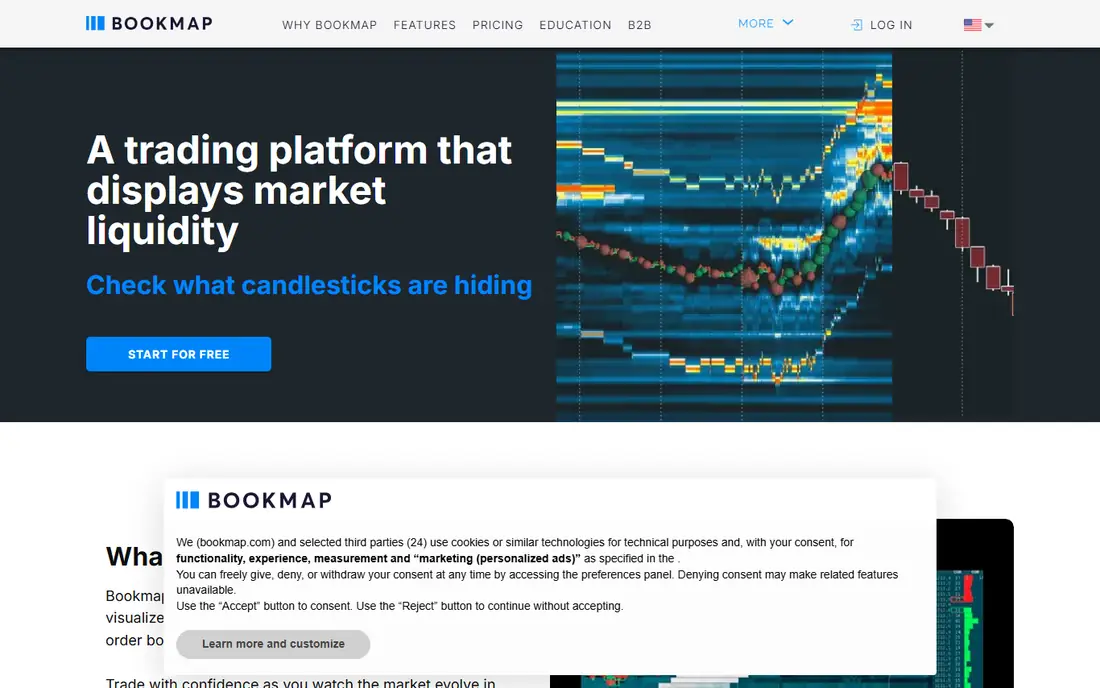
Bookmap is built around a live heatmap of the order book, so you can see liquidity build, thin out, and get absorbed in real time. That view helps traders who read support and resistance from actual orders rather than from price history alone. Historical depth replay lets you practise on past sessions, which is useful before risking live money.
The costs stack up. The platform subscription is separate from exchange data, and the learning curve is real if you have only used candlestick charts before. Bookmap is best for futures traders who already understand orderflow basics and want the clearest live depth view available.
- Live depth heatmap is clear and fast
- Historical depth replay
- Strong futures coverage
- Subscription cost adds up with data
- Learning curve for new orderflow traders
- Needs a supported data feed
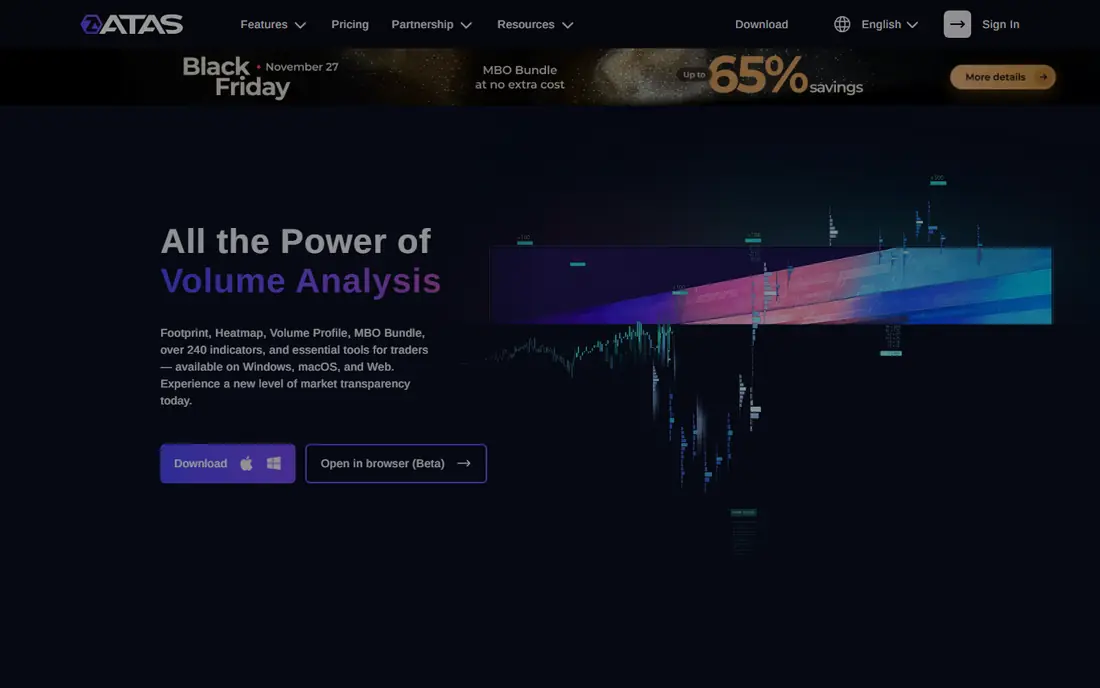
ATAS, short for Advanced Time And Sales, is a dedicated orderflow platform with strong footprint charts, cluster charts, volume profiles, and cumulative delta. Those tools let you see buying and selling pressure inside each price level, rather than guessing from a single volume bar. The platform supports major futures data feeds and brokers, and its community shares templates and setups.
The interface is dense at first, and the subscription sits on top of data costs. Some advanced features also need higher tiers, so check the plan page against the tools you actually use. For traders who live in footprint charts, ATAS is one of the most complete dedicated options.
- Strong footprint, cluster, and volume profile charts
- Good futures data support
- Active user community
- Interface takes learning
- Subscription plus data costs
- Some features need higher tiers
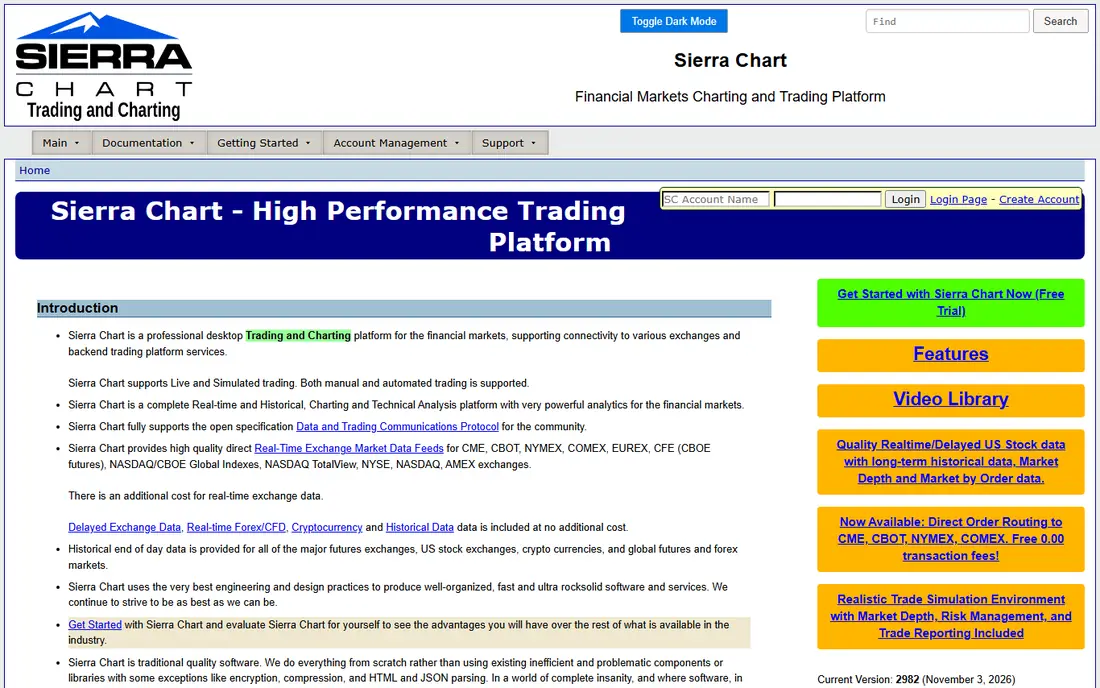
Sierra Chart is a long-standing charting platform with deep orderflow tools, including footprint charts, volume profiles, cumulative delta, and market depth studies. Its strength is customisation: you can build almost any orderflow layout, study, or alert, and the platform runs fast even with many charts open. The ongoing platform cost is also lower than many dedicated orderflow subscriptions.
The interface looks dated, and setup takes patience, including data feed configuration and study settings. New traders may find Bookmap or ATAS easier to learn. For experienced traders who want control and low ongoing cost, Sierra Chart is hard to beat.
- Deep customisation and footprint tools
- Lower ongoing platform cost
- Stable and fast performance
- Interface looks dated
- Setup takes time
- Data and exchange fees are separate
NinjaTrader is the most accessible route into orderflow for many US futures traders, because the core platform is free for charting and simulated trading. Orderflow tools, including footprint-style charts and volume profiles, are available in the platform and through add-ons, and the integrated brokerage lets you trade futures from the same account. Simulated trading is a sensible first step before live money.
Advanced orderflow features may need paid add-ons, and live exchange data and brokerage costs are separate from the platform itself. The platform is also mainly futures focused, so stock and crypto traders may prefer a multi-asset tool. For a US futures trader starting with orderflow, NinjaTrader is a practical and low-cost entry point.
- Free platform for charting and simulation
- Orderflow tools and add-ons available
- Integrated brokerage for US futures
- Advanced orderflow tools may need add-ons
- Live data and brokerage costs are separate
- Mainly futures focused
Jigsaw Trading is built for traders who read the depth of market ladder as their main chart. The ladder shows live bids, offers, and traded volume at each price, with tools for reading absorption, stacking, and order pulling. Training material is a real strength, which matters because ladder trading has a steep learning curve.
The focus is narrow by design. If you prefer footprint charts or longer-term charting, Jigsaw will feel limited, and it works best alongside a charting platform rather than replacing one. For short-term futures traders who want to learn ladder reading properly, Jigsaw is a focused and well-taught choice.
- Depth ladder is built for fast orderflow reading
- Strong training material
- Works with major platforms
- Niche focus on ladder trading
- Subscription plus data costs
- Less useful for long-term chart traders
Quantower is a multi-asset platform with orderflow charts, including footprint, volume profile, cumulative delta, and depth tools. That breadth suits traders who move between futures, stocks, crypto, and forex, or who want one platform for several accounts. Connections to many brokers and data feeds reduce the need to learn a new platform for each market.
Feature depth varies by asset class, so check that your market has the orderflow tools you need before subscribing. The interface also takes time to learn, and data costs sit on top of the platform price. For multi-asset traders who want orderflow in one place, Quantower is a flexible option.
- Covers futures, stocks, crypto, and forex
- Footprint and volume tools
- Connects to many brokers and feeds
- Feature depth varies by asset
- Subscription plus data costs
- Interface takes learning
MotiveWave combines orderflow tools with a broader charting and analysis package, including Elliott Wave tools and a wide study library. That mix suits traders who want footprint and volume profile views without giving up general technical analysis, and who like having desktop and web access in one subscription.
Dedicated orderflow traders may find the depth lighter than Bookmap or ATAS, especially for advanced footprint work. Full features also need higher tiers, and data costs are separate. MotiveWave is best for traders who want orderflow as part of a wider charting toolkit, rather than as the only tool.
- Orderflow tools plus strong general charting
- Elliott Wave and analysis tools
- Desktop and web access
- Orderflow depth is lighter than dedicated tools
- Paid tiers needed for full features
- Data costs separate
Volfix focuses on volume analysis for futures, with cluster charts, volume profiles, and tools for reading where large volume traded. That focus makes it useful for traders who build decisions around volume at price, rather than around indicators alone. Historical volume tools help with backtesting ideas on past sessions.
Volfix is less widely known than Bookmap or ATAS, so community templates and third-party training are thinner. The interface also takes learning, and data costs are separate. For futures traders who centre their method on volume, Volfix is a focused option worth a trial.
- Strong volume and cluster analysis
- Futures focused
- Historical volume data tools
- Niche and less widely known
- Interface takes learning
- Data costs are separate
TradingView is the most accessible charting platform here, with a clean interface, a huge script library, and a free tier that covers basic charting. Volume profile tools are available, and third-party indicators add footprint-style views, which makes it a useful first step into orderflow concepts without a dedicated subscription.
Native orderflow depth is limited compared with Bookmap, ATAS, or Sierra Chart, and true footprint and depth data depend on your plan, market, and third-party tools. Data depth also varies by exchange. TradingView is best as a learning and general charting tool, with a dedicated orderflow platform added later if your method needs it.
- Easy to use and widely available
- Large indicator and script library
- Free tier for basic charting
- Native orderflow tools are limited
- Advanced orderflow needs paid plans or third-party tools
- Data depth varies by market
How we picked these
We compared official feature pages, pricing pages, and supported data feeds, and we kept only platforms that are available in 2026 and that show genuine orderflow data, such as footprint charts, depth, or volume profiles. We favoured platforms with a distinct strength, from live depth heatmaps to ladder trading to multi-asset coverage, and we noted where data costs sit separately from platform costs. We did not claim hands-on trading results.
What to check before you pay
Start with your market and your data feed, because orderflow is only as good as the data behind it. Confirm that the platform supports your broker or feed, that the exchange data you need is included or priced separately, and that the feed offers the depth and historical data your method requires. A platform subscription without the right data is money spent for charts you cannot use properly.
Next, trial the platform in simulation before trading live. Learn one tool well, such as cumulative delta or a volume profile, rather than turning on every orderflow indicator at once. Watch how the tool behaves in fast markets, slow markets, and around news events, because orderflow reading changes with conditions. Keep a simple log of what you saw and what happened next, and review it weekly.
Finally, manage risk plainly. Orderflow tools show information, they do not remove risk, and short-term futures trading can lose money quickly, especially when trading on margin. Use position sizes you can afford to lose, set stops before you enter, and never fund trading with money needed for rent, bills, or debt. If you are new to orderflow, paper trading for several weeks is a sensible and low-cost way to learn.
Frequently asked questions
What is the best orderflow trading platform?
Bookmap is our pick for live depth reading, and ATAS is our pick for footprint and volume profile work. Sierra Chart suits experienced traders who want customisation at a lower ongoing cost, while NinjaTrader is the easiest low-cost entry for US futures traders.
Is orderflow trading profitable?
Orderflow tools can help you read buying and selling pressure, but they do not guarantee profit. Trading carries risk, and results depend on method, risk control, costs, and market conditions. Treat any claim of guaranteed orderflow profits with scepticism.
Do I need to pay for data separately?
In most cases, yes. Platform subscriptions usually exclude exchange data, and live depth data can cost more than the platform itself. Check the platform pricing page and the data provider pricing page together before you subscribe.
Can I learn orderflow on TradingView first?
Yes, for basics. TradingView covers volume profiles and general charting well, and third-party tools add footprint-style views. For live depth, full footprint charts, and ladder trading, you will eventually need a dedicated platform such as Bookmap, ATAS, or Sierra Chart.
Is this financial advice?
No. This article is educational only and is not financial advice. Trading carries risk, including the risk of losing money, and you should consider your own financial situation and, if needed, speak to a qualified financial adviser before trading.
Sources we checked (9)

Online Jobs is an independent blog about careers, online work, learning new skills and the tools that help people earn. More about us.
Keep reading
All posts
Top AI Financial Software
Searching for top AI financial software? We compared 9 AI finance tools for AP, spend, close, forecasting and bookkeeping to help teams choose wisely.
Quicken Alternatives
Compare the best quicken alternatives for Mac, Windows, and small business owners, from Monarch Money and YNAB to Copilot, Tiller, and Banktivity in 2026.

GoFundMe Alternatives
Looking for GoFundMe alternatives? We compared 8 fundraising platforms on fees, campaign types, donor tools and who each platform suits best in 2026 today.