Best Merchant Services for Small Business in 2026: 8 Services Compared

How we put this together: we compare official feature and pricing pages, app store listings, privacy policies and public user reviews. Prices change, so check the provider's site before you pay.
Key takeaways
- Square is our pick for new small businesses, thanks to no monthly fee, simple flat rates and a full point of sale system.
- Stripe is the best pick for online and developer led businesses, with a strong API and subscription tools.
- Helcim is the best pick for transparent interchange plus pricing with no standard monthly fee.
- This is not financial advice, and rates and approval depend on your business type, volume and risk checks.
- Compare total cost on your real sales mix, not just the headline rate, because card type, channel and monthly fees change the total.
Quick comparison
| Name | Who it suits | Starting price | Free option | |
|---|---|---|---|---|
 Square | New small businesses | Free | Yes | Visit |
 Stripe | Online and developer led | Free | Yes | Visit |
 Helcim | Transparent interchange plus | Free | Yes | Visit |
 Stax | High volume businesses | $99 per month | No | Visit |
 PayPal | Familiar online checkout | Free | Yes | Visit |
 Payment Depot | Subscription plus wholesale rates | $79 per month | No | Visit |
 Clover | Retail and restaurant point of sale | See website | No | Visit |
 Chase Payment Solutions | Chase banking customers | See website | No | Visit |
The best merchant services for small business
A merchant service lets you accept card payments, in person and online, and it charges you for that service in different ways. Flat rate pricing is simple, interchange plus pricing can be cheaper at volume, and subscription pricing can win for high volume sellers. The services below cover all three models, so pick by your sales volume, channel and need for point of sale hardware.
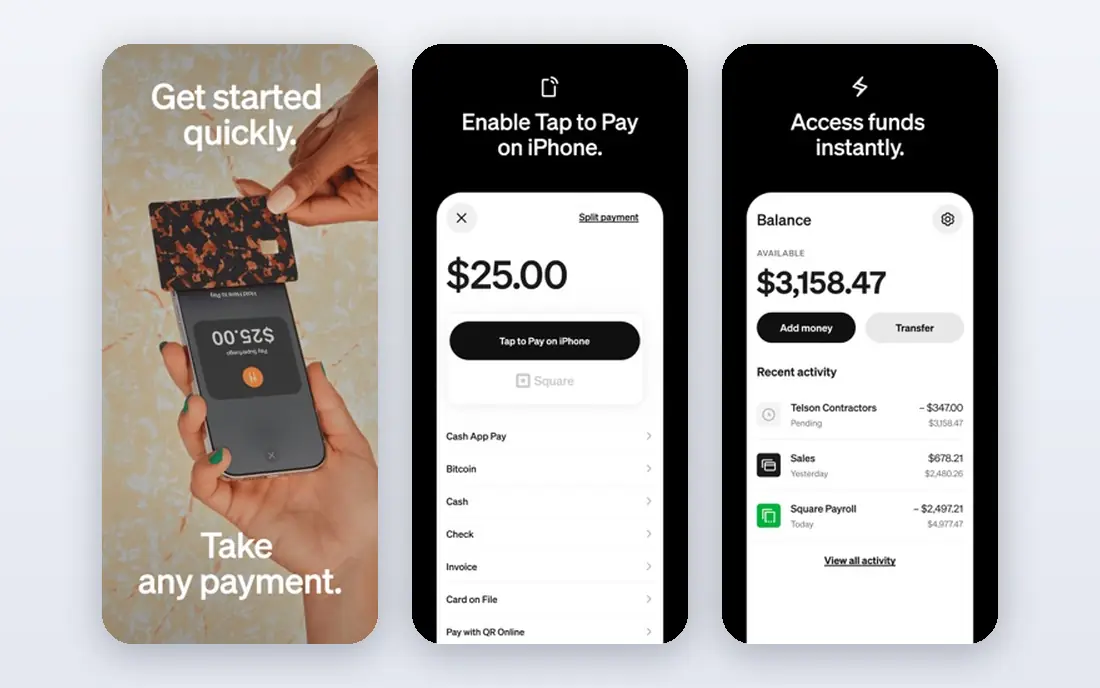
Square is our pick for a new small business because you can start taking cards today with no monthly fee and no long contract on the base plan. In person rates are listed at 2.6 percent plus $0.10, and online rates at 2.9 percent plus $0.30. The point of sale app runs on a phone or tablet, with a free card reader, and Square adds invoicing, appointments, an online store and banking tools in the same system.
The catch is volume. Flat rate pricing becomes costly as volume rises, because you pay the same rate even on low cost debit cards that would be cheaper under interchange plus pricing. Square can also hold funds or close accounts for risk reasons, which is a risk with any payment provider, but it matters more for high risk or unusual sales patterns. This is not financial advice, and your rate and approval will depend on your business checks. Start with Square, track your monthly fees, and compare with Helcim once you have three months of real statements.
- No monthly fee on the base plan
- Free card reader
- Simple flat rates
- Full point of sale system
- Flat rates cost more at high volume
- Account holds can affect some sellers
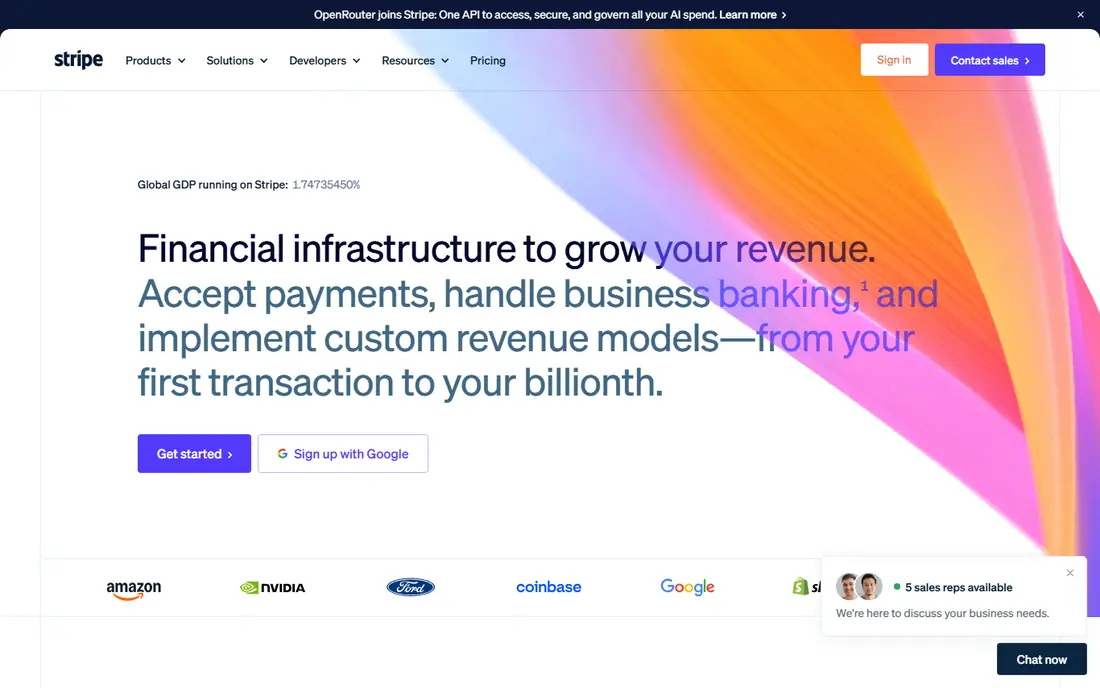
Stripe is the best pick for an online business, a software company or a team with developer help. Its standard online rate is listed at 2.9 percent plus $0.30, with no monthly fee, and it offers subscription billing, marketplace payments, international payments in many currencies, fraud detection and tax tools. The API and docs are widely regarded as developer friendly. Custom rates are offered for high volume businesses.
The trade-off is in person and non technical use. Stripe Terminal exists for developers building a custom point of sale, but Stripe does not offer the same ready made retail point of sale system as Square or Clover. Non technical teams may find the dashboard complex, and international cards add a fee, listed at plus 1.5 percent in recent comparisons. For an online first business, Stripe is a strong pick. For a shop that needs a counter system out of the box, Square or Clover will be simpler.
- Strong API and docs
- Subscription billing
- Fraud tools
- Many payment methods
- No full point of sale system for non technical teams
- Dashboard can feel complex
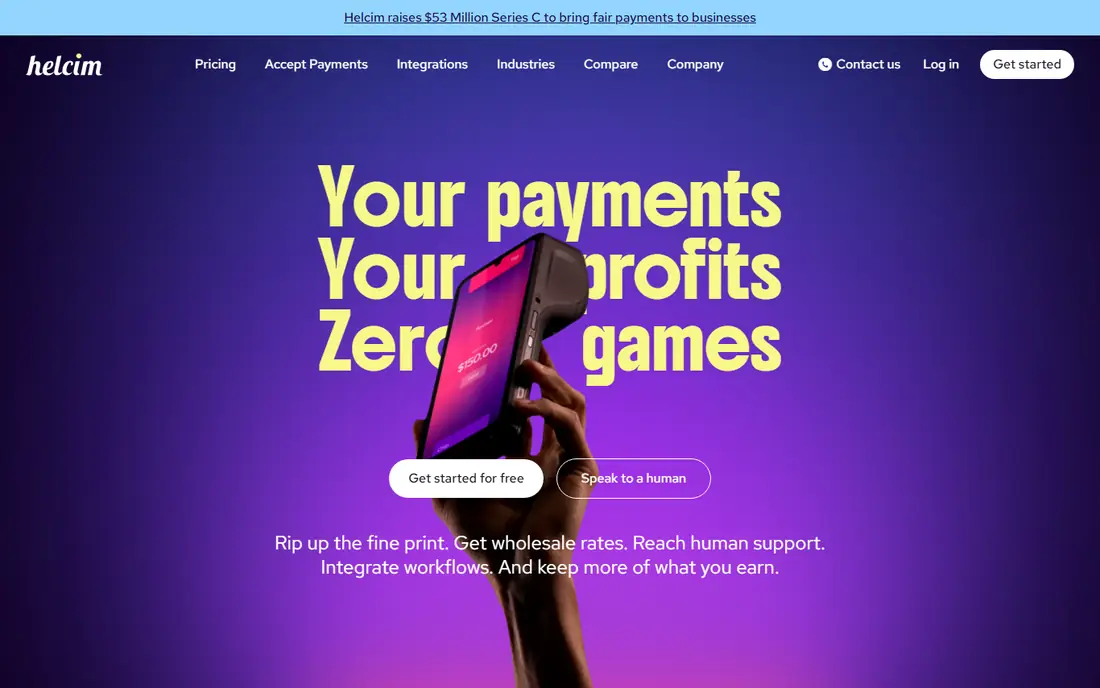
Helcim is our pick for transparent pricing. It uses interchange plus pricing, where you pay the card network cost plus a published Helcim markup, with no standard monthly account fee. Recent comparisons cite in person interchange plus about 0.4 percent plus $0.08, and online interchange plus about 0.5 percent plus $0.25, with automatic volume discounts as your volume grows.
The catch is card mix. Helcim passes premium rewards and commercial card costs straight through, so a business with many premium cards may not save as much as a business with mostly debit cards. High risk merchants may also face limited approval. This is not financial advice, and your final rate will depend on your card mix and volume. For a growing business with steady volume, Helcim often beats a flat rate provider on total cost, and it is worth comparing with three months of statements.
- Interchange plus pricing with published markup
- No standard monthly fee
- Automatic volume discounts
- Passes premium card costs through
- Limited approval for high risk merchants
Stax suits a business with high, predictable card volume that can earn back a monthly fee. Plans are listed from $99 per month, with interchange passed through plus a small transaction fee, and higher plans at $139 and $199 per month for larger businesses. That subscription model can beat flat rate pricing once volume passes a threshold, with recent comparisons citing a crossover at roughly $58,000 to $70,000 per month for card present sales, depending on ticket size.
The trade-off is the fee itself. At $99 per month, Stax costs $1,188 per year before transaction fees, so a low volume business will pay more than with Square or Stripe. This is not financial advice, and approval and final pricing depend on your business and volume. Price Stax on your real volume and ticket size, not on a headline saving, and check what the plan includes for hardware, support and contract terms before you sign.
- Subscription plus interchange pricing
- 0 percent markup model on some plans
- Strong support
- Monthly fee makes it costly for low volume
- Needs volume to beat flat rate rivals
PayPal is a good pick for an online business that wants a checkout customers already trust. Standard online rates are listed at about 2.89 percent plus $0.29 in recent comparisons, with no monthly fee on standard plans, and PayPal offers invoicing, online checkout and international payments. Many shoppers already have a PayPal account, which can help conversion on a small store.
The catch is holds and channel rates. PayPal can hold funds for new sellers, for unusual sales patterns or for high risk goods, and rates vary by channel, such as online, in person or invoicing. This is not financial advice, and your rate and account terms will depend on your business checks. For a small online store, PayPal is a simple, trusted start. For a high volume business, compare PayPal's total cost with Stripe and Helcim on your real sales mix.
- Customers trust the PayPal brand
- Online checkout and invoicing
- No monthly fee on standard plans
- Flat rates vary by channel
- Holds can affect new or high risk sellers
Payment Depot suits a business that processes enough volume to justify a subscription for wholesale rates. Plans are listed from about $79 per month, with interchange plus about $0.05 to $0.10 per transaction on some comparisons, and higher plans for larger businesses. That model can beat flat rate pricing at volume. For a retailer or restaurant with steady high volume, the saving can be clear.
The trade-off is the monthly fee and plan limits. At $79 per month, Payment Depot costs $948 per year before transaction fees, so low volume sellers will pay more than with a free plan provider. Some older plan terms limited an account to one computer terminal, so check current terms if you need multiple terminals. This is not financial advice, and your final cost depends on volume and card mix. Price Payment Depot on your real statements before you commit to a subscription.
- Wholesale interchange plus a small markup
- Subscription model for high volume
- No percentage markup on some plans
- Monthly fee from $79
- Only one terminal per account in some older plan terms
Clover is the best pick for a retail or restaurant business that needs a full counter system, not just a phone app. It offers a range of hardware, from a mini terminal to a full station, with an app marketplace for inventory, ordering, loyalty and reporting. That system suits a shop or restaurant where staff need a fast, reliable till. Clover is sold through resellers and banks, which can bundle it with a merchant account.
The catch is pricing variation. Clover pricing varies by reseller, with monthly fees, hardware costs and contract terms that differ by deal, so two businesses can pay different totals for the same system. Check the full contract, including monthly fees, hardware lease terms and early exit terms, before you sign. This is not financial advice, and approval depends on your business checks. For a business that needs a full till system, Clover is worth comparing with Square's hardware range on total cost over two years.
- Full point of sale hardware range
- App marketplace
- Good for counter and table service
- Pricing varies by reseller
- Monthly fees and contract terms need a close read
Chase Payment Solutions suits a business that already banks with Chase and wants payments, banking and reporting in one relationship. It offers flat rate and custom rate options, with in person and online processing, and it can simplify settlement into a Chase business account. For a business with a Chase relationship, that single bank view can help with reporting and support.
The trade-off is transparency for small sellers. Pricing is custom for many businesses, so you need a quote based on your volume, channel and card mix, rather than a published rate you can compare at a glance. This is not financial advice, and approval and rates depend on your business checks. Get a written quote, compare it with Square, Stripe and Helcim on your real statements, and check contract and monthly fee terms before you switch. For a Chase customer with steady volume, the bundled banking benefit can tip the choice.
- Works with Chase business banking
- Flat rate and custom rate options
- Large bank backing
- Pricing is custom for many businesses
- Less transparent than Helcim for small sellers
How we picked these
We compared official pricing pages, plan contents and recent fee comparisons, and we weighted pricing model, monthly fees, point of sale tools, online tools and contract clarity. We looked for providers that state their headline rates, monthly fees and hardware costs clearly, and we flagged where pricing is custom or varies by reseller. We did not claim hands-on testing for every provider, and rates change, so check the vendor pricing page and get a written quote before you sign. This is not financial advice, and no provider in this list can promise approval or a specific rate for your business.
How to compare merchant services on your real sales
Start with three months of statements, or with a realistic forecast if you are new. Note your total card volume, average ticket, share of in person versus online sales, and share of debit versus premium credit cards. Those four numbers decide which pricing model wins for you. A flat rate provider wins on simplicity, an interchange plus provider wins when debit share is high, and a subscription provider wins when volume is high enough to earn back the monthly fee.
Read the contract before you sign
Check monthly fees, per transaction fees, hardware costs, early exit fees, PCI compliance fees and any minimum volume terms. Ask whether rates are locked, whether they can change with notice, and how long the contract runs. For a reseller deal, such as Clover, ask who your merchant account provider is and who handles support. A cheap headline rate with a long contract and high exit fee can cost more than a slightly higher rate with no contract.
Test settlement, support and holds
Ask how fast funds settle to your bank, what triggers a hold, and how you contact support if a payment fails. Test the point of sale or checkout with a small live sale before a busy period, and check reporting for refunds, chargebacks and payouts. A provider with fast settlement and clear support can matter more than a small rate difference, especially for a business with tight cash flow. Keep a backup payment option for busy days, in case your main provider has an outage.
Frequently asked questions
What are the best merchant services for small business?
Square is our pick for new small businesses, Stripe is the best pick for online businesses, and Helcim is the best pick for transparent interchange plus pricing. Stax and Payment Depot suit high volume sellers, while Clover suits retail and restaurant point of sale needs. The best service depends on your volume, channel and hardware needs.
What is the best merchant service for a small business with low volume?
Square and Stripe are the best low volume picks, because they have no monthly fee on base plans and you can start quickly. PayPal is also a good low volume pick for online checkout. Avoid a subscription provider until your volume is high enough to earn back the monthly fee. This is not financial advice, and your rate will depend on your business checks.
How much do merchant services cost?
Costs depend on pricing model. Flat rate providers list about 2.6 percent plus $0.10 in person and 2.9 percent plus $0.30 online. Interchange plus providers charge card network costs plus a markup, such as about 0.4 to 0.5 percent plus $0.08 to $0.25. Subscription providers charge $79 to $199 per month plus interchange. Price your real sales mix, not just the headline rate.
Do merchant services require a contract?
Some do, and some do not. Square, Stripe, Helcim and PayPal offer no long contract on standard plans, while subscription and reseller deals, such as Stax, Payment Depot and some Clover deals, may include monthly fees and contract terms. Read the full contract, including early exit fees, before you sign, and ask for a written quote.
Can a merchant service refuse my business?
Yes. Providers check business type, risk, volume and history, and they may decline high risk businesses or ask for extra documents. This is not financial advice, and no provider can promise approval. If one provider declines you, another provider with a different risk model may accept you, but rates and terms may differ. Be honest on your application, because misstatements can lead to holds or closure.
Is Square or Stripe better for a small business?
Square is better for a shop or service business that needs a simple point of sale system out of the box. Stripe is better for an online business or a team with developer help that needs subscriptions, marketplaces or custom checkout. Many businesses use both: Square in person and Stripe online, if that split fits their sales. Compare both on your real in person and online volume.
Sources we checked (8)

Online Jobs is an independent blog about careers, online work, learning new skills and the tools that help people earn. More about us.
Keep reading
All posts
Top AI Financial Software
Searching for top AI financial software? We compared 9 AI finance tools for AP, spend, close, forecasting and bookkeeping to help teams choose wisely.
Quicken Alternatives
Compare the best quicken alternatives for Mac, Windows, and small business owners, from Monarch Money and YNAB to Copilot, Tiller, and Banktivity in 2026.
QuickBooks Online Alternatives
Looking for quickbooks online alternatives? We compared 8 accounting tools on invoicing, bank feeds, payroll, pricing and fit for small businesses today.