Best LLM Optimization Tools for AI Visibility in 2026: 9 Tools Compared

How we put this together: we compare official feature and pricing pages, app store listings, privacy policies and public user reviews. Prices change, so check the provider's site before you pay.
Key takeaways
- Profound, Peec AI, and Scrunch offer the deepest AI visibility tracking for brands that need prompt-level reporting across many engines.
- Otterly is the lowest-cost credible entry point, which makes it a good first tracker for small teams.
- Semrush and Ahrefs suit teams already paying for those SEO suites, since AI visibility sits inside a familiar workflow.
- No tracker alone improves visibility. The value comes from fixing the content, structure, and citations that AI systems quote.
Quick comparison
| Name | Who it suits | Starting price | Free option | |
|---|---|---|---|---|
 Profound | Enterprise AI visibility | See website | Free trial | Visit |
 Peec AI | Mid-market share of voice | $95 per month | Free trial | Visit |
 Otterly | Budget tracking | $29 per month | Free trial | Visit |
 Scrunch | Enterprise optimization | $250 per month | Free trial | Visit |
 AthenaHQ | Free testing and optimization | Free | Yes | Visit |
 Goodie | Attribution and agents | See website | Free trial | Visit |
 Semrush AI Visibility Toolkit | Existing Semrush users | $99 per month | No | Visit |
 Ahrefs Brand Radar | Research and prompt data | $199 per month | No | Visit |
 Writesonic GEO | Content plus tracking | $79 per month | Free trial | Visit |
The best LLM optimization tools for AI visibility
We compared official pricing pages and feature pages for tools that track how brands appear in AI answers, often called generative engine optimization or GEO tools. Our pick for most mid-sized brands is Peec AI, because it balances prompt tracking, share of voice, and price. Otterly is the pick for small teams on a budget, while Profound suits enterprises that need depth and reporting at scale.
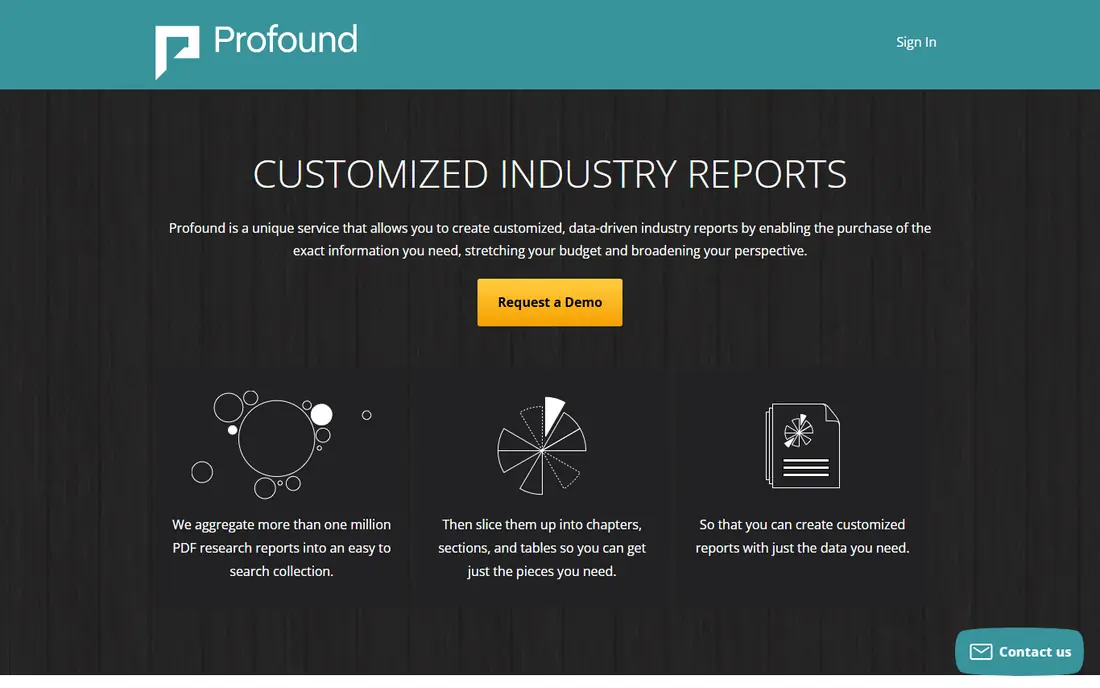
Profound is the enterprise standard in this list for AI visibility. It tracks how a brand appears across AI engines, shows which sources are cited, and reports sentiment and share of voice in a way that suits large teams and agencies. The breadth of engine coverage, up to nine engines on enterprise plans in published comparisons, is a real advantage for brands that care about ChatGPT, Gemini, and Google AI Overviews together.
The catch is access. Profound withdrew simple self-serve starter plans in September 2026 in published reports, and now offers a free trial followed by custom enterprise pricing, plus an agency plan. That makes it hard to budget without a sales conversation. If you run a large brand or agency and need depth, Profound is worth that conversation. Smaller teams should start with Otterly or Peec AI.
- Tracks many AI engines
- Deep citation and sentiment reporting
- Agency and enterprise reporting
- Pricing is custom after a trial
- Built for teams with dedicated analysts
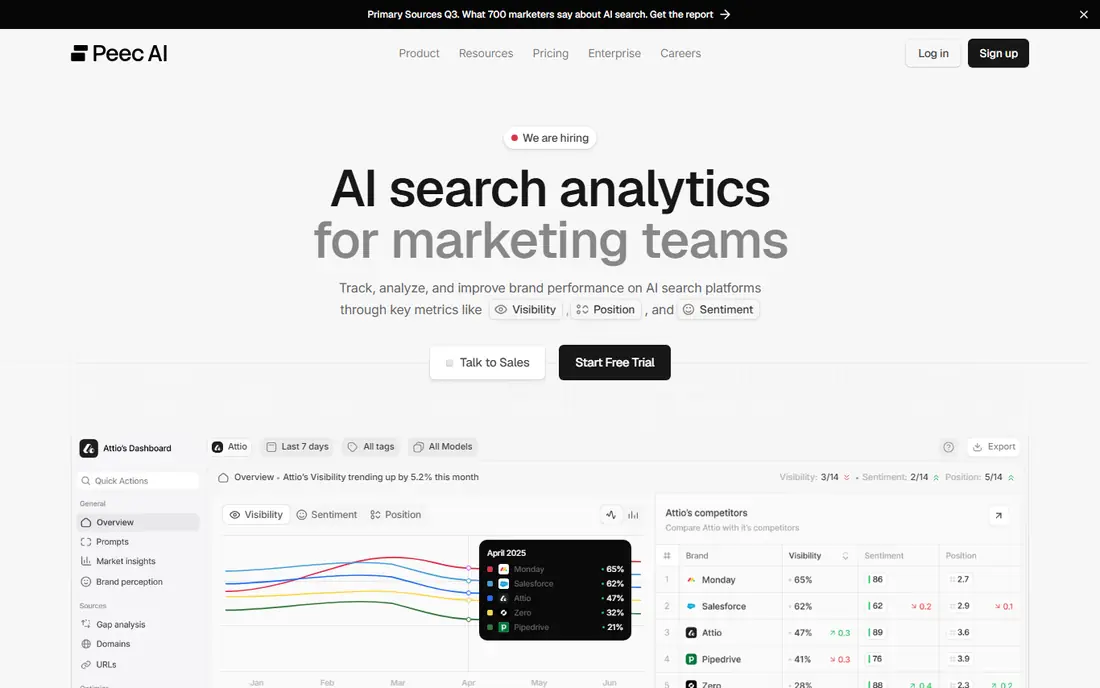
Peec AI focuses on the core job of AI visibility tracking, which is knowing how often your brand appears, what is said, and which competitors appear instead. Daily prompt tracking, share of voice, and citation views help a marketing team spot gaps and act on them, without the enterprise complexity of Profound. Starting at $95 per month in published comparisons, it sits in the mid-market range.
The limit is engine coverage at entry level. The starter tier covers a smaller set of engines, and additional models can be add-ons, so check which engines matter to your customers before buying. For B2B and SaaS teams that want daily tracking and clear competitor comparisons, Peec AI is a strong balance of depth and price.
- Daily prompt tracking
- Share of voice versus competitors
- Sentiment and citation views
- Entry tier covers fewer engines
- Some models are add-ons
Otterly is the cheapest credible entry point in this list, starting at $29 per month in published comparisons. It tracks brand visibility across core AI engines, shows sentiment trends, and flags changes, which is enough for a small team to learn whether AI answers mention them at all. Setup is simpler than enterprise tools, so a team can start tracking in days, not weeks.
The trade-off is depth. Entry plans include a small prompt count, and diagnostic features are lighter than Peec AI or Profound. Otterly is best as a first tracker, not a final system for a large brand. If you find that AI visibility drives real leads, you can upgrade to a deeper tool later, with a clear sense of which prompts and engines matter.
- Lowest entry price here
- Simple setup
- Covers core AI engines
- Fewer diagnostic features than mid-tier tools
- Prompt limits are low on entry tier
Scrunch goes further than simple tracking by linking visibility gaps to content work. It shows which personas and customer journeys trigger AI answers, where your brand is missing, and what content could close the gap. That optimization angle suits mid-market and enterprise teams that already have content resources and want a system for improving citations, not just watching them.
The catch is price and effort. Starting at $250 per month billed annually in published comparisons, Scrunch is a serious commitment, and getting value from it needs someone to act on its recommendations. For small teams, Otterly or Peec AI will be more practical. For larger teams with content capacity, Scrunch offers a clearer path from tracking to fixing.
- Turns citation gaps into content actions
- Persona and journey views
- Enterprise scale
- Price puts it out of reach for small teams
- Setup needs more time
AthenaHQ stands out because it offers a free tier, which is rare among dedicated AI visibility tools. You can test tracking across several models, see how your brand appears, and try content optimization features before paying. That free entry makes it a good way to learn the category without committing to a monthly plan.
The limit is scale. Free credits are limited, and paid plans start at $295 per month in published comparisons, which is a large jump. AthenaHQ suits teams that want to test AI visibility first, then decide whether the optimization features justify a higher plan. If you only need tracking, Otterly or Peec AI may be cheaper at scale.
- Free tier for testing
- Credit-based flexibility
- Content optimization features
- Paid plans start high
- Free tier limits credits and engines
Goodie focuses on attribution, which means linking AI visibility to outcomes rather than just counting mentions. For brands that need to show how AI answers affect traffic, leads, or sales, that focus matters. It also tracks agents and brand presence across AI systems, which suits teams thinking beyond classic search.
The downside is price. Published comparisons place Goodie at the higher end, with entry plans around $295 per month in some reports and higher in others, so check the current pricing page before budgeting. Small teams will find better value in Otterly or Peec AI. Larger brands that need attribution reporting will find Goodie worth a closer look.
- Attribution-focused reporting
- Agent and brand tracking
- Useful for larger brands
- Higher price point
- Less suited to small teams starting out
Semrush AI Visibility Toolkit
Who it suits: Existing Semrush users
Semrush AI Visibility Toolkit is the practical pick for teams already paying for Semrush. It adds AI visibility tracking to the SEO workflow they already use, covering Google AI Overviews and AI Mode, ChatGPT, Gemini, and Perplexity in published comparisons. Daily tracking and prompt views help SEO teams compare classic rankings with AI answers in one place.
The catch is per-domain pricing. At $99 per month per domain in published comparisons, agencies managing many client brands will see costs rise quickly. It also offers less GEO-specific depth than dedicated tools like Profound or Scrunch. If you already use Semrush for one or two domains, it is a sensible add-on. If you manage many brands, a dedicated tracker may be cheaper.
- Sits inside a familiar SEO suite
- Tracks AI Overviews, ChatGPT, Gemini, and Perplexity
- Daily tracking
- Priced per domain
- Adds up fast for agencies with many clients
Ahrefs Brand Radar suits research-led teams that trust Ahrefs data. It offers a large pre-built prompt index and tracks brand visibility across AI Overviews, AI Mode, ChatGPT, Perplexity, Gemini, Copilot, and Claude in published comparisons. That breadth helps teams discover which prompts actually matter, rather than guessing at a small prompt list.
The limit is depth and pricing structure. Brand Radar is newer than dedicated GEO tools, and published reports differ on whether the $199 per month figure sits on top of a base Ahrefs plan. Check the current pricing page for your account type before buying. For teams already in Ahrefs, Brand Radar is a useful research add-on. For pure GEO tracking, Peec AI or Profound may offer more depth.
- Large pre-built prompt index
- Grounded in real query data
- Strong research features
- Newer product with less GEO depth than specialists
- Add-on pricing on top of base plans in some reports
Writesonic GEO suits content teams that want tracking and content help in one platform. It tracks AI visibility and offers content tools to improve the pages that AI systems cite. Starting at $79 per month in published comparisons, it is cheaper than enterprise trackers and fits teams that publish often.
The trade-off is focus. Writesonic is primarily a content platform with GEO features, so its tracking depth is lighter than Profound, Peec AI, or Scrunch. If your main need is deep prompt reporting, choose a dedicated tracker. If your main need is to fix content that AI systems quote, Writesonic GEO offers a practical combination of tracking and writing tools.
- Combines GEO tracking with content creation
- Good for content teams
- Lower entry price than enterprise tools
- Tracking depth is lighter than dedicated trackers
- Content features may not suit all teams
How we picked these
We compared official pricing and feature pages, plus published 2026 comparisons that checked vendor pricing pages in October 2026. We favored tools that track real prompts across named AI engines, show citations, and offer a usable entry plan or trial. We excluded tools that only promise AI visibility without showing prompt-level data, and we noted where pricing is custom or per domain, since that changes the real cost sharply.
How to improve AI visibility once you start tracking
Start with a small, honest prompt list. Choose 20 to 50 prompts that real customers actually ask, covering your brand, your competitors, and your core services. Track those prompts for a month before adding more, so you can see a baseline and spot real changes rather than noise.
Next, fix the pages AI systems cite. Make sure each key page answers one question clearly, uses headings that match how people ask, includes facts and sources, and is easy for AI systems to read. Add structured data where it helps, and keep information current, since outdated pages are less likely to be cited. Finally, measure citations, not just mentions. A brand mention without a link or citation is weaker than a cited answer that sends a reader to your site. Use your tracker to find citation gaps, then create or update the content that fills them.
Frequently asked questions
What are LLM optimization tools?
LLM optimization tools, also called GEO or AI visibility tools, track how brands appear in answers from large language models such as ChatGPT, Gemini, and Perplexity. They show which prompts trigger mentions, which sources are cited, and how your share of voice compares with competitors. Some also suggest content fixes to improve citations.
Which LLM optimization tool is best for small businesses?
Otterly is the best starting point for small teams, at $29 per month in published comparisons. AthenaHQ offers a free tier for testing. If you need deeper daily tracking and competitor comparisons, Peec AI at $95 per month is the next step up.
How is GEO different from SEO?
SEO focuses on rankings in classic search results, while GEO focuses on mentions and citations in AI-generated answers. The two overlap, since clear, factual, well-structured content helps in both. GEO tools add prompt-level tracking across AI engines, which classic rank trackers do not cover in the same way.
Can these tools guarantee that AI systems will mention my brand?
No. No tool can guarantee mentions or citations, since AI systems choose sources based on relevance, freshness, and authority. A tracker shows where you stand and where gaps exist, but improvement comes from better content, clearer pages, and credible sources, not from the tracker alone.
Should I use Semrush or Ahrefs for AI visibility, or a dedicated tool?
Use Semrush or Ahrefs if you already pay for those suites and you track one or two domains, since the AI tools sit inside a familiar workflow. Use a dedicated tool like Peec AI, Profound, or Scrunch if you need deeper prompt reporting, more engines, or agency reporting across many brands.
Sources we checked (9)

Online Jobs is an independent blog about careers, online work, learning new skills and the tools that help people earn. More about us.
Keep reading
All posts
Best AI Overview Rank Tracking Software
Compare the best AI overview rank tracking software for 2026, with prices, prompt limits and engine coverage from Otterly, Peec, Profound and more today.

n8n Alternatives
n8n alternatives compared for 2026, with Zapier, Make, Activepieces, and more, covering visual builders, code steps, self-hosting, and pricing models.
eBay Alternatives
Looking for ebay alternatives? We compared 9 marketplaces for sellers on fees, buyer reach, categories and ease of listing, to help you sell with confidence.