Best Lab Grown Diamond Companies in 2026: 8 Companies Compared


Ethical sourcing and showrooms · Starting price: See website
How we put this together: we compare official feature and pricing pages, app store listings, privacy policies and public user reviews. Prices change, so check the provider's site before you pay.
Key takeaways
- James Allen and Brilliant Earth offer the largest stone selections, while Clean Origin and VRAI focus purely on lab grown diamonds.
- Always check the grading report before buying, since cut, color, clarity and carat drive the price far more than the brand name.
- Lab grown prices vary a lot between retailers for similar stones, so compare the same specifications across at least three sites.
- Return windows, resizing and warranties differ, and those policies matter more once the ring is on a finger every day.
- Lightbox suits fashion jewelry at lower prices, while the other retailers here focus on engagement rings and fine jewelry.
Quick comparison
| Name | Who it suits | Starting price | Free option | |
|---|---|---|---|---|
| Brilliant Earth | Ethical sourcing and showrooms | See website | No | Visit |
 James Allen | Largest selection with 360 views | See website | No | Visit |
 Clean Origin | Lab grown specialists | See website | No | Visit |
 VRAI | Unusual shapes and own-grown stones | See website | No | Visit |
 Blue Nile | Classic retailer with custom builds | See website | No | Visit |
 Ritani | Local jeweler preview option | See website | No | Visit |
 Lightbox | Affordable fashion jewelry | See website | No | Visit |
 Grown Brilliance | Value-focused modern settings | See website | No | Visit |
The best lab grown diamond companies
Lab grown diamonds are real diamonds, made with the same carbon structure as mined stones, but their prices have fallen sharply as supply has grown. That makes retailer choice more important than ever, because similar stones can cost very different amounts. We compared official inventories, certification details, settings, return policies and warranties to build this list.
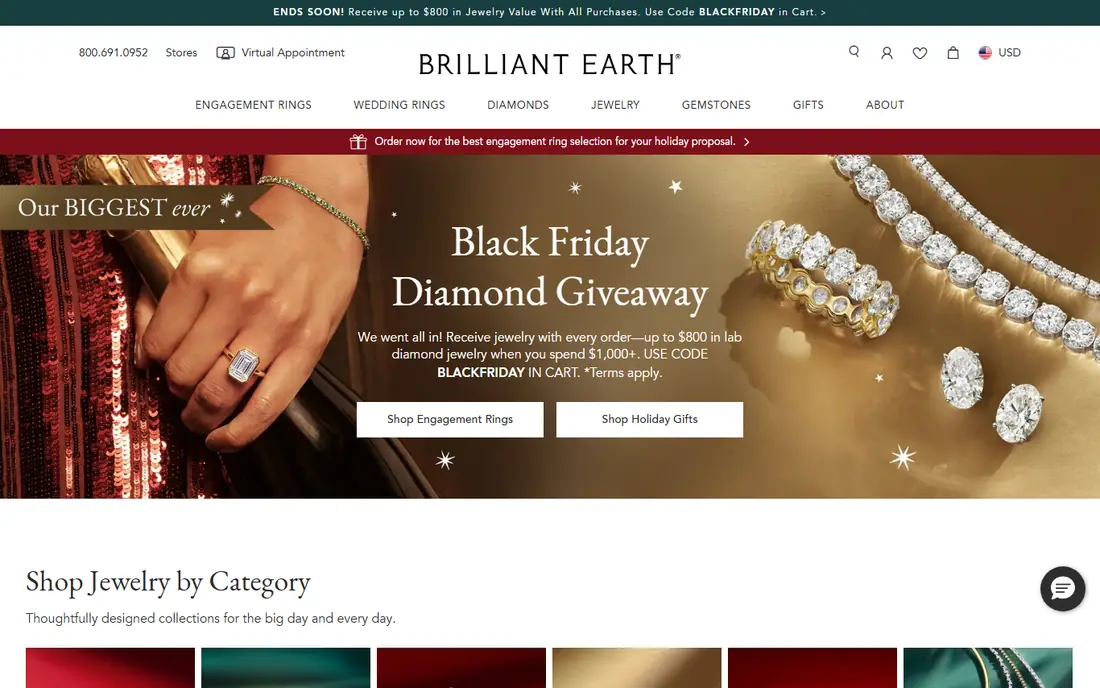
Brilliant Earth is a good first stop if you care about sourcing and want to see a ring in person before buying. The company uses recycled metals and emphasizes ethical sourcing across its natural and lab grown ranges, and its showrooms let you compare stones and settings face to face. The inventory is large, with many shapes and sizes to filter.
The trade-off is price. For the same specifications, Brilliant Earth can cost more than value-focused retailers, so compare like with like before paying a premium for the brand and the showroom experience. If those factors matter to you, the premium may be worth it. If not, use its inventory to learn what you like, then price the same stone elsewhere.
- Large diamond inventory
- Recycled metals and ethical sourcing focus
- Physical showrooms for in-person viewing
- Prices can sit above value-focused rivals for similar stones
- Popular settings sell out
James Allen built its name on showing you the actual stone. Every diamond gets a detailed 360 degree view, magnified so you can inspect inclusions and cut quality before buying. That transparency matters for lab grown stones, where two stones with the same grade on paper can look different in practice.
The selection is enormous, which is both a benefit and a chore: filtering by cut, color, clarity and carat is essential. James Allen also offers a custom ring builder, so you can pair a loose stone with a setting you like. For buyers who want to inspect the stone closely and choose from the widest range, it is a top pick.
- Huge diamond selection
- Detailed 360 degree views of each stone
- Custom ring builder
- Lab grown prices still vary by stone
- No standalone showroom network of its own
Clean Origin sells only lab grown diamonds, and that focus shows in its pricing and policies. As a specialist, it keeps its range tight and its prices competitive, and it offers a generous return window plus free resizing terms that take pressure off the purchase. If you already know you want lab grown, the specialist approach is appealing.
The range of settings is smaller than at Brilliant Earth or James Allen, so buyers who want an unusual design may need to look elsewhere. Clean Origin is best for classic and vintage-inspired settings bought with confidence in the return policy.
- Focuses only on lab grown diamonds
- Competitive pricing
- Generous return window and resizing terms
- Smaller setting range than the biggest retailers
- No mined diamond option if you change your mind
VRAI stands out because it grows its own diamonds rather than buying them in, and it cuts them in-house. That control lets it offer an unusually wide range of shapes, including rare cuts you will not find at most retailers. Its production is presented as zero-carbon, which appeals to buyers who weigh environmental impact.
The browsing experience is less photo-led than James Allen, since stones are shown in detail only after you click through. Some unusual shapes also need a custom design consultation or must be bought as loose stones. If you want a rare shape or a clear origin story, VRAI is worth the extra effort.
- Grows its own diamonds in the United States
- Many unusual shapes
- Zero-carbon production claims
- Browsing shows fewer stone photos up front
- Some shapes need a custom consultation
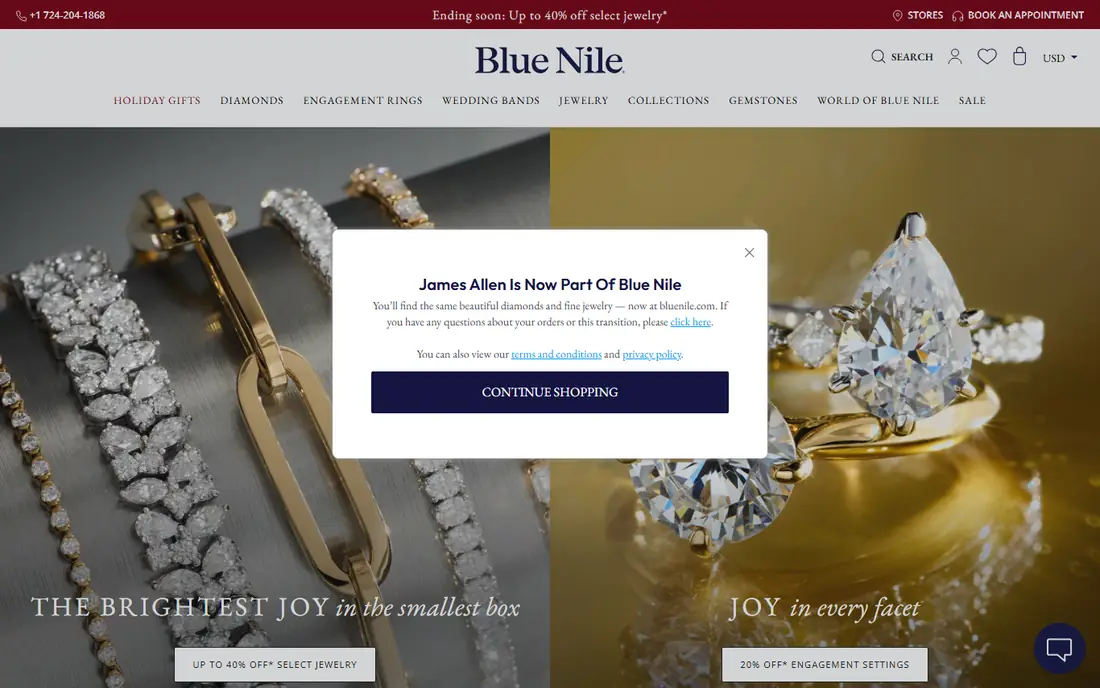
Blue Nile has sold jewelry online for over 25 years, and that longevity gives many buyers confidence. Its custom ring builder lets you design from scratch or start from a preset design, and its showrooms give you a place to see settings in person. James Allen designs are also available through Blue Nile as a curated collection.
Because Blue Nile sells both mined and lab grown stones, you need to filter carefully to compare lab grown options only. Prices vary by stone, as they do everywhere, so use the same specifications across retailers. For buyers who want a classic retailer with a long record, Blue Nile is a safe choice.
- Long-running trusted retailer
- Custom ring builder
- Showrooms in many cities
- Lab grown range sits alongside mined stones, so filtering matters
- Prices vary by stone
Ritani offers a useful middle path between pure online buying and a traditional jeweler: you can arrange to preview a ring through a local jeweler before committing. That preview step helps buyers who are nervous about spending thousands online, and its pricing on many stones is competitive with larger rivals.
The brand is less well known than James Allen or Blue Nile, and the setting range is narrower. If the preview option matters to you, Ritani earns its place. Compare the same stone specifications elsewhere too, since lab grown prices move often.
- Option to preview a ring through a local jeweler
- Competitive pricing on many stones
- Clear grading information
- Smaller brand presence than the biggest retailers
- Setting range is narrower
Lightbox takes a different approach from the engagement-focused retailers here. It sells lab grown diamond fashion jewelry, such as pendants, earrings and smaller rings, at lower prices with a simpler pricing model. That makes it a good choice for everyday jewelry or a gift, rather than a once-in-a-lifetime center stone.
Buyers shopping for an engagement ring will find the range too limited, since Lightbox is not built around large center stones or custom settings. Use it for what it is: affordable, attractive lab grown jewelry without the engagement-ring markup.
- Lower prices aimed at fashion jewelry
- Simple, clear pricing approach
- Backed by a major diamond company
- Not built for large engagement center stones
- Limited customization
Grown Brilliance focuses on value, with competitive prices and modern settings that suit buyers who want a contemporary look without paying a premium brand price. Its lab grown range covers popular shapes and sizes, and promotions appear regularly, which can bring the total cost down further.
As a newer brand, it has less history than Blue Nile or Brilliant Earth, so check the grading report for each stone and read the return and warranty terms before buying. For value-first buyers who compare specifications carefully, Grown Brilliance is a strong option.
- Competitive pricing on many stones
- Modern setting designs
- Frequent promotions
- Newer brand with less history than older rivals
- Check certification details per stone
How we picked these
We compared official inventories, certification practices, settings, return policies and warranties for each retailer, and we favored companies with a real lab grown range, clear grading information and published policies. We wrote "See website" for prices because lab grown diamond prices depend on the exact stone's specifications and change often. We did not claim hands-on purchases; our view comes from the published material we reviewed.
How to buy a lab grown diamond without overpaying
Compare the same specifications everywhere
Fix the shape, carat, cut, color and clarity you want, then compare that exact combination across three retailers. Prices for similar stones vary widely, and this is the fastest way to spot a good deal.
Read the grading report
Look for a report from a recognized lab such as IGI or GIA, and check that the report matches the stone you receive. The report is your proof of what you bought.
Check returns, resizing and warranties
A generous return window and free resizing remove risk from an online purchase. Read the warranty terms too, since lifetime cover usually has conditions.
Decide what the premium buys
A higher price may buy a showroom visit, a rare shape, a brand name or better service. Decide which of those you value before paying, rather than assuming a higher price means a better stone.
Frequently asked questions
What is the best lab grown diamond company overall?
James Allen and Brilliant Earth lead on selection, while Clean Origin leads for lab grown specialists and VRAI leads for unusual shapes. Compare the same stone specifications across at least three retailers, since prices for similar stones vary a lot.
Are lab grown diamonds real diamonds?
Yes. Lab grown diamonds have the same carbon structure and physical properties as mined diamonds, and they are graded by the same laboratories. The main differences are origin, price and resale value, which tends to be lower for lab grown stones.
Which lab grown diamond company is best for value?
Clean Origin, Grown Brilliance and Ritani often price competitively for similar specifications, but prices move often. Fix your specifications first, then compare across retailers on the same day to get a fair comparison.
What certification should a lab grown diamond have?
Look for a grading report from a recognized laboratory such as IGI or GIA that lists cut, color, clarity and carat. Check that the report number matches the stone, and keep the report with your purchase records.
Is it safe to buy a lab grown diamond online?
Yes, if you buy from an established retailer with a clear return policy, a grading report and secure payment. Use the 360 degree views where available, read the return window, and inspect the stone and report as soon as it arrives.
How much should I expect to pay for a lab grown diamond?
It depends on size and quality. Small stones cost far less than large, high-grade ones, and prices have fallen in recent years as supply has grown. Set your specifications first, then compare live prices across retailers rather than relying on old price guides.
Sources we checked (8)

Online Jobs is an independent blog about careers, online work, learning new skills and the tools that help people earn. More about us.
Keep reading
All posts
eBay Alternatives
Looking for ebay alternatives? We compared 9 marketplaces for sellers on fees, buyer reach, categories and ease of listing, to help you sell with confidence.

Best Shopping Apps
Looking for the best shopping apps in 2026? We compare 9 leading apps for everyday shopping, groceries, deals, shared lists, delivery and secondhand finds.

Best Receipt Rewards App
Best receipt rewards app in 2026: we compare 8 apps that pay you for scanning receipts, with cash-out minimums, payout options and honest earning notes.