Best Investing and High Return Platform in 2026: 9 Tools Compared

How we put this together: we compare official feature and pricing pages, app store listings, privacy policies and public user reviews. Prices change, so check the provider's site before you pay.
Key takeaways
- Fidelity, Schwab, and Vanguard suit long term investors who want low costs, broad funds, and strong research, rather than short term speculation.
- Robinhood, Webull, and Moomoo suit active traders who want low commissions and mobile tools, but trading frequently raises risk and costs.
- High returns carry high risk, and no platform can promise returns, so past performance is not a guide to future results.
- Fees, spreads, and taxes affect returns more than app design, so compare total costs for your actual trading pattern.
- This is not financial advice, and you should consider your goals, time horizon, and risk tolerance before investing, and seek independent advice if unsure.
Quick comparison
| Name | Who it suits | Starting price | Free option | |
|---|---|---|---|---|
 Fidelity | Low cost long term investing | Free | Yes | Visit |
 Charles Schwab | Research and broad investing | Free | Yes | Visit |
 Vanguard | Low cost index funds | Free | Yes | Visit |
 Robinhood | Simple mobile trading | Free | Yes | Visit |
 Interactive Brokers | Advanced global trading | Free | Yes | Visit |
 Webull | Active trading tools | Free | Yes | Visit |
 E*TRADE | Research and education | Free | Yes | Visit |
 SoFi Invest | Beginner investing | Free | Yes | Visit |
 Moomoo | Data and trading tools | Free | Yes | Visit |
The best investing and high return platform
Investing platforms differ in fees, investment choice, research, and risk controls. A platform that suits a long term index investor may not suit an active trader, and a platform built for trading may encourage frequent trades that hurt returns. The list below compares platforms on cost, choice, tools, and suitability, with a clear warning about risk.
This is not financial advice. Trading and investing carry risk, including loss of capital, and high return strategies carry high risk of loss. No platform on this list can promise returns, and past performance does not predict future results. Consider your goals, time horizon, and ability to bear losses, and seek independent financial advice if you are unsure.
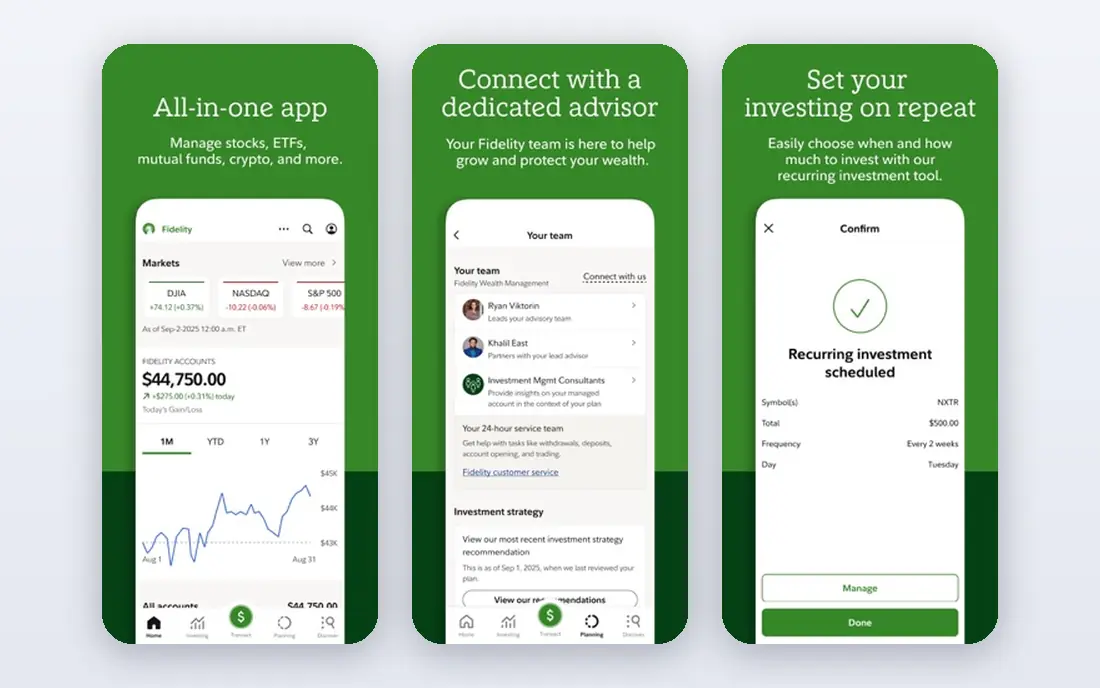
Fidelity suits long term investors who want low costs and a wide choice of investments. US stock and ETF trades are commission free, and Fidelity offers its own index funds with low expense ratios, plus thousands of funds from other providers. That combination helps investors build a diversified portfolio without paying high annual fund fees.
Research and education are strong. Fidelity offers articles, webinars, calculators, and screening tools that help investors compare funds, ETFs, and stocks. Customer service, including phone and branch support in the US, is also well regarded, which helps new investors who have questions about accounts, taxes, or retirement planning.
- Commission free US stock and ETF trades
- Broad fund choice
- Strong research and education
- Interface can feel dense
- Some advanced tools need learning
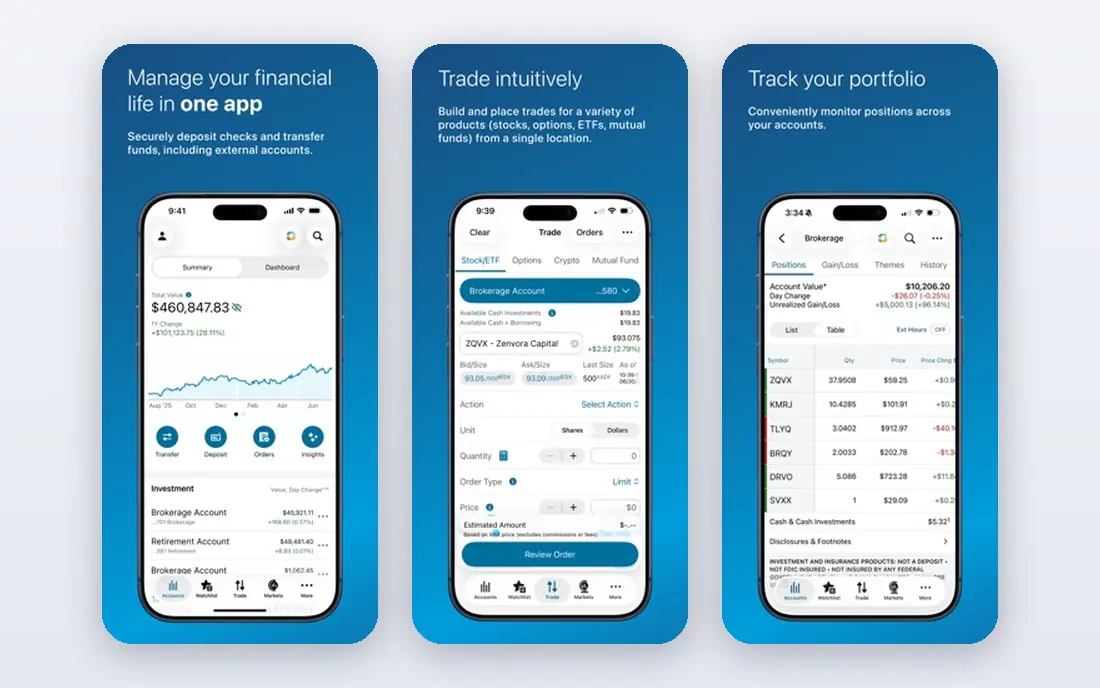
Charles Schwab, often called Schwab, is a strong all round platform for US investors. It offers commission free US stock and ETF trades, a wide range of funds, retirement accounts, and banking services, so investors can manage cash and investments in one place. Research tools, including Schwab own research and third party reports, help investors evaluate stocks and funds.
Education is also a strength, with articles, courses, and planning tools for retirement, college savings, and general investing. Schwab mobile app and website both offer a clear view of portfolio performance, holdings, and cash, which helps investors track progress without logging into several systems.
- Commission free US stock and ETF trades
- Strong research
- Banking and investing in one place
- Some fund fees vary
- Platform can feel complex for beginners
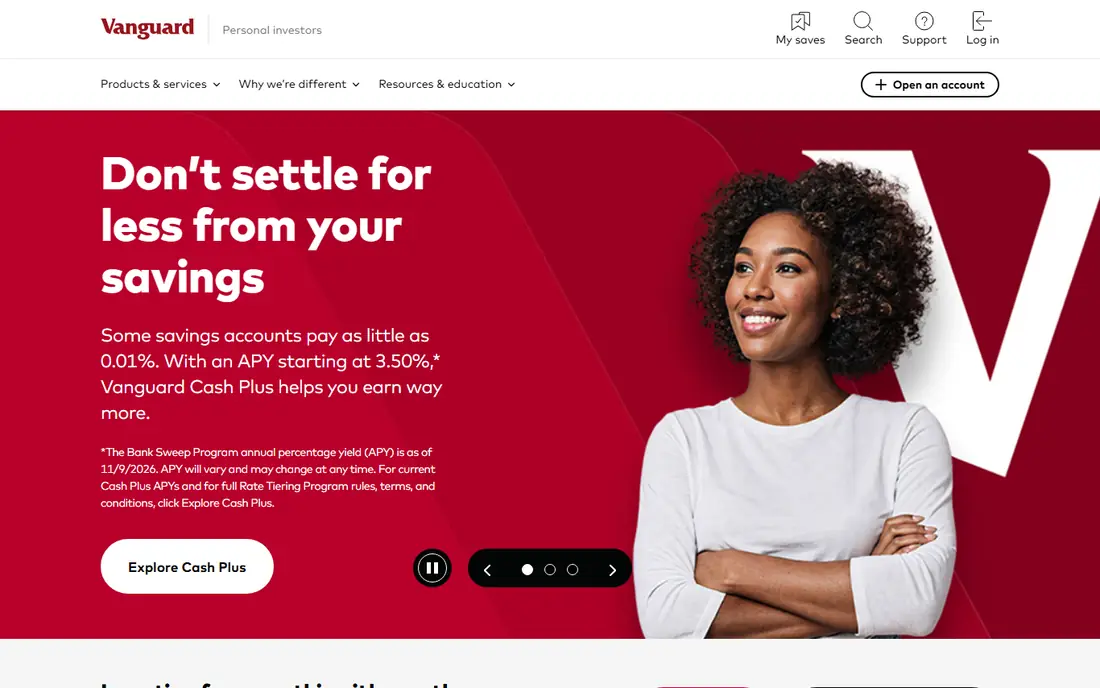
Vanguard is best known for low cost index funds and ETFs, and it suits investors who want a simple, long term portfolio. Vanguard index funds often have very low expense ratios, which matters over decades, because fees compound just like returns. For retirement investing, Vanguard target date funds and broad index funds are a common, low maintenance choice.
The investor owned structure is a point of difference. Vanguard is owned by its funds, which in turn are owned by investors, and that structure is designed to keep costs low. Vanguard also offers retirement accounts, education savings, and advice services for investors who want help building a plan.
Trading tools are basic compared with Robinhood, Webull, or Interactive Brokers. Vanguard is not built for frequent trading, options, or advanced charting, and its app is simpler than rivals. For long term index investing, that simplicity is fine. For active trading, choose a different platform on this list.
- Very low cost index funds and ETFs
- Investor owned structure
- Strong for retirement investing
- Trading tools are basic
- App experience is simpler than rivals
Robinhood suits new investors who want a simple mobile app for stocks, ETFs, and, in some states, crypto. The interface is clean, fractional shares let you invest small amounts in high priced stocks, and commission free trades lower the barrier to starting. For a first brokerage account, Robinhood is easy to open and easy to use.
The app also offers basic charts, news, and watchlists, plus retirement accounts in the US. That simplicity helps beginners, but it also has a risk: a very easy trading app can encourage frequent trading, which research shows often hurts returns after fees, spreads, and taxes. Investors should set a plan and avoid trading on every price move.
Research is thinner than Fidelity or Schwab, and customer support has been criticised in the past, though it has improved. Robinhood is best for simple, long term investing in stocks and ETFs, with a clear plan, rather than for complex strategies or for investors who need deep research and advice.
- Simple mobile app
- Commission free US stock and ETF trades
- Fractional shares
- Limited research compared with Schwab
- Frequent trading can raise risk
Interactive Brokers, often called IBKR, suits experienced investors and traders who want global access. It offers stocks, options, futures, forex, and bonds in many countries, with advanced trading tools, low margin rates for eligible accounts, and detailed reporting. For investors who trade internationally or use complex strategies, IBKR is often the most capable platform.
Pricing is competitive for active traders, with commission structures that vary by market and volume. IBKR also offers a lite plan with commission free US stock trades for some users, plus a pro plan with more advanced tools. Research, screening, and risk tools are strong, and the platform supports multiple currencies and account types.
Complexity is the main barrier. IBKR interface and account setup are harder than Robinhood or SoFi, and beginners may find the platform overwhelming. Margin trading, options, and futures carry high risk and can lead to losses larger than the initial investment, so they suit only experienced investors who understand those risks.
- Global market access
- Low margin rates for eligible accounts
- Advanced trading tools
- Complex platform
- Not ideal for beginners
- Fees vary by market
Webull suits active traders who want advanced charts and tools on mobile and desktop without paying commissions on US stock and ETF trades. Charts, technical indicators, and level 2 data help traders analyse price moves, and paper trading lets new traders practise without risking real money. That practice mode is a useful feature that not every platform offers.
The app also offers fractional shares, extended hours trading in some cases, and a community section where traders share ideas. For traders who follow technical analysis, Webull tools are stronger than Robinhood, and the desktop platform offers more screen space for charts and watchlists.
Webull offers limited banking, retirement advice, and fund research compared with Fidelity or Schwab. Active trading itself raises risk, because frequent trades can lead to losses from fees, spreads, taxes, and poor timing. Webull is best for traders who have a clear strategy, use paper trading first, and understand that high return trading strategies carry high risk.
- Commission free US stock and ETF trades
- Advanced charts
- Paper trading
- Limited banking and advice
- Active trading raises risk
E*TRADE, now part of Morgan Stanley, offers a solid mix of trading, research, and education for US investors. US stock and ETF trades are commission free, and the platform offers research reports, screening tools, and educational articles that help investors learn about stocks, ETFs, options, and retirement planning. That education focus suits investors who are moving from beginner to intermediate level.
The mobile app and website both offer portfolio tracking, watchlists, and news, and E*TRADE offers retirement accounts and managed portfolios for investors who want help. Customer service and branch access through Morgan Stanley add support for complex questions, though most users will manage accounts online.
Interface consistency is a minor drawback, because the app and web experiences differ in layout and features. Some advanced options tools need learning, and options trading carries high risk. For general investing with good research, E*TRADE is a reliable choice, especially for investors who value education alongside trading.
- Commission free US stock and ETF trades
- Strong research and education
- Morgan Stanley backing
- Interface varies between app and web
- Some features need learning
SoFi Invest suits beginners who want investing alongside banking, loans, and other financial products in one app. The interface is simple, fractional shares let you start with small amounts, and automated investing builds a diversified portfolio based on your goals and risk tolerance. That automation helps beginners who do not want to pick individual stocks.
SoFi also offers educational articles and community features, plus retirement accounts in the US. For a first investor, the simplicity of SoFi can be an advantage, because it reduces the chance of being overwhelmed by charts and options that more advanced platforms offer. Fees for automated investing are low compared with traditional advisers, though you should check current fee details on the SoFi site.
Investment choice is narrower than Fidelity or Schwab, and research tools are basic. SoFi is not built for advanced trading, options, or global markets. For a beginner who wants a simple, automated portfolio, SoFi is a good starting point. For a more experienced investor, Fidelity or Schwab offers more choice and research.
- Simple investing app
- Fractional shares
- Automated investing option
- Investment choice is narrower
- Research is basic
Moomoo suits traders who want rich market data, advanced charts, and a community of traders, with commission free US stock trades for eligible users. The platform offers level 2 data, technical indicators, earnings calendars, and news, which help traders research stocks before trading. Paper trading lets users practise strategies without real money, which is valuable for new traders.
The app and desktop platforms are well designed for data heavy trading, with customisable watchlists, screeners, and alerts. Moomoo also offers fractional shares and extended hours trading in some cases, plus educational content for traders learning technical analysis. For data focused traders, Moomoo tools compare well with Webull.
Moomoo is a newer brand than Fidelity or Schwab in some markets, and its research and advice services are thinner. Active trading on any platform raises risk, and Moomoo ease of trading does not reduce that risk. Use Moomoo for research and practised strategies, not for impulsive trades, and remember that high return goals often mean high loss risk as well.
- Rich market data and charts
- Commission free US stock trades for eligible users
- Paper trading
- Newer brand in some markets
- Active trading raises risk
How we picked these
We checked official app pages, app store listings, pricing pages, and public help pages to confirm each option still operates in October 2026. We compared features, costs, and limits on the vendor own site, and we left out options that had closed or lacked clear public details.
Investing for growth without chasing risk
Start with goals and time horizon. Money needed in the next year should not be invested in volatile stocks, because short term prices can fall sharply. Money for retirement in twenty years can tolerate more volatility, but it still needs diversification across stocks, bonds, and funds, rather than concentration in a few high risk bets. A diversified index fund portfolio suits many long term investors better than frequent stock picking.
Understand total costs. Commissions may be zero, but spreads, fund expense ratios, and taxes still affect returns. A fund with a 1 percent annual fee costs far more over decades than a fund with a 0.1 percent fee, even if both track a similar index. Check expense ratios, account fees, and tax implications for your country before choosing a platform or fund.
Avoid borrowed money trading and concentration unless you fully understand the risk. Margin, options, and ETFs that use borrowed money can amplify gains, but they can also amplify losses and lead to losses larger than your initial investment. High return claims online often ignore risk, fees, and taxes, and they rarely show the full period, including losses. A boring, diversified plan that you can stick to through market falls often beats a high risk plan that you abandon after a loss.
Frequently asked questions
What is the best investing platform for beginners?
Fidelity, Schwab, and SoFi Invest are strong for beginners, because they offer low costs, education, and simple account setup. SoFi suits absolute beginners who want automated investing, while Fidelity and Schwab suit beginners who want to learn and choose their own funds. Start with a diversified fund portfolio, not individual stock picks, and invest only money you can afford to leave invested for years.
Can a platform guarantee high returns?
No. No legitimate platform can guarantee high returns, and any claim that does should be treated as a warning sign. Returns depend on markets, your investments, fees, and timing, and high return strategies carry high risk of loss. Past performance does not predict future results, and diversified long term investing has historically involved periods of loss as well as growth.
Is Robinhood or Webull better for trading?
Webull offers stronger charts and data for active traders, while Robinhood offers a simpler app for beginners. Both offer commission free US stock and ETF trades, but active trading on either platform raises risk. Choose Webull if you want advanced tools and paper trading, and choose Robinhood if you want simplicity, and in both cases, trade with a clear plan and position sizes you can afford to lose.
What fees should I check before choosing a platform?
Check commissions, fund expense ratios, account fees, margin rates, and foreign exchange fees if you trade internationally. Also check spreads, which are the difference between buy and sell prices, and taxes on dividends and capital gains in your country. A platform with zero commissions can still be costly if fund fees are high or if frequent trading leads to tax costs.
Should I invest in stocks, ETFs, or index funds?
ETFs and index funds suit most long term investors, because they offer diversification in one purchase and low fees. Individual stocks can offer higher returns, but they also carry higher risk, because one company can fall sharply. Many investors combine a core index fund portfolio with a small amount in individual stocks, if they enjoy research and can accept the extra risk.
Sources we checked (9)

Online Jobs is an independent blog about careers, online work, learning new skills and the tools that help people earn. More about us.
Keep reading
All posts
Top AI Financial Software
Searching for top AI financial software? We compared 9 AI finance tools for AP, spend, close, forecasting and bookkeeping to help teams choose wisely.
Quicken Alternatives
Compare the best quicken alternatives for Mac, Windows, and small business owners, from Monarch Money and YNAB to Copilot, Tiller, and Banktivity in 2026.
GoFundMe Alternatives
Looking for GoFundMe alternatives? We compared 8 fundraising platforms on fees, campaign types, donor tools and who each platform suits best in 2026 today.