Best Expense Management Software for Startups in 2026: 9 Tools Compared

How we put this together: we compare official feature and pricing pages, app store listings, privacy policies and public user reviews. Prices change, so check the provider's site before you pay.
Key takeaways
- Ramp and Brex offer genuinely free core tiers with corporate cards, which makes them the cheapest starting point for many startups.
- Expensify and Fyle suit startups that want to keep their existing cards and still automate receipts and approvals.
- Zoho Expense and BILL Spend and Expense suit budget-conscious teams that need simple, reliable expense tracking.
- Navan suits startups where travel booking and expenses need to live in one system, rather than in separate tools.
Quick comparison
| Name | Who it suits | Starting price | Free option | |
|---|---|---|---|---|
 Ramp | Free cards, expenses, and bill pay in one place | Free | Yes | Visit |
 Brex | Free spend management for funded startups | Free | Yes | Visit |
 Expensify | Expense reporting without new cards | $5 per member per month | Yes | Visit |
 Zoho Expense | Budget expense automation | See website | Yes | Visit |
 BILL Spend and Expense | Free cards with budgets and bill pay | Free | Yes | Visit |
 Navan | Travel plus expenses in one platform | See website | Yes | Visit |
 Airbase | Procurement controls for growing teams | See website | No | Visit |
 Fyle | Real-time tracking on existing cards | See website | Free trial | Visit |
 Rydoo | Simple mobile-first expense reports | See website | Free trial | Visit |
The best expense management software for startups
Startups need expense software that saves founder time without adding a finance department. The best tools automate receipt capture, enforce simple policies, and sync cleanly to accounting software, so month-end does not become a spreadsheet rescue mission. We compared official pricing pages and product documentation, and we focused on tools that work for small teams, not only enterprises.
This is general business information, not financial advice. Card eligibility, credit terms, and accounting treatment depend on your company and jurisdiction, so check the vendor terms and your accountant before you rely on a specific setup.
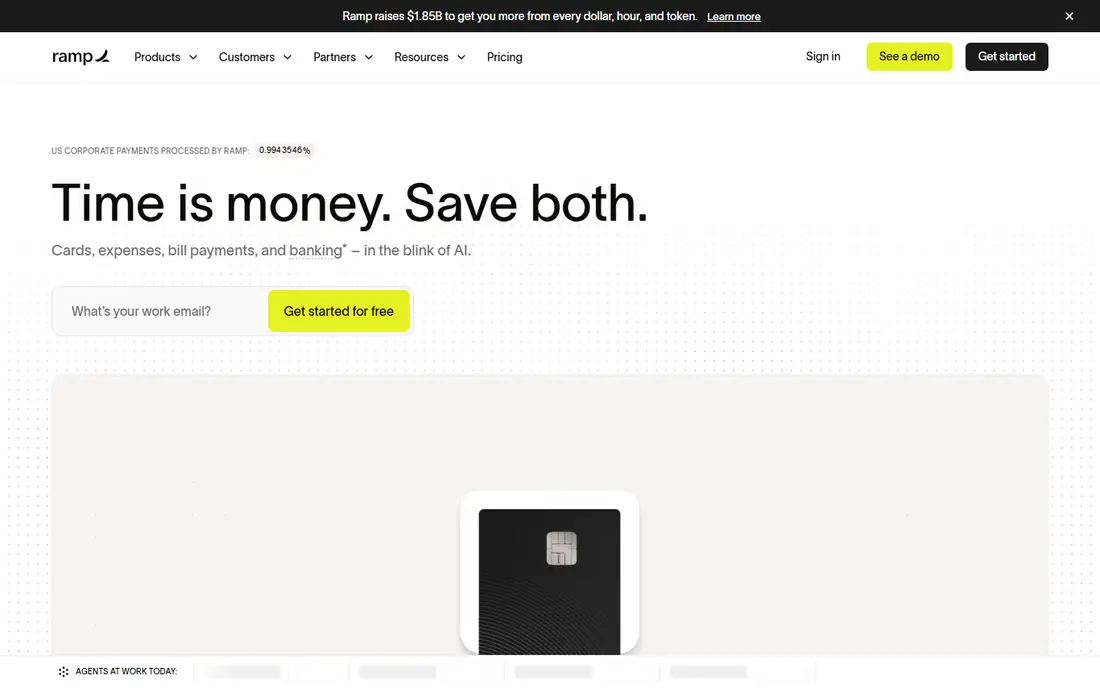
Ramp is our pick for most startups that are happy to switch to Ramp cards. The free tier covers cards, expense management, and bill pay, with receipt capture, policy controls, and accounting sync that reduce manual work for a small finance team. Automation is the strength: receipts are matched, policies are enforced, and spend visibility improves without constant chasing.
The trade-off is commitment to the Ramp card program. If your team must keep existing bank cards, Ramp is a weaker fit. Paid Plus adds deeper controls for a per-user fee plus a platform fee, so growing teams should model that cost. For a startup starting fresh, Ramp offers the most complete free starting point.
- Free core tier with corporate cards
- Strong receipt automation
- Accounting integrations
- Requires Ramp cards for the full benefit
- Paid Plus tier adds a platform fee on top of per-user pricing
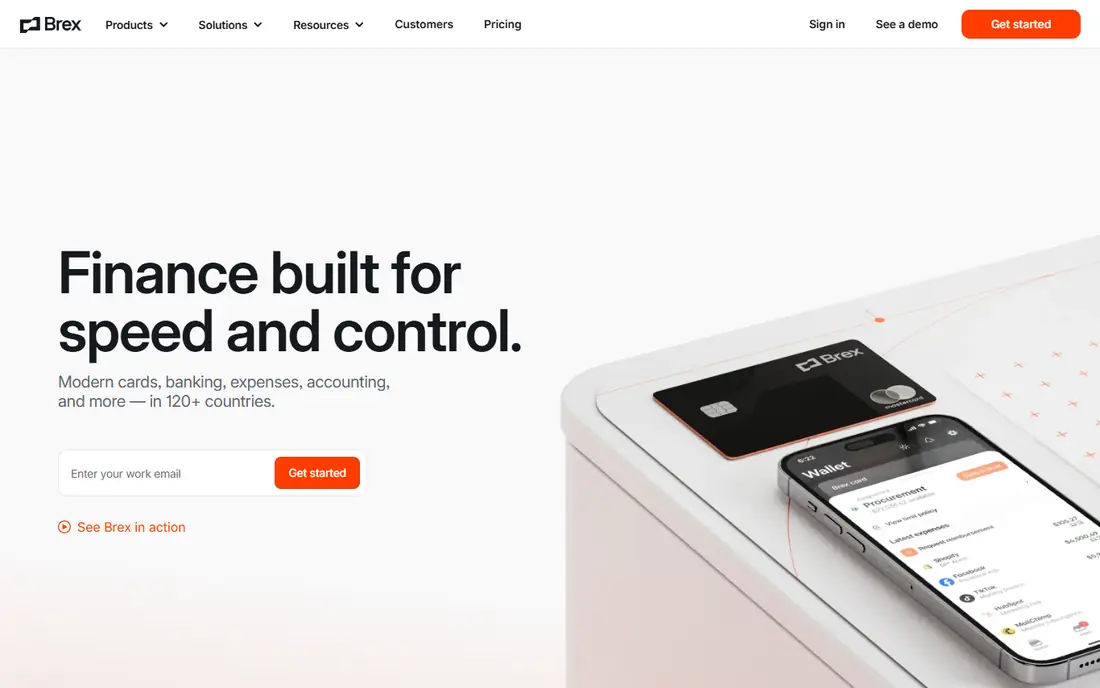
Brex suits venture-backed and global startups that want cards, spend controls, and travel in one free-leaning platform. Essentials is free, with expense management and card controls, while Premium adds advanced features for a per-user fee. Multi-currency and global team support are stronger here than in many US-only tools.
Eligibility and credit terms depend on your company, funding, and banking setup, so not every startup will qualify on the same terms. Teams that do qualify get a polished platform that scales from seed stage to mid-market. Check the current eligibility wording on the Brex site before you plan around it.
- Free Essentials tier
- Corporate cards plus travel
- Global spend support
- Eligibility depends on company profile
- Premium features sit behind the paid tier
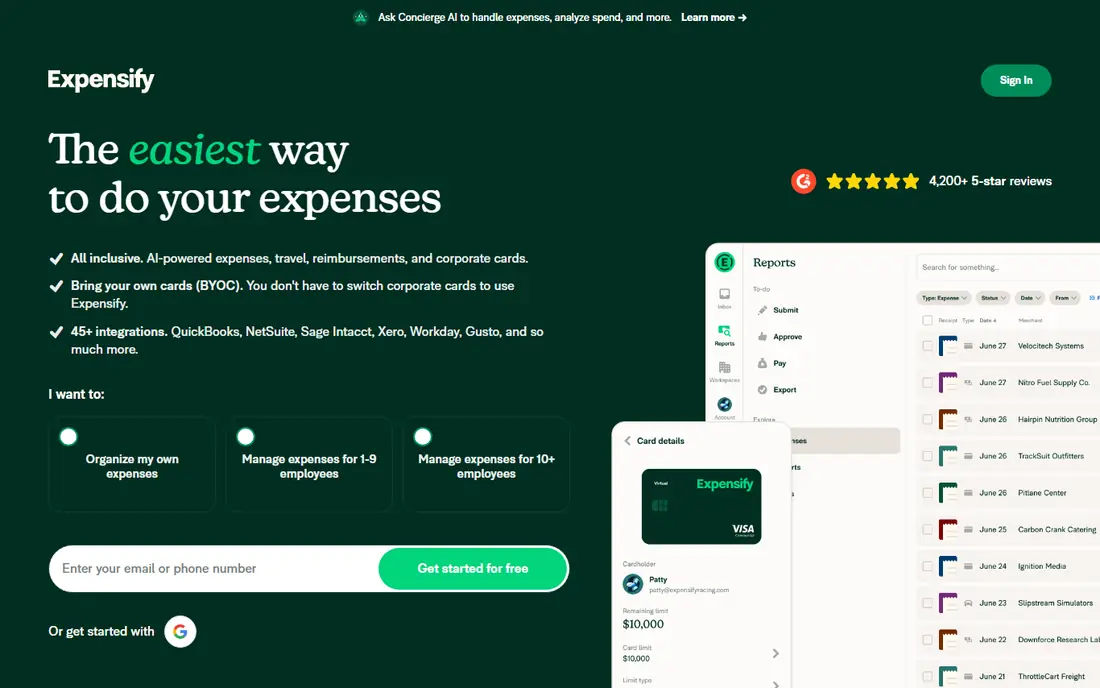
Expensify is the best choice when you do not want to change cards. It captures receipts, builds expense reports, handles approvals, and reimburses employees, while syncing to accounting tools. The Collect plan starts at $5 per member per month in published comparisons, with a basic free option for individuals. That flexibility matters for startups with an existing bank relationship.
Costs rise with active members, so a growing team should track who counts as billable each month. The feature set is also broad, which can feel like overkill for a team of three. For receipt-heavy teams that want to keep their cards, Expensify remains a reliable, proven option.
- Works with existing corporate cards
- Strong receipt scanning
- Flexible approvals and reimbursements
- Paid plans are billed per active member
- Interface can feel busy for very small teams
Zoho Expense is the budget pick, especially for teams already using Zoho Books or other Zoho apps. A free version covers up to three users, and paid plans are low cost compared with card-first platforms. Receipt scanning, approvals, mileage, and accounting sync cover the core workflow well.
It does not offer the same card-first spend control as Ramp or Brex, and larger teams may outgrow its policy depth. For a small startup that mainly needs clean expense reports and reimbursements, Zoho Expense is hard to fault on price. Try the free tier on real expenses before paying for anything else.
- Free version for up to three users
- Low paid pricing
- Strong Zoho Books integration
- Advanced controls trail Ramp and Brex
- Card program is less central than rivals
BILL Spend and Expense
Who it suits: Free cards with budgets and bill pay
BILL Spend and Expense, formerly Divvy, gives small teams free employee cards with budgets, expense tracking, and approvals, tied to BILL bill pay. That combination suits startups that already pay bills through BILL or plan to. Budgets stop overspend before it happens, rather than catching it at month-end.
If you do not use BILL for accounts payable, part of the value is lost, and teams with a different AP system may prefer a standalone tool. For BILL users, though, this is a coherent, low-cost way to control spend without a separate subscription for the core product.
- Free spend and expense product with BILL cards
- Budgets and approvals built in
- Bill pay integration
- Full value comes with BILL cards and bill pay
- Larger accounting suites may duplicate features
Navan is the natural pick when travel is a major part of startup spending. Booking flights and hotels inside the same system that captures expenses removes duplicate entry and makes policy enforcement easier. Published terms have offered free expensing for the first few users for smaller companies, with paid pricing beyond that.
Teams that rarely travel will not use half the platform, and should compare pure expense tools first. For a startup with frequent travel, sales trips, or distributed hiring, Navan saves time in a way that a receipt-only tool cannot match.
- Travel booking and expenses in one flow
- First expensing users free for smaller companies in published terms
- Good policy controls
- Travel focus may be overkill for non-travelling teams
- Pricing details need checking for your size
Airbase suits startups that have grown past simple expense reports and now need procurement control: who can request spend, who approves it, and how it flows into accounting. It covers corporate cards, bill payments, and reimbursements in one approval system, which helps finance teams as headcount grows.
Pricing is quote-based, and setup takes more effort than a free card tool. Early-stage teams with only a handful of expenses may find it heavy. When uncontrolled spend, not receipt capture, is the problem, Airbase is worth the evaluation.
- Strong procure-to-pay controls
- Approvals for cards, bills, and reimbursements
- Good accounting integrations
- Quote-based pricing
- More setup than free startup tools
Fyle is built for teams that want real-time visibility without changing cards. Expenses appear as card transactions happen, receipts are captured by app or email, and approvals flow quickly. That speed helps finance teams close the month faster and spot policy issues early.
Fyle does not offer the same free card-first model as Ramp or Brex, so budget-conscious startups should get a quote and compare total cost. If keeping your existing cards is non-negotiable and real-time tracking matters, Fyle is one of the strongest options in that niche.
- Real-time expense tracking on existing cards
- Strong receipt capture
- Accounting integrations
- No free tier for ongoing use in published comparisons
- Pricing is by quote for some plans
Rydoo keeps expense reporting simple and mobile-first, which suits teams that mainly submit receipts on the go. Employees scan, categorise, and submit from the phone, managers approve quickly, and finance gets clean reports for accounting. Per diem handling is a useful extra for travelling teams.
It does not match Ramp, Brex, or Airbase for card controls or procurement, so it fits best as a reporting tool rather than a full spend platform. For a startup that needs tidy reports without a card switch, Rydoo is a clean, low-friction choice.
- Simple mobile expense reporting
- Receipt scanning and approvals
- Per diem support
- Less card and procurement depth than rivals
- Paid plans needed for full use
How we picked these
We compared official pricing pages, product documentation, and startup-relevant features such as free tiers, card requirements, receipt automation, and accounting integrations. We favoured tools that work for teams under 50 people, and we noted where a tool requires new cards, since that is often the deciding factor. Where pricing was quote-based or varied by plan, we wrote See website rather than publishing an estimate.
What to check before you choose
Decide first whether you will switch cards. Card-first tools offer the best free value, but they require adoption. Card-agnostic tools cost more per user but leave banking untouched. That single decision narrows the list faster than any feature comparison.
Accounting, policies, and growth
Check the accounting sync for your exact system, including how categories, departments, and tax codes map. Set a simple policy before rollout: spending limits, receipt thresholds, and approval chains. A tool with perfect features and a policy nobody follows will not save time. Pilot with one team, measure month-end time, and only then roll out company-wide.
Frequently asked questions
Which expense management app is best for startups?
Ramp and Brex are the best starting points for many startups because their core tiers are free with corporate cards. Expensify is better if you want to keep existing cards, while Zoho Expense is the cheapest reporting-first option.
What is the top expense management software for startups with travel?
Navan is the top pick when travel and expenses need to live together, since booking and expense capture share one system and policy flow.
Are there free expense management apps for startups?
Yes. Ramp, Brex, BILL Spend and Expense, and Zoho Expense all offer free tiers or free core products, although card eligibility and user limits apply. Check the current free-tier limits before relying on them.
Do startups need corporate cards to use expense software?
No. Expensify, Fyle, Zoho Expense, and Rydoo work with existing cards and reimbursements. Card-first tools offer more control, but they are not required for good expense management.
How much does expense management software cost for a startup?
It ranges from free for basic card-first tiers to a few dollars per user per month for reporting tools, up to quote-based pricing for procurement platforms. Total cost depends on active users, card choice, and whether you need travel or procurement features.
Sources we checked (9)

Online Jobs is an independent blog about careers, online work, learning new skills and the tools that help people earn. More about us.
Keep reading
All posts
Wise Alternatives
Compare the best Wise alternatives in 2026, from Revolut and Remitly to OFX and Xe, with fees, speed, cash pickup options, and honest trade-offs today.

Top AI Financial Software
Searching for top AI financial software? We compared 9 AI finance tools for AP, spend, close, forecasting and bookkeeping to help teams choose wisely.
Quicken Alternatives
Compare the best quicken alternatives for Mac, Windows, and small business owners, from Monarch Money and YNAB to Copilot, Tiller, and Banktivity in 2026.