Best Event Ticketing Software in 2026: 10 Platforms Compared

How we put this together: we compare official feature and pricing pages, app store listings, privacy policies and public user reviews. Prices change, so check the provider's site before you pay.
Key takeaways
- Eventbrite suits public events that benefit from discovery, while Ticket Tailor suits organizers who want low per-ticket costs.
- TicketSpice and Humanitix offer different value: branding control on one side, charity-directed profits on the other.
- Ticketmaster and Cvent suit large venues and enterprise conferences, not small community events.
- Per-ticket fees, payment processing, and who pays the fee together decide the real cost.
- Always test checkout and mobile check-in before tickets go on sale.
Quick comparison
| Name | Who it suits | Starting price | Free option | |
|---|---|---|---|---|
 Eventbrite | Public event discovery | See website | Yes | Visit |
 Ticket Tailor | Low-cost small events | See website | Yes | Visit |
 TicketSpice | Branded ticket pages | See website | Yes | Visit |
 Humanitix | Nonprofits and schools | See website | Yes | Visit |
 Ticketmaster | Large venues and tours | See website | No | Visit |
 Universe | Community and mid-size events | See website | Yes | Visit |
 RSVPify | Guest lists and RSVPs | See website | Yes | Visit |
 TicketLeap | Local community events | See website | Yes | Visit |
 Cvent | Enterprise conferences | See website | No | Visit |
 ThunderTix | Performing arts venues | See website | No | Visit |
The best event ticketing software
Event ticketing software does more than sell tickets. It builds the event page, handles payments, manages refunds and guest lists, and scans tickets at the door. The platforms below cover that range, from free community tools to enterprise conference systems, and we compare them on fees, branding, and check-in.
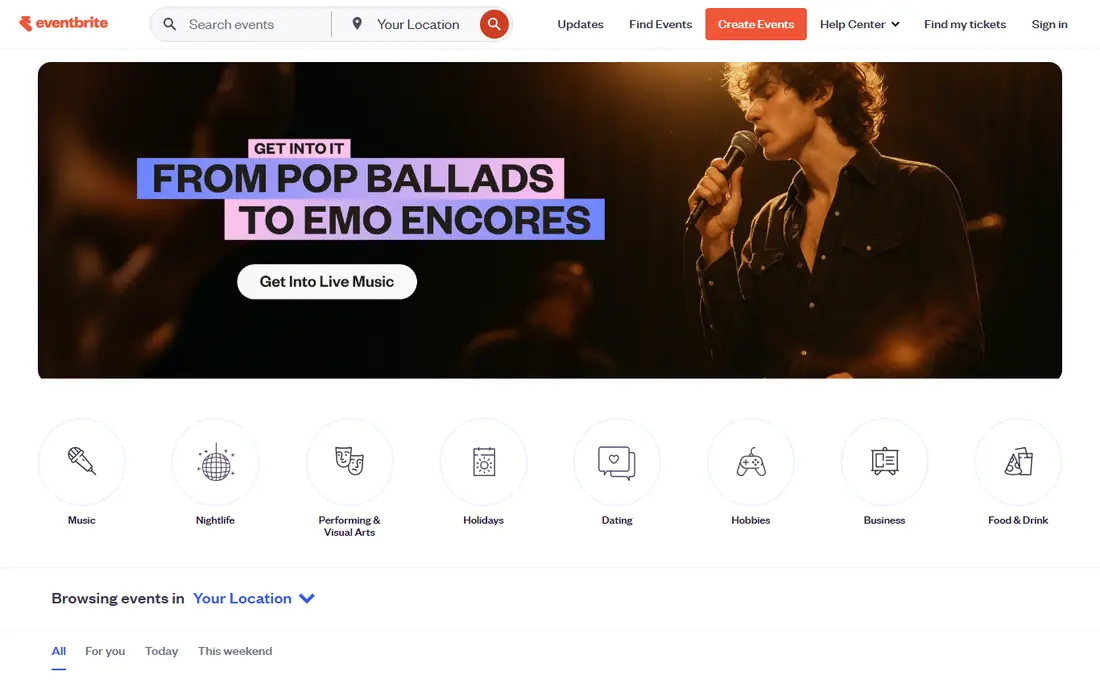
Eventbrite is the default choice for many public events because it is fast to set up and because attendees already know it. Publishing a free event costs nothing, and paid events carry a service fee plus payment processing, which organizers can pass to buyers or absorb. Its Organizer app handles mobile check-in, and its discovery pages can bring extra attendees to public events.
The fee structure is the main drawback for larger events. A percentage plus a per-ticket fee scales with ticket price, so a $100 ticket costs far more in fees than a $10 ticket. Eventbrite suits small to mid-size public events, classes, and fundraisers where discovery matters more than deep branding.
- Free to publish free events
- Built-in discovery for public events
- Fast setup and mobile check-in app
- Paid ticket fees add up on higher-priced tickets
- Branding control is limited on standard plans

Ticket Tailor charges a flat fee per ticket rather than a percentage of ticket price, and prepaid credits can bring that fee down further. Because payments flow through your own Stripe, PayPal, or Square account, you keep control of payouts and customer data. That model suits organizers who already have an audience and do not need a marketplace to find buyers.
The trade-off is discovery. Attendees will not stumble across your event on Ticket Tailor the way they might on Eventbrite, so you need your own marketing. For community groups, small businesses, and recurring events with an existing list, Ticket Tailor often works out cheaper.
- Low per-ticket costs with prepaid credits
- Payments go to your own Stripe or PayPal account
- No percentage commission on ticket price
- Less built-in discovery than Eventbrite
- Smaller brand recognition with attendees
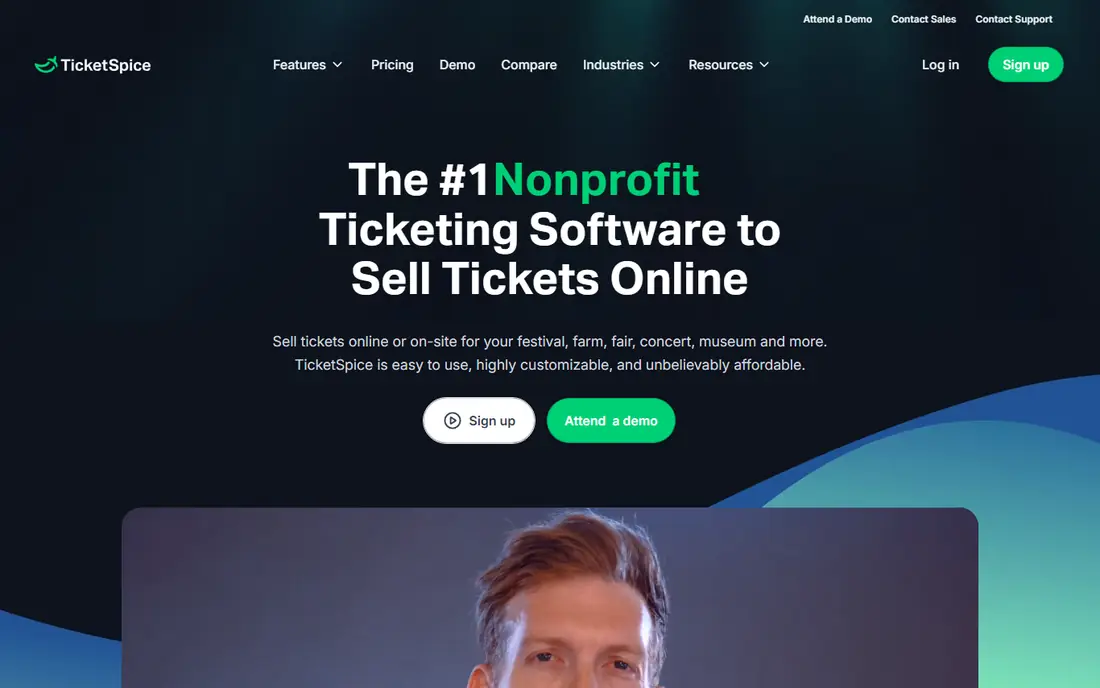
TicketSpice gives organizers control over the look and flow of ticket pages, including custom domains and branding that keep the event's identity front and center. Its standard fee is $0.99 per ticket plus payment processing, with lower fees for low-priced and box office tickets. Attractions, venues, and recurring events benefit from its group logic and timed-entry options.
That control comes with more setup work. TicketSpice suits organizers who care about branding and who run events repeatedly, rather than someone publishing a one-off free meetup in an afternoon. If your event page is part of your brand, TicketSpice is worth the extra setup.
- Full branding control on ticket pages
- $0.99 per ticket on standard plans
- Group and timed-entry logic
- Less marketplace discovery
- Setup takes longer than a simple Eventbrite page
Humanitix is a ticketing platform with a social purpose: it directs its profits to education projects, and it offers reduced fees for charities and schools. Its standard fee sits below Eventbrite on many ticket prices, and free events are supported. For nonprofits, schools, and community groups, the combination of lower cost and a charitable model is appealing.
Humanitix does not match enterprise platforms for complex conference workflows, and its branding tools are simpler than TicketSpice. It suits organizers who want a straightforward, low-cost platform with a clear social benefit, rather than a fully custom enterprise setup.
- Profits directed to charity projects
- Lower fees for charities and schools
- Free events supported
- Fewer enterprise features than Cvent
- Branding options are simpler than TicketSpice
Ticketmaster is the platform behind many arena concerts, sports events, and large tours. It handles high-volume on-sales, queueing, reserved seating, and venue integrations at a scale that smaller platforms cannot match. For a large venue or a touring act, that infrastructure is the point.
For small organizers, Ticketmaster is usually out of reach. Its fees are set by venue contract rather than a public price list, and its tools assume venue-scale operations. Ticketmaster belongs on this list because it defines the top end of ticketing, but most readers will be better served by the smaller platforms above.
- Scale for arenas and tours
- Advanced queueing and reserved seating
- Deep venue integrations
- Fees are negotiated per venue, not published as a simple list
- Not suited to small events
Universe, part of the Ticketmaster group, targets mid-size organizers who want more flexibility than a basic tool but do not need a full venue contract. It supports varied ticket types, discount codes, and social sharing, and it handles free events. Its service fees vary by plan, with a cap per ticket on some plans.
The fee picture needs checking before you commit, because processing fees sit outside the published service fee. Universe suits community festivals, mid-size concerts, and organizers who want Ticketmaster-adjacent tools without a venue deal.
- Part of the Ticketmaster ecosystem
- Flexible ticket types
- Social sharing tools
- Processing fees are not published as clearly as some rivals
- Fee caps vary by plan
RSVPify is built around invitations and guest lists, which makes it a strong pick for weddings, galas, corporate events, and private parties. It handles RSVPs, plus-ones, meal choices, and guest messaging alongside ticket sales, and its per-ticket fee is low compared with Eventbrite. Payments go through your own processor.
For large public events with open ticket sales, a dedicated ticketing platform may offer stronger discovery and check-in at scale. RSVPify suits events where the guest list matters as much as the ticket, and where the organizer already knows most attendees.
- Strong RSVP and guest list tools
- Low per-ticket fee
- Free plan for up to 100 registrations a month
- Less suited to large paid public events
- Ticket branding is simpler than TicketSpice
TicketLeap offers a simple route to selling tickets for local events, with a low per-ticket fee and support for free events. Its setup is quick, its pages are mobile-friendly, and social sharing helps small organizers reach a local audience without a complex platform.
It does not offer the depth of Cvent for conferences or the branding control of TicketSpice, but that is not its job. TicketLeap suits local theaters, community groups, and small businesses that want to sell tickets online without learning an enterprise system.
- Simple setup for small events
- Supports free events
- Low flat fee options
- Fewer advanced features than larger platforms
- Limited enterprise tools
Cvent is an enterprise event platform that covers registration, ticketing, venue sourcing, mobile apps, and attendee engagement for large conferences and corporate events. Its reporting and CRM integrations suit teams that run many events a year and need consistent data across them.
Pricing is by contract, not by a public per-ticket fee, which puts Cvent out of reach for most small organizers. It earns a place here for corporate and association buyers who need that depth. Small event organizers should shortlist the simpler platforms above instead.
- Full conference registration, venue sourcing, and attendee engagement
- Enterprise reporting
- Integrations with CRM tools
- Enterprise contract pricing, not a simple per-ticket list
- Overkill for small events
ThunderTix serves performing arts venues, theaters, and festivals that need box office tools, reserved seating, and patron records. Its per-ticket fees are transparent, and its CRM features help venues track repeat patrons and donors. Mobile check-in and season ticket handling are part of the offer.
A monthly plan fee sits alongside per-ticket fees, so very small venues should compare total cost against Ticket Tailor or TicketLeap. ThunderTix suits venues with regular seasons and repeat audiences, where patron data and reserved seating matter.
- Box office and reserved seating tools
- Per-ticket fees from $1.00 to $1.25 plus plan fee
- CRM and patron data tools
- Plan fee adds to per-ticket costs
- Less marketplace discovery than Eventbrite
How we picked these
We compared platforms that actively sell event tickets in 2026, checking their pricing pages, fee structures, and feature lists. We weighted total fee cost for a typical ticket, free event support, branding control, check-in tools, and suitability for different event sizes. We left out pure resale marketplaces, because they serve buyers reselling tickets rather than organizers selling their own events.
Fees change often, and some platforms publish service fees separately from payment processing. Always work out the total cost for your ticket price and volume, including who pays the fee, before you choose. A platform that looks cheap per ticket can cost more once processing is added.
How to choose ticketing software for your event
Start with your audience. If you need discovery to fill seats, Eventbrite or Universe may help. If you already have an audience, a low flat-fee platform such as Ticket Tailor or TicketSpice will usually cost less. Next, check branding: does the ticket page need to look like your venue, or is a standard page acceptable.
Then test the attendee journey. Buy a test ticket on a phone, check the confirmation email, and scan it with the check-in app. Finally, confirm refund, transfer, and payout rules before you go live, because those details cause the most organizer stress after tickets sell.
Frequently asked questions
What is the best ticketing platform for events?
Eventbrite is best for public events that need discovery, Ticket Tailor is best for low-cost events with an existing audience, and TicketSpice is best for branded pages. The best platform depends on event size, ticket price, and whether you need discovery or branding most.
What is the best event ticketing platform for small events?
Ticket Tailor and TicketLeap are strong for small events because their per-ticket fees are low and setup is simple. Humanitix is also worth checking for community and nonprofit events. Compare total fees for your ticket price before deciding.
How much does event ticketing software cost?
It varies by model. Some platforms charge a percentage plus a per-ticket fee, some charge a flat per-ticket fee, and enterprise platforms charge by contract. Always add payment processing to the service fee, and check whether the organizer or the buyer pays it.
Can I sell tickets for free events without fees?
Yes, on several platforms. Eventbrite, Ticket Tailor, Humanitix, Universe, RSVPify, and TicketLeap all support free events, though limits and terms vary. Check whether free events are truly unlimited or capped per year.
What is the best ticketing software for nonprofits?
Humanitix is a strong pick for nonprofits and schools because of its reduced fees and charity-directed profits. Ticket Tailor is also good for nonprofits that want low flat fees and control of payouts through their own payment account.
Should I use Ticketmaster for a small event?
Usually not. Ticketmaster is built for large venues, arenas, and tours, with fees set by venue contract. Small organizers will find simpler, cheaper, and faster options in Eventbrite, Ticket Tailor, or TicketLeap.
Sources we checked (10)

Online Jobs is an independent blog about careers, online work, learning new skills and the tools that help people earn. More about us.
Keep reading
All posts
ZoomInfo Alternatives
The best ZoomInfo alternatives in 2026, compared on price, free plans, data coverage, and which tool fits small teams or large sales teams best in detail.

Zoom Alternatives
Zoom alternatives compared for 2026: Google Meet, Microsoft Teams, Webex, Jitsi and more for free calls, large meetings and webinars for teams and classrooms.

Workday Alternatives
We compared the best workday alternatives for HR, payroll, and global hiring, from BambooHR and Gusto to Rippling, Deel, and HiBob for growing teams in 2026.