Best Electric Company in 2026: 8 Providers Compared


Large provider with many plan options · Starting price: See website
How we put this together: we compare official feature and pricing pages, app store listings, privacy policies and public user reviews. Prices change, so check the provider's site before you pay.
Key takeaways
- There is no single best electric company for every home, because rates and plan availability change by ZIP code, utility area, and usage.
- In retail choice markets, you buy energy supply from a provider while your local utility still delivers power and maintains the lines.
- Fixed-rate plans give price predictability for a set term, while variable plans can move with the market and deserve a close read of the terms.
- Always compare the average price at your actual usage level, plus fees, contract length, and early termination terms, not just the headline rate.
- Renewable plans vary a lot, so check whether the plan buys renewable energy certificates, uses local wind or solar, or simply offsets part of usage.
Quick comparison
| Name | Who it suits | Starting price | Free option | |
|---|---|---|---|---|
| TXU Energy | Large provider with many plan options | See website | No | Visit |
 Reliant Energy | Rewards and app tools for Texas homes | See website | No | Visit |
 Constellation | Fixed-rate plans in several states | See website | No | Visit |
 Direct Energy | Simple plans with flexible terms | See website | No | Visit |
 Green Mountain Energy | Renewable electricity focus | See website | No | Visit |
 Gexa Energy | Low headline rates for careful shoppers | See website | No | Visit |
 Rhythm Energy | Straightforward Texas plans | See website | No | Visit |
 Octopus Energy | Flexible plans and smart home tools | See website | No | Visit |
The best electric company options
We compared providers that operate in US retail choice markets, with a focus on Texas, where shoppers have the widest choice. Your address decides which of these you can actually buy from, so treat this list as a shortlist to check against your ZIP code.
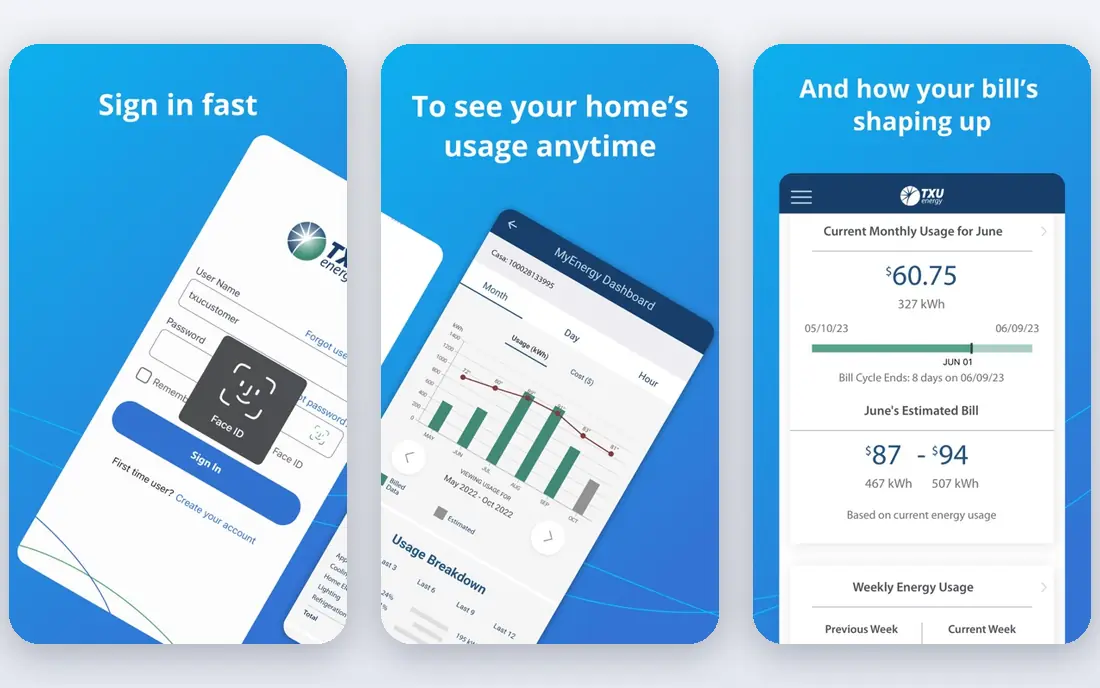
TXU Energy is one of the largest retail electricity providers in Texas, and that scale shows up in its plan menu. Shoppers can usually find fixed-rate terms of different lengths, plans aimed at higher or lower usage homes, and options tied to renewable content. The account tools are practical too, with usage tracking that helps a household see when consumption spikes.
The catch is that a TXU plan that looks cheap at 1,000 kilowatt-hours may look less attractive at 500 or 2,000 kilowatt-hours. Bill credits and usage bands can change the average price a lot. Before signing, run the math at your own past usage, read the Electricity Facts Label, and check the early termination fee for the term you are considering.
- Wide plan range
- Well-known Texas brand
- Online account tools and usage alerts
- Headline rates can sit above smaller rivals
- Some plans include bill credits that depend on hitting a usage band
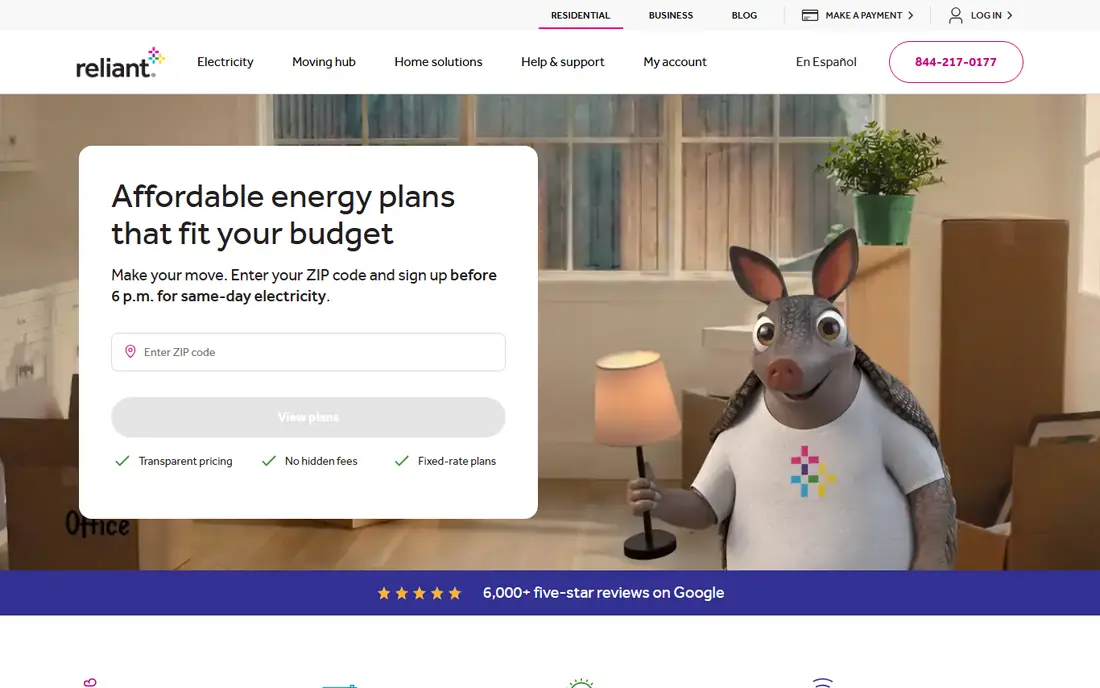
Reliant Energy pairs electricity supply with extras that some households value, such as rewards, bill credits, or device offers on selected plans. Its app makes it easy to track usage, set alerts, and manage payments, which matters when a plan has a usage threshold or a bill credit tied to a specific range.
We would still put the rate first and the perks second. A free gadget or a points bonus does not help much if the average price per kilowatt-hour is high at your usage level. Compare the total estimated bill over the full term, then decide whether the extras are worth anything on top of a competitive rate.
- Rewards and perks on some plans
- Strong app and alerts
- Long Texas track record
- Perks can distract from the underlying rate
- Plan details vary by utility area
Constellation is a useful name to know outside Texas as well as inside it, because it sells retail electricity in a number of choice markets. That breadth helps shoppers who move between states and want a familiar provider, though it never guarantees the same plan or price in a new area. Fixed-rate terms are the core of its offer for most homes.
Read the plan terms for your state carefully, because Constellation plans can include bill credits, minimum usage fees, or term lengths that change the real cost. If you like price certainty, a fixed-rate plan without a tricky credit structure is usually the cleanest choice, even if a flashier plan posts a lower headline number.
- Operates in multiple states
- Fixed-rate options
- Plans with renewable content
- Availability and pricing differ sharply by state
- Some plans carry usage-based bill credits
Direct Energy keeps its pitch simple: pick a term, pick a rate type, and get on with it. That simplicity suits shoppers who do not want to sort through a dozen plan variants, and its presence in several states makes it a reasonable comparison point when you are gathering quotes. Online sign-up is quick, and plan documents are easy to find.
The trade-off is that simple does not always mean cheap. Direct Energy rates in a given ZIP code can sit well above the lowest offers from smaller providers on the same day. Use it as a benchmark, then check at least two smaller rivals before you commit, and watch for early termination fees on longer terms.
- Straightforward plan lineup
- Available in several markets
- Online sign-up
- Rates move with the local market
- Customer service reviews are mixed in some areas
Green Mountain Energy has built its brand around renewable electricity, and for shoppers who want their supply matched with renewable sources, it is one of the clearest choices. Plans typically describe how renewable content is sourced, and the company also offers carbon offset products for homes that want to go further than electricity alone.
Expect to pay more than the cheapest basic plan in your area, because renewable supply and certificates carry a cost. That premium may be worth it to you, but check exactly what the plan promises. A plan described as 100 percent renewable through certificates is not the same as power generated by a specific local wind farm, and the plan documents should spell out the difference.
- Clear renewable positioning
- Plans built around wind and solar
- Carbon offset options
- Renewable plans often cost more than basic plans
- Renewable claims need careful reading
Gexa Energy regularly appears near the low end of Texas rate tables, which makes it a natural pick for price-focused shoppers. Its fixed-rate plans are easy to understand at first glance, and the company focuses on Texas rather than spreading across many states. For a household that knows its usage pattern well, Gexa can be a strong value choice.
The warning is the same one that applies to most low headline rates: check the average price at 500, 1,000, and 2,000 kilowatt-hours. If a plan only becomes cheap inside a narrow usage band, a mild month or a hot month can push your average price up. If the numbers hold up at your real usage, Gexa is worth a close look.
- Often posts competitive rates
- Fixed-rate terms available
- Texas focused
- Cheapest plans can include bill credits tied to usage bands
- Fewer extras than larger rivals
Rhythm Energy takes a plainer approach than the big Texas brands, with a smaller plan menu that is easier to compare side by side. That clarity is a genuine strength for shoppers who feel overwhelmed by dozens of variants, bill credit tiers, and reward schemes. Its fixed-rate plans suit households that want a predictable rate without extra clutter.
The smaller menu also means fewer choices if you want a specific perk, a renewable-heavy plan, or a very short term. Rhythm is best judged on the rate itself at your usage level. If it competes with the larger names on price and the terms are clean, the lack of extras is not a real loss.
- Clean plan presentation
- Texas only focus
- Fixed-rate options
- Smaller provider with fewer plan extras
- Limited to Texas
Octopus Energy made its name in the UK with flexible tariffs and smart meter tools, and it has brought a similar approach to parts of the US. Its plans can suit households with smart meters, electric vehicles, or flexible usage, because time-of-use pricing rewards shifting heavy use away from peak hours. The app and usage data are generally well regarded.
US availability is still patchy compared with long-standing Texas providers, so many readers will not be able to buy an Octopus plan yet. Even where it is available, time-of-use plans only pay off if your household can actually shift usage. If most of your consumption happens at peak times, a simple fixed-rate plan may cost less overall.
- Innovative time-of-use and flexible plans
- Smart meter tools
- Growing US presence
- Newer in the US market than Texas incumbents
- Availability is limited by area
How we picked these
We compared official provider pages, plan documents, and current rate tables for retail choice markets, with extra weight on Texas because it offers the broadest public rate data. We looked for providers with a real operating history, a published plan lineup, and clear terms a shopper can verify before signing. We did not rank on headline rate alone, because a rate that only applies at one usage level can mislead. Where a price changes by ZIP code and usage, we list it as See website and tell you what to check instead of inventing a single number.
What to check before you switch
Start with your last 12 months of usage, if you can get it from your current bill or utility account. That history tells you which usage band matters and whether a bill credit plan will actually pay off. Then pull the Electricity Facts Label or plan summary for each shortlisted plan and compare the average price at your usage, the contract term, the early termination fee, and any minimum usage fee.
Next, decide on rate type. A fixed rate locks your supply price for the term, which helps budgeting, but you may pay an exit fee if you leave early. A variable rate can fall when wholesale prices fall, but it can also rise with little warning, so it suits shoppers who watch their bills and are ready to switch. Month-to-month plans offer freedom but the least price certainty.
Finally, confirm who does what after you switch. Your retail provider supplies the energy and bills you, while your local utility still owns the poles and wires, handles outages, and reads the meter in most areas. Switching providers should not interrupt your service, and you should never pay a fee to a door-to-door seller or a caller who pressures you to switch on the spot. Compare in your own time, in writing, and keep a copy of the plan terms.
Questions to ask any provider
Ask whether the quoted rate includes delivery charges or only supply, because the two are often shown separately. Ask what happens at the end of the term: does the plan renew, move to a variable rate, or end? Ask about fees for late payment, disconnection, and early exit, and ask how renewable content is sourced if that matters to you. A provider that answers clearly in writing is usually a safer bet than one that leans on a single low headline number.
Frequently asked questions
What is the best electric company?
There is no one winner, because the best electric company for you depends on your ZIP code, your utility area, your usage, and whether you want a fixed rate, a renewable plan, or the lowest possible bill. Start with two or three providers that serve your address, compare their average price at your real usage, and read the full plan terms before choosing.
What is the best electric company in Texas?
Texas shoppers have the widest choice, and providers such as TXU Energy, Reliant Energy, Constellation, Gexa Energy, and Rhythm Energy all compete there. The cheapest plan changes often and varies by utility area, so check current rates for your ZIP code rather than relying on a statewide ranking.
Does switching electric companies interrupt my power?
No, switching retail providers should not interrupt your service in a choice market. Your local utility still delivers electricity through the same lines, and the change is a billing and supply change behind the scenes. Keep your account number handy, note the switch date, and confirm the new plan in writing.
Are fixed-rate electricity plans better than variable plans?
Fixed-rate plans give price certainty for the term, which suits most households that want predictable bills. Variable plans can be cheaper in some months and more expensive in others, and they suit shoppers who monitor rates and are willing to switch quickly. Compare the exit fee on a fixed plan against the risk of a price rise on a variable plan.
What should I look for in a renewable electricity plan?
Check how the renewable content is sourced and whether the plan is matched with renewable energy certificates, a specific generation source, or a mix. Also check the price premium over a basic plan and whether the renewable claim covers all of your usage or only part of it. The plan summary should state this plainly.
Can I switch electric companies if I rent?
In most retail choice areas, the account holder for the address can choose a provider, whether they own or rent. Check your lease for any clause about utilities, and make sure the account is in your name before switching. If your landlord pays the bill, ask them whether a change is allowed.
Sources we checked (8)

Online Jobs is an independent blog about careers, online work, learning new skills and the tools that help people earn. More about us.
Keep reading
All posts
Top AI Financial Software
Searching for top AI financial software? We compared 9 AI finance tools for AP, spend, close, forecasting and bookkeeping to help teams choose wisely.

Quicken Alternatives
Compare the best quicken alternatives for Mac, Windows, and small business owners, from Monarch Money and YNAB to Copilot, Tiller, and Banktivity in 2026.

QuickBooks Online Alternatives
Looking for quickbooks online alternatives? We compared 8 accounting tools on invoicing, bank feeds, payroll, pricing and fit for small businesses today.