Best Delivery App to Make Money in 2026: 8 Apps Compared

How we put this together: we compare official feature and pricing pages, app store listings, privacy policies and public user reviews. Prices change, so check the provider's site before you pay.
Key takeaways
- DoorDash offers the widest order volume in most US cities, which suits drivers who want to log on and get orders fast.
- Uber Eats suits bike, scooter, and car couriers in dense cities, and pairs well with rideshare work for drivers who do both.
- Instacart and Shipt suit shoppers who enjoy grocery work and want tip-heavy batches, though in-store time lowers hourly pace.
- Amazon Flex suits drivers who prefer scheduled package blocks with a clearer pay range per block.
- Spark Driver and Grubhub suit drivers in Walmart and restaurant-heavy markets, but availability and pay vary sharply by city.
Quick comparison
| Name | Who it suits | Starting price | Free option | |
|---|---|---|---|---|
 DoorDash | Widest order volume | Free | Yes | Visit |
 Uber Eats | Dense city delivery | Free | Yes | Visit |
 Instacart | Grocery shopping pay | Free | Yes | Visit |
 Amazon Flex | Scheduled package blocks | Free | Yes | Visit |
 Grubhub | Restaurant delivery blocks | Free | Yes | Visit |
 Spark Driver | Walmart grocery delivery | Free | Yes | Visit |
 Shipt | Target and retail shopping | Free | Yes | Visit |
 GoPuff | Short convenience runs | Free | Yes | Visit |
The best delivery apps to make money
Delivery pay is not a fixed wage. It varies by city, time of day, tips, vehicle costs, and how selectively you accept orders. The apps below are free to join as independent contractors, and earnings figures in public driver data are gross, before fuel, wear, insurance, and taxes. Treat any hourly figure as a local estimate to test yourself, not a promise.
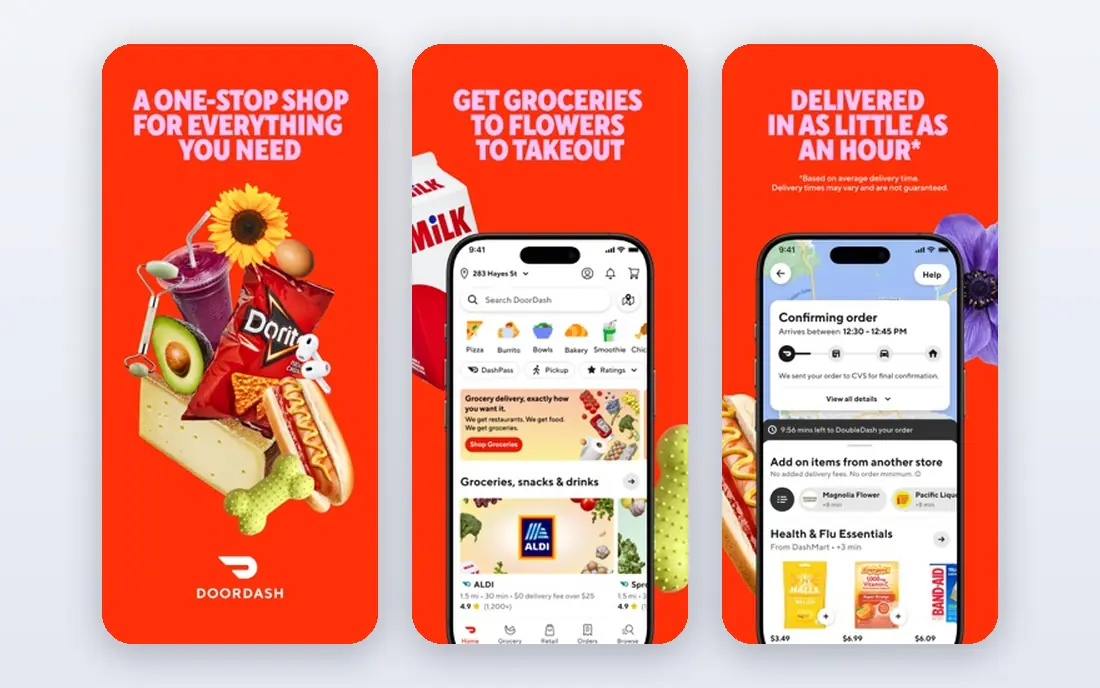
DoorDash is the default starting point for most new delivery drivers, simply because orders are plentiful. Dashers can log on during busy lunch and dinner periods, see base pay before accepting, and add tips and bonuses on top. Food orders dominate, but retail and grocery orders add variety in larger markets.
The catch is that volume does not guarantee high net pay. Base pay alone can be thin, so earnings depend on tips, peak pay, and choosing orders with good pay per mile. Track miles, fuel, and time online, not just time on trips, to judge whether DoorDash pays well in your city.
- Largest order volume in many cities
- Flexible log-on hours
- Food and retail orders
- Base pay can be low without tips
- Busy markets can be oversupplied
- Wear on your vehicle adds up
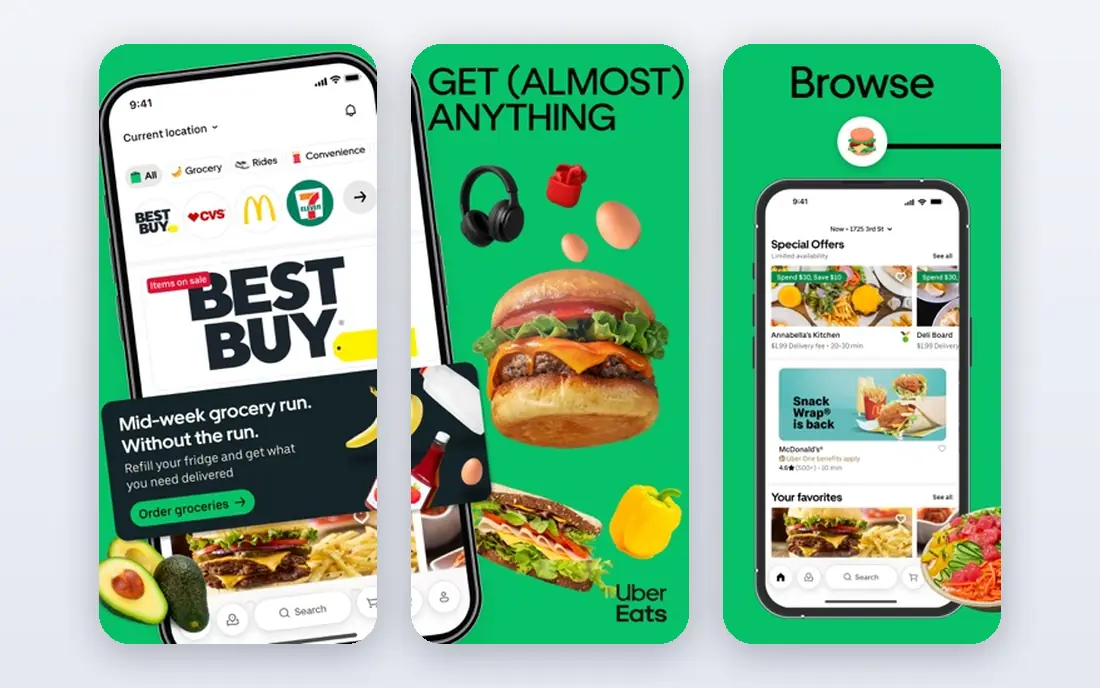
Uber Eats suits couriers in dense urban areas where short trips and bike or scooter delivery keep costs low. Drivers can preview destination and payout before accepting, and those who also drive passengers for Uber can switch between rideshare and delivery in one driver app. Quest bonuses reward drivers who complete a set number of trips.
In spread-out suburbs, longer drives and waiting time can cut net hourly pay. Base pay is often modest, so tips and promotions matter a great deal. Uber Eats works best as part of a multi-app strategy, where you take its best trips and skip low-pay offers.
- Bike and scooter options in many cities
- Pairs with Uber rideshare
- Clear trip previews
- Base pay is often low
- Earnings depend heavily on tips and bonuses
- Dense cities work best
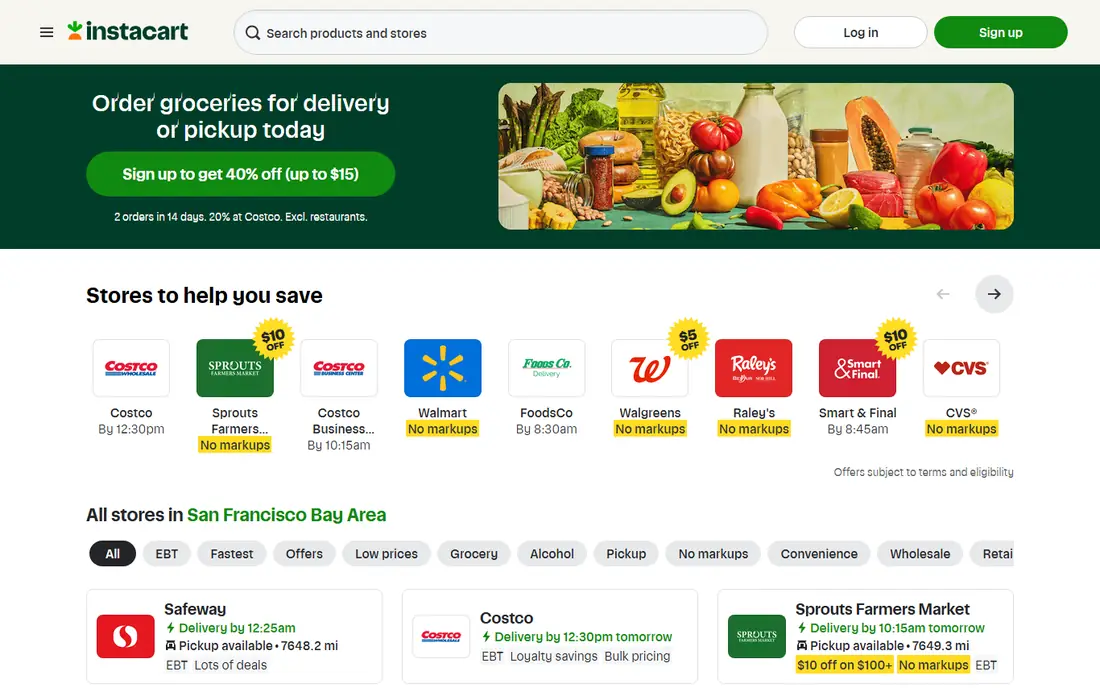
Instacart pays full-service shoppers to shop for groceries and deliver them, which creates larger batches and higher tips than single restaurant orders in many markets. Experienced shoppers who learn store layouts and batch efficiently can earn well, especially at peak hours in higher-income areas.
Shopping time is the trade-off. A large batch can take a long time in store, which lowers pay per hour if items are out of stock or the store is crowded. Shoppers also pay fuel and vehicle costs, so batch selection matters: favour batches with strong tips, short drives, and familiar stores.
- Tip-heavy grocery batches
- Full-service shoppers shop and deliver
- Busy metro demand
- In-store shopping takes time
- Batch pay varies
- Shoppers absorb vehicle costs
Amazon Flex lets drivers reserve delivery blocks, pick up packages from a station, and deliver a route within a set window. That schedule suits drivers who prefer planned work over waiting for food orders, and public driver data often ranks Flex among the higher gross hourly options for delivery-only work.
Blocks are not always available, and competition for prime blocks can be intense in popular areas. Package routes also vary in density, so a block that looks good on paper can involve long rural drives. Flex works best for drivers who can grab blocks early and plan routes efficiently.
- Scheduled blocks with set pay ranges
- Package work avoids restaurant waiting
- Lower miles per dollar in some markets
- Blocks can be competitive to claim
- Work depends on station demand
- No tips on most package routes
Grubhub remains a solid second app for restaurant delivery, especially in cities where it holds strong restaurant coverage. Drivers can schedule blocks, which helps plan shifts, and restaurant orders tend to be straightforward compared with grocery shopping. It pairs well with DoorDash or Uber Eats for multi-apping.
Volume is the limit. In many cities, Grubhub offers fewer orders than DoorDash, so drivers may wait longer between trips. Use Grubhub to fill gaps and cherry-pick good restaurant orders, rather than relying on it alone unless your city shows strong Grubhub demand.
- Scheduled blocks in many markets
- Restaurant focus
- Useful as a second app
- Order volume varies by city
- Fewer orders than DoorDash in many areas
- Pay depends on tips
Spark Driver, the Walmart delivery platform, suits suburban drivers near Walmart stores. Orders often involve grocery and general retail baskets, which can pay more per trip than a single restaurant order. Drivers in strong Walmart zones report steady work during daytime and weekend peaks.
Availability depends on your zone, and recent driver data shows pay trends varying by market, with some declines. Wait times at stores and app issues are common complaints. Check Spark demand in your specific zone before making it your main app, and keep a food delivery app as backup.
- Walmart grocery and retail orders
- Larger basket orders
- Suburban demand
- Availability varies by zone
- Pay has softened in some driver data
- App and wait times frustrate some drivers
Shipt shoppers deliver groceries and retail orders, with a strong link to Target stores. Preferred shopper status can bring steadier work from repeat customers, and scheduled batches help drivers plan their week. Shoppers who build good ratings and efficient store routines tend to do better over time.
Batch availability is inconsistent in some markets, and oversupply of shoppers can cut earnings. Like Instacart, shopping time matters: a batch that pays well per order may pay less per hour if the store trip is long. Shipt suits patient shoppers who value repeat customers and scheduled work.
- Preferred shopper perks with Target
- Consistent grocery and retail batches
- Scheduled work
- Batch availability can be inconsistent
- Market saturation lowers pay in some areas
- Shopping time affects hourly rate
GoPuff delivers convenience items from local hubs, which keeps trips short and reduces empty driving between orders. That hub model suits drivers near a GoPuff facility who want quick, repeatable runs without restaurant waiting or grocery shopping. Evening demand is often strongest.
Recent driver data ranks GoPuff lower on hourly pay than larger food and grocery apps, and coverage depends entirely on hub locations. Treat GoPuff as a supplementary app for short runs near a hub, rather than a sole income source, unless your local hub shows strong, steady demand.
- Short hub-based trips
- Convenience items
- Lower deadhead miles in hub areas
- Lower hourly pay in recent driver data
- Hub locations limit coverage
- Shifts and demand vary
How we picked these
We compared official driver sign-up pages, app listings, and public driver earnings data for US delivery and grocery platforms in 2026. We favoured apps that are widely available, free to join, and used by drivers as a main or supplementary income source, covering food, grocery, retail, and package delivery. Earnings vary by market, so we describe relative strengths and costs rather than promising a fixed hourly rate.
How to earn more without burning out
Start by tracking your real numbers for two weeks: gross pay, tips, miles, fuel, active hours, and total hours online. Net pay per hour online is the figure that matters, since waiting time and deadhead miles eat into gross trip pay. Use that data to choose your best hours, usually lunch and dinner peaks for food, and daytime peaks for grocery, and to drop apps or zones that consistently pay poorly after costs.
Next, learn multi-apping carefully and legally. Running two apps at once can fill gaps, but it can also lead to late deliveries and lower ratings if orders overlap. Accept orders with good pay per mile, factor in return miles, and decline low-pay trips without guilt. Set aside money for taxes, since delivery drivers are usually independent contractors, and keep mileage records from day one.
Vehicle, costs, and taxes
Your vehicle choice shapes net pay more than app choice. A fuel-efficient car, bike, or scooter keeps costs down, while a large, thirsty vehicle can erase tips. Track fuel, maintenance, insurance, and depreciation, and consider the standard mileage deduction rules for your tax situation. This article is general information, not tax advice, so check official tax guidance or a tax professional for your circumstances.
Safety and ratings
Keep ratings healthy by communicating delays, checking orders before leaving, and handling food and groceries with care. Do not rush through traffic to chase a bonus, and decline orders that feel unsafe or unprofitable. A steady rating, good acceptance habits on scheduled apps, and polite customer messages protect long-term access to better orders.
Frequently asked questions
What is the best delivery app to make money?
DoorDash offers the widest volume in most cities, Amazon Flex often ranks high on gross hourly pay for scheduled package work, and Instacart suits shoppers who earn strong tips on grocery batches. The best app depends on your city, vehicle, and whether you prefer food, grocery, or package work.
What are the best paying driving apps?
Public driver data for 2026 often ranks Amazon Flex and Spark Driver above food-only apps on gross engaged hourly pay, with Instacart and Grubhub in the middle and DoorDash and Uber Eats close behind. Net pay after fuel, wear, and waiting time changes the ranking, so track your own costs by city and app.
What is the best app for delivery jobs?
DoorDash is the best starting app for most new drivers because orders are plentiful and hours are flexible. Uber Eats suits bike couriers in dense cities, Instacart suits shoppers, and Amazon Flex suits drivers who prefer scheduled blocks. Many experienced drivers use two or three apps together.
Do delivery drivers need a car?
Not always. Uber Eats and DoorDash allow bike or scooter delivery in many cities, and GoPuff hub work can suit drivers without long highway trips. Instacart, Spark Driver, and Amazon Flex usually need a car for grocery and package loads, so check vehicle rules for your market before signing up.
How much can you make with delivery apps?
Earnings vary widely by city, hours, tips, and vehicle costs. Public driver data for 2026 shows gross engaged hourly pay roughly in the mid-teens to low twenties in dollars for many delivery apps, before fuel, wear, and taxes. Treat that range as a starting estimate and track your own net pay per hour online.
Sources we checked (8)

Online Jobs is an independent blog about careers, online work, learning new skills and the tools that help people earn. More about us.
Keep reading
All posts
Top AI Financial Software
Searching for top AI financial software? We compared 9 AI finance tools for AP, spend, close, forecasting and bookkeeping to help teams choose wisely.
Quicken Alternatives
Compare the best quicken alternatives for Mac, Windows, and small business owners, from Monarch Money and YNAB to Copilot, Tiller, and Banktivity in 2026.
GoFundMe Alternatives
Looking for GoFundMe alternatives? We compared 8 fundraising platforms on fees, campaign types, donor tools and who each platform suits best in 2026 today.