Best Day Trading Platforms for Beginners in 2026: 9 Platforms Compared

How we put this together: we compare official feature and pricing pages, app store listings, privacy policies and public user reviews. Prices change, so check the provider's site before you pay.
Key takeaways
- Fidelity is our pick for most beginners, with $0 commissions, fractional shares from $1, strong research and no account minimum.
- Charles Schwab is best for practice trading, with thinkorswim paperMoney offering real-time practice data.
- Webull is best for learning active trading, with free paper trading and professional charting at no cost.
- Robinhood is best for a simple mobile experience, with $0 commissions and fractional shares from $1.
- SoFi Invest is best for the simplest start, with $0 commissions and automated investing in the same app.
Quick comparison
| Name | Who it suits | Starting price | Free option | |
|---|---|---|---|---|
 Fidelity | Best overall for beginners | Free | Yes | Visit |
 Charles Schwab | Practice trading and education | Free | Yes | Visit |
 Robinhood | Simple mobile trading | Free | Yes | Visit |
 Webull | Learning active trading | Free | Yes | Visit |
 SoFi Invest | Simplest start | Free | Yes | Visit |
 E*TRADE | Options and retirement | Free | Yes | Visit |
 Interactive Brokers | Global access | Free | Yes | Visit |
 Public | Simple multi-asset investing | Free | Yes | Visit |
 TradeStation | Scanning and strategy tools | Free | Yes | Visit |
The best day trading platforms for beginners
Day trading is not the same as investing. It means buying and selling within the same day, watching prices move in real time, and accepting that most day traders lose money. A beginner platform should therefore offer paper trading, so you can practise with fake money before risking real dollars, plus education, low costs and tools that do not push you toward impulsive trades. We compared nine platforms on price, paper trading, tools and education, using published pricing pages. This is not financial advice, and trading carries risk. Only trade with money you can afford to lose, and consider talking to a qualified financial adviser before starting.
A note on day trading rules
FINRA replaced the $25,000 pattern day trader minimum with new intraday margin standards effective June 4, 2026, but brokers have until October 20, 2027 to implement them, so each broker's current day trading rules may differ. Check your broker's rules before you start day trading, and do not assume the old $25,000 rule still applies in the same way.
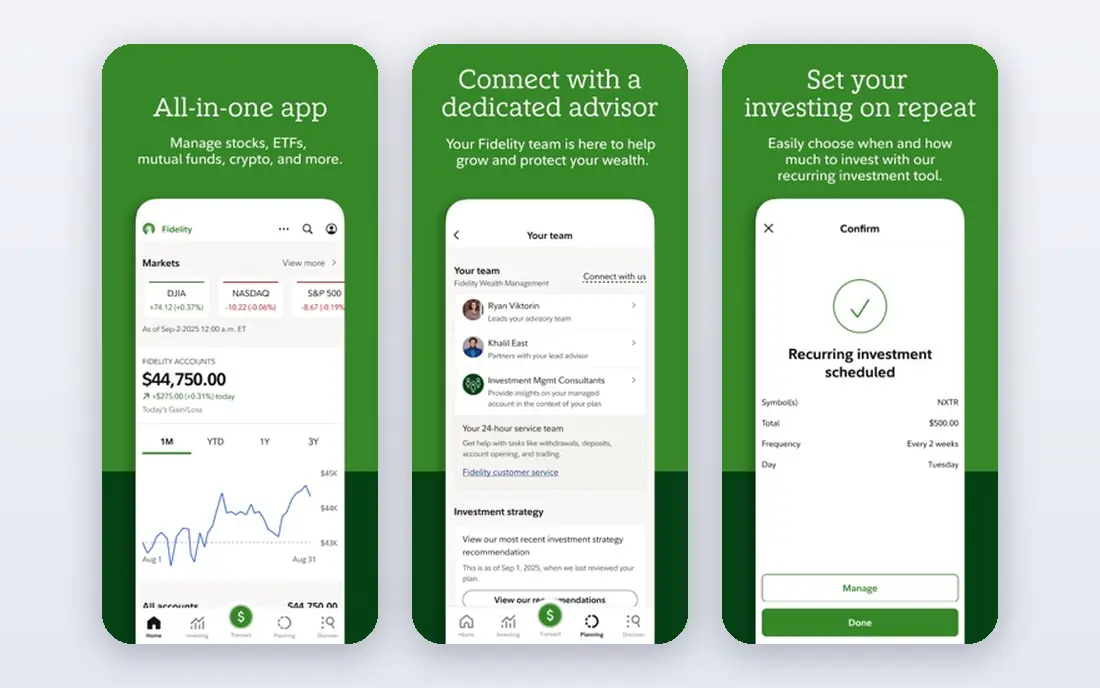
Fidelity is the best day trading platform for most beginners, because it combines low costs with depth. It charges $0 commissions on US stocks and ETFs, offers fractional shares from $1, has no account minimum, and provides strong research, screeners and planning tools alongside retirement accounts like IRAs. Options cost $0.65 per contract.
Fidelity has no paper trading, so practise elsewhere before trading live, and the interface can feel complex at first. For a beginner who wants one broker for day trading and long-term investing, Fidelity is the strongest all-round choice.
- $0 commissions on US stocks and ETFs
- Fractional shares from $1
- No account minimum
- Strong research, screeners and education
- No transfer-out fee
- No paper trading
- Interface can feel complex at first
- Non-Fidelity mutual funds cost $49.95 per transaction
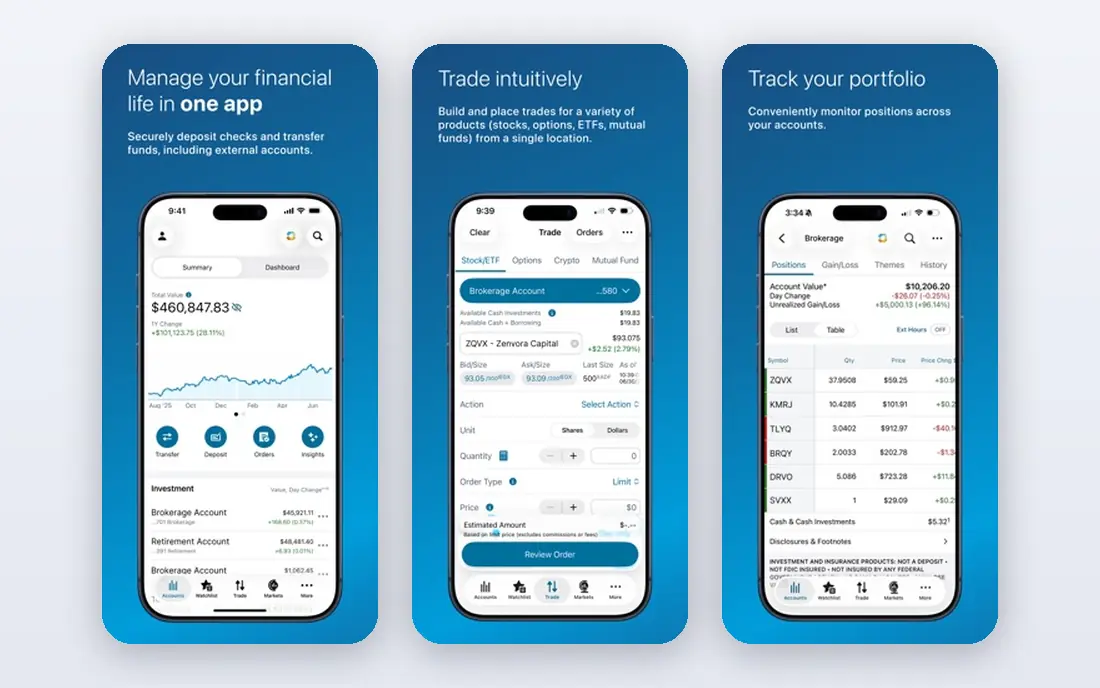
Charles Schwab is the best platform for a beginner who wants to practise first. Its thinkorswim platform, free for Schwab clients, includes paperMoney, a practice account with real-time market data covering stocks, ETFs, options, futures and forex, with $100,000 in customisable practice cash. Education and customer support are among the best in the industry.
The product range can feel complex at first, and options cost $0.65 per contract. For a beginner who wants to learn by doing, without risking real money, Schwab's paperMoney is the best practice tool available.
- $0 commissions on online listed stocks and ETFs
- Thinkorswim paperMoney with real-time market data for practice
- Strong education and customer support
- No minimum to open a brokerage account
- Product range can feel complex at first
- Options cost $0.65 per contract
- $50 full transfer-out fee
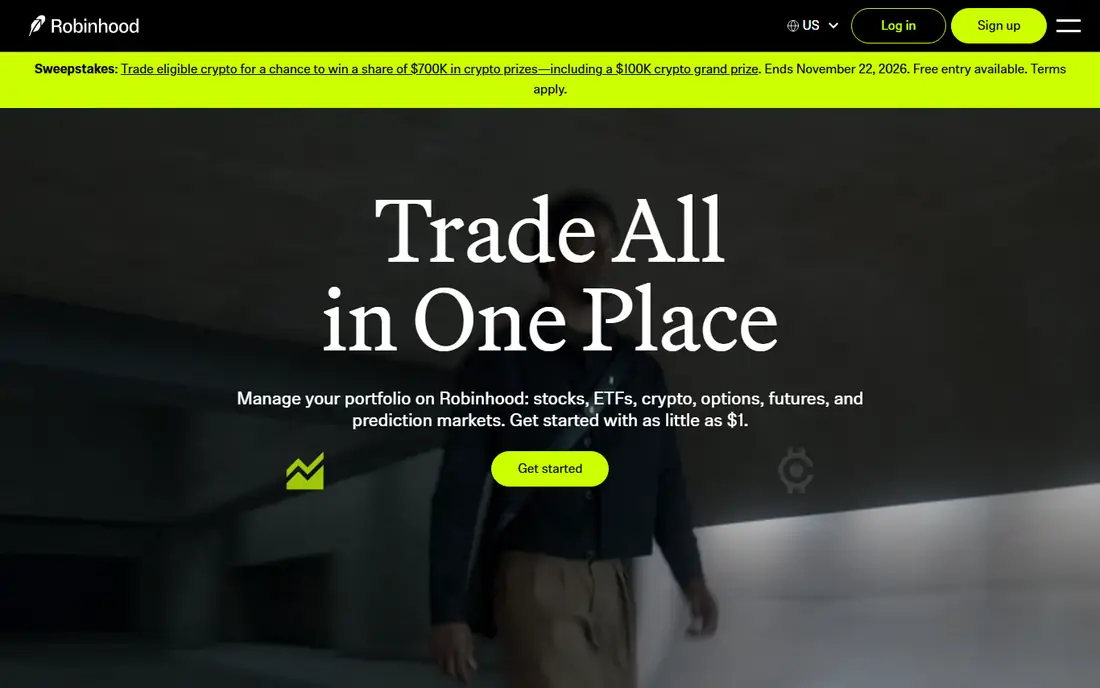
Robinhood is the best day trading app for a beginner who wants the simplest mobile experience. It charges $0 commissions on stocks, ETFs and stock options, offers fractional shares from $1 and recurring investments, and its clean mobile interface makes placing a first trade genuinely easy. Crypto trading is also available in the same app.
Robinhood has no paper trading, and its simple interface can encourage frequent trading, which is the opposite of what most beginners need. For a first app that stays simple, Robinhood is a good start, provided you trade slowly and deliberately.
- $0 commissions on stocks, ETFs and stock options
- Fractional shares from $1
- Recurring investments
- Simplest mobile interface on this list
- No account minimum
- No paper trading
- Interface can encourage frequent trading
- $100 full transfer-out fee
- Research is lighter than Fidelity or Schwab
Webull is the best platform for a beginner who wants to learn active trading. Its paper trading account offers real-time pricing with $1,000,000 in practice cash and unlimited resets, and its charting tools are professional-grade and free. Extended hours trading is included, and Nasdaq TotalView costs $2.99 per month, well under rivals.
Webull offers no mutual funds, so it is less suited to a simple fund-based retirement plan. For a beginner who wants to practise day trading seriously before risking real money, Webull is the best free learning platform.
- $0 commissions on US-listed stocks, ETFs and many options
- Free paper trading with real-time pricing and $1,000,000 in practice cash with unlimited resets
- Professional charting and extended hours trading free
- Nasdaq TotalView for $2.99 per month
- No paper trading for mutual funds, since it offers none
- Less suited to a simple fund-based retirement plan
- Customer support is weaker than Fidelity or Schwab
SoFi Invest is the best day trading platform for a beginner who wants the simplest possible start. It charges $0 commissions on stocks and ETFs, offers fractional investing from $5, and combines self-directed and automated investing in one clean app, alongside SoFi's banking and lending products. Account holders get access to human financial planners.
Research and trading tools are lighter than specialist brokers, and there is no paper trading. For a beginner who finds other brokers overwhelming, SoFi Invest is the easiest place to start.
- $0 commissions on stocks and ETFs
- Fractional investing from $5
- Self-directed and automated investing in one app
- Clean, beginner-friendly interface
- No account minimum
- Research and trading tools are lighter than specialist brokers
- No paper trading
- No mutual funds
- Automated portfolios need $50 to start
ETRADE is the best platform for a beginner who also wants strong options and retirement tools. It charges $0 commissions on stocks and ETFs, with options at $0.65 per contract, or $0.50 at 30 plus trades per quarter, and its paper trading account offers $100,000 in practice cash. Power ETRADE gives active traders a dedicated platform, and retirement accounts are well supported.
The $75 full transfer-out fee is high, and the design feels older in places. For a beginner who wants options tools and paper trading in a full-service broker, E*TRADE is a solid choice.
- $0 commissions on stocks and ETFs
- Options at $0.65 per contract, or $0.50 at 30 plus trades per quarter
- Paper trading with $100,000 in practice cash
- Power E*TRADE platform for active traders
- Strong retirement tools
- $75 full transfer-out fee
- Older design in places
- Fewer fractional share options than Fidelity
Interactive Brokers is the best platform for a beginner who wants global access and serious tools. IBKR Lite offers $0 US stock and ETF commissions, and the platform reaches more than 160 markets worldwide. Paper trading covers stocks, ETFs, options, futures, crypto, forex and bonds with $1,000,000 in customisable practice cash.
The advanced tools create a steeper learning curve, and Pro pricing is complex. For a beginner who plans to trade internationally or grow into active trading, Interactive Brokers is the strongest long-term platform.
- IBKR Lite with $0 US stock and ETF commissions
- Access to more than 160 markets
- Paper trading with $1,000,000 in customisable practice cash
- Lowest published small-balance margin rates among active-trading brokers
- Advanced tools create a steeper learning curve
- Pro tier pricing is complex
- Interface overwhelms beginners at first
Public is the best platform for a beginner who wants simple multi-asset investing with a social edge. It charges $0 commissions on stocks and ETFs, offers stocks, ETFs, bonds, Treasuries and crypto in one app, with fractional shares from $5 and recurring plans. Social features let you see what other investors are doing and learn from their reasoning.
There is no paper trading, and some plans and asset types carry separate fees. For a beginner who wants bonds and Treasuries alongside stocks, Public is a clean, simple choice.
- $0 commissions on stocks and ETFs
- Stocks, ETFs, bonds, Treasuries and crypto in one app
- Fractional shares from $5
- Recurring plans
- Social features for learning from other investors
- No paper trading
- Some plans, subscriptions and asset types carry separate fees
- Research is lighter than Fidelity or Schwab
TradeStation is the best platform for a beginner who wants scanning and strategy tools. Its paper trading account offers unlimited customisable practice cash across stocks, ETFs, options and futures, and its scanning and strategy tools help active traders find setups and test ideas. Futures trading is available for traders who outgrow stocks.
Pricing varies by plan, so check the vendor's site, and the interface is built for active traders rather than first-timers. For a beginner who wants to learn strategy and scanning, TradeStation is a powerful, if demanding, choice.
- Free stock and ETF trades on some plans, with competitive per-contract pricing otherwise
- Paper trading with unlimited customisable practice cash
- Strong scanning and strategy tools
- Futures trading available
- Pricing varies by plan, so check the vendor's site
- Interface is built for active traders, not first-timers
- Customer support is thinner than Fidelity or Schwab
How we picked these
We compared price, paper trading, tools, education and ease of use, and we favoured platforms with $0 stock and ETF commissions and a genuine practice mode. We left out platforms aimed mainly at professionals or at non-US users, and focused on brokers a US beginner can actually open and learn on.
Start with paper trading, then go small
The best path for a beginner is paper trading first, then small real trades. Practise on Schwab's paperMoney or Webull's paper trading until you can explain why you entered and exited each trade. Then start with fractional shares and small amounts, and keep a trading journal. If you cannot explain a trade, do not make it with real money.
Frequently asked questions
What is the best day trading platform for beginners?
Fidelity is best overall for beginners, with $0 commissions, fractional shares from $1 and strong research. Schwab is best for practice trading, Webull is best for learning active trading, and Robinhood is best for a simple mobile experience.
Can I practise day trading without risking real money?
Yes. Schwab's thinkorswim paperMoney, Webull's paper trading and E*TRADE's paper trading all let you trade with virtual money using real market data. Practise until you can explain your trades before risking real dollars.
How much money do I need to start day trading?
Most platforms here have no account minimum, and fractional shares start from $1 at Fidelity and Robinhood or $5 at SoFi and Public. Start small, and only trade with money you can afford to lose.
What are the day trading rules in 2026?
FINRA replaced the $25,000 pattern day trader minimum with new intraday margin standards effective June 4, 2026, but brokers have until October 20, 2027 to implement them. Check your broker's current rules before you start.
Is day trading risky?
Yes. Most day traders lose money, and day trading involves borrowed money, fees and fast-moving prices that can work against you. This is not financial advice, and trading carries risk. Consider talking to a qualified financial adviser before starting.
Which platform has the best mobile app for day trading?
Robinhood has the simplest mobile app, and Webull has the best mobile charting for active traders. Fidelity and Schwab offer fuller mobile apps with more research, at the cost of simplicity.
Sources we checked (9)

Online Jobs is an independent blog about careers, online work, learning new skills and the tools that help people earn. More about us.
Keep reading
All posts
Best Whole Life Insurance Companies
We compared the best whole life insurance companies on dividends, cash value, riders and financial strength, so buyers can shortlist wisely in 2026 today.
Best Trading Apps for Beginners
Compare the best trading app for beginners, with $0 stock commissions, fractional shares, education, paper trading and account types explained in 2026 now.
Best Trading App
We compared the best trading apps for beginners and active traders on fees, tools, accounts and ease of use, so you can pick a platform that fits your plan.