Best Credit Building Apps in 2026: 8 Apps Compared


Low cost starting point with no hard credit check · Starting price: See website
How we put this together: we compare official feature and pricing pages, app store listings, privacy policies and public user reviews. Prices change, so check the provider's site before you pay.
Key takeaways
- The cheapest entry point is often a credit line or subscription reporting tool, while credit builder loans usually cost more per month but add an installment account.
- Reporting to all three bureaus (Equifax, Experian, and TransUnion) is more useful than reporting to one, so check which bureaus each app covers.
- No app can guarantee a score increase, and missed payments on a builder product can hurt your score, so only take a payment you can make every month.
- Free tools such as Experian Boost and Credit Sesame help with tracking and bill reporting, but they do not replace a reported tradeline for building history.
Quick comparison
| Name | Who it suits | Starting price | Free option | |
|---|---|---|---|---|
| Kikoff | Low cost starting point with no hard credit check | See website | No | Visit |
 Self | Structured savings plus an installment loan | See website | No | Visit |
 Grow Credit | Reporting subscriptions you already pay for | See website | No | Visit |
 Chime Credit Builder | Secured card users who want no interest | See website | Yes | Visit |
 Experian Boost | Free bill reporting to Experian | Free | Yes | Visit |
 Kovo | Simple installment account with broad bureau coverage | See website | No | Visit |
 MoneyLion | Credit building inside a wider money app | See website | No | Visit |
 Credit Sesame | Free score tracking plus building tools | Free | Yes | Visit |
The best credit building apps
This is not financial advice. Credit building apps can help you add positive payment history, but they cost money in most cases, they do not erase past missed payments, and results vary by person. The apps below report payments to one or more credit bureaus, and they differ in whether they use a loan, a credit line, a secured card, or bill reporting. Choose by the mechanism that fits your budget, not by the biggest promised score gain.
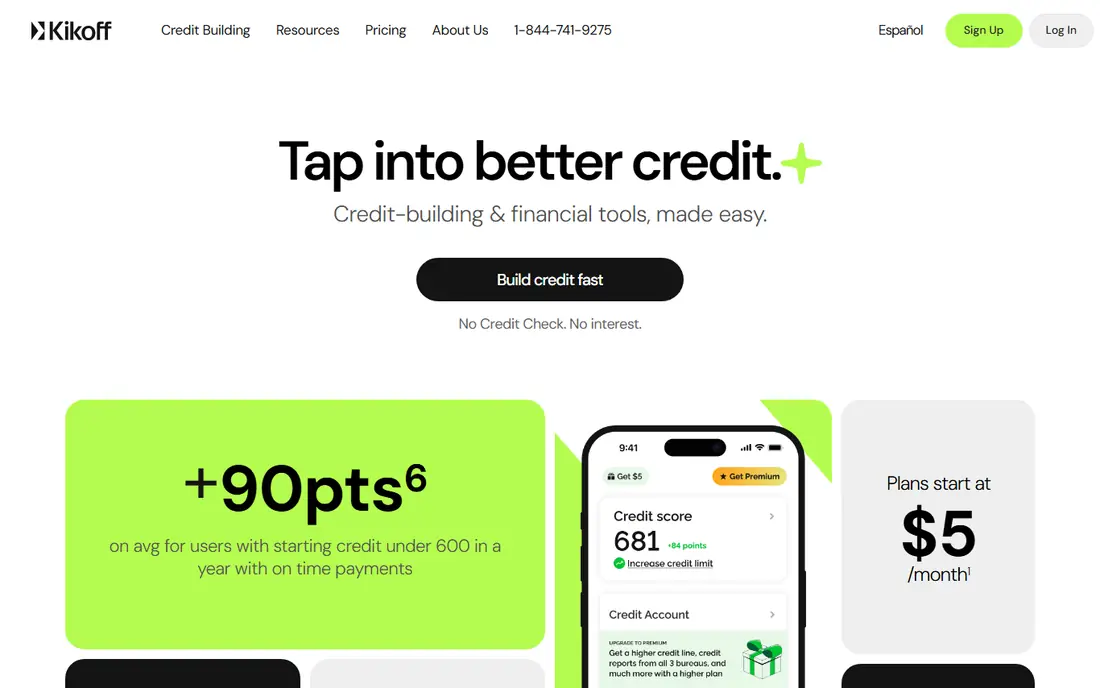
Kikoff gives you a revolving credit account that reports payments to Equifax, Experian, and TransUnion without a hard credit check, which is why it is often the first app people try. The basic plan is low cost, and the account structure can help both payment history and credit utilisation, the two factors that matter most for many thin files. You can upgrade, downgrade, or cancel, and higher tiers add rent reporting, bill reporting, and identity tools.
The limit is that the core credit line is not a card you can use anywhere. You use it for purchases inside the platform, so Kikoff works best as a builder tool rather than everyday spending. If you want a card for daily use, pair Kikoff with a secured card, and check which bureau each add-on reports to before assuming full coverage.
- Low monthly entry cost
- Reports to all three bureaus
- No hard credit check for the core account
- Core credit line is restricted to purchases in the platform
- Higher tiers cost more
- Rent and bill reporting vary by plan
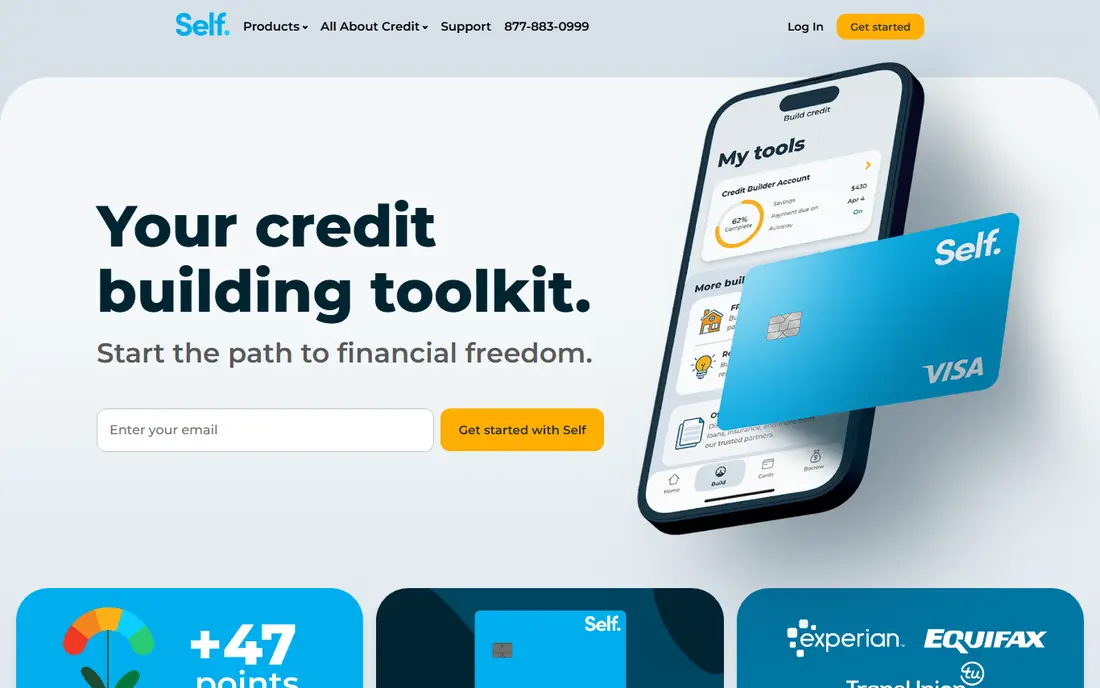
Self works like a secured installment loan in reverse: you choose a monthly payment, make payments for up to 24 months, and receive the savings back at the end minus interest and fees. Each payment is reported to all three bureaus, which adds an installment account to your file and a record of on-time payments. Some users may also qualify for a secured Self Visa card after building history.
The cost is the honest catch. Interest means the payout is smaller than the total you paid, and the monthly payment is higher than a low cost credit line. Self suits someone who wants a forced savings habit alongside credit building and can commit to the full term. If you might need to stop early, check the early closure terms before signing up.
- Installment loan reported to all three bureaus
- Savings returned at the end minus interest and fees
- No hard credit check
- You pay interest, so you get back less than you paid in
- Monthly payments start higher than some rivals
- Term can run to 24 months
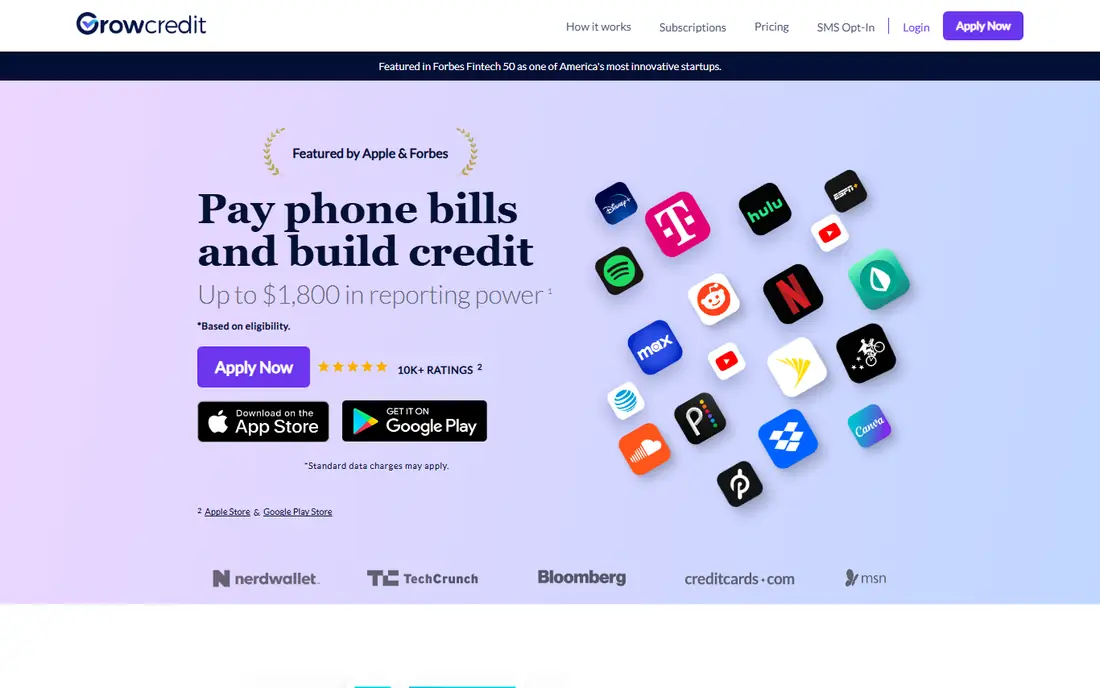
Grow Credit takes a clever route: it reports payments for subscriptions you may already pay for, such as streaming or phone services, through a virtual card and a small loan structure. That means you can build payment history without taking on new spending, which suits someone who is wary of debt. Payments are reported to all three bureaus, and the entry tier is low cost.
The scope is narrow by design. Only eligible subscriptions count, so Grow Credit will not build history from rent, utilities, or general spending unless those are added through a higher tier or a different tool. Use it as a supplement to a credit line or secured card, not as your only builder, and check that your subscriptions qualify before paying.
- Reports subscription payments to all three bureaus
- Low entry cost
- Virtual card structure keeps spending contained
- Only covers eligible subscriptions
- Monthly fee for higher tiers
- Not a general purpose credit card
Chime Credit Builder
Who it suits: Secured card users who want no interest
Chime Credit Builder is a secured Visa card that works differently from a traditional secured card: you move money from a Chime checking account to the secured account, spend, and Chime reports the payments, with no interest charged on the card. Because it reports to all three bureaus, it can build payment history while you spend money you already have.
Eligibility is the gate. You need a Chime checking account and a qualifying direct deposit to open Credit Builder, so it is not a standalone app you can join without switching banking. The secured structure also means your spending limit depends on money you move over, which keeps debt low but requires a habit of moving funds before spending. For Chime users, it is a strong, low cost builder.
- Secured card with no interest on purchases
- Reports to all three bureaus
- No annual fee for the card itself
- Requires a Chime checking account and direct deposit setup for eligibility
- Secured card needs money moved to the secured account
Experian Boost is the free starting point many people should try before paying for anything. It connects your bank account, finds eligible bill payments such as utilities, phone, and streaming, and reports them to Experian. There is no monthly fee, and you can see the effect on your Experian score in the same app, which makes it a low risk way to learn how reporting works.
The limit is bureau coverage. Boost reports to Experian only, so lenders who check Equifax or TransUnion will not see those payments. Eligible bills also vary, and the score effect may be small if your file already has strong payment history. Use Boost alongside a tool that reports to all three bureaus, and treat it as a free extra rather than a complete builder.
- Free to use
- Reports eligible bill payments to Experian
- Instant score context in the Experian app
- Reports to Experian only, not all three bureaus
- Only eligible bills count
- Impact varies and may be small
Kovo offers a straightforward installment account that reports to Equifax, Experian, TransUnion, and Innovis, which is broader bureau coverage than most single product apps. The appeal is simplicity: one monthly payment, one account, and reporting across four bureaus, without the need to manage a card or a subscription list. For someone who wants a set and forget builder, that clarity helps.
The trade-off is depth. Kovo does not bundle rent reporting, bill reporting, or a secured card in the same way larger platforms do, so you may still want a second tool for those factors. The monthly fee also adds up over a year, so compare the total annual cost against Kikoff or Grow Credit before committing. Simplicity is worth paying for only if you will actually keep the payments going.
- Installment account reported to all three bureaus plus Innovis
- Simple monthly cost
- No hard credit check in many cases
- Single mechanism only
- Monthly fee adds up over time
- Fewer extra tools than larger rivals
MoneyLion Credit Builder Plus combines a credit builder loan with a monthly membership, and it sits inside a wider app that also offers banking, investing, and budgeting tools. The loan is reported to all three bureaus, and some of the loan proceeds may be accessible rather than fully locked away, which is a difference from a pure builder loan that holds everything until the end.
Cost is where you need to be careful. The membership fee sits on top of the loan, and the APR range is wide, so the total cost depends on the terms you are offered. The wider app also promotes many other products, which can distract from the simple goal of on-time payments. MoneyLion suits someone who already uses the app for banking and wants building in the same place, not someone looking for the cheapest single tool.
- Credit builder loan reported to all three bureaus
- Wider banking and investing tools in one app
- Some loan proceeds may be accessible
- Monthly membership fee makes total cost higher
- Loan APR range is wide and depends on approval
- App has many upsells to ignore
Credit Sesame starts with what many builders skip: free tracking of your score and report, so you can see what is actually changing. The app adds credit building tools and monitoring, which makes it a useful companion to a reporting product such as Kikoff or Self. Watching your file regularly also helps you spot errors or new accounts you did not expect.
The free tier is mostly tracking, not building, so do not mistake a free score for a builder account. Paid tiers add more monitoring and building features, and the score shown in any consumer app may differ from the score a lender pulls. Use Credit Sesame to monitor and learn, and use a reporting product to do the actual building.
- Free score and report tracking
- Credit building tools and monitoring in one place
- Useful for watching progress
- Free tier is mainly tracking
- Building features and full monitoring sit in paid tiers
- Score shown may differ from lender scores
How we picked these
When we compared credit building apps, we checked official pricing and product pages, app store listings, and current comparison material on bureau reporting and fees. We favoured apps that clearly state which bureaus they report to, what the monthly cost is, and whether a credit check is required. We left out apps that promise a specific score gain, charge large upfront fees without clear reporting, or hide their bureau coverage. Prices change, so check the vendor pricing page before you sign up.
How to choose without overpaying
Start with the free tools. Experian Boost costs nothing and Credit Sesame gives free tracking, so you can learn your starting point before paying. Then add one reporting product that covers all three bureaus and fits a monthly payment you can make even in a tight month. One on-time tradeline beats three products you abandon.
Watch the total annual cost, not just the monthly price
A low monthly fee can still add up to a large annual total, and a builder loan adds interest on top. Add up twelve months of fees plus any interest, and compare that total against what a secured card with no annual fee would cost. If the total is more than you can justify, choose the cheaper reporting tool and keep the payments perfect.
Protect the score you are building
Only take a builder payment you can make on time every month, because a missed payment on a builder product can hurt the score you are trying to raise. Set up automatic payments, keep other balances low, and check your reports for errors at least once a year. Building credit is slow by design, and steady on-time payments matter more than any single app feature.
Frequently asked questions
What is the best credit building app?
For most people starting out, Kikoff is the lowest cost way to get a reported account at all three bureaus, while Self suits someone who wants a savings habit alongside an installment loan. The best choice depends on whether you prefer a credit line, a loan, or a secured card.
What are the best free credit building apps?
Experian Boost is free and reports eligible bills to Experian, and Credit Sesame offers free score tracking. Neither alone builds a full file at all three bureaus, so pair a free tool with one paid reporting product if you need broader coverage.
Which apps are best for credit building without a credit check?
Kikoff, Self, and Kovo do not require a hard credit check for their core builder accounts, and Chime Credit Builder uses a secured structure rather than a traditional credit approval. Check the current eligibility page, since terms can change.
What is the best app to help build credit fast?
No app can build credit fast in a guaranteed way, because scoring rewards sustained on-time payments over time. A product that reports to all three bureaus and that you pay on time every month is the fastest honest route, and any claim of a large instant gain should be treated with caution.
Is Self or Kikoff better for building credit?
Kikoff costs less per month and uses a revolving credit line, which can help utilisation as well as payment history. Self uses an installment loan and returns savings at the end, which suits someone who wants a savings habit. Many people use one of them, not both, to keep costs down.
Sources we checked (8)

Online Jobs is an independent blog about careers, online work, learning new skills and the tools that help people earn. More about us.
Keep reading
All posts
Top AI Financial Software
Searching for top AI financial software? We compared 9 AI finance tools for AP, spend, close, forecasting and bookkeeping to help teams choose wisely.

Quicken Alternatives
Compare the best quicken alternatives for Mac, Windows, and small business owners, from Monarch Money and YNAB to Copilot, Tiller, and Banktivity in 2026.

GoFundMe Alternatives
Looking for GoFundMe alternatives? We compared 8 fundraising platforms on fees, campaign types, donor tools and who each platform suits best in 2026 today.