Best Cell Phone Company in 2026: 9 Companies Compared

How we put this together: we compare official feature and pricing pages, app store listings, privacy policies and public user reviews. Prices change, so check the provider's site before you pay.
Key takeaways
- There is no single best cell phone company for everyone: the right pick depends on coverage where you live, how much data you use, and how many lines you need.
- Visible and Mint Mobile offer the lowest prices for single lines on major networks, with fewer perks than the big carriers.
- Verizon, T-Mobile, and AT&T still lead for premium data, travel perks, and in-store support, at a higher monthly price.
- US Mobile stands out because it lets you use more than one major network, which helps if coverage varies by area.
- Always check coverage at your home, workplace, and regular travel routes before switching, since national maps hide local gaps.
Quick comparison
| Name | Who it suits | Starting price | Free option | |
|---|---|---|---|---|
 Verizon | Widest premium coverage | $65 per month | No | Visit |
 T-Mobile | Premium perks and 5G | $55 per month | No | Visit |
 AT&T | Balanced premium service | $60 per month | No | Visit |
 Visible | Low-cost Verizon network | $25 per month | No | Visit |
 Mint Mobile | Low-cost T-Mobile network | $15 per month | Free trial | Visit |
 US Mobile | Network choice | $8 per month | No | Visit |
 Google Fi | Flexible and travel-friendly | $20 per month | No | Visit |
 Cricket Wireless | AT&T coverage with stores | $35 per month | No | Visit |
 Consumer Cellular | Simple plans and support | $20 per month | No | Visit |
The best cell phone companies
We compare companies, not just single plans, because coverage, customer support, and plan rules matter as much as a headline price. Prices below are entry or popular single-line starting points reported in 2026 comparisons, and they change with promotions, autopay, and taxes, so confirm the current price for your ZIP code before you switch.
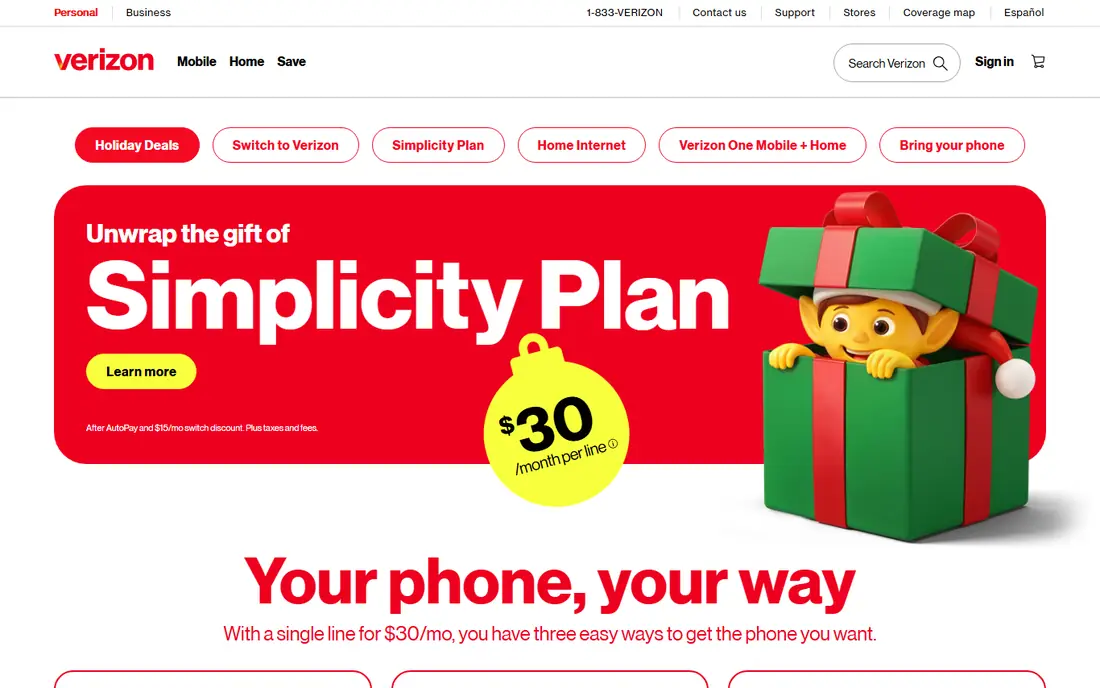
Verizon is the safe premium pick for people who need coverage in a wide range of places, including rural areas where smaller networks may thin out. Its unlimited plans include generous premium data on higher tiers, and its stores give you somewhere to go when a phone or SIM problem needs hands-on help. For families and for people who travel for work, that combination still carries weight.
The cost is the catch. A single line on Verizon costs far more than a comparable prepaid line on the same network, and the headline price often excludes taxes and fees. If you mainly use your phone in a city, on Wi-Fi, and with modest data, a cheaper Verizon-network option such as Visible may give you similar day-to-day coverage for much less.
- Large, reliable network in many areas
- Strong premium unlimited plans
- Wide store network
- Higher single-line prices than prepaid rivals
- Taxes and fees often sit on top of the headline price
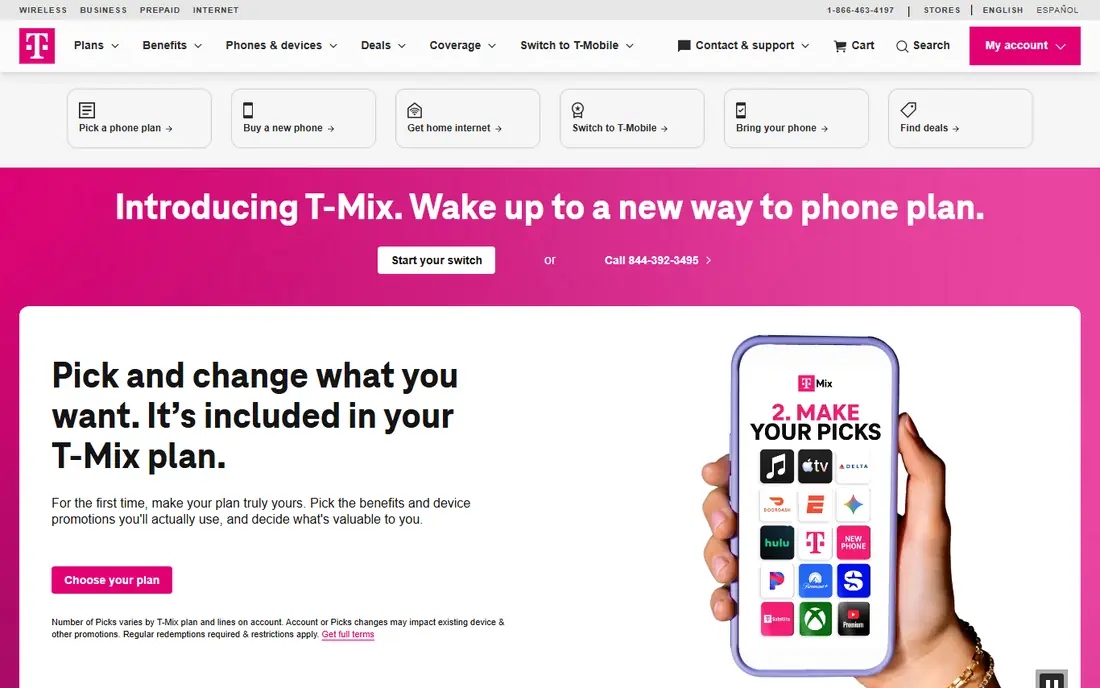
T-Mobile has become the perk-heavy premium carrier, with plans that bundle streaming, travel data, and generous hotspot allowances on higher tiers. Its 5G network is strong in many urban and suburban areas, and family plans often work out better value than single lines. If you use a lot of data, travel, and want extras included rather than bought separately, T-Mobile is worth a close look.
Coverage is the check to make first. In some rural areas, T-Mobile still lags Verizon, so test it where you live and work, not just in a city centre. Also note that the best perks sit on higher-priced plans, so compare the plan you would actually buy, not the entry plan, when you judge value.
- Strong 5G coverage in many cities
- Plans often include streaming and travel perks
- Competitive family pricing
- Rural coverage can vary by area
- Higher tiers are needed for the best perks and hotspot allowances
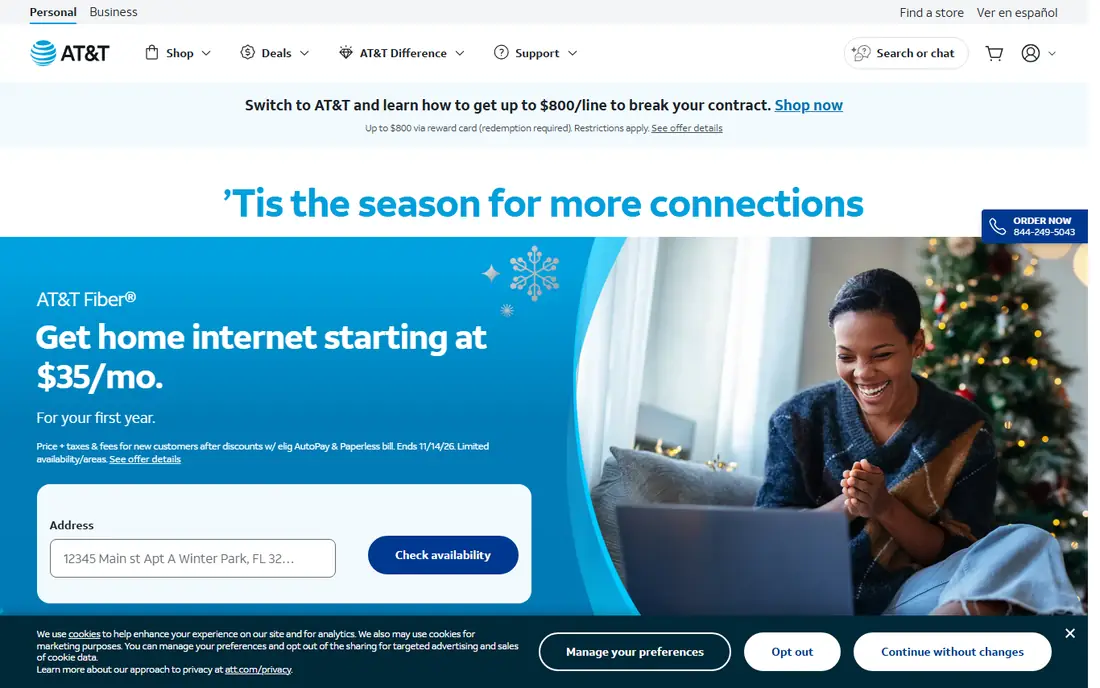
AT&T sits between Verizon and T-Mobile for many buyers: a large national network, premium plans with useful features, and bundle options where AT&T home internet is available. For households that already use AT&T for internet, the combined saving can make the mobile plan more attractive than it looks on its own.
On its own, a single AT&T line is expensive compared with prepaid options on the same network, and entry plans are less generous than higher tiers. Cricket Wireless, covered below, uses the AT&T network at a lower price, so check whether you need AT&T direct support and perks, or whether coverage alone is enough.
- Large national network
- Solid premium plans
- Good option for bundling with home internet in some areas
- Single-line prices are high
- Entry plans have smaller data and hotspot allowances
Visible is our pick for a low-cost single line if Verizon coverage suits you. The base plan offers unlimited data on the Verizon network for $25 per month, with taxes and fees included, which makes the bill easy to predict. There are no complex tiers to decode for the basic plan, and you manage everything through the app.
The trade-offs are support and hotspot speed. There is no store to visit, and the base plan limits hotspot speed, so heavy hotspot users should look at the higher Visible plan or another carrier. For a phone used mainly for calls, messages, browsing, and streaming on the device itself, Visible is hard to beat for value.
- Simple unlimited plan on the Verizon network
- Taxes and fees included in the price
- No stores needed
- Support is online and app-based only
- Hotspot speeds are limited on the base plan
Mint Mobile keeps prices low by asking you to pay for several months at once. That bulk model brings the effective monthly cost down, with entry plans from $15 per month and unlimited plans around $30 per month on regular terms. It runs on the T-Mobile network, so coverage will match T-Mobile in your area, and the plan choices are easy to understand.
The catch is cash flow and commitment. You pay upfront, and if you want to leave early, the remaining value does not simply follow you. Data also slows after the premium allowance on unlimited plans, so heavy users should check that limit. For people who are happy to commit and who have good T-Mobile coverage, Mint is one of the cheapest ways to get a solid service.
- Low prices when paid in bulk
- Runs on the T-Mobile network
- Simple plan choices
- Best prices require paying for months in advance
- Data slows after the premium allowance on unlimited plans
US Mobile is different because it does not lock you to one network. You can choose from the three major networks, and in some cases move between them, which helps if one network is strong at home but weak at work. Its range runs from a light $8 per month plan to a premium unlimited plan around $44 per month, so light users and heavy users can both find a fit.
That flexibility needs a little homework. Network choice, hotspot allowances, and data rules vary by the network you pick, so read the plan details for your chosen network rather than assuming every option works the same way. For people who have struggled with coverage on a single network, US Mobile is the most practical way to test an alternative without changing company.
- Access to all three major networks
- Flexible light and unlimited plans
- Taxes included on many plans
- Network switching rules need reading
- Top unlimited plan costs more than the cheapest rivals
Google Fi suits light users and travellers. The Flexible plan starts at $20 per month plus data, so a user who spends most time on Wi-Fi pays less than on a fixed unlimited plan. International use is simpler than on many prepaid plans, with data in many countries included on unlimited plans, which helps frequent travellers avoid local SIM hassle.
For heavy domestic users, Fi is not the cheapest option. Unlimited plans cost more than Visible or Mint, and some network features work best on phones designed for Fi. If you travel often or use little mobile data, Fi is a strong pick. If you stream a lot at home on mobile data, a cheaper unlimited plan will save more.
- Flexible plan for light users
- Simple international use
- Runs on the T-Mobile network
- Unlimited plans cost more than Mint or Visible
- Phone choice can affect full network features
Cricket Wireless is the store-based way to get AT&T coverage without AT&T direct prices. Plans start around $35 per month for a limited-data plan, with unlimited options above that, and taxes are included in many prices. Having a store matters for buyers who want help setting up a phone, transferring a number, or solving a problem in person.
The trade-off is speed and priority. Cricket data can be slower than AT&T direct data at busy times, and its top unlimited plan costs more than Visible or Mint. If in-person help and AT&T coverage matter more to you than the lowest possible price, Cricket is a sensible middle ground.
- AT&T network coverage
- Physical stores for help
- Taxes included in many plan prices
- Data speeds can be lower than AT&T direct plans
- Top plans cost more than other prepaid options
Consumer Cellular targets users who want a simple plan and a person to talk to, rather than the lowest price or the most data. Plans start around $20 per month for a small data plan, with unlimited options around $35 per month, and support by phone is a central part of the offer. It uses the AT&T network, with some plans also using T-Mobile, so coverage is generally strong.
Heavy data users will find better value elsewhere, since premium data allowances are smaller than on some prepaid unlimited plans. For older users, light users, and anyone who values clear bills and phone support over perks, Consumer Cellular is a calm, reliable choice.
- Simple plan structure
- US-based phone support
- AARP member discounts for eligible users
- Data allowances are smaller than some rivals
- Less suited to very heavy data users
How we picked these
We compared carrier plan pages, 2026 plan comparisons, and public coverage and pricing reports, and we favoured companies that are widely available in the United States, that run on or operate a major network, and that offer a clear range of plans. We kept a mix of premium carriers, low-cost prepaid brands, and network-choice options, and we noted where taxes, autopay, or bulk payment change the headline price. We did not test coverage in every location for this guide, and prices change with promotions, so confirm the current price and coverage for your address before switching.
What to check before you switch
Start with coverage where you actually use your phone. Ask neighbours, check carrier maps for your home and workplace, and use a trial or prepaid SIM for a week if you can. Next, work out your real data use from your current bill, not from a guess, since many people pay for unlimited data they never use. Check hotspot needs, international travel, and whether you need a store, because those factors often decide between two similar prices. Finally, read the fine print on autopay, taxes, device payments, and early exit costs. A plan that looks cheap with autopay and a device deal can cost far more if you leave early or miss a payment.
Frequently asked questions
Who is the best cell phone company overall?
There is no one winner, because coverage and use differ by person. Verizon is the safest premium pick for wide coverage, T-Mobile leads on perks and urban 5G, and Visible or Mint Mobile lead on single-line price. Pick based on coverage at your address first, then price for the data you actually use.
What is the best phone company for a single line?
Visible at $25 per month and Mint Mobile at around $30 per month for unlimited plans are the strongest single-line values in this list, subject to network coverage. US Mobile is also worth checking, since it lets you pick a network that works well where you live.
Which cell phone company has the best coverage?
Verizon and AT&T generally offer the widest coverage, especially outside cities, while T-Mobile has strong 5G in many urban areas. Local results vary, so check coverage maps and, if possible, test a SIM in your home, workplace, and regular routes before committing.
Is it cheaper to stay with a big carrier or switch to prepaid?
Prepaid is usually cheaper for a single line, and often for two lines, because you give up some perks, priority data, and in-store support. Big carriers can be better value for families, for bundle deals with home internet, and for users who need premium data, travel perks, and device financing.
Can I keep my phone number when I switch?
Yes, in most cases you can port your number to a new carrier, provided your old account is active and you have the account number and transfer PIN. Do not cancel the old service before the port completes, and check that your phone is not locked to a carrier and compatible with the new network.
Do prepaid plans slow down at busy times?
Sometimes, yes. Prepaid and lower-cost plans may have lower priority than premium direct plans on the same network, so speeds can drop in crowded places or after a premium data allowance is used. If you often use data in stadiums, festivals, or busy city centres, a premium plan may be worth the extra cost.
Sources we checked (11)
- https://www.whistleout.com/CellPhones/Guides/Best-cell-phone-plans
- https://www.usmobile.com/blog/best-cell-phone-plans-august-2026/
- https://www.verizon.com
- https://www.t-mobile.com
- https://www.att.com
- https://www.visible.com
- https://www.mintmobile.com
- https://www.usmobile.com
- https://fi.google.com
- https://www.cricketwireless.com
- https://www.consumercellular.com

Online Jobs is an independent blog about careers, online work, learning new skills and the tools that help people earn. More about us.
Keep reading
All posts
Best Cell Phone Companies for Coverage
Find what cell phone company has the best coverage in 2026 today, comparing Verizon, AT&T, T-Mobile, and lower cost carriers that use the same networks.
9 Best Cellular Service Options in the US
Compare the best cellular service in the US, from Verizon, AT&T, and T-Mobile to low-cost Mint Mobile, Visible, and US Mobile plans and coverage in detail.

n8n Alternatives
n8n alternatives compared for 2026, with Zapier, Make, Activepieces, and more, covering visual builders, code steps, self-hosting, and pricing models.