Best Business Expense Tracking Apps in 2026: 9 Apps Compared

How we put this together: we compare official feature and pricing pages, app store listings, privacy policies and public user reviews. Prices change, so check the provider's site before you pay.
Key takeaways
- Card-first platforms such as Ramp, Brex, and BILL give away much of their expense software because their business model rests on the corporate card, so they suit teams willing to switch cards.
- Expensify and Zoho Expense are better fits when a team wants to keep its existing bank cards and still automate receipts and reports.
- SAP Concur and Airbase are built for larger companies with strict policies, approvals, and audit needs, and both are priced by quote.
- A free plan is not the same as a free ride, so check receipt limits, user limits, and which accounting integrations sit behind a paid tier before you commit.
- Our pick for most small teams is Ramp for card users and Expensify for teams that want to keep their current cards.
Quick comparison
| Name | Who it suits | Starting price | Free option | |
|---|---|---|---|---|
 Ramp | Startups that want cards plus expenses free | Free | Yes | Visit |
 Brex | Startups and growing companies that want free spend tools | Free | Yes | Visit |
 Expensify | Teams that want to keep their existing cards | $5 per user per month | Yes | Visit |
 Zoho Expense | Budget-conscious teams and Zoho users | See website | Yes | Visit |
 Navan | Companies that book travel and track expenses together | See website | Yes | Visit |
 SAP Concur | Large firms with complex expense policies | See website | No | Visit |
 BILL Spend and Expense | Small teams that want free spend controls | Free | Yes | Visit |
 Airbase | Mid-market firms that want procure-to-pay control | See website | No | Visit |
 Rydoo | Teams that want simple mobile expense reports | See website | No | Visit |
The best business expense tracking apps
The right expense app depends less on receipt scanning, which most of these do well, and more on how your team spends. We compared official feature pages, pricing pages, and app store listings to sort card-first platforms from classic expense tools.
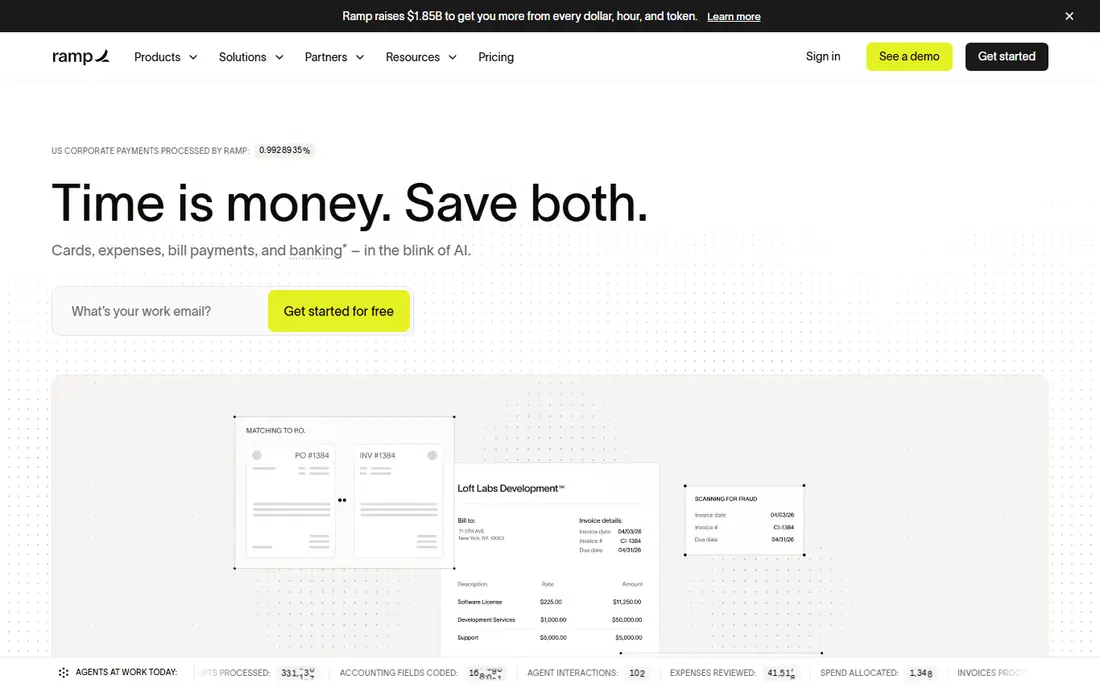
Ramp pairs corporate cards with expense management, so a purchase, a receipt, and an approval can live in one flow instead of three separate tools. Staff get cards with limits set by managers, and finance sees spending as it happens rather than at month end. That real-time view is the main reason small and growing companies choose it first.
The catch is the card link. Ramp works best when the team actually spends on Ramp cards, and companies tied to another card program will get less from it. Ramp Plus adds deeper controls and reporting for a monthly fee per user, so larger teams should price that tier before assuming the free plan covers everything they need.
- Free core platform with corporate cards
- Automatic receipt matching
- Strong spend controls and accounting integrations
- Best value comes from using Ramp cards
- Advanced features sit on Ramp Plus
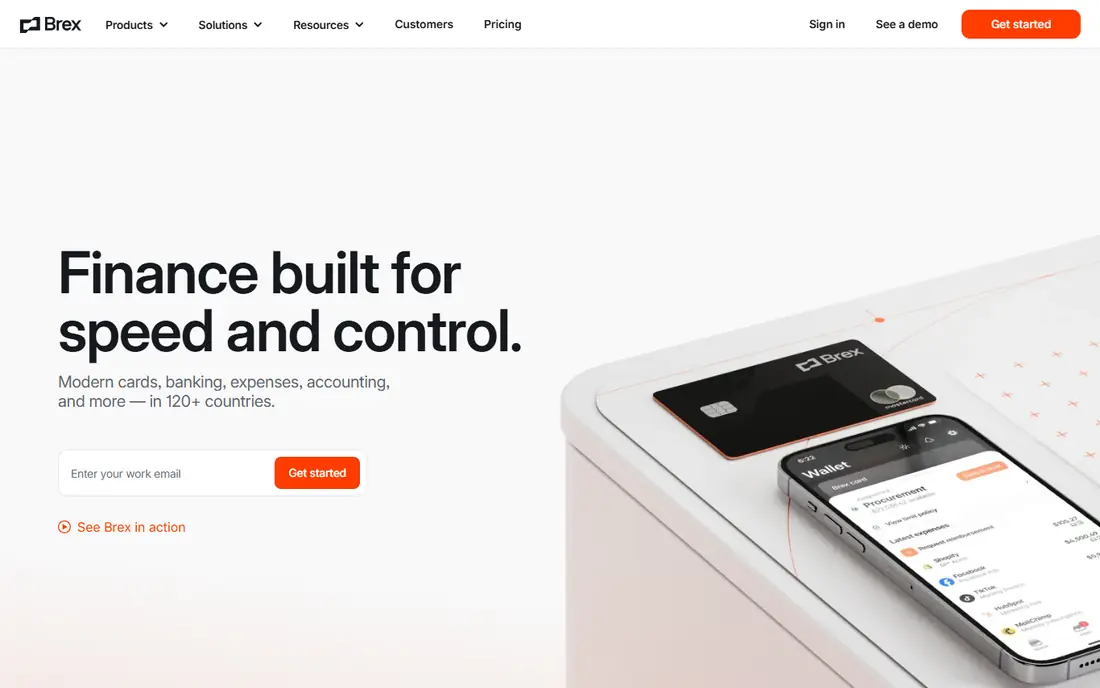
Brex is a close rival to Ramp, with a free Essentials tier that covers cards, expenses, and bill pay for qualifying companies. Receipts can be captured by phone, policies can block out-of-policy spending before it happens, and approved expenses flow to common accounting systems. For a startup that wants one spend platform without a software bill, that is a strong offer.
Brex Premium adds advanced controls, custom approvals, and deeper reporting for a monthly fee per user. Teams should also check eligibility and credit terms, since Brex is a financial product as well as a software tool. If your company cannot or will not move its card program, a card-neutral tool further down this list will fit better.
- Free Essentials tier
- Corporate cards with built-in controls
- Expense automation and accounting sync
- Premium features cost extra
- Card-centered design suits card switchers best
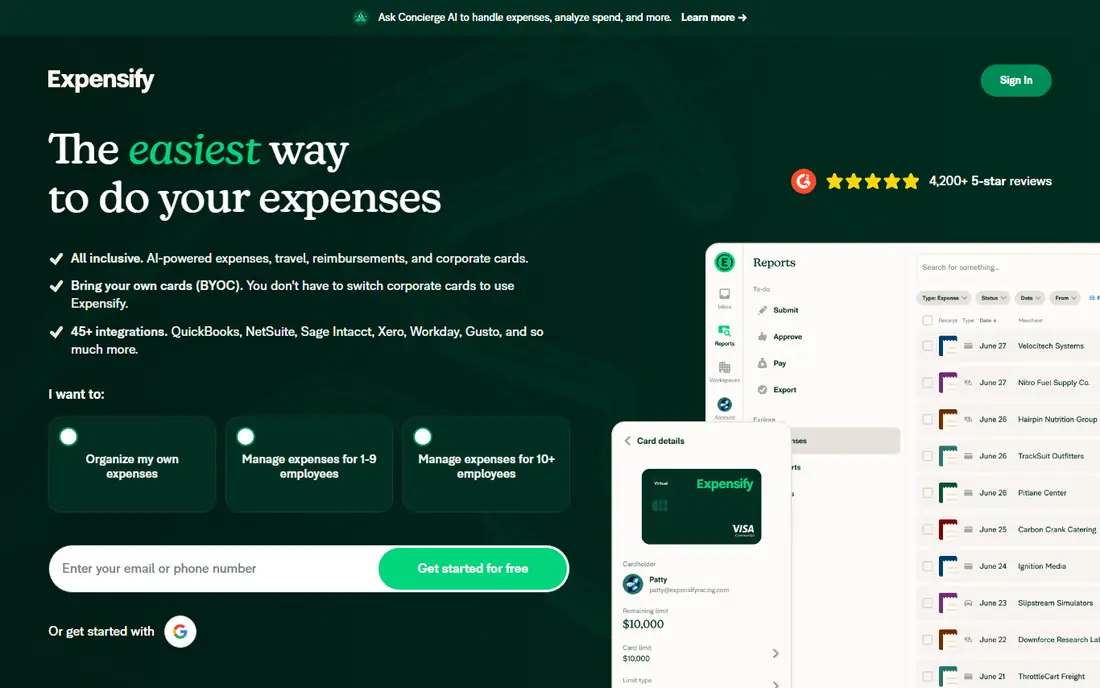
Expensify built its name on receipt scanning and simple expense reports, and it still shines for teams that do not want to change banks. Staff photograph receipts, the app reads the merchant and amount, and managers approve reports from a phone or a browser. It connects to many banks and accounting systems, which matters when a company already has cards in staff wallets.
Pricing starts with a low-cost Collect plan, while a higher Control plan adds multi-level approvals, advanced integrations, and single sign-on. Small teams often find Collect is enough, but finance teams with strict audit rules should compare the Control price before they settle. Expensify also offers its own card, but unlike Ramp and Brex, the software does not depend on it.
- Works with existing corporate cards
- Fast receipt scanning
- Simple reports and approvals
- Advanced controls sit in higher plans
- Per-member pricing adds up for large teams
Zoho Expense is the budget pick in this list, with a free plan for very small teams and low-cost paid plans for larger ones. It covers receipt scanning, mileage, per diem, approvals, and policy checks, and it pairs naturally with Zoho Books and other Zoho apps. A company already using Zoho will feel at home quickly.
The main limit to watch is receipt scanning volume, which is capped on the free and lower plans, so a team that files many paper receipts may need to upgrade sooner than expected. Zoho Expense also lacks the card-first perks of Ramp and Brex, since it is software first. For the price, though, it is hard to beat for a small business that wants solid expense reports without a card switch.
- Low-cost paid plans
- Free plan for small teams
- Good fit inside the Zoho suite
- Receipt scan limits on lower plans
- Some advanced features need a higher tier
Navan, formerly TripActions, is the pick when travel is a large share of spending. Staff book flights and hotels inside Navan, expenses from those trips flow into the same system, and managers see travel and non-travel spending together. That single flow removes the usual gap between a booking tool and an expense tool.
Navan has offered free expensing for a first group of users at smaller companies, with paid plans beyond that, so check the current offer for your headcount. Companies that rarely travel will get less from Navan than from a pure expense tool. Companies with frequent travelers, on the other hand, may save enough time on booking and reconciliation to justify the switch.
- Travel booking and expenses in one place
- First users free on some plans
- Corporate card option
- Full value depends on using Navan for travel
- Pricing varies by plan and company size
SAP Concur is the enterprise standard for a reason. It handles complex approval chains, multi-country tax rules, audit trails, and travel booking at a scale that smaller tools cannot match. Large firms with many entities, currencies, and policy exceptions need that depth, and Concur has spent years building it.
That depth comes with weight. Pricing is quoted, implementation takes planning, and a team of ten will find it far more than it needs. Concur makes sense when expense volume is high, policy is strict, and finance needs a defensible audit trail across countries. Smaller firms should start with Ramp, Brex, Expensify, or Zoho Expense and move up only when those tools stop fitting.
- Deep policy, audit, and global compliance controls
- Travel and expense in one enterprise system
- Broad integrations
- Quote-only pricing
- Heavy setup for small teams
- Best value at enterprise scale
BILL Spend and Expense
Who it suits: Small teams that want free spend controls
BILL Spend and Expense, formerly Divvy, gives small teams free cards, budgets, and expense controls, with software costs covered by card use. Managers set budgets by team or project, staff spend within those limits, and receipts and approvals are handled in the app. It pairs well with BILL accounts payable for firms that already pay bills through BILL.
As with Ramp and Brex, the free model depends on using BILL cards, so teams that want to keep another card should look elsewhere. BILL is also broader than expense tracking alone, covering payables and receivables in paid products, which can be a plus for a growing finance team and a distraction for one that only needs expenses. For a small team starting from spreadsheets, the free plan is a practical first step.
- Free Spend and Expense plan
- Cards with budgets and controls
- Fits with BILL bill pay
- Card-centered model
- Deeper accounting features sit in paid BILL products
Airbase goes beyond expense reports to cover the whole path from a purchase request to payment. Staff request spend, managers approve it, cards or bills carry it out, and accounting records it without retyping. That procure-to-pay view helps mid-market finance teams stop off-policy spending before it happens rather than catching it in a report.
Airbase is priced by quote and built for companies with a finance team that will use its approval and procurement features daily. A ten-person firm will likely find it too much system and too much setup. A company of a few hundred staff with growing procurement needs, though, may find Airbase cheaper in total than patching separate expense, bill pay, and approval tools together.
- Combines expenses, bill pay, and procurement approvals
- Strong accounting integrations
- Good control before spending
- Quote-based pricing
- More system than a small team needs
Rydoo keeps expense reporting simple, with mobile receipt scanning, mileage and per diem handling, and approvals that do not require training sessions. Staff submit expenses from the road, managers approve with a tap, and finance exports to accounting software. That simplicity suits field teams and consultants who file expenses often and dislike fiddly software.
Rydoo has no free plan, so it competes on ease rather than price. It also has a smaller integration list than the biggest names, so check that your accounting system is supported before you buy. If your team values a clean mobile flow over a card program or a travel suite, Rydoo earns a place on the shortlist.
- Clean mobile receipt capture
- Per diem and mileage support
- Accounting integrations
- No free plan
- Smaller ecosystem than Expensify or Concur
How we picked these
We compared official feature pages, pricing pages, and app store listings for each product, and we favored tools that are available in the United States, support receipt capture and approvals, and connect to common accounting systems. We mixed card-first platforms with card-neutral software, and budget tools with enterprise systems, so readers at different sizes can find a fit. Where a vendor does not publish a price, we wrote See website rather than guessing a figure.
What to check before you choose an expense app
Start with your card question, because it splits this list in half. If your team can switch cards, Ramp, Brex, and BILL offer strong software for free, and the real cost is the change itself. If your team must keep its current cards, Expensify, Zoho Expense, and Rydoo are the natural shortlist, with SAP Concur or Airbase waiting for larger firms.
Next, test the parts that cause daily friction. Scan a crumpled receipt, file mileage for a real trip, and run an approval past two managers, then watch how each step feels on a phone. Check receipt limits, approval depth, and whether your accounting system syncs both ways or only exports a file. A short trial with real expenses from one team will tell you more than a sales demo, and it will surface the limits that matter before the whole company moves.
Frequently asked questions
What is the best app for tracking business expenses?
For most small teams, Ramp is our pick if the team can use Ramp cards, and Expensify is our pick if the team wants to keep its existing cards. Both cover receipt scanning, approvals, and accounting sync, and both have low-cost starting points. Larger firms with strict policies should shortlist SAP Concur and Airbase instead.
What is the best app for small business expense tracking?
Zoho Expense and BILL Spend and Expense are strong low-cost options for small businesses. Zoho Expense suits teams inside the Zoho suite, while BILL suits teams that want free cards and budgets. Expensify is also a good small-business choice when the team already has corporate cards it wants to keep.
Is there a free business expense tracking app?
Yes. Ramp, Brex, and BILL offer free core plans tied to their corporate cards, and Zoho Expense and Expensify offer free tiers for small or individual use. Free plans often limit users, receipt scans, or advanced approvals, so read the plan details before you rely on a free tier for a whole company.
What is the best business expense tracking software for large companies?
SAP Concur is the most established choice for large companies with complex policies, global travel, and audit needs. Airbase is a strong alternative for mid-market firms that want procurement and bill pay in the same system. Both are priced by quote, so ask for total cost including implementation and support.
Do expense apps work with QuickBooks and other accounting software?
Most apps on this list sync with QuickBooks and other major accounting systems, but the depth of the sync varies. Some push approved expenses automatically, while others export files that finance must import. Confirm two-way sync, tax categories, and multi-entity support with the vendor before you buy.
Sources we checked (9)

Online Jobs is an independent blog about careers, online work, learning new skills and the tools that help people earn. More about us.
Keep reading
All posts
Wise Alternatives
Compare the best Wise alternatives in 2026, from Revolut and Remitly to OFX and Xe, with fees, speed, cash pickup options, and honest trade-offs today.

Top AI Financial Software
Searching for top AI financial software? We compared 9 AI finance tools for AP, spend, close, forecasting and bookkeeping to help teams choose wisely.
Quicken Alternatives
Compare the best quicken alternatives for Mac, Windows, and small business owners, from Monarch Money and YNAB to Copilot, Tiller, and Banktivity in 2026.