Best Astrology App in 2026: 8 Apps Compared

How we put this together: we compare official feature and pricing pages, app store listings, privacy policies and public user reviews. Prices change, so check the provider's site before you pay.
Key takeaways
- Co-Star suits readers who want a full birth chart and a short daily note, with friends and chart comparison built in.
- The Pattern suits readers who prefer timing and relationship patterns written in plain, psychology-led language.
- Sanctuary is the clear pick for a live reading, because the main service is a chat with a human astrologer.
- TimePassages suits learners who want transits, progressions, and detailed chart data in one place.
- Most apps are free to download, so the real cost question is what sits behind a subscription or a per-reading charge.
Quick comparison
| Name | Who it suits | Starting price | Free option | |
|---|---|---|---|---|
 Co-Star | Daily chart check-ins | Free | Yes | Visit |
 The Pattern | Timing and relationship patterns | Free | Yes | Visit |
 Sanctuary | Live astrologer readings | See website | No | Visit |
 CHANI | Guided readings and learning | See website | Yes | Visit |
 TimePassages | Serious chart study | See website | Yes | Visit |
 Nebula | Horoscopes, tarot, and compatibility | Free | Yes | Visit |
 AstroSage | Vedic charts and horoscopes | Free | Yes | Visit |
 Astrology Zone | Daily horoscopes by sign | Free | Yes | Visit |
The best astrology app
A good astrology app starts from your birth data, not only your sun sign, and it explains what it is showing in words you can follow. The eight apps below cover daily reading, learning, social comparison, and live advice, so the best choice depends on how deep you want to go.
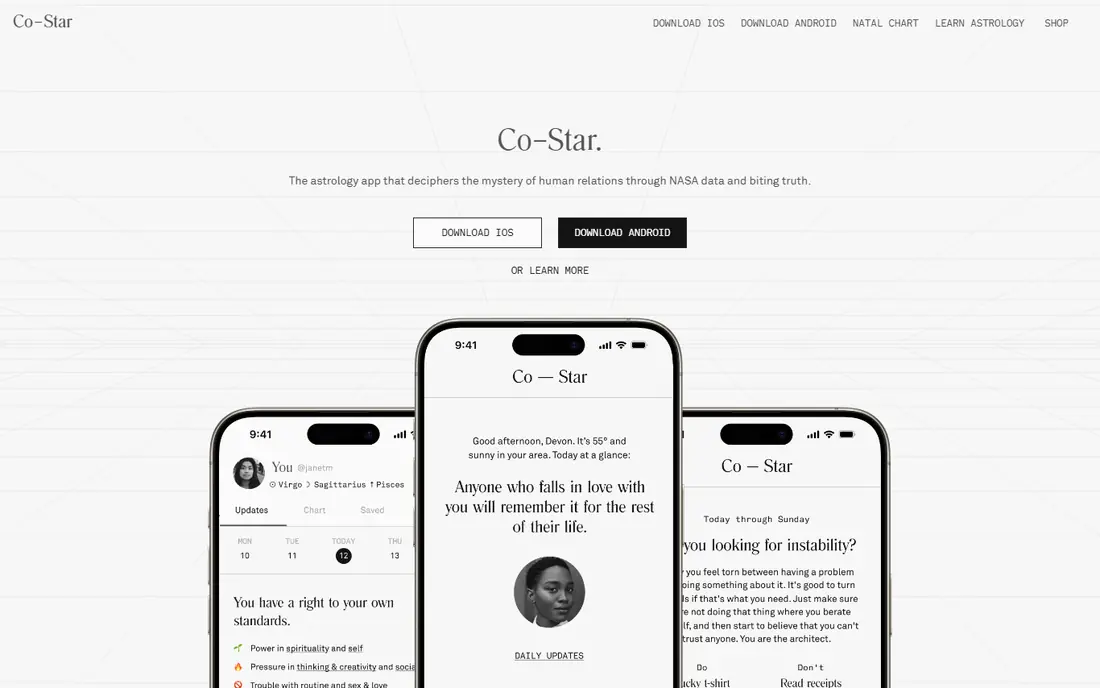
Co-Star opens with your whole chart, which makes it a stronger daily habit than a sun-sign-only feed. The daily notes are short, direct, and tied to current planetary movement, so you can read them in under a minute and still learn something about the day. Friend comparison is a genuine draw here, because it turns a private chart into a shared reference point for relationships and timing. The catch is that the free tier covers the core habit, while deeper reports and extra features sit behind a paid tier. Readers who want long, gentle guidance may find the tone too sharp, and readers who want a human reading will need to look elsewhere. For most people who want a free, chart-based daily app, Co-Star is the easiest place to start.
- Full natal chart from birth data
- Short daily updates
- Chart comparison with friends
- Paid features vary by store and region
- Tone can feel blunt for some readers
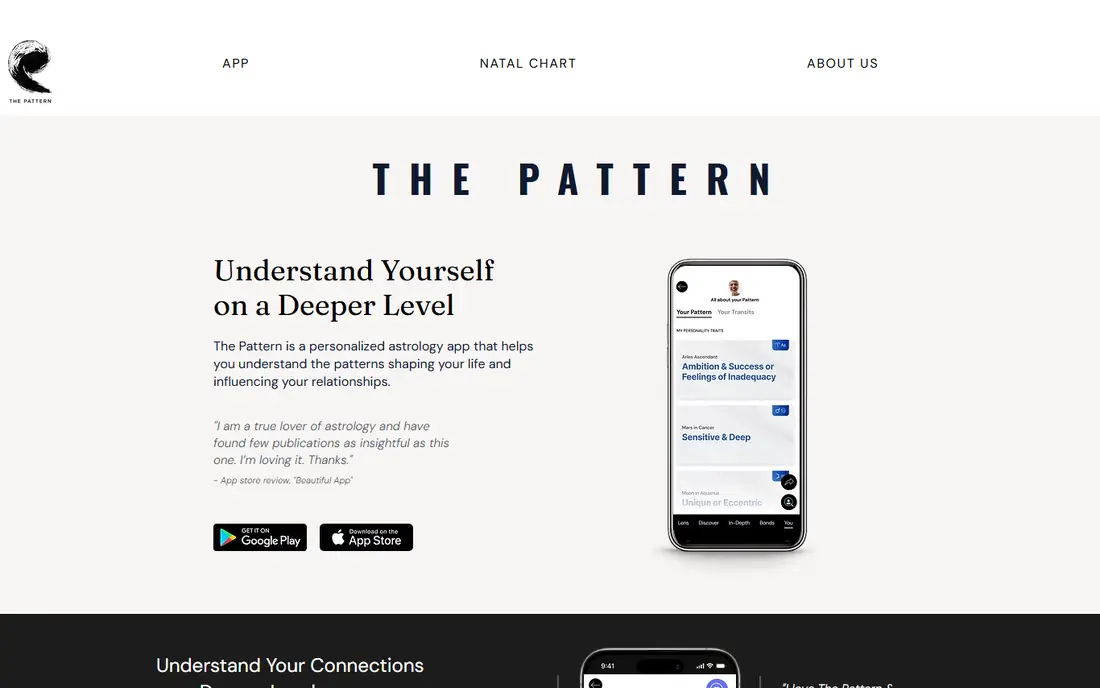
The Pattern frames astrology as timing and recurring themes, which helps readers who feel lost in houses, aspects, and technical terms. Its daily and longer-range notes focus on what a period may feel like, rather than listing every transit, and that makes it easy to return to each morning. Bonds, which compare your patterns with people you know, give it a social angle that feels closer to reflection than to prediction. The trade-off is depth. If you want to see exact chart positions, study progressions, or check a specific aspect, a study app will serve you better. The Pattern works best as a companion for self-reflection, especially for readers who want meaning without a steep learning curve.
- Clear life-cycle and timing themes
- Relationship bonds with contacts
- Calm, readable tone
- Less chart detail than study apps
- Paid features vary by store and region
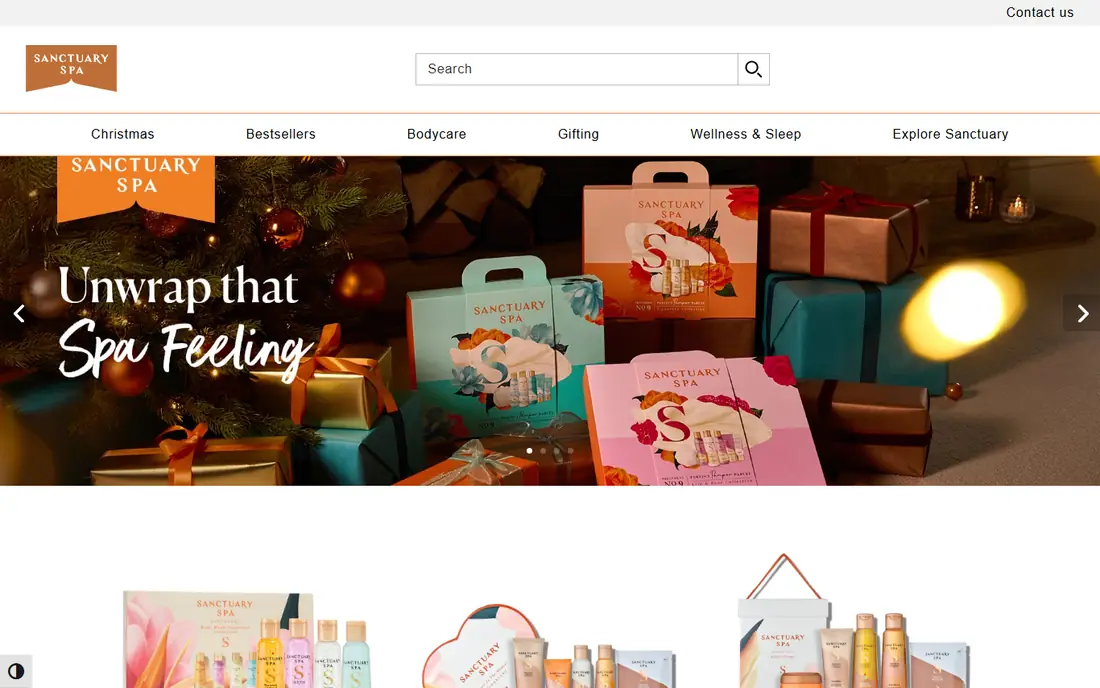
Sanctuary answers a different question from the rest of this list, because it connects you to a person rather than only to a generated report. That matters when you have a specific question about work, love, or timing and you want a conversation, not a paragraph. The daily content gives free readers a reason to open the app, while the paid readings are the core service. The honest catch is cost control. Per-reading charges can add up quickly if you ask follow-up questions, so it helps to write your question down first and decide what an answer would need to cover. Sanctuary is best kept for occasional questions, with a free daily app handling the everyday habit.
- Live chat with human astrologers
- Daily horoscope content
- Tarot prompts alongside astrology
- Readings are paid separately
- Less suited to deep self-study of charts
CHANI stands out because its voice is warm, considered, and clearly written by people who work with astrology every day. Weekly horoscopes, monthly readings, and guided material help new readers build a habit without needing to learn chart symbols first. The app feels more like a reading companion than a data tool, which suits readers who want context for a week or a month. The limit is price and scope. Full access sits behind a subscription, and the app does not try to match the chart depth of a study tool. If you want a thoughtful weekly read and a gentle way to learn, CHANI earns its place. If you want raw chart data, pair it with a study app.
- Readings written by human astrologers
- Weekly and monthly guidance
- Learning content for beginners
- Paid subscription needed for full access
- Tone leans toward wellness and ritual
TimePassages is the study desk of this list. It shows charts in detail, tracks transits and progressions over time, and lets you compare two charts for relationship study. That depth makes it the right pick for students, readers who already know basic chart language, and anyone who wants to check a date rather than only read a daily note. Beginners should expect a learning curve. Menus and chart options take time to explore, and the design favours information over a smooth daily feed. The free chart and horoscope content is a fair starting point, and the paid options make more sense once you know which tools you actually use.
- Detailed natal charts
- Transits and progressions
- Synastry tools for relationships
- Interface feels dense for beginners
- Some advanced features are paid
Nebula packs several interests into one app, which suits readers who move between horoscopes, tarot, and compatibility checks. You can build a birth chart, read a daily horoscope, and explore relationship reports without switching apps. That breadth makes it a good all-rounder for casual readers who enjoy more than one kind of reading. Depth is the trade-off. Individual features are lighter than a dedicated study app or a live-reading service, and the fuller reports sit behind a subscription. Nebula works best when you want variety in a single place and you are happy to treat longer reports as an occasional extra.
- Birth chart tool in one app
- Daily horoscopes
- Tarot and compatibility features
- Subscription needed for deeper reports
- In-app purchases vary by store
AstroSage is the pick for readers who follow Vedic astrology, where the chart system and timing methods differ from Western astrology. It offers kundli charts, daily horoscopes, and a large library of related content, which makes it useful for both quick checks and deeper reading. Readers who grew up with this tradition will find familiar terms and methods here. The free experience can feel crowded, with ads and many menu options competing for attention. That is a fair price for a free, feature-rich app, but it may put off readers who want a quiet daily feed. For Vedic practice, the breadth of tools outweighs the busy design.
- Vedic chart tools
- Daily horoscopes
- Wide language and content coverage
- Ads in the free experience
- Interface is busy compared with newer apps
Astrology Zone suits readers who want a well-written horoscope for their sign without entering birth time or learning chart symbols. Its monthly forecasts are longer and more detailed than most daily feeds, which gives readers something to return to across a month. The sign-by-sign layout also makes it easy to check a partner, friend, or family member. The limit is personalisation. A sign horoscope speaks to everyone born under that sign, so it cannot reflect your Moon, rising sign, or house placements. Treat it as a general guide and a pleasant reading habit, and use a birth chart app when you want a reading tied to your own chart.
- Long-form monthly horoscopes
- Clear sign-by-sign structure
- Easy daily reading habit
- Less personal than a full birth chart app
- Premium content is paid
How we picked these
We compared official feature pages, app store listings, and public pricing notes for apps that cover birth charts, daily horoscopes, compatibility, learning, and live readings. We favoured apps with a clear free starting point, a stated platform, and a distinct job, so readers are not choosing between eight near-identical feeds. We also checked whether each app builds a chart from birth data or only offers sign-based horoscopes, because that difference changes how personal a reading can feel. We did not treat astrology as a proven science, and we did not rank apps by claims about accuracy. The picks reflect breadth of features, clarity of pricing, and fit for different readers, from casual daily readers to students of chart study. Prices change by store and region, so check the listing in your app store before you subscribe.
Choosing the right astrology app for you
Start with the question you actually ask each day. If you want a quick chart-based note, a free daily app is enough. If you want to understand why a week feels a certain way, a guided or timing-led app will serve you better. If you have one pressing question, a live reading may be worth more than a month of short notes.
Match the app to your habit
Daily readers should favour a fast feed and a clear chart. Learners should favour transits, progressions, and written explanations. Social readers should check friend comparison before paying, because that feature varies a lot between apps. Readers who follow Vedic astrology should start with a Vedic tool, since Western chart apps use a different system.
Check the cost before you commit
Use the free tier for at least a week and note which paid features you actually open. A subscription makes sense only if you read the longer reports, use the learning material, or return to compatibility tools often. For live readings, set a budget for one question and avoid paying for repeat readings on the same question in the same week.
Frequently asked questions
What is the best astrology app for beginners?
Co-Star is a strong starting point because it builds a full birth chart from your birth data and gives short daily notes. The Pattern is also beginner friendly if you prefer plain language about timing and relationships. Try both free tiers and keep the one you open most often.
What is the best free horoscope app?
Co-Star, The Pattern, Nebula, AstroSage, and Astrology Zone all offer free reading content, though deeper reports are usually paid. The best free option depends on whether you want a chart-based daily, a sign-based horoscope, or tarot alongside astrology. Start free and pay only for features you use each week.
What is the best astrology software for professionals?
TimePassages is the strongest pick here for detailed charts, transits, progressions, and synastry. It favours data and study over a daily feed, which suits students and practising astrologers. Readers who only want a daily habit will find it heavier than needed.
What is the best birth chart app?
Co-Star and TimePassages both build a chart from birth data, but they serve different needs. Co-Star is better for daily use and friend comparison, while TimePassages is better for study and detailed chart work. AstroSage is the better birth chart choice for Vedic astrology.
What is the best zodiac app for compatibility?
Nebula and The Pattern both cover compatibility, with Nebula offering chart and relationship reports and The Pattern offering bonds between contacts. Co-Star also lets you compare charts with friends. For a specific relationship question, a live reading in Sanctuary may give a more direct answer.
Are astrology apps accurate?
Astrology apps present symbolic interpretations, not verified predictions, so treat readings as reflection and entertainment rather than fact. A chart-based app is more personal than a sign-only feed, but it still cannot predict events with certainty. Use readings to prompt thought, not to make major life, money, or health decisions alone.
Sources we checked (8)

Online Jobs is an independent blog about careers, online work, learning new skills and the tools that help people earn. More about us.
Keep reading
All posts
Surfshark Alternatives
Looking for Surfshark alternatives? We compare 8 VPN services on price, privacy, streaming, and device limits to help you find a VPN that fits your needs.
Spotify Alternatives
Looking for Spotify alternatives? We compare 8 music services on price, sound quality, free tiers, and catalogs to help you find a good alternative to Spotify.
NordPass Alternatives
We compared NordPass alternatives for families, solo users and teams, checking pricing, free plans, passkeys and sharing, so you can switch safely today.