Best apps to learn english in 2026: 9 Apps Compared

How we put this together: we compare official feature and pricing pages, app store listings, privacy policies and public user reviews. Prices change, so check the provider's site before you pay.
Key takeaways
- Duolingo is our pick for free daily practice and habit building, while Babbel suits learners who want structured, practical courses.
- Busuu stands out for CEFR aligned lessons and community feedback, and italki is best when real conversation with a tutor is the goal.
- ELSA Speak is the strongest choice for pronunciation, since most general apps give only light speaking feedback.
- No single app covers vocabulary, grammar, speaking, and listening equally well, so most learners benefit from one main app plus one speaking tool.
Quick comparison
| Name | Who it suits | Starting price | Free option | |
|---|---|---|---|---|
 Duolingo | Free daily practice | Free | Yes | Visit |
 Babbel | Structured practical courses | See website | Free trial | Visit |
 Busuu | CEFR lessons and feedback | Free | Yes | Visit |
 Memrise | Vocabulary and real accents | See website | Yes | Visit |
 Rosetta Stone | Immersion learning | $15.95 per month | Free trial | Visit |
 italki | Live tutor conversation | $4 per lesson | No | Visit |
 ELSA Speak | Pronunciation correction | See website | Yes | Visit |
 HelloTalk | Language exchange | Free | Yes | Visit |
 Pimsleur | Audio lessons on the go | $20.95 per month | Free trial | Visit |
The best apps to learn english
We compared lesson structure, speaking practice, pronunciation feedback, level alignment, and pricing to find apps for beginners, intermediate learners, and people preparing for work or exams.
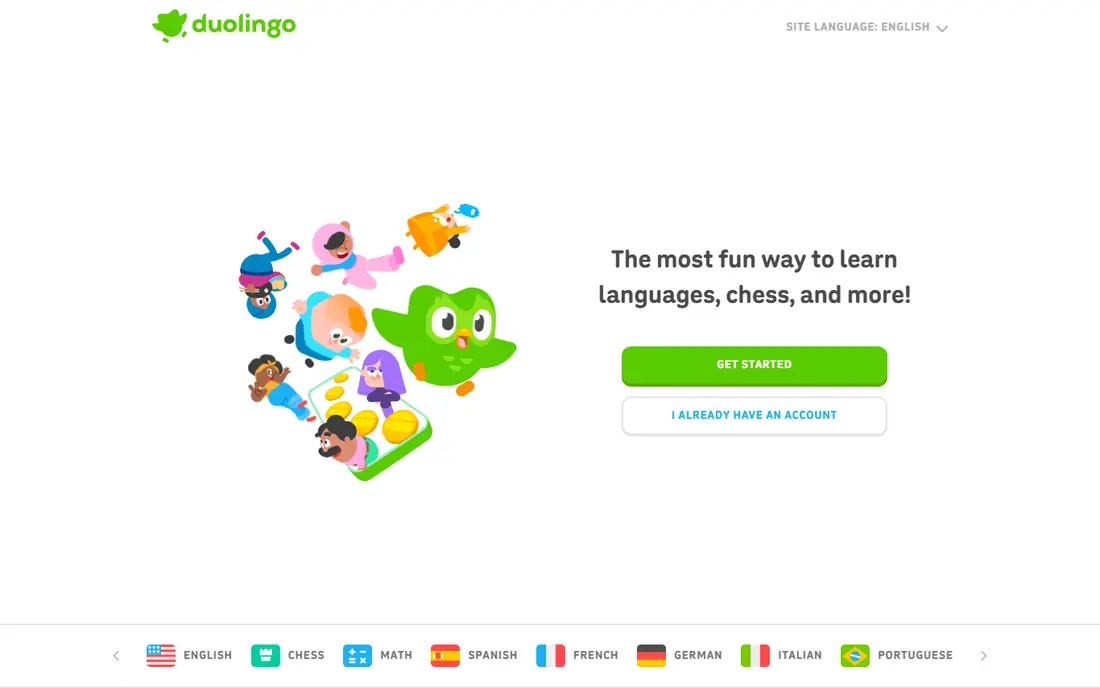
Duolingo remains the easiest place to start learning English for free. Lessons are short, game like, and built around spaced repetition, so vocabulary returns at intervals designed to help retention. Streaks, leagues, and daily goals help many learners keep a habit, which is often more important than lesson depth in the first months. The limit appears as you advance. Duolingo is strong for A1 to B1 vocabulary and basic grammar, but conversation, detailed grammar explanation, and pronunciation correction are lighter than specialist tools. Paid Super removes ads and adds unlimited hearts and offline lessons, but it does not turn Duolingo into a tutor. If you want a free daily habit, Duolingo is our pick, and you can add a speaking app later.
- Large free tier with gamified lessons
- Short daily sessions build habit
- Covers vocabulary, grammar, and listening basics
- Speaking practice is limited
- Progress past intermediate level is slower
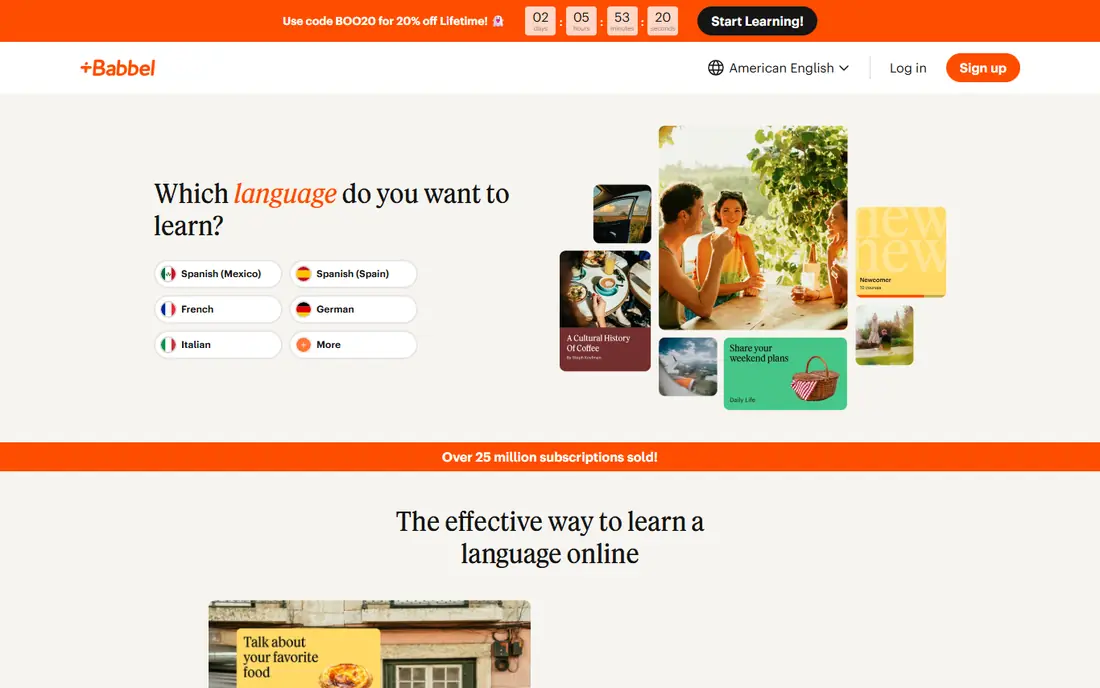
Babbel suits learners who want a course, not just a game. Lessons follow a structured path, with dialogues that reflect everyday situations, grammar explanations in context, and review sessions that revisit vocabulary. That structure helps learners who feel lost in an open ended app and want to know what to study next. Babbel is a paid product after the first lesson of each course, and pricing varies by plan length, so we list See website. It also covers fewer languages than Duolingo, though English courses are well developed. If you prefer textbook style progression without a textbook, and you want practical conversation skills, Babbel is a strong main app.
- Courses built by language experts
- Practical dialogues for work and travel
- Review sessions reinforce grammar
- First lesson free only, rest needs subscription
- Fewer languages than Duolingo
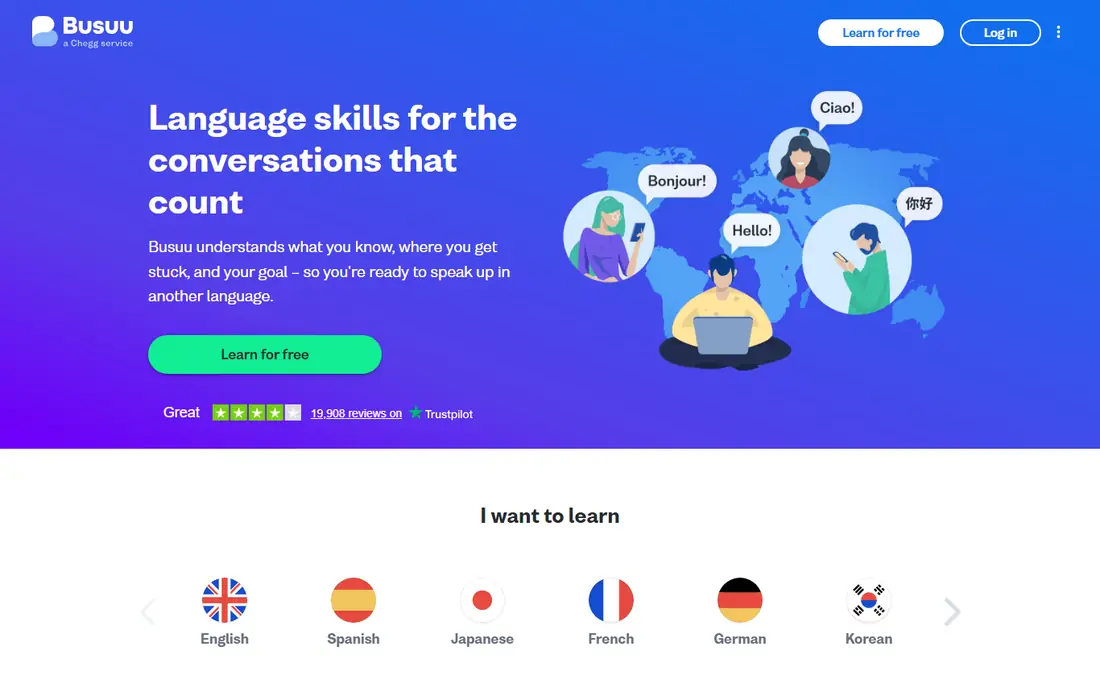
Busuu combines structured lessons with a community. Courses are aligned to CEFR levels, so you can track progress from beginner to upper intermediate in a clear framework, and writing and speaking exercises can be corrected by native speakers in the community. Some levels offer certificates issued with McGraw Hill, which some employers and schools accept as level evidence. The free tier covers basic lessons, while Premium opens full courses, offline mode, and grammar review. Feedback quality and speed depend on community activity, so it is not a substitute for a paid tutor when you need immediate correction. For learners who want a clear level path plus real human feedback, Busuu is a good balance of structure and community.
- CEFR aligned courses from A1 to B2
- Feedback from native speakers
- Certificates on some levels
- Premium needed for full courses
- Community feedback speed varies
Memrise is strongest for vocabulary and listening. Short video clips show native speakers using words and phrases in context, which helps you hear natural speed, accent variation, and everyday expressions that textbook audio often smooths out. Spaced repetition schedules reviews to support long term retention. Grammar teaching is lighter than Babbel or Busuu, so Memrise works best as a vocabulary companion rather than a sole course. A free tier lets you test the video style, while paid plans open more content and features. If your main gap is vocabulary and understanding real speech, Memrise is a useful second app alongside a structured course.
- Native speaker video clips
- Spaced repetition for vocabulary
- Good for listening to varied accents
- Less structured grammar teaching
- Pricing varies by plan
Rosetta Stone teaches through immersion, showing images and English phrases without translating into your first language. That method suits visual learners and beginners who want to think in English from the start, rather than translating every sentence. TruAccent speech recognition gives pronunciation feedback on spoken exercises, which helps early speaking confidence. The drawback is explanation. Grammar rules are learned by pattern, not by explicit teaching, which frustrates some learners who want to know why a form is used. Pricing is also higher than Duolingo or Busuu free tiers, with a minimum term on some plans. If immersion suits your learning style, Rosetta Stone is a proven option, but try the trial first to see if the lack of translation helps or hinders you.
- Immersion method without translation
- Speech recognition for pronunciation
- Structured levels
- Higher price for what it covers
- Less explicit grammar explanation
italki is not an app course, it is a marketplace for live tutors, and that difference matters. A tutor can correct pronunciation in real time, adapt a lesson to your job or exam, and give you the conversation practice that apps struggle to provide. Prices start low for community tutors and rise for professional teachers, and you pay per lesson rather than committing to a subscription. Tutor quality varies, so read reviews, watch introduction videos, and book trial lessons with two or three tutors before committing to a regular slot. Scheduling also takes effort compared with opening an app for ten minutes. If speaking fluency is your goal, italki is the most direct route, and it pairs well with Duolingo or Babbel for daily vocabulary work.
- One to one lessons with native tutors
- Pay per lesson, no subscription required
- Wide tutor choice and prices
- Quality varies by tutor
- Scheduling takes more effort than an app
ELSA Speak focuses on one problem that general apps handle weakly: pronunciation. Its AI listens to your speech and gives feedback on individual sounds, word stress, and intonation, with drills targeted at the sounds your first language makes harder. That specificity helps learners whose vocabulary is good but whose accent causes misunderstandings at work or in exams. ELSA is not a full English course. It does not replace structured grammar, vocabulary, or conversation lessons, so treat it as a specialist tool. A free tier offers limited daily lessons, while paid plans open full assessments and practice. If pronunciation is your main barrier, ELSA is the best specialist pick here.
- Detailed feedback on sounds, stress, and intonation
- AI listening exercises
- Short daily pronunciation drills
- Focus is pronunciation, not full courses
- Paid plan needed for full feedback
HelloTalk connects you with native English speakers who want to learn your language, creating a free exchange. You can chat by text or voice, correct each other, and learn slang and cultural context that courses miss. For learners who already have basic English and want real conversation without paying for a tutor, HelloTalk is a low cost way to practise daily. Exchange quality varies. Partners may be inconsistent, time zones complicate scheduling, and there is no curriculum to follow. Safety and moderation also require care, so use in app tools, avoid sharing personal details, and report misuse. HelloTalk works best as a speaking supplement to a structured app, not as a standalone course for beginners.
- Chat with native speakers worldwide
- Text, voice, and correction tools
- Free core exchange features
- Partner quality and availability vary
- Not a structured course
Pimsleur is built for learners who study while driving, walking, or doing chores. Lessons are audio based, with prompts to recall and speak phrases, which builds speaking confidence without a screen. That format suits auditory learners and busy schedules where app time is hard to protect. Reading, writing, and grammar depth are lighter than Babbel or Busuu, so Pimsleur alone will not cover exam writing or detailed grammar. It is also priced as a premium audio product. If your main study window is a commute, Pimsleur is a strong choice, and you can pair it with a reading and vocabulary app for balance.
- Audio first lessons for commutes
- Focus on speaking and recall
- No screen needed
- Less visual and reading practice
- Price is high for audio only content
How we picked these
We reviewed official feature pages, pricing pages, and app store listings, plus public reviews, to compare lesson structure, CEFR alignment, speaking and pronunciation feedback, tutor access, and free limits. We favoured apps that are currently available, publish a clear free or trial path, and serve a distinct learner need, from daily habit to live tutoring to pronunciation. We also checked whether pricing varies by store, region, or plan length, and used See website where a single figure would be misleading. No app was ranked on download counts alone.
How to build an English routine that lasts
Pick one main app and one speaking tool
Choose a structured main app for daily lessons, such as Duolingo, Babbel, or Busuu, and add one speaking tool, such as italki, HelloTalk, or ELSA Speak, depending on budget and level. Two tools used consistently beat five tools opened once. Set a daily time, even ten minutes, and protect it for at least a month before judging progress.
Study for your real use, not for a streak
If you need English for work, prioritise work dialogues, email phrases, and meeting vocabulary. If you need it for travel, prioritise directions, ordering, and small talk. If you need it for an exam, check which app covers that exam format, and add past papers or a tutor for writing feedback, since apps alone rarely cover exam writing well.
Measure speaking, not just app progress
App levels and streaks can hide weak speaking. Record yourself monthly reading a short paragraph and answering two questions, then compare pronunciation and fluency over time. Book a tutor lesson or exchange session each week if speaking is your goal, and use ELSA drills for sounds that repeatedly cause confusion.
Frequently asked questions
What is the best app to learn English for free?
Duolingo is the best free app for daily practice, with a large free tier and short lessons. Busuu and HelloTalk also offer useful free tiers, for structured lessons and language exchange respectively. Free apps cover basics well, but speaking feedback and advanced grammar usually need a paid app or tutor.
What is the best app for learning English speaking?
italki is best for real conversation with a tutor, HelloTalk is best for free language exchange, and ELSA Speak is best for pronunciation correction. Most learners benefit from combining one of these with a main course app, since general apps alone give limited speaking practice.
Is Babbel or Duolingo better for English?
Duolingo is better for free habit building and beginners on a budget, while Babbel is better for structured, practical courses with clearer grammar progression. Many learners start free with Duolingo, then move to Babbel or Busuu when they want a course path and are ready to pay.
How long does it take to learn English with an app?
It depends on starting level, daily time, and speaking practice. Daily app use plus weekly speaking can move a beginner to basic conversation in several months, but reaching intermediate and advanced levels takes sustained study, reading, and conversation beyond app lessons alone. Consistency matters more than total hours in one week.
Do English learning apps help with exams like IELTS?
Apps help with vocabulary, listening, and general grammar, but exam writing, speaking tasks, and test strategy need targeted practice. Use an app for daily skills, add exam practice materials, and consider a tutor for writing and speaking feedback before a test date.
Sources we checked (9)

Online Jobs is an independent blog about careers, online work, learning new skills and the tools that help people earn. More about us.
Keep reading
All posts
Zoom Alternatives
Zoom alternatives compared for 2026: Google Meet, Microsoft Teams, Webex, Jitsi and more for free calls, large meetings and webinars for teams and classrooms.
Top Rated Poster Maker Software
Top rated poster maker software compared for 2026: Canva, Adobe Express, VistaCreate, PosterMyWall and more for events, sales and classrooms for US users.
Surfshark Alternatives
Looking for Surfshark alternatives? We compare 8 VPN services on price, privacy, streaming, and device limits to help you find a VPN that fits your needs.