Best Apps for Sports Card Values in 2026: 9 Apps Compared

How we put this together: we compare official feature and pricing pages, app store listings, privacy policies and public user reviews. Prices change, so check the provider's site before you pay.
Key takeaways
- eBay sold listings remain the most honest price check, since they show what buyers actually paid rather than asking prices.
- 130point is free and pulls eBay sales data into a searchable history, making it the best free value lookup.
- Card Ladder and Market Movers track collection values over time with charts, which suits collectors managing a portfolio.
- PSA's app verifies graded card certifications, which matters because a card's value depends heavily on its grade.
- Scanner apps like CollX and Ludex identify cards from a photo, but always confirm a value against sold listings before buying or selling.
Quick comparison
| Name | Who it suits | Starting price | Free option | |
|---|---|---|---|---|
 eBay | Real sold prices | Free | Yes | Visit |
 130point | Free sales history | Free | Yes | Visit |
 Card Ladder | Collection tracking | See website | Free trial | Visit |
 Market Movers | Market analytics | See website | Free trial | Visit |
 Sports Card Pro | Price guide lookup | See website | Yes | Visit |
 Beckett | Graded card values | See website | Yes | Visit |
 PSA | Certification checks | Free | Yes | Visit |
 CollX | Photo scanning | Free | Yes | Visit |
 Ludex | Fast card scanning | Free | Yes | Visit |
The best apps for sports card values
A card's value is what someone recently paid for the same card in the same condition and grade, not what a seller asks. The apps below cover sold listings, price guides, collection tracking, and scanning. We compared official feature pages, pricing pages, and app listings to sort them by how collectors actually use them.
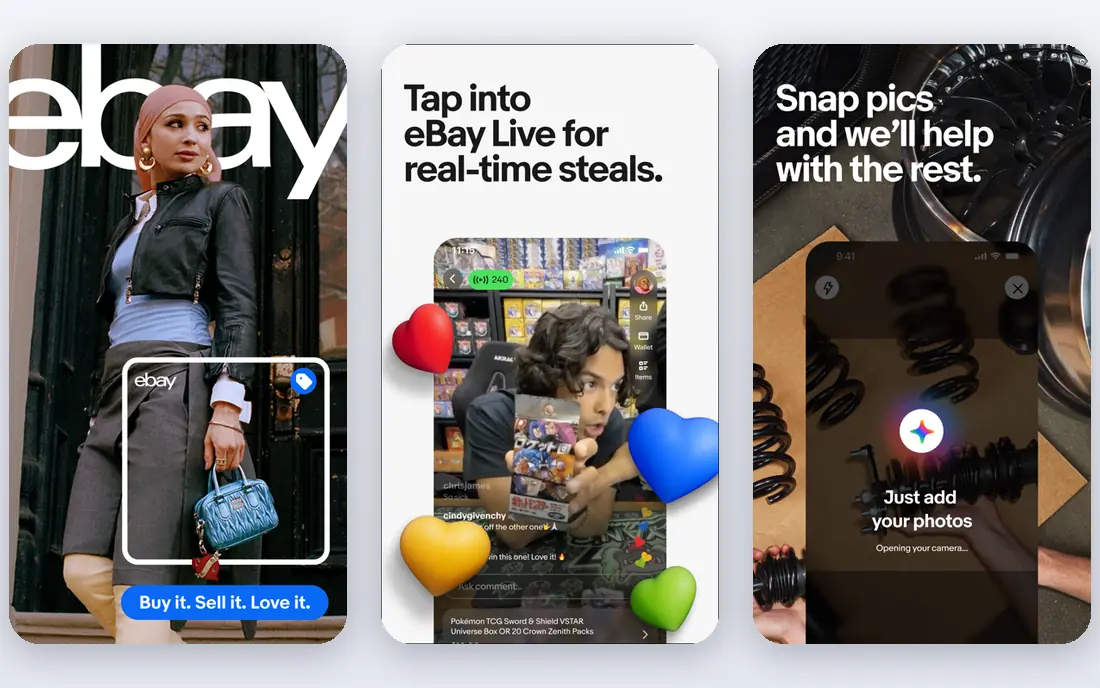
eBay is our pick for the single most reliable value check, and it is free to browse. Search a card, filter to sold listings, and you see what buyers actually paid in recent weeks, which beats any guide price. Condition, grade, and whether the sale included shipping all affect the number, so compare several sales of the same card rather than trusting one.
The catch is noise. Asking prices mean nothing, and a single outlier sale can mislead. For a quick reality check before buying, selling, or trading, eBay sold listings are the standard every other tool on this list is measured against.
- Largest marketplace with real sold data
- Sold listings filter shows actual prices
- Free to browse
- Prices vary by condition and seller
- Fees apply when you sell
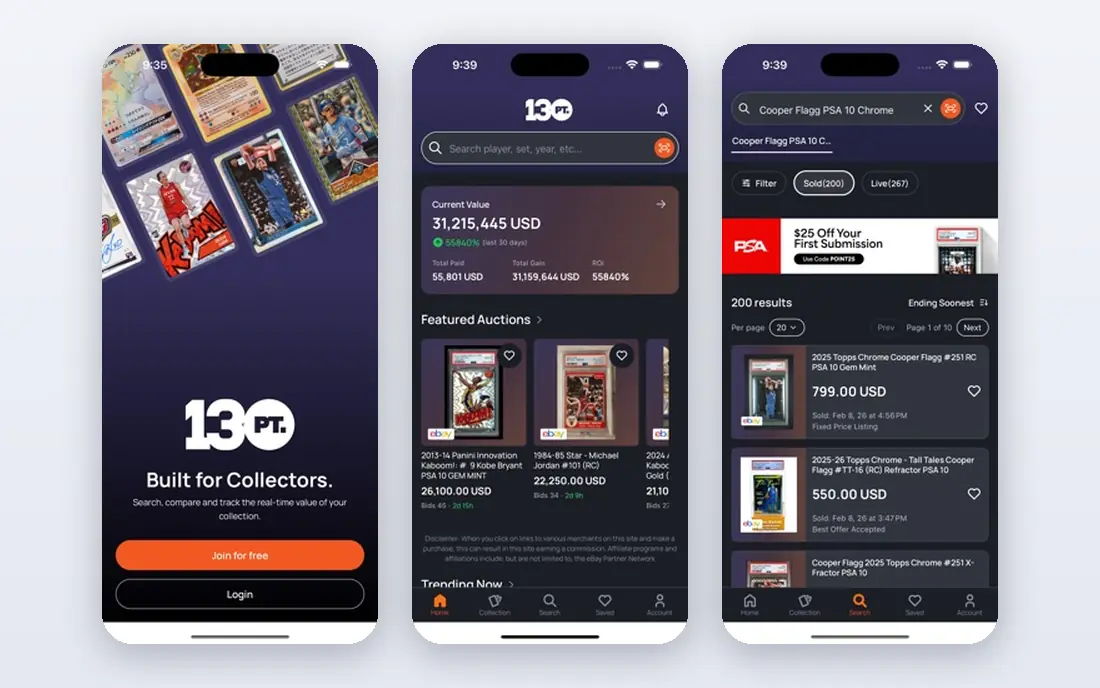
130point is a free website that searches eBay sales history for sports cards, showing sold prices with filters for grade, auction versus buy-it-now, and date range. It is the fastest way to answer what a card actually sold for without digging through eBay's own interface. Collectors use it daily for pricing trades and purchases.
It only covers eBay sales, so cards that trade mostly elsewhere need another source, and it is web-based rather than a dedicated mobile app. For a free, fast value lookup, 130point is the best tool available.
- Free eBay sales history search
- Filters by grade and auction type
- No account needed for basic use
- Web-based rather than a full app
- Data limited to eBay sales
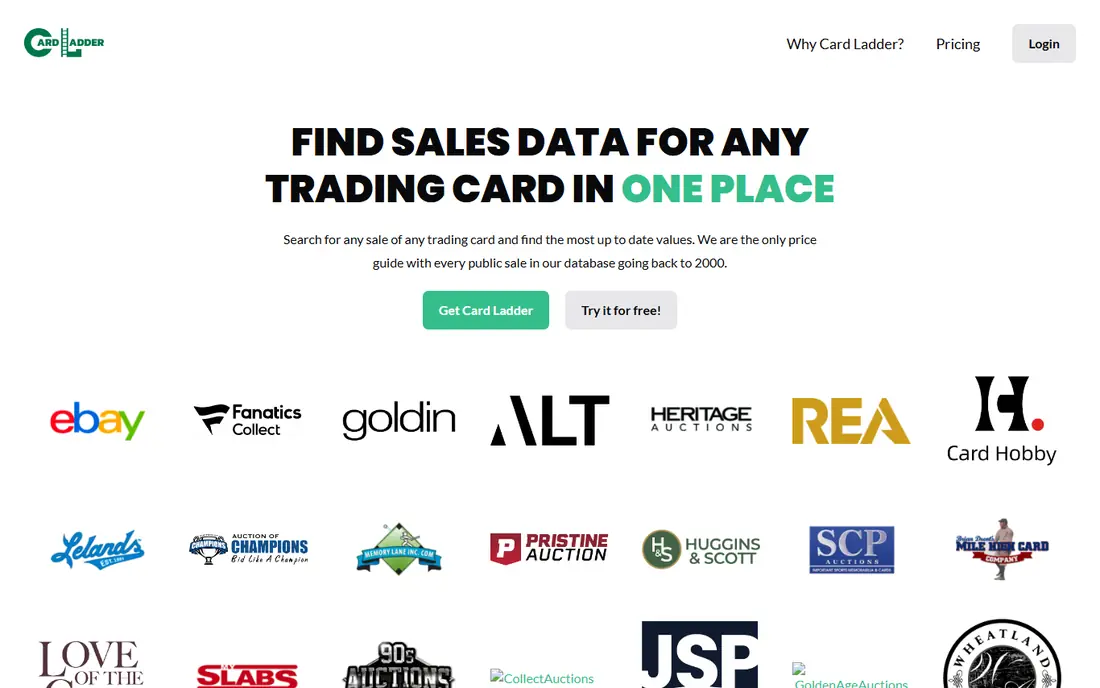
Card Ladder tracks your collection's value over time, charting price changes like a stock portfolio. You add cards, and it pulls sales data to estimate current value, with history charts, population data, and market insights. A free trial covers evaluation, with paid tiers that include full tracking and analytics.
The full experience needs a subscription, with pricing listed on Card Ladder's site. For a collector managing dozens or hundreds of cards who wants to know whether the collection is up or down, Card Ladder's tracking is the most complete on this list.
- Tracks collection value over time with charts
- Large sales database
- Portfolio tools
- Full features need a paid plan
- Pricing varies by tier
Market Movers combines price history, market analytics, and collection tracking, drawing sales data from major marketplaces. It shows price trends, identifies movers, and lets collectors follow specific cards or players. A free trial covers the basics, with paid plans that include deeper analytics and larger collections.
The interface packs in a lot of data, which takes time to learn, and full access needs a subscription. For a collector who trades actively and wants analytics behind decisions, Market Movers offers the deepest market view here.
- Market analytics and price history
- Collection tracking
- Data from major marketplaces
- Paid plans for full access
- Interface takes time to learn
Sports Card Pro offers a price guide built from sales data, plus collection management tools for tracking what you own and what it is worth. A free tier covers basic lookups, with paid plans adding deeper history and larger collections. Its guide format suits collectors who prefer a reference-book style lookup over raw sales lists.
The audience is smaller than eBay-based tools, so coverage can be thinner for obscure cards. For a straightforward price guide with collection tracking, Sports Card Pro is a solid, affordable option.
- Price guide with sales data
- Collection tools
- Free tier available
- Smaller audience than eBay-based tools
- Some features need a paid plan
Beckett has published card price guides for decades, and its online guide covers graded and ungraded values across sports. The same company grades cards, so its values connect directly to the grading scale collectors use. A free tier covers basic browsing, with subscriptions that include the full price guide.
Guide values can lag fast-moving markets, since they update on a schedule rather than live sales, so confirm a hot card against eBay sold listings too. For graded vintage cards and long-term reference values, Beckett remains a trusted name.
- Long-running price guide brand
- Graded card values
- Grading services in the same company
- Full price guide needs a subscription
- Values can lag fast-moving markets
PSA's app is free and centers on certification verification. Enter a cert number or scan a label, and it confirms the card, grade, and population data, which matters because value swings sharply between grades. PSA also shows price data for graded cards and auction results, helping owners of slabbed cards track worth.
It only covers PSA-graded cards, so raw cards need another tool. For anyone buying, selling, or holding graded cards, verifying the cert in the PSA app is a basic safety step before trusting any price.
- Free certification verification
- Population reports
- Price data for graded cards
- Only covers PSA-graded cards
- Not a general price guide
CollX lets you point your phone camera at a card to identify it and see an estimated value, then track it in a collection. The free tier covers scanning and basic tracking, with a premium tier adding deeper features. For sorting a box of cards or checking a card at a show, scanning beats typing names into a search box.
Accuracy varies with lighting, glare, and card condition, and estimated values should be confirmed against sold listings before a deal. For fast identification and rough values, CollX is the most convenient scanner here.
- Scan a card with your camera to identify it
- Free tier
- Collection tracking
- Scan accuracy varies with lighting and card condition
- Values need confirmation
Ludex scans cards with your phone camera and returns an estimated value from sales data, with collection tracking built in. The free tier covers scanning and basic collections, while a premium tier adds advanced features. Its speed suits card shows and shops, where checking a card quickly matters more than a deep analysis.
Estimates can miss condition details that change value, like centering or surface wear, so confirm important cards against sold listings and grading standards. For a quick scan-and-price workflow, Ludex is a strong, fast option.
- Fast photo scanning
- Value estimates from sales data
- Collection tools
- Estimates can miss condition details
- Premium features need a subscription
How we picked these
We compared official feature pages, pricing pages, and app listings for tools that value sports cards today. We favored tools grounded in real sales data over asking prices, and we kept scanning, tracking, and guide tools separate in our thinking, since they solve different problems. Prices are the standard published rates from each vendor's own site, and where pricing is tiered or custom we say so rather than guessing.
What to check before you choose
Start with what you need the value for. A seller needs sold listings, a collector needs tracking, and a show buyer needs fast scanning. One tool rarely covers all three well, so most serious collectors use two: a sales source and a tracker.
Always compare sold listings
Guide prices and estimates are starting points, not final values. Before buying or selling a card worth real money, check several recent sold listings for the same card, grade, and condition. A single sale, especially an auction with few bidders, can mislead badly.
Condition and grade change everything
The same card can be worth ten times more in gem mint than in played condition, and grading adds its own premium. Scanner estimates often assume average condition, so inspect centering, corners, edges, and surface before trusting a number.
Track your collection honestly
A collection tracker is only useful if entries match reality, including grade and condition. Record purchase prices too, since knowing what you paid separates a good collection from a good story. Update values regularly, since card markets move fast.
Frequently asked questions
What is the best app for sports card values?
eBay sold listings are our pick for the most honest value check, since they show what buyers actually paid. 130point makes those sales searchable free, while Card Ladder tracks a collection's value over time. For a single app, start with eBay, then add a tracker if you collect seriously.
What is the best card value app for baseball cards?
The same tools cover baseball cards well, since eBay, 130point, and Beckett all handle baseball deeply. Beckett's long history in baseball guides adds depth for vintage cards, while PSA verification matters for graded stars. Check sold listings for the specific year and set before trusting any guide.
What is the best app for pricing sports cards by photo?
CollX and Ludex both scan cards with your phone camera and return estimated values. CollX is slightly more collection-focused, while Ludex emphasizes speed. Confirm any scan-based value against sold listings, since scans can miss condition details.
What is the best sport card scanner app?
CollX and Ludex lead on scanning, with free tiers for both. CollX suits collectors who want scanning plus collection tracking, while Ludex suits fast checks at shows. Neither replaces a careful condition check for valuable cards.
How do I check sports card prices for free?
Use eBay sold listings or 130point, both free, to see what a card actually sold for recently. PSA's app is free for graded card verification, and CollX and Ludex offer free scanning tiers. For a valuable card, combine two free sources before deciding.
Are sports card values in apps accurate?
Apps grounded in sold listings are the most accurate, while guide prices and scan estimates lag or approximate. Condition, grade, and market timing all shift values, so treat any single number as an estimate. For a sale, recent sold listings for the exact card and grade are the closest thing to a true price.
Sources we checked (9)

Online Jobs is an independent blog about careers, online work, learning new skills and the tools that help people earn. More about us.
Keep reading
All posts
Who Is the Best Company to Get Travel Insurance
Compare the best travel insurance companies, including World Nomads, Allianz Travel, SafetyWing and AXA, with coverage types, limits and who each suits.

Top AI Financial Software
Searching for top AI financial software? We compared 9 AI finance tools for AP, spend, close, forecasting and bookkeeping to help teams choose wisely.

Quicken Alternatives
Compare the best quicken alternatives for Mac, Windows, and small business owners, from Monarch Money and YNAB to Copilot, Tiller, and Banktivity in 2026.