Best App for Business Expenses in 2026: 8 Apps Compared

How we put this together: we compare official feature and pricing pages, app store listings, privacy policies and public user reviews. Prices change, so check the provider's site before you pay.
Key takeaways
- This is not financial advice, and tax rules vary, so check with your accountant before changing how you record deductible expenses.
- Card based apps such as Ramp and Brex offer free core tiers, but they require you to use their corporate card.
- Standalone apps such as Expensify and Zoho Expense suit firms that want to keep their existing cards and banks.
- Receipt scanning, approvals and accounting sync matter more than a long feature list, because those steps decide whether expenses are recorded on time.
- Free tiers are real for small teams, but check user caps, receipt limits and whether approvals are included before you rely on them.
Quick comparison
| Name | Who it suits | Starting price | Free option | |
|---|---|---|---|---|
 Ramp | Free cards plus expenses | Free | Yes | Visit |
 Brex | Startups and global teams | Free | Yes | Visit |
 Expensify | Keeping your current cards | $5 per member per month | Yes | Visit |
 Zoho Expense | Budget teams and Zoho users | See website | Yes | Visit |
 Navan | Travel plus expenses | See website | Yes | Visit |
 BILL Spend and Expense | Teams using BILL | Free | Yes | Visit |
 Fyle | Real time card expense control | See website | Free trial | Visit |
 SAP Concur | Large enterprises | See website | Free trial | Visit |
The best apps for business expenses
A good business expense app captures receipts, applies policy, routes approvals and syncs clean data to your accounting system, so finance teams spend less time chasing paper. We compared official pricing pages, feature lists and accounting integrations, with weight given to receipt capture, card controls, approvals and sync quality.
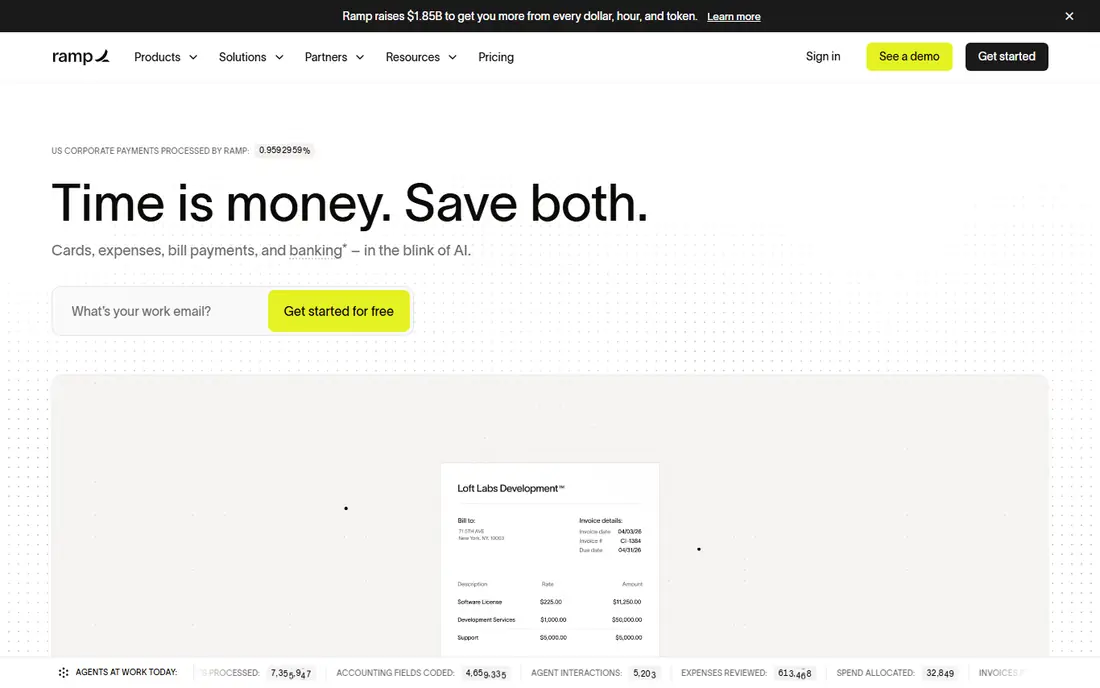
Ramp is our pick for startups and growth firms that are happy to switch cards. Its free tier gives corporate cards, expense management and bill pay, with automation that matches receipts, codes transactions and flags policy issues. Real time controls let managers set limits by employee, vendor or category, which prevents overspend rather than reporting it later.
The catch is the card requirement. Ramp works best when spending runs through Ramp cards, so firms with existing card programs or strict banking rules may not want to switch. Plus adds advanced features at a per user price plus a platform fee, so check the Plus total for your team size. For card ready startups, Ramp offers a lot for no subscription cost.
- Free core tier with corporate cards
- Strong automation for receipts and coding
- Real time spend controls
- Requires Ramp cards for the full benefit
- Plus tier adds per user and platform fees
- Eligibility and credit checks apply
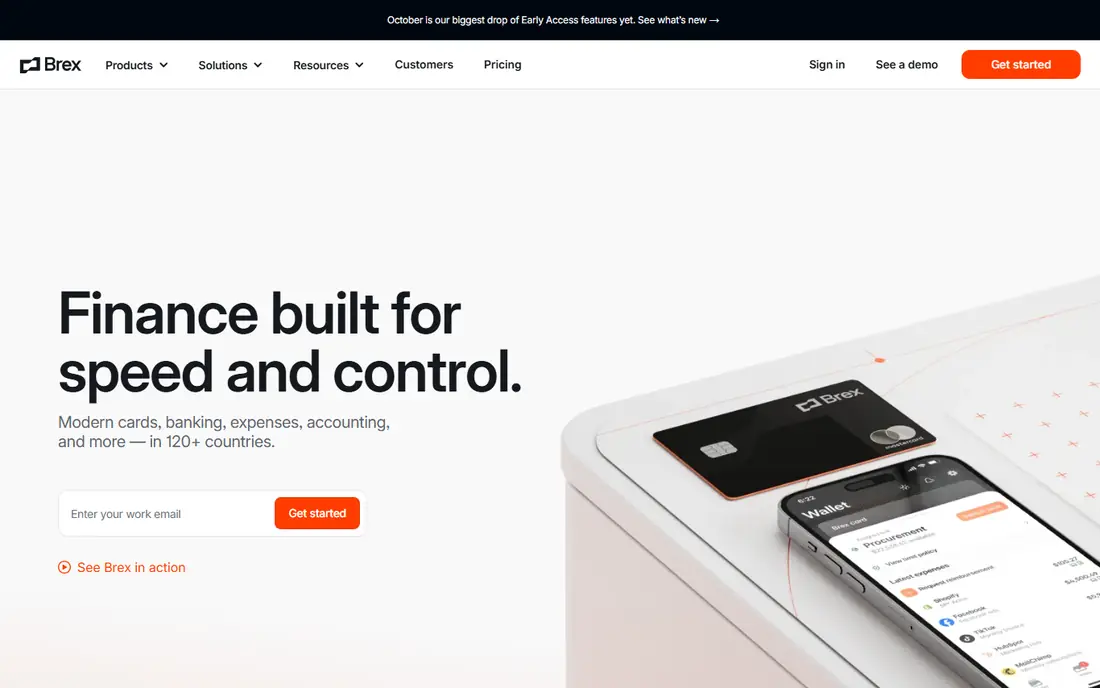
Brex suits funded startups and global teams that want cards, banking style features and expense controls in one place. Its Essentials tier is free, with corporate cards, spend limits and receipt capture, while Premium adds advanced controls and rewards at a per user price. Multi currency support helps teams that spend across countries.
Like Ramp, Brex needs you to use its cards, so it is not a fit for firms that must keep an existing card program. Eligibility, credit and banking rules also apply, and they vary by company stage and location. If you are starting fresh or can switch cards, Brex is a strong, low cost way to control spend from day one.
- Free Essentials tier with cards and spend controls
- Global spend and multi currency support
- Clean mobile receipt capture
- Requires Brex cards
- Premium adds per user cost
- Banking and credit eligibility apply
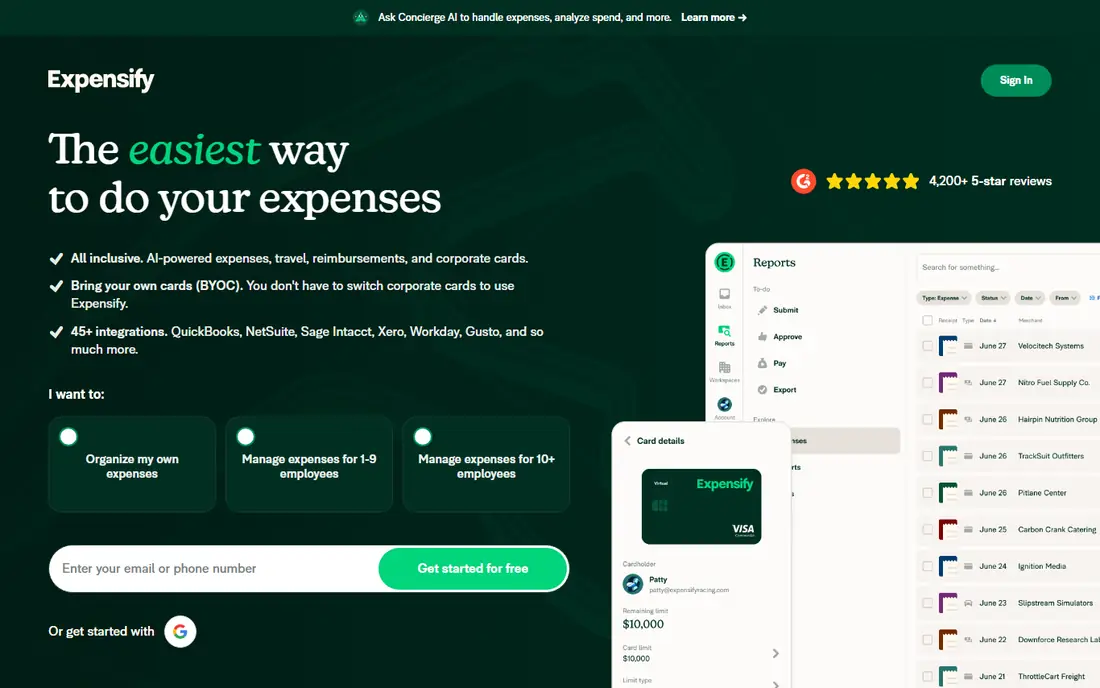
Expensify is the classic expense app for firms that do not want to change cards. You keep your bank and card program, connect accounts, scan receipts, build reports and reimburse staff, with accounting sync to common systems. SmartScan reads receipts and codes many expenses automatically, which cuts manual entry for frequent travelers.
Pricing is per active member, so only staff who submit expenses in a month count, which helps seasonal teams. Advanced policy controls, approvals and integrations sit on higher tiers, so check which tier matches your approval workflow. For firms that value card freedom over a free card bundle, Expensify remains a practical choice.
- Works with your existing cards and banks
- Strong receipt scanning and SmartScan
- Familiar expense reports and reimbursements
- Paid tiers are per active member
- Advanced controls need higher tiers
- Card based rivals offer more free automation
Zoho Expense is the budget pick for small teams, especially those already using Zoho Books. Its free version covers a tiny team, and paid tiers are low cost, with receipt scanning, approvals, mileage tracking and accounting sync. For a firm of three to twenty staff, Zoho Expense gives a proper expense workflow without a card switch.
Card based control is the gap. Zoho Expense tracks expenses well, but it does not offer the same real time card limits and instant spend blocking as Ramp or Brex, because it is not built around its own card. If your main need is clean reports and reimbursements on a tight budget, Zoho Expense is excellent. If you need to stop overspend at the card, look at a card platform.
- Free version for up to three users in past listings
- Low paid pricing
- Good sync with Zoho Books and other accounting tools
- Free tier caps users and features
- Advanced automation needs paid tiers
- Card controls are weaker than Ramp or Brex
Navan, formerly TripActions, suits firms where travel is a large share of spend. Booking flights and hotels in the same app as expenses means travel costs flow into expense reports automatically, with policy applied at booking time. That reduces the classic problem of travel booked outside policy and expensed weeks later.
For firms that rarely travel, Navan is more platform than needed, and its pricing depends on expensing user counts and plan details. Check the current free user offer and the per user price for your team, because travel and expense plans are sold separately in some listings. If travel matters to your budget, Navan is worth a demo. If it does not, a simpler expense app will cost less.
- Travel booking and expenses in one app
- First expensing users free for smaller firms in past listings
- Strong policy controls for travel
- Expense pricing depends on user count and plan
- Travel focus may be more than non travel firms need
- Setup takes planning
BILL Spend and Expense, formerly Divvy, gives small teams free employee cards with budgets and expense tracking, when they use BILL cards. It suits firms already using BILL for accounts payable, because spend, approvals and accounting data sit in one system. Budget controls by team, vendor or category help managers see spend before it happens.
The limit is the same as other card platforms: you need to use BILL cards to get the full benefit, and some features depend on your wider BILL plan. Firms that do not use BILL for payables can still use Spend and Expense, but the integration benefit is smaller. For BILL users, it is a natural, low cost addition.
- Free Spend and Expense tier with BILL cards
- Budgets and approvals built in
- Good fit if you already use BILL for payables
- Full benefit needs BILL cards
- Accounting sync and features depend on your BILL plan
- Less travel depth than Navan
Fyle is a good middle path for firms that want real time card data without switching cards. It connects to existing corporate cards, pulls transactions in real time, prompts staff for receipts, and syncs coded expenses to accounting systems. That combination suits finance teams that want card visibility but cannot change card providers.
Pricing is less transparent than Expensify or Zoho Expense, so get a quote for your user count and card volume. Fyle is also less widely known, which means fewer public reviews to compare, though its integrations with major accounting tools are solid. If card freedom and real time feeds are both priorities, Fyle deserves a trial.
- Works with existing cards
- Real time expense feeds from card transactions
- Strong integrations with accounting systems
- Pricing is quote led in many listings
- Smaller brand than Expensify
- Setup needs card feed configuration
SAP Concur is the enterprise standard for travel, expense and invoice management. It handles complex policies, multi entity structures, audit trails and global compliance in a way that small business apps cannot, and it integrates with major ERP systems. For a large firm with thousands of travelers and strict audit needs, Concur is often the safe choice.
Small firms should not start here. Pricing is quote based, implementation takes time and internal resources, and the platform assumes a level of policy complexity that most small teams do not have. If your firm is large, regulated or multi national, Concur is worth its cost. If you have under fifty staff, Ramp, Expensify or Zoho Expense will serve you better.
- Deep travel, expense and invoice workflows
- Strong policy, audit and multi entity support
- Wide enterprise integrations
- Quote based pricing
- Implementation is heavy
- Far more platform than a small firm needs
How we picked these
We compared official pricing pages, feature lists and accounting integrations, and we favored apps that are still operating and that state free tier limits and card requirements plainly. We did not claim hands on testing, and we did not treat a free tier as free for every firm, because card based free tiers require a card switch and standalone free tiers cap users.
We also added a short disclaimer because expense recording affects taxes and audits. This guide helps you compare tools, but it does not replace advice from your accountant about deductible expenses, record keeping or policy design.
What to check before you choose
Decide card switch or card freedom first
This single choice narrows the list fast. If you can switch cards, Ramp, Brex and BILL offer strong free tiers. If you must keep your cards, shortlist Expensify, Zoho Expense and Fyle. Do not compare a card platform and a standalone app on price alone, because they solve different problems.
Test receipt capture on real receipts
Scan crumpled, faded and foreign currency receipts during a trial, not just clean hotel bills. Check how the app codes vendors, handles mileage and splits a receipt across categories. A tool that fails on real receipts will create manual work for finance every week.
Check approvals and accounting sync
Map your approval chain, including manager, finance and policy exceptions, and test it with a real expense. Then test the sync to your accounting system, including categories, departments and tax codes. A clean sync saves hours at month end, while a messy sync creates a new reconciliation job.
Count active users, not headcount
Some apps bill per active member who submits expenses in a month, while others bill per seat regardless of use. Count how many staff actually expense each month, including seasonal staff, and model both pricing models. The cheaper headline price is not always cheaper for your pattern.
Frequently asked questions
What is the best app for business expenses for small business?
Ramp and Brex are strong if you can use their cards, while Expensify and Zoho Expense suit firms that want to keep existing cards. Zoho Expense is the cheapest standalone start, Expensify is the most familiar, and Ramp offers the most automation for free with its cards.
Is there a free app for business expenses?
Yes. Ramp, Brex and BILL offer free core tiers with their cards, and Zoho Expense offers a free version for up to three users in past listings. Free tiers have limits on users, features or card requirements, so check the current terms for your team size before relying on them.
Do I need a corporate card to use an expense app?
No, but card apps work best with their own cards. Expensify, Zoho Expense and Fyle work with your existing cards and banks, while Ramp, Brex and BILL give their best value when spending runs through their cards. Choose based on whether you can switch cards.
How do expense apps sync with accounting software?
Most apps sync coded expenses, receipts and approvals to QuickBooks, Xero, NetSuite and other systems, either directly or through integrations. Check that your categories, departments and tax codes map correctly, and test a sync with real expenses during a trial before you commit.
Can expense apps track mileage?
Yes, most apps here include mileage tracking, either by manual entry, GPS or map based distance. Check whether mileage is included in your tier and whether rates match your company policy and local tax rules. Your accountant can confirm the correct rate and record keeping for your region.
What should I keep for tax records?
Keep receipts, expense reports, approval records and accounting sync logs for the period your tax authority requires, which varies by country and expense type. An expense app helps organize these records, but it does not replace professional tax advice, so confirm retention rules with your accountant.
Sources we checked (8)

Online Jobs is an independent blog about careers, online work, learning new skills and the tools that help people earn. More about us.
Keep reading
All posts
Who Is the Best Company to Get Travel Insurance
Compare the best travel insurance companies, including World Nomads, Allianz Travel, SafetyWing and AXA, with coverage types, limits and who each suits.

Top AI Financial Software
Searching for top AI financial software? We compared 9 AI finance tools for AP, spend, close, forecasting and bookkeeping to help teams choose wisely.
Quicken Alternatives
Compare the best quicken alternatives for Mac, Windows, and small business owners, from Monarch Money and YNAB to Copilot, Tiller, and Banktivity in 2026.