Best AI Mode Rank Tracker Software in 2026: 9 Tools Compared

How we put this together: we compare official feature and pricing pages, app store listings, privacy policies and public user reviews. Prices change, so check the provider's site before you pay.
Key takeaways
- AI Mode and AI Overviews need their own tracking, because a traditional ranking does not show whether an AI answer cites your site.
- SE Ranking, Semrush, and Nightwatch suit teams that want AI visibility inside a wider SEO platform.
- Advanced Web Ranking, Keyword.com, and Rankscale suit teams that want broader coverage across many AI engines.
- Start with a small prompt set tied to real customer questions, then expand once you trust the data.
Quick comparison
| Name | Who it suits | Starting price | Free option | |
|---|---|---|---|---|
 SE Ranking | AI visibility plus classic SEO | See website | Free trial | Visit |
 Semrush | All-in-one AI visibility | See website | Free trial | Visit |
 Nightwatch | Precise local and AI tracking | See website | Free trial | Visit |
 Advanced Web Ranking | Broad AI engine coverage | See website | Free trial | Visit |
 Keyword.com | Local plus AI visibility | See website | Free trial | Visit |
 Rankscale | Many AI engines in one view | See website | Free trial | Visit |
 Otterly AI | Simple AI Overview tracking | See website | Free trial | Visit |
 Profound | Enterprise AI visibility | See website | No | Visit |
 ZipTie.dev | Citation gap analysis | See website | Free trial | Visit |
The best ai mode rank tracker software
Google AI Mode and AI Overviews change what ranking means. A page can rank well in classic results yet never appear in the AI answer a searcher reads first. We looked for tools that track citations, mentions, and visibility in AI answers, alongside traditional rankings where that helps.
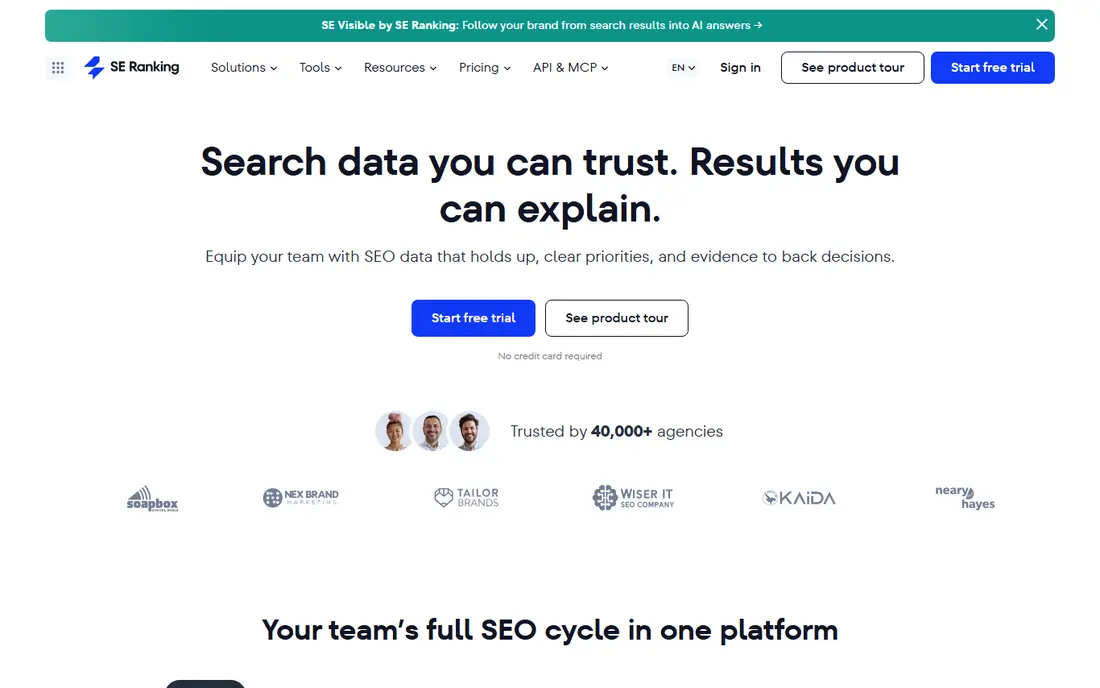
SE Ranking appeals to teams that do not want another separate login for AI search. Its AI visibility features sit next to classic rank tracking, so you can see a traditional position and an AI citation picture in one account. That pairing helps when a page slips in AI answers but holds its classic rank, because the team can spot the gap without stitching reports together. The limit to watch is prompt volume. AI tracking is priced around prompts checked, not just keywords, so a broad question set can push you to a higher plan. Start with the questions that drive revenue or support load, prove the reporting habit, and only then expand the prompt list. For small and mid-sized teams, that discipline keeps SE Ranking good value.
- Combines AI visibility tracking with rank tracking, audits, and backlink tools
- Share of voice views help compare brands
- Reporting suits agencies
- AI prompt limits vary by plan, so large prompt sets cost more
- Very deep AI analysis may need a specialist tool as well
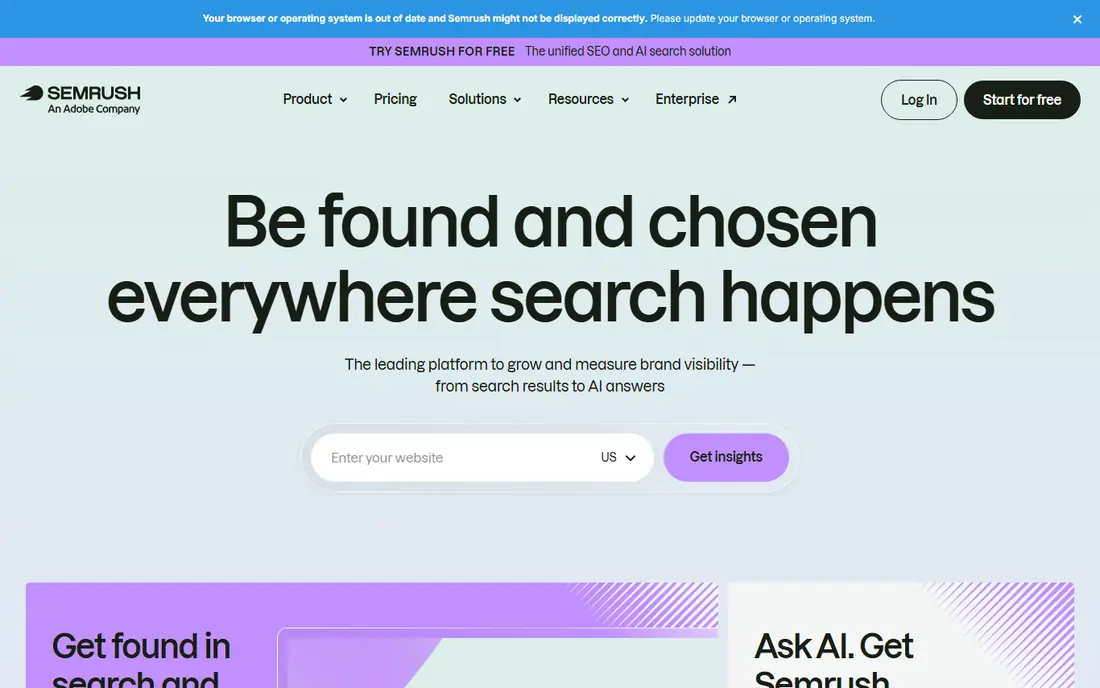
Semrush is the broad platform on this list. Alongside keyword research, site audits, and classic rank tracking, its AI visibility tools track brand mentions across AI engines and help teams see how often they appear in AI-generated answers. That breadth suits marketing teams that already use Semrush for content and competitor work, because AI data joins a familiar workflow. The trade is focus and cost. A team that only needs AI Mode tracking may pay for a much larger toolkit than it uses, and the interface holds many features that take time to learn. If your team already lives in Semrush, adding AI visibility there makes sense. If not, a dedicated AI tracker may give a clearer first step at a lower starting cost.
- Wide SEO toolkit plus AI visibility features
- Brand mention and sentiment views
- Competitor comparison is strong
- Price and breadth can overwhelm small teams
- AI features sit inside larger plans
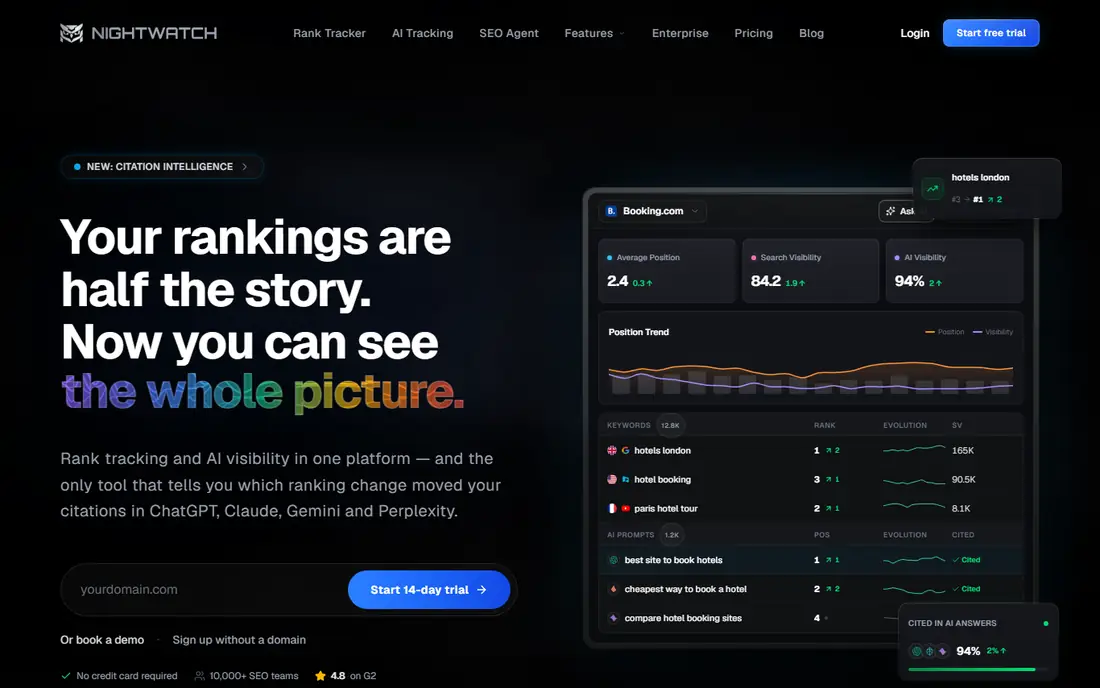
Nightwatch built its name on precise rank tracking, and its AI features extend that strength to AI search surfaces. Teams can track classic rankings by location with fine detail, then check AI visibility for the same brand in ChatGPT, Google AI Mode, and AI Overviews. That combination helps local and multi-location businesses, where an AI answer in one city may differ from the answer in another. Nightwatch is less of an all-in-one content platform, so teams that want keyword research, writing help, and audits in one place may still need other tools. As a tracker, though, its focus is a benefit: reports stay readable, location detail stays strong, and the AI views do not get buried under unrelated features. Check prompt and location allowances before committing to a large tracking set.
- Precise location tracking down to local areas
- AI search visibility for ChatGPT, AI Mode, and AI Overviews
- Clean reporting and integrations
- Less of a full content suite than Semrush
- AI prompt allowances need checking against your question list
Advanced Web Ranking, often called AWR, stands out for breadth. Its vendor documentation describes brand visibility tracking across Google AI Mode, AI Overviews, ChatGPT, Perplexity, Claude, and Gemini in one dashboard. For agencies and larger teams that must report AI presence across many engines, that single view saves time compared with checking each engine separately. The product feels built for people who already understand rank tracking, so beginners may need a short learning period. Keyword volume also drives price, which matters for portfolios with thousands of terms. If broad AI engine coverage is your main need, AWR deserves a trial with your real prompt set, because coverage claims only matter if they match the engines your customers actually use.
- Claims native tracking across several major AI engines
- Long history in rank tracking
- Agency reporting and API options
- Interface feels more technical than some rivals
- Pricing rises with keyword volume
Keyword.com pairs local rank tracking with AI visibility, which suits brands with many locations. A multi-location business can see classic Google positions by city or ZIP area, then check AI answer visibility across engines such as ChatGPT, Perplexity, Gemini, Copilot, AI Overviews, and AI Mode. Share of voice views help compare a brand with competitors in the same AI answers. Credit counting needs care. Tracking the same keyword on desktop and mobile can use more credits, so a dual-device set halves the effective allowance. White-label reporting also costs extra, which raises the real price for agencies. Plan the keyword and device mix before buying, and use the trial to confirm that local detail and AI coverage match your locations.
- City and ZIP-level local tracking
- AI visibility across several engines
- Share of voice and client reporting
- Desktop and mobile tracking can use separate credits
- White-label reporting is a paid add-on
Rankscale aims at teams that want the widest engine list in one place. Its AI rank tracker reports visibility scores, rankings, sentiment, mentions, citations, and share of voice, with historical trends to show change over time. Prompt research and citation analysis help teams find where their content is missing from AI answers, and page audits add technical checks alongside visibility data. That breadth can feel like a lot for a founder tracking twenty prompts. The platform makes most sense when your audience uses a mix of engines, including smaller ones beyond the big names, or when you manage many brands and need one dashboard. Smaller teams should trial it with a focused prompt set and ignore features they will not use weekly, rather than judging it on feature count alone.
- Tracks visibility across many AI engines
- Visibility score, sentiment, mentions, and citations
- Prompt research and page audits
- Full platform can feel large for a small team
- Value depends on needing long-tail engine coverage
Otterly AI suits teams that want a clear answer to one question: are we showing up in AI Overviews? Its focused design makes setup faster than a full SEO platform, and the reports centre on AI visibility rather than burying it inside dozens of other modules. For a small business or a content team starting with AI search, that clarity helps build a weekly checking habit. The limit is scope. Otterly AI is not a replacement for a full rank tracker, site auditor, or backlink tool, so teams with wider SEO needs will still need those elsewhere. We would use it as a first AI visibility step, or as a companion to a classic tracker, and judge it on whether its AI Overview data matches what your team sees in real searches.
- Focused on AI Overview and AI search visibility
- Simpler setup than a full SEO suite
- Useful for quick brand checks
- Narrower than all-in-one platforms
- Larger teams may need classic rank tracking elsewhere
Profound is built around AI search as the main job, not as an add-on. It tracks brand presence across AI engines, supports persona-based views that reflect different customer types, and gives detailed competitor comparisons for teams managing a large brand. That focus helps enterprise SEO and brand teams who must report AI visibility to leadership with consistent definitions. For a small site, Profound is likely more platform than needed, and pricing reflects its enterprise positioning. The value appears when AI search is a board-level topic, when many stakeholders need the same visibility numbers, or when persona differences change the answers customers see. Smaller teams can learn from its approach, then pick a lighter tool until their prompt volume and reporting needs grow.
- Built for AI search visibility at enterprise scale
- Persona-based tracking
- Detailed brand and competitor views
- Pricing and setup suit larger teams
- Overkill for a small site with a handful of prompts
ZipTie.dev appeals to content teams that want to know not just whether they appear, but why they do not. Its citation gap analysis highlights where AI answers cite competitors instead of your pages, which gives writers a concrete fix list rather than a vague visibility score. That angle suits SEO consultants and content teams working on expertise and source quality. As a specialist tool, ZipTie.dev will not replace classic rank tracking or a full audit suite. Its value also depends on follow-through: a gap list only helps if someone updates the page, adds sources, or improves the answer it gives. Use it when your AI problem is citations and content depth, and pair it with a broader tracker if you also need local rankings and technical audits.
- Focus on citations and content gaps in AI answers
- Useful for Perplexity and Gemini tracking
- Clear action hints for content teams
- Narrower engine and SEO scope than larger suites
- Needs a content plan to act on the gaps it finds
How we picked these
We compared official feature pages, pricing pages, and public product documentation for tools that name Google AI Mode or AI Overviews in their tracking, rather than tools that only track classic rankings. We favoured products with a clear AI visibility view, prompt or citation tracking, and ongoing maintenance, and we spread the list across all-in-one platforms and dedicated AI trackers. Where pricing could not be confirmed from the vendor site at the time of writing, we listed it as See website. We did not claim hands-on testing, and we treated vendor coverage claims as claims to verify in a trial with your own prompts.
How to choose the right option
Define prompts from real questions
AI tracking starts with prompts, not keywords. List the questions customers actually ask, including comparison, pricing, and how-to questions, then add competitor and brand prompts. A tool that tracks fifty relevant prompts well beats a tool that tracks five hundred generic terms with no link to revenue or support.
Check citations, not just scores
A visibility score is useful, but a citation list is actionable. During a trial, check whether the tool shows which pages AI answers cite, how that changes over time, and whether competitors appear instead. If you cannot trace a score back to a cited page, you will struggle to fix it with content changes.
Keep classic rankings alongside AI data
AI answers still draw on web content, and classic rankings help explain sudden AI changes. Pick a setup where AI visibility and classic positions can be compared, even if that means two tools with a shared report. Dropping classic tracking entirely makes AI drops harder to diagnose.
Frequently asked questions
What is the best ai mode rank tracker software for a small business?
A small business usually does best with a focused tracker or an AI module inside a tool it already uses. SE Ranking, Nightwatch, and Otterly AI are good starting points, depending on whether you also need local tracking. Start with twenty to fifty prompts tied to real customer questions, and expand only when the weekly review habit is solid.
Does Google AI Mode tracking replace classic rank tracking?
No. AI Mode tracking shows whether AI answers mention or cite your brand, while classic tracking shows where your pages rank in standard results. Both matter, because AI answers often draw on pages that also rank well. Use AI data to guide content and citation work, and classic data to guide technical and on-page SEO.
How many prompts should I track?
Start small. Twenty to fifty prompts can reveal clear patterns for a small site, while an agency may need hundreds across clients and locations. More prompts cost more and create more noise, so add prompts when they link to a service, location, or customer question you actually serve. Remove prompts that never lead to a content decision.
Why do AI answers differ by location or phrasing?
AI answers can vary by location, device, prompt wording, and the sources available at that moment. That is why precise location tracking and prompt history matter. Track the same core prompts over time, note major changes, and avoid judging a tool on a single AI answer seen once.
Can these tools improve my AI visibility directly?
No tool can force an AI answer to cite your site. Tools show where you appear, which competitors get cited, and where content gaps exist. Improvement comes from clearer pages, better sources, structured answers, and content that directly addresses the prompt. Use the tracker to measure that work, not as a substitute for it.
Sources we checked (9)

Online Jobs is an independent blog about careers, online work, learning new skills and the tools that help people earn. More about us.
Keep reading
All posts
Best Search Visibility Software
Looking for the best search visibility software? We compared 9 tools for rank tracking, keyword research, audits and AI search visibility in 2026 today.
Best SEO Tracking Software
Looking for the best SEO tracking software in 2026? We compare nine rank trackers for keywords, SERP features and reporting, so you pick the right tool.
Best Enterprise SEO Tools
We compared the best enterprise SEO tools on rank tracking, crawling, backlinks, content tools, integrations and enterprise controls for large sites and teams.