Best Search Visibility Software in 2026: 9 Tools Compared

How we put this together: we compare official feature and pricing pages, app store listings, privacy policies and public user reviews. Prices change, so check the provider's site before you pay.
Key takeaways
- Semrush is our pick for teams that need SEO, content and paid search data in one place, with newer AI visibility tracking.
- Ahrefs suits backlink research and competitor analysis, while SE Ranking suits freelancers and agencies that live on client reports.
- Moz Pro suits small teams that want a classic suite at a lower entry price, with domain metrics many teams already know.
- Similarweb suits market and traffic benchmarking, while BrightEdge and Conductor suit larger teams with enterprise reporting needs.
- Search visibility now means classic rankings plus AI answers, so check whether a tool tracks prompts as well as keywords.
Quick comparison
| Name | Who it suits | Starting price | Free option | |
|---|---|---|---|---|
 Semrush | All-in-one SEO and AI visibility | See website | Free trial | Visit |
 Ahrefs | Backlink and competitor research | See website | Yes | Visit |
 Moz Pro | Classic suite for small teams | See website | Free trial | Visit |
 SE Ranking | Freelancer and agency reports | See website | Free trial | Visit |
 Similarweb | Market and traffic benchmarking | See website | Yes | Visit |
 BrightEdge | Enterprise SEO and content | See website | No | Visit |
 Conductor | Enterprise content and reporting | See website | No | Visit |
 Serpstat | Full suite on a smaller budget | See website | Free trial | Visit |
 Mangools | Beginner-friendly keyword research | See website | Free trial | Visit |
The best search visibility software
We compared official feature pages, pricing pages and public reviews to find the best search visibility software for different teams. The list covers all-in-one suites, rank trackers, market tools and enterprise platforms, with a focus on what each tool actually measures.
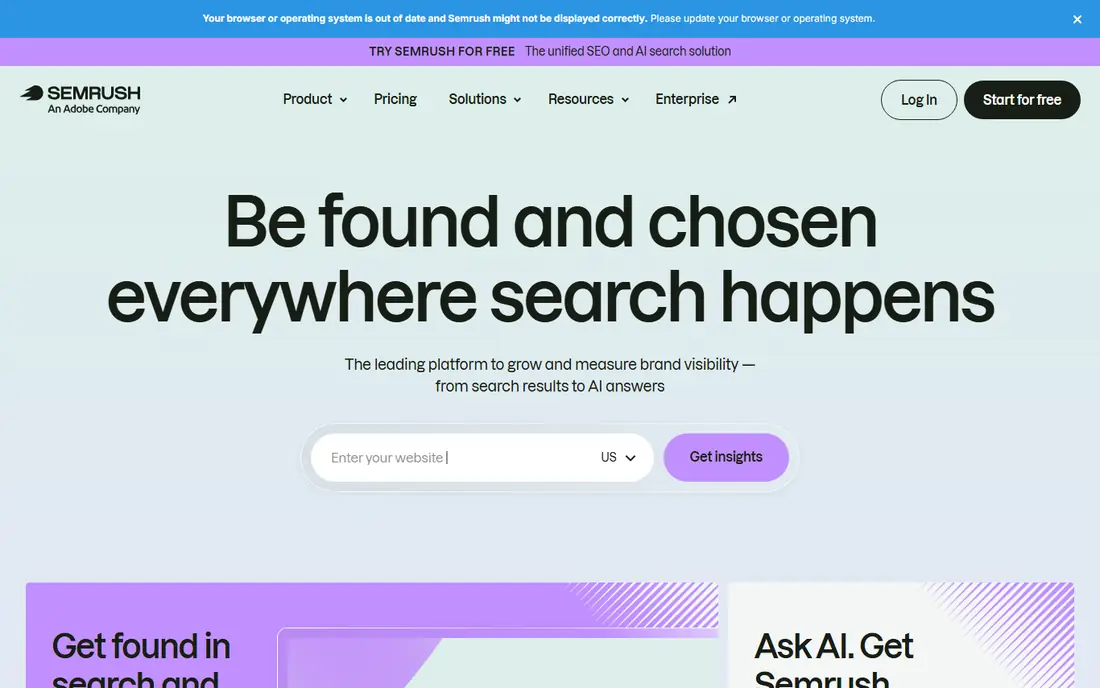
Semrush fits teams that run SEO, content and paid search together. Keyword research, site audits, rank tracking, backlink analysis, competitor paid data and content tools live under one login, and newer plans add AI search visibility tracking for prompts. That breadth is why Semrush tops many best search visibility tools lists for agencies and in-house teams.
Recent pricing comparisons list the SEO plan at $139.95 per month billed monthly, with lower effective monthly prices on annual billing, and a 7-day free trial on some plans. Check the vendor pricing page for the current plan names and limits, since Semrush has changed its lineup through 2026.
The honest catch is cost for small sites. A business tracking one website and researching keywords weekly will use only part of the platform, and cheaper tools below deliver similar core results for that job. Semrush earns its price when SEO, content and paid search are all in play at once.
- Broadest toolset in one login
- Strong keyword database
- AI visibility tracking on newer plans
- Entry price is high for a single site
- Project and keyword limits push upgrades
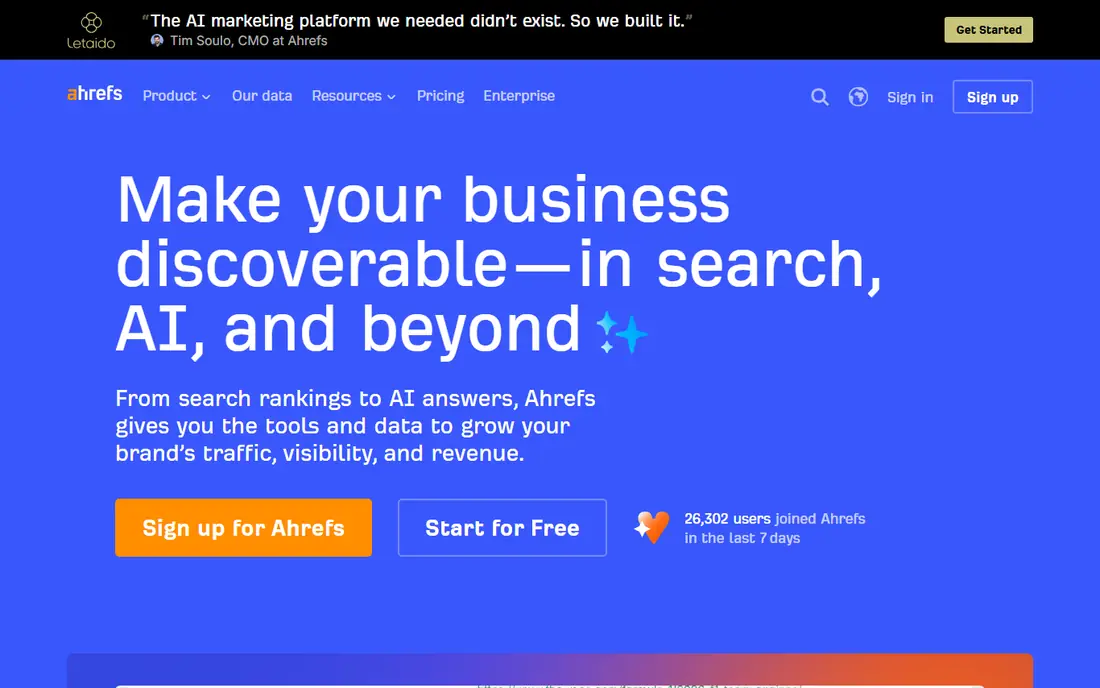
Ahrefs fits SEO professionals who care most about links and competitors. Its backlink index, competitor content gaps and keyword data help you see why a rival ranks, which pages earn links, and where your own site is weak. That link depth is the main reason teams keep Ahrefs even when they use another tool for rank tracking.
Recent comparisons list a Starter plan at $29 per month and a Lite plan at $129 per month billed monthly, with Ahrefs Webmaster Tools offering free access for sites you verify. Check the vendor pricing page, since Starter has no rank tracking in some comparisons and credits govern much of the usage.
The catch is that Ahrefs is a research suite, not a publishing tool. You still need a separate workflow to draft, publish and measure content changes, and credit limits mean heavy users should price their real usage before committing.
- Deep backlink database
- Strong competitor teardown
- Free tools for sites you verify
- Entry suite price is high
- Credits and extra-user fees add up
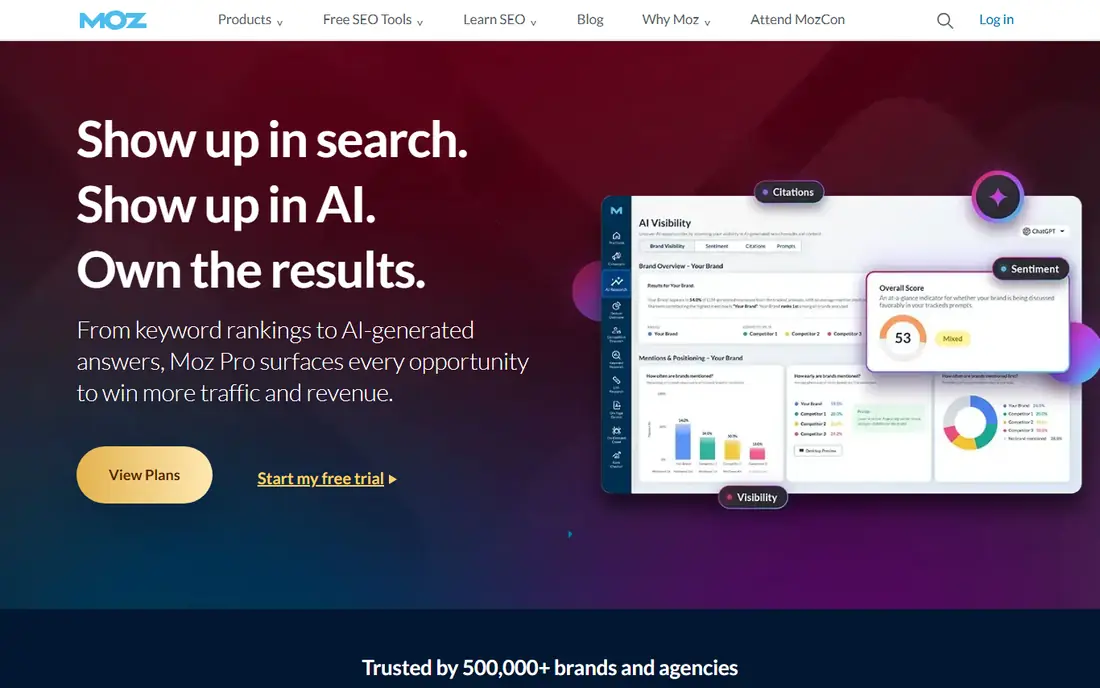
Moz Pro fits small teams that want a classic SEO suite without a steep learning curve. Research, rank tracking, site audits and link metrics sit in a clear interface, and Domain Authority gives teams a familiar shorthand for comparing sites. That simplicity suits beginners and small businesses that do not need every tool in a larger suite.
Recent pricing comparisons list Standard at $99 per month, or $79 per month billed annually, with a Starter tier at $49 per month in some listings. Check the vendor pricing page for the current tiers and tracked keyword limits, since Moz has changed its plan names over time.
The catch is depth. Moz's databases are smaller than Semrush or Ahrefs in many head-to-head reviews, so large agencies may need a second source for link or keyword depth. For a small team tracking a handful of sites, that gap rarely matters.
- Simple interface for beginners
- Domain Authority metrics many teams know
- Rank tracking and audits included
- Smaller keyword and link databases than Semrush or Ahrefs in many comparisons
- Higher tiers needed for larger teams
SE Ranking fits freelancers and small agencies that live on client reports. Rank tracking, site audits, backlink monitoring, keyword research and competitor analysis cover the core agency workflow, and white-label reports let you send clients clean, branded updates without building reports by hand.
Recent comparisons list Core at $129 per month billed monthly, or $103.20 per month billed annually, with a 14-day free trial and no card required in some listings. Check the vendor pricing page for project counts, seats and add-ons, since those limits decide the real price for an agency.
The catch is add-on creep. Extra users, extra projects and extra features can push the monthly bill above the headline Core price. Price your real client count first, then compare SE Ranking with Semrush and Ahrefs on that total.
- Accurate rank tracking in reviews
- White-label client reports
- Good project value for agencies
- Add-ons can raise the final bill
- AI visibility features vary by plan
Similarweb fits teams that need market context, not just their own rankings. It estimates traffic, audience behaviour and competitor share, which helps you see how big a market is, who leads it, and where a rival gets visitors. That market view is different from a classic rank tracker, and it complements a suite such as Semrush or Ahrefs.
Pricing comparisons list a Competitive Intelligence entry plan around $199 per month, with a free tier for basic data. Check the vendor pricing page for the current plan, since Similarweb's tiers and data limits change for different company sizes.
The catch is focus. Similarweb is a market tool first, so teams that mainly need daily rank tracking, audits and keyword research should pick a suite first and add Similarweb only when market benchmarking matters. For a single small site, it is often more than you need.
- Traffic and market benchmarking
- Competitor audience data
- App and web intelligence in one platform
- Entry paid price is high for small sites
- SEO rank tracking is not its main strength
BrightEdge fits large teams and enterprises that manage many pages and need reporting at scale. It combines rank tracking, content recommendations, forecasting and enterprise dashboards, so a large content team can see which pages to update, which topics to cover, and how changes affect visibility. That scale is its main advantage over small-team suites.
Pricing is custom, quoted by the vendor for enterprise contracts, so there is no public entry price to compare directly. Request a quote based on site size, seat count and data needs, and compare the total with Conductor and Semrush enterprise plans.
The catch is fit. BrightEdge is built for enterprises, with pricing and onboarding to match, so freelancers and small teams will find it too expensive and too complex. Pick it only when you manage a large site portfolio and need enterprise reporting.
- Enterprise reporting and forecasting
- Content recommendations tied to search data
- Large-site crawling
- Pricing is custom and enterprise-level
- Overkill for small sites and solo users
Conductor fits large content and SEO teams that need one reporting home. It tracks search visibility, links content performance to search data, and gives teams workflows for briefs, optimisation and reporting. That content focus suits publishers, retailers and enterprises with large editorial calendars.
Pricing is custom, like BrightEdge, and depends on site size and seats. Ask for a demo on your own site data before committing, since enterprise platforms differ most in reporting and workflow, not in headline rank tracking.
The catch is size and cost. Conductor is not a budget tool for a solo blogger or a small agency, and smaller teams will get faster value from SE Ranking, Moz Pro or Ahrefs. Use Conductor when team workflows and enterprise reporting are the bottleneck, not just rankings.
- Content and SEO reporting in one platform
- Workflow tools for large teams
- Enterprise support
- Custom pricing
- Learning curve for smaller teams
Serpstat fits small teams and solo SEOs who want a full suite without paying suite prices. It covers keyword research, rank tracking, site audits, backlink analysis and competitor research in one login, at an entry price below Semrush and Ahrefs in recent comparisons. That value is why it appears in many best tool for search visibility lists for budget users.
Recent comparisons list an Individual plan around $50 to $69 per month depending on billing and source, with a trial that requires a small card check in some listings. Check the vendor pricing page for the current Individual price and limits before buying.
The catch is data depth. Serpstat's keyword and link databases are smaller than the largest suites in some reviews, so teams in competitive markets may still need a second source. For small sites and less competitive niches, that gap is less important than the price saving.
- Full suite at a lower entry price than Semrush or Ahrefs
- Rank tracking, audits and backlink tools included
- Databases are smaller in some comparisons
- Interface feels less polished than rivals
Mangools fits bloggers and small site owners who want keyword research without a complex suite. Its KWFinder tool finds keywords with difficulty scores, SERPWatcher tracks rankings, and the suite adds link and site tools in a clean interface. That focus makes it the best software for search visibility for beginners who mainly need keywords and ranks.
Recent comparisons list Basic around $49 per month billed monthly, or about $29.90 per month billed annually, with a free account option in some listings. Check the vendor pricing page for the current Basic price and tracked keyword limits.
The catch is scale. Mangools does keywords and ranks well, but it lacks the audit depth, paid data and enterprise reporting of Semrush, Ahrefs or Conductor. Use it as a first suite, and move up when audits, link depth or client reporting become the main job.
- Easiest interface on this list for beginners
- Focused keyword tool with rank tracking
- Free account option in listings
- Less depth than full suites
- Not built for large agencies or enterprise reporting
How we picked these
We compared official feature pages and pricing pages, and checked public reviews for how each tool handles rank tracking, keyword research, audits, backlinks and AI visibility. We favoured tools with a clear visibility focus, a usable trial or free tier where offered, and a distinct audience, from solo bloggers to enterprises. Prices in this category change often, so where a price was not confirmed on the vendor page at the time of writing, we marked it as See website and described the plan structure instead.
What to check before you pick search visibility software
Start with the question you need answered. Classic rankings, AI answers, market share and technical audits are different questions, and the best tool for one is not always best for another. Pick the tool that answers your main question daily, then add a second source only if a gap remains.
Check tracked keywords and projects, not just price
Headline prices hide limits. A $29 plan with no rank tracking is not comparable to a $129 plan that tracks 2,000 keywords, and a plan with five projects will not cover an agency with twenty clients. List your sites, keywords and seats first, then compare the plan that actually covers them.
Check AI visibility separately
Search visibility now includes AI answers as well as classic results. Some suites now track prompts, while others sell AI visibility as a separate add-on. If AI answers matter to your brand, check prompt counts, engines covered and whether AI tracking is included in the plan you are pricing, not just in the top tier.
Check data against your own analytics
No third-party tool sees your real clicks as well as your own analytics and Search Console data. Connect Google Search Console where the tool allows it, and compare tool estimates with real impressions and clicks for your own site. Use the tool for trends and competitors, and your own data for final decisions.
Frequently asked questions
What is the best search visibility software?
The best search visibility software for most teams is Semrush, because it covers SEO, content and paid data in one place with newer AI visibility tracking. Ahrefs is better for backlinks, SE Ranking is better for agency reports, and Moz Pro is better for small teams that want a classic suite. Pick by team size and main job, not by headline price alone.
What are the best search visibility tools for small businesses?
For small businesses, Moz Pro, SE Ranking and Mangools are strong picks, since they cover rank tracking and keyword research at lower entry prices than enterprise tools. Ahrefs Starter suits link research on a budget, while Semrush suits teams that also need content and paid data. Start with a trial on your own site before paying.
What is the best tool for search visibility in AI answers?
Semrush, BrightEdge and Conductor all offer AI visibility features, but prompt coverage and pricing differ by plan. Check whether AI tracking is included in the plan you are pricing, how many prompts it covers, and which AI engines it tracks. For a standalone AI tracker, compare prompt price separately from classic rank tracking.
How is search visibility different from rank tracking?
Rank tracking follows your positions for chosen keywords, while search visibility is a broader measure of how often your brand appears in search, including rankings, features, market share and now AI answers. A rank tracker answers where you rank, while a visibility tool also shows how much of the market conversation you own.
Do I need paid search visibility software if I have Search Console?
Search Console is free and shows real clicks and impressions for your own site, which no paid tool can replace. Paid tools add competitor data, keyword research, audits and market estimates that Search Console does not provide. Use both: Search Console for your own truth, and a paid tool for competitors and opportunities.
Which search visibility tool is best for agencies?
SE Ranking suits agencies that need white-label client reports at a workable price, while Semrush and Ahrefs suit agencies that need deeper data and broader toolsets. Check project counts, seats and report limits for your real client list, since those limits decide the true monthly cost more than the headline plan price.
Sources we checked (9)

Online Jobs is an independent blog about careers, online work, learning new skills and the tools that help people earn. More about us.
Keep reading
All posts
Best Enterprise SEO Tools
We compared the best enterprise SEO tools on rank tracking, crawling, backlinks, content tools, integrations and enterprise controls for large sites and teams.
Zoom Alternatives
Zoom alternatives compared for 2026: Google Meet, Microsoft Teams, Webex, Jitsi and more for free calls, large meetings and webinars for teams and classrooms.
Top Rated Poster Maker Software
Top rated poster maker software compared for 2026: Canva, Adobe Express, VistaCreate, PosterMyWall and more for events, sales and classrooms for US users.