Best AI Investment Apps in 2026: 8 Tools Compared

How we put this together: we compare official feature and pricing pages, app store listings, privacy policies and public user reviews. Prices change, so check the provider's site before you pay.
Key takeaways
- AI investment apps fall into three groups: automated portfolios, research assistants, and trading signal tools, and they are not interchangeable.
- Automated portfolios suit hands-off investors, while research tools suit investors who still make their own decisions.
- Fees, minimums, and tax features change the real return, so compare those before judging a tool by its marketing.
- No AI tool can remove market risk, and past performance shown by a vendor is not a promise about future results.
- This is not financial advice; investing carries risk, and you can lose money, including your original investment.
Quick comparison
| Name | Who it suits | Starting price | Free option | |
|---|---|---|---|---|
 Betterment | Goal based automated portfolios | See website | No | Visit |
 Wealthfront | Tax aware automated portfolios | See website | No | Visit |
 Schwab Intelligent Portfolios | Low cost automated portfolios | See website | No | Visit |
 Acorns | Micro investing with round-ups | See website | No | Visit |
 Magnifi | Conversational investment research | See website | Yes | Visit |
 Trade Ideas | Intraday trading signals | See website | No | Visit |
 Tickeron | AI forecasts and pattern tools | See website | Yes | Visit |
 Kavout | Quantitative stock scoring | See website | Yes | Visit |
The best AI investment apps
We grouped these tools by job, not by marketing label. Some build and rebalance a portfolio for you, some help you research a stock, and some generate trading signals. Read each entry for its actual job, because an automated portfolio and a signal tool suit very different investors.

Betterment suits an investor who wants a plan, not a daily trading task. You set a goal, such as retirement or a house deposit, choose a risk level, and the portfolio is built from diversified funds and rebalanced over time. That hands-off structure helps investors who might otherwise delay investing. The trade-off is control. You do not pick individual stocks in the core portfolio, and the advisory fee, while modest, still reduces returns compared with a self managed index fund. Betterment fits long term, goal based investors better than active traders.
- Goal based planning
- Automatic rebalancing
- Tax-loss harvesting on some plans
- Advisory fee applies
- Less control for stock pickers
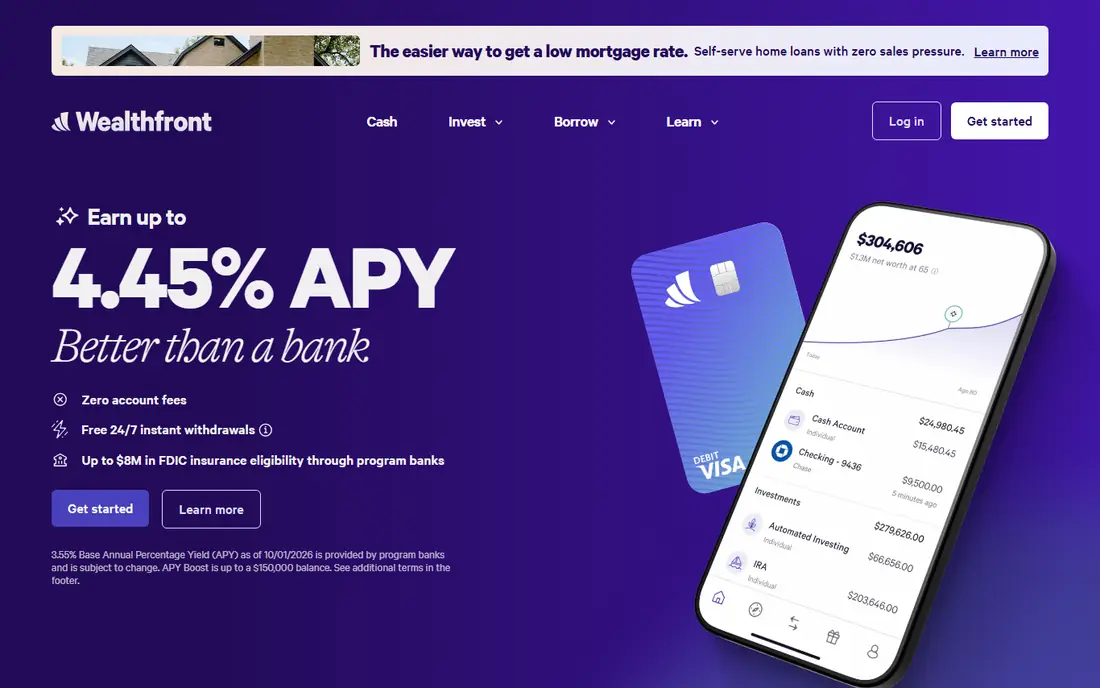
Wealthfront is a similar automated portfolio service, with an emphasis on tax features and diversification. The system rebalances as markets move, and tax-loss harvesting on eligible accounts can offset gains in some cases, though tax rules depend on your situation. That automation suits investors who want a portfolio that is looked after without daily input. As with Betterment, the cost is an advisory fee and limited stock picking. Investors who enjoy researching single stocks will find the core portfolio restrictive. For a long term investor who wants automation and tax awareness, it is a strong, well established option.
- Automatic rebalancing
- Tax-loss harvesting features
- Diversified portfolios
- Minimum may apply on some plans
- Less suited to active stock picking
Schwab Intelligent Portfolios
Who it suits: Low cost automated portfolios
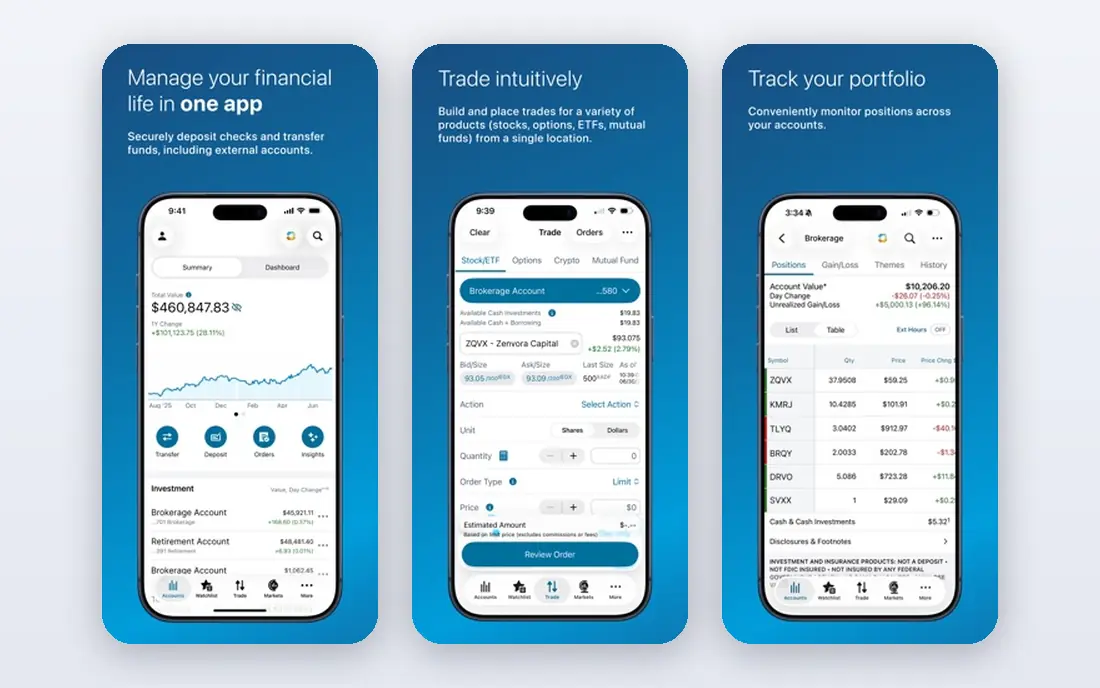
Schwab Intelligent Portfolios appeals to cost conscious investors, because the core automated service does not charge an advisory fee. Portfolios are built from ETFs, rebalanced automatically, and held at a large broker many investors already trust. That combination is attractive for a first automated portfolio. The honest weakness is cash. The service holds a portion in cash, which can drag returns in a rising market compared with a fully invested portfolio. Investors should read the cash allocation for their risk level before signing up, and compare the total cost, not just the headline fee.
- No advisory fee on the core service
- Diversified ETF portfolios
- Large, established broker
- Cash allocation can drag returns
- Premium features cost extra
Acorns is built for starting, not for optimising. Round-ups invest small amounts from everyday spending, so an investor can build a habit without a large lump sum. The portfolios are simple and diversified, which suits a beginner who might otherwise put off investing. The monthly fee needs care. On a very small balance, a fixed monthly fee is a larger share of the account than a percentage fee elsewhere, so Acorns makes more sense once the balance grows or round-ups are regular. It is a habit tool first, and a portfolio tool second.
- Round-ups invest spare change
- Low minimums
- Simple portfolios
- Monthly fee can be high relative to a small balance
- Limited customisation
Magnifi works like a research assistant you can ask in plain language. An investor can ask about a sector, a fund, or a theme, and get a list to investigate further, with screening tools to narrow the results. That is useful when you know what you want to explore but not which specific funds fit. It does not manage money for you, and its answers are a starting point, not a decision. Check any suggestion against the fund's own documents, fees, and holdings before investing. Magnifi suits self directed investors who want faster research, not hands-off investors.
- Natural language research questions
- Screening tools
- Free tier to test
- Research is not a managed portfolio
- Answers need independent checking
Trade Ideas is a trading tool, not a long term portfolio service. Its AI assistant scans the market, flags patterns, and alerts a trader to intraday moves, with backtesting to check a strategy against past data. That suits an active trader who already understands risk and position sizing. The risk and cost are both higher here. A monthly subscription adds up, active trading demands time and discipline, and backtested results do not guarantee future results. Most long term investors should not use a signal tool as their main investment plan.
- AI assisted scanning and alerts
- Intraday signal tools
- Backtesting features
- Higher subscription cost
- Active trading carries higher risk and time demand
Tickeron offers AI driven pattern tools and forecasts for stocks, ETFs, and other assets. A trader or researcher can use it to spot trends, check a pattern, and compare an AI view with their own analysis. The free tier lets a user explore the interface before paying. Forecasts deserve caution. A pattern or a probability is not a prediction that a price will move a certain way, and markets can move against any model. Use Tickeron as one input among several, and never size a trade based on a single forecast.
- Pattern recognition tools
- AI forecasts
- Free tier to explore
- Forecasts are probabilistic, not certain
- Paid tiers needed for full tools
Kavout scores stocks using machine learning models, which gives a researcher a quick way to sort a large list. An investor can screen by score, then read financials and news for the highest scoring names before deciding. That sorting step can save time when a watchlist is large. A score is still a model output, and models can be wrong, especially in fast moving markets or for smaller stocks with less data. Treat the score as a filter, not a verdict, and check the underlying business, valuation, and risk before investing any money.
- Machine learning stock scores
- Screening by score
- Free tier available
- Scores are a model output, not advice
- Coverage and accuracy vary by stock
How we picked these
We compared official feature pages, pricing pages, app store listings, and privacy policies, and we checked public reviews for recurring points about fees, minimums, and support. We kept only tools that were still offered in October 2026 and that used automation, machine learning, or AI assisted research in a clear, named feature, not just in marketing copy. We did not claim hands-on testing that we did not do, and where a vendor did not publish a clear starting price, we wrote See website rather than guessing. We separated managed portfolios from research and signal tools, because mixing them misleads readers. A tool that manages a portfolio should be judged on fees, diversification, and tax features, while a research tool should be judged on screening, data quality, and transparency about its method.
Choosing an AI investment tool without mistaking marketing for a method
First, decide whether you want someone else to manage the portfolio, help you research, or flag trades. A managed portfolio suits a long term investor who will not check markets daily. A research tool suits an investor who enjoys deciding but wants faster screening. A signal tool suits an active trader who accepts higher risk and time cost. Buying a signal tool for a retirement goal, or a managed portfolio for day trading, will disappoint in both cases. Second, read the fee and tax details in full. Advisory fees, fund fees, subscription fees, and cash drag all reduce returns, and tax-loss harvesting helps only in taxable accounts and only under tax rules that apply to you. Ask what the total annual cost is on your expected balance, and what happens to fees if you withdraw or pause. A tool that looks cheap at a small balance may look different at a larger one. Third, test the method, not just the interface. Ask what data the model uses, how often it updates, and whether the vendor publishes a track record with clear limits. Be wary of a tool that shows only winning examples or that promises returns. This is not financial advice, and investing carries risk. Diversify, invest only money you can afford to leave invested, and consider regulated advice if the decision is large or complex.
Automated portfolios
Choose a managed portfolio when you want diversification, rebalancing, and a goal plan without daily decisions. Compare advisory fees, fund fees, minimums, and cash allocation before choosing.
Research and signal tools
Choose a research tool when you want to decide yourself but faster. Choose a signal tool only when you understand active trading risk, can afford losses, and have time to monitor trades. Check forecasts against your own analysis every time.
Frequently asked questions
What is the best AI investment app for beginners?
Betterment, Wealthfront, and Schwab Intelligent Portfolios are strong beginner options, because they build a diversified portfolio and rebalance it for you. Acorns suits a beginner who wants to start with round-ups and small amounts. A beginner should start with a managed portfolio and a long time horizon, rather than with trading signals.
Is AI investing safe?
No investment is safe from loss, and AI does not remove market risk. Automated portfolios reduce some behavioural mistakes, such as panic selling, but they still fall when markets fall. Signal tools add trading risk on top of market risk. This is not financial advice; invest only money you can afford to lose in value, and diversify.
What is the best AI investment platform for long term investing?
For long term investing, a low cost automated portfolio from Betterment, Wealthfront, or Schwab is usually a better fit than a signal tool. The key factors are fees, diversification, and staying invested, not the sophistication of a single model. Check fees and tax features, and keep a plan you can stick with through market falls.
Do AI investment apps guarantee returns?
No, and any tool that implies guaranteed returns should be avoided. Past performance, backtests, and AI forecasts are not promises about future results. Markets change, models can be wrong, and a tool that performed well in one period can perform poorly in another. Read the vendor's risk disclosures before investing.
How much does an AI investment app cost?
Costs vary by type. Managed portfolios often charge an advisory fee as a percentage of assets, plus fund fees. Research tools may offer a free tier and a monthly subscription. Trading signal tools often charge a higher monthly subscription. Compare the total annual cost on your expected balance, not just the headline price.
Can I use an AI investment app instead of a financial adviser?
An app can help with a simple, diversified portfolio or with research, but it does not replace personal advice for complex tax, pension, or estate decisions. If your situation involves a large sum, a pension transfer, or tax planning, consider regulated financial advice. An app is a tool, not a substitute for advice tailored to you.
Sources we checked (8)

Online Jobs is an independent blog about careers, online work, learning new skills and the tools that help people earn. More about us.
Keep reading
All posts
Top AI Financial Software
Searching for top AI financial software? We compared 9 AI finance tools for AP, spend, close, forecasting and bookkeeping to help teams choose wisely.
Quicken Alternatives
Compare the best quicken alternatives for Mac, Windows, and small business owners, from Monarch Money and YNAB to Copilot, Tiller, and Banktivity in 2026.

GoFundMe Alternatives
Looking for GoFundMe alternatives? We compared 8 fundraising platforms on fees, campaign types, donor tools and who each platform suits best in 2026 today.