Best Facebook Alternatives in 2026: 8 Apps Compared

How we put this together: we compare official feature and pricing pages, app store listings, privacy policies and public user reviews. Prices change, so check the provider's site before you pay.
Key takeaways
- No single app copies everything Facebook does, so pick the one that covers the job you miss most, whether that is groups, local news, or photo sharing.
- MeWe and Vero come closest to a familiar Facebook-style feed, while Mastodon and Bluesky suit people who want more control over what they see.
- Threads works best if your friends already use Instagram, and Nextdoor is the strongest pick for neighbourhood news rather than a general feed.
- Every app on this list is free to join, but check paid extras, data settings, and moderation rules before you move your main group chats over.
Quick comparison
| Name | Who it suits | Starting price | Free option | |
|---|---|---|---|---|
 MeWe | Privacy-minded Facebook-style networking | Free | Yes | Visit |
 Mastodon | Community-run, ad-free feeds | Free | Yes | Visit |
 Bluesky | Open public conversation | Free | Yes | Visit |
 Threads | Instagram-linked posting | Free | Yes | Visit |
 Minds | Creator rewards and open posting | Free | Yes | Visit |
 Vero | Chronological photo and media sharing | Free | Yes | Visit |
 Nextdoor | Neighbourhood news and local help | Free | Yes | Visit |
 Diaspora | Decentralised, privacy-first posting | Free | Yes | Visit |
The best facebook alternatives
Facebook bundles a feed, groups, events, messaging, and a marketplace into one place. The alternatives below each handle part of that bundle well, and a few handle several parts at once. We compared official feature pages, app store listings, and privacy policies to sort out which one fits which kind of user.
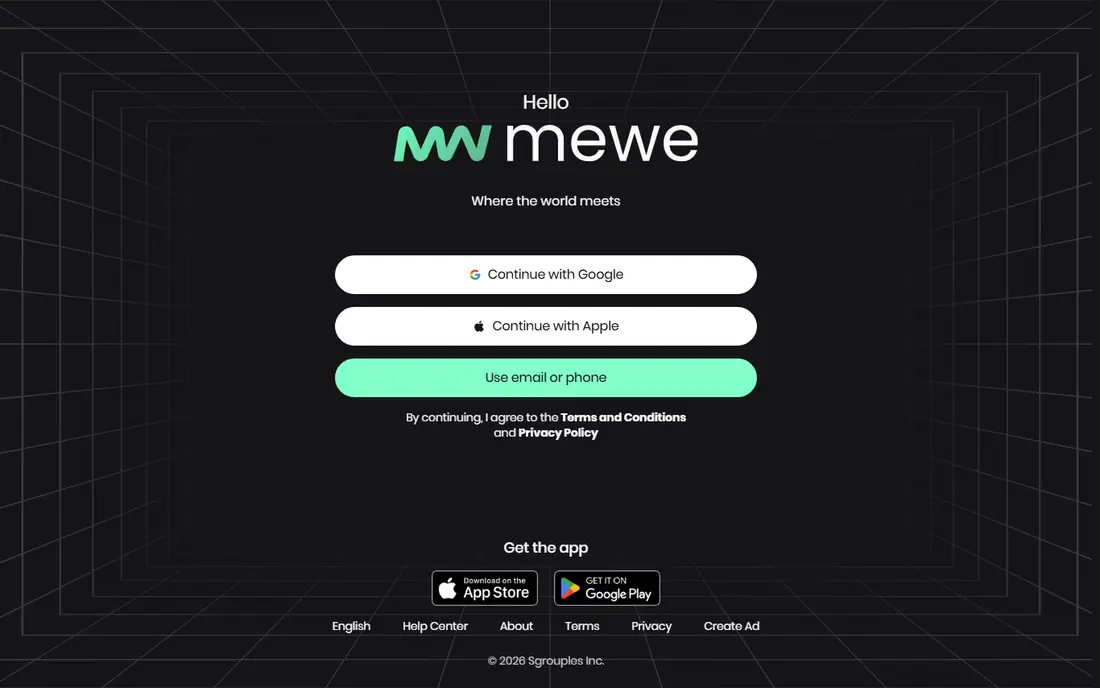
MeWe is the easiest first stop for many people leaving Facebook because it looks and feels familiar. You get a newsfeed, groups, pages, stories, and chat, without ads placed between posts from friends. That familiarity matters when you are trying to move a whole family group or a hobby club, since nobody has to learn a new way of posting from scratch.
The trade-off is audience size. Your old Facebook friends will not all be here, so you may need to invite people directly and rebuild a group or two. MeWe also sells optional extras, so the free version covers the basics well but not every add-on. If privacy is your main reason for leaving, and you want a feed that still feels like a feed, MeWe is our pick for most people.
- No ads on the main feed
- Groups, pages, and chat in one place
- Familiar layout for people leaving Facebook
- Smaller audience than Facebook
- Some extras cost money
- Groups vary widely in activity
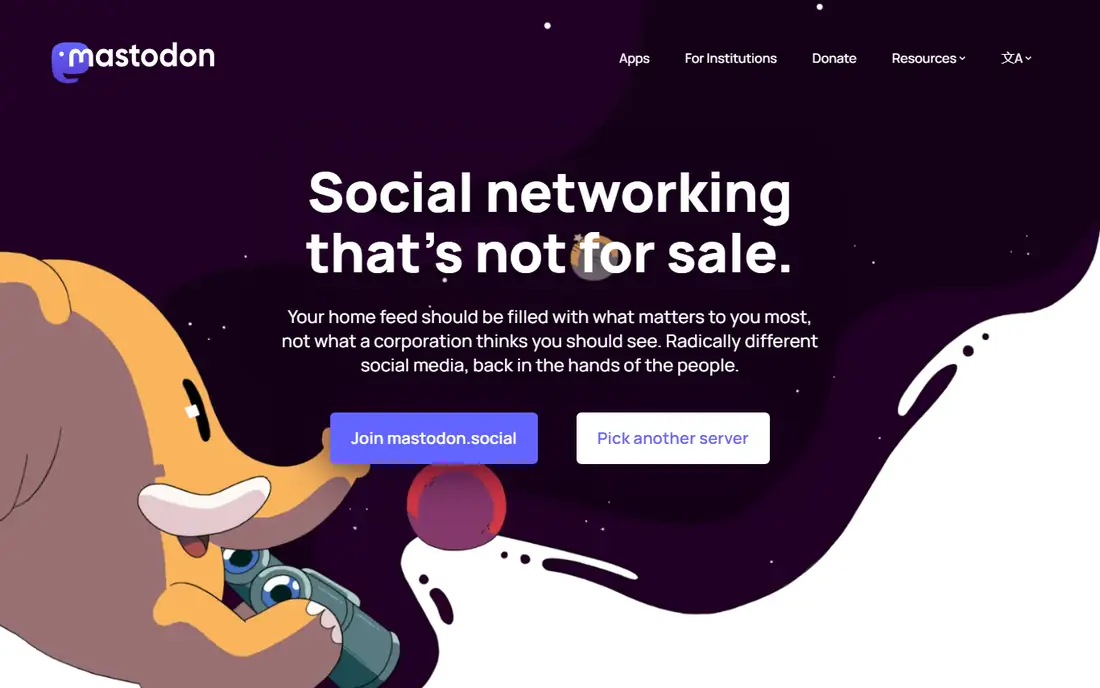
Mastodon is not one company but a network of independent servers that talk to each other. You join one server, often built around a topic or a community, and you can still follow people on other servers. Timelines run in chronological order, and there are no ads, which gives the whole experience a calmer feel than a feed tuned for engagement.
The catch is the first ten minutes. New users have to pick a server, and that choice can feel needlessly technical when you just want to post a photo. Once you are in, though, the controls are strong, including content warnings, lists, and muted words. Mastodon suits people who care about who runs their network and who are happy to trade a huge audience for a quieter, more deliberate feed.
- No ads and no single company controlling the feed
- Chronological timelines
- Many topic-based servers to choose from
- Picking a server confuses new users
- Friends may sit on different servers
- Smaller mainstream reach
Bluesky feels closest to a modern public timeline: short posts, replies, reposts, and feeds built around topics you choose. Custom feeds are the standout feature here. Instead of one feed chosen for you, you can follow feeds for news, sport, art, or a local city, and switch between them in a couple of taps. That puts more of the choice back in your hands.
What Bluesky does not yet replace is Facebook groups and events. There is no direct equivalent for a private club page with files, polls, and a calendar in one spot. It also leans public, so check your settings before posting anything personal. If your main Facebook habit is following public conversation and sharing links and thoughts, Bluesky is a strong, low-friction move.
- Easy sign-up and a familiar short-post format
- Custom feeds you can build or follow
- Portable handle options
- Fewer groups and events than Facebook
- Public by default in ways new users should check
- Still growing its moderation tools
Threads is the simplest switch for Instagram users, because it uses your Instagram account to get started and can carry over people you already follow. Posting is straightforward, with text, photos, and short video, and the audience is far larger than on most independent alternatives. If your friends are already here, that alone can settle the choice.
The honest catch is that Threads is a Meta product, so it does not solve a wish to leave Meta behind. Group tools are thin compared with Facebook groups, and the feed blends posts from accounts you follow with suggested posts. Treat Threads as a good replacement for the public posting part of Facebook, not as a clean break from big-platform social media.
- Quick start if you already use Instagram
- Large and active user base
- Simple text and photo posting
- Tied closely to Instagram and Meta
- Limited group tools
- Feed mixes suggested posts with followed accounts
Minds pitches itself as an open network where creators can earn rewards for engagement and where moderation decisions are published for users to see. You can post text, images, and video, join groups, and write longer blog-style posts, which makes it more flexible than a short-post-only app. For writers and video makers who want an audience without paying to boost every post, that mix is appealing.
The audience is the limit. Minds is smaller and more niche than the mainstream options here, so a local community group may struggle to gain traction. The rewards system also adds clutter for people who just want to chat with friends. Pick Minds if you publish regularly and want a platform that treats creators as partners, not as a side note.
- Open posting rules with transparent moderation pages
- Rewards for engagement
- Groups and blogs in one app
- Smaller, more niche audience
- Rewards system can feel gimmicky
- Interface is busier than rivals
Vero is built around sharing what you are watching, reading, listening to, and photographing, in the order it was posted. There are no ads and no algorithm reordering your feed, so you see posts from people you follow when they post them. For photo lovers and media fans, that simple promise is the whole appeal, and the app handles collections and recommendations neatly.
Vero will not replace a busy Facebook group, and its smaller audience means you may post into a quiet room at first. It has also talked about subscription plans over the years, so check the current terms before you commit to it as your main home. If your Facebook use is mostly photos and recommendations from people you trust, Vero is a calm and pleasant place to land.
- Chronological feed with no ads
- Good for photos, films, books, and music recommendations
- Clean post layout
- Smaller user base
- Subscription plans have been discussed in the past
- Fewer group and event tools
Nextdoor replaces a very specific Facebook job: the neighbourhood group. People post about road closures, lost pets, plumbers they trust, and items for sale nearby, and because membership is tied to a real neighbourhood, the posts tend to be practical rather than performative. If you joined Facebook mainly to keep up with your street and town, Nextdoor may be the only alternative you actually need.
It is not a substitute for keeping up with distant friends or running a hobby group, and the tone of each neighbourhood varies. Some areas are friendly and busy, while others are quiet or argumentative. Check how active your own area is before you rely on it, and keep your address details private beyond what the service needs to verify your neighbourhood.
- Strong for local news, recommendations, and lost-and-found posts
- Verified neighbourhood areas
- Useful buy-and-sell section
- Not a general social network
- Local tone varies a lot by area
- Some areas are far more active than others
Diaspora works like Mastodon in structure: independent pods run by different people and groups, connected so users on one pod can follow users on another. No single company owns the network, and there are no ads. For people whose main complaint about Facebook is centralised control of their data, that design is the point, not a bonus feature.
The price of that design is effort. The audience is small, the interface feels older than its rivals, and discovering friends takes patience. Diaspora suits technically confident users and privacy purists who value the model more than a polished app. Most people will be happier on MeWe or Mastodon, but if decentralisation is your top priority, Diaspora is the purest version of it here.
- No single company owns your data
- You can pick a pod that fits your values
- No ads
- Smallest audience on this list
- Interface feels dated
- Finding friends takes more effort
How we picked these
We compared official feature pages, pricing pages, app store listings, and privacy policies for each service, and we checked which Facebook jobs each one actually covers, such as groups, events, local news, photos, and public posting. We favoured services that are live and usable in the United States in October 2026, that state their moderation and data practices in plain language, and that do not charge just to join. Where a service is small or tied to a large parent company, we say so rather than smoothing it over.
What to check before you switch
Start by naming the Facebook feature you will miss most. If it is groups, MeWe gives you the closest match, while Meetup-style event tools may suit you better for in-person gatherings. If it is public conversation, Bluesky and Threads are the easiest places to rebuild an audience, and if it is local news, Nextdoor wins outright. Trying two apps for a week tells you more than reading ten reviews, so install a pair, post in both, and see where your people actually reply.
Moving your groups and contacts
Export what Facebook lets you export, including your photos and contact details, before you delete anything. Tell your group members where you are going, and give them a direct link or group name rather than assuming they will find you. Expect a slow start. Most groups lose some members in any move, and the group that survives is usually the one with a clear reason to meet, such as a weekly photo challenge or a local meetup.
Privacy and safety settings
Read the privacy settings on day one, not month three. Check who can see your posts, whether your profile is public, and what data the app uses for recommendations. Turn on two-factor authentication where it is offered, and be careful with location sharing on neighbourhood apps. A smaller app is not automatically safer, so judge each service by its written policy and by how easy it is to block, mute, and report other users.
Frequently asked questions
What is the best alternative to Facebook?
There is no single best alternative, because Facebook does several jobs at once. MeWe is our pick for the closest all-round replacement, Mastodon suits people who want an ad-free and community-run feed, and Nextdoor is best for neighbourhood news. Pick based on the feature you use most, and try two options before settling.
Are Facebook alternatives really free?
Yes, every app on this list is free to join and use for its core features. Some sell optional extras, such as MeWe add-ons or storage upgrades, and a few have discussed subscriptions in the past. Check the pricing page before you pay for anything, since the free version covers normal posting, groups, and feeds on all eight.
Can I use a Facebook alternative without my friends joining?
You can, but social apps are only as good as the people on them. Public conversation apps like Bluesky and Threads work well even without your close friends, because you can follow topics and creators. For group chats and family updates, invite people directly and give them a clear reason to join, such as a shared album or a weekly event.
Is Mastodon hard to use?
Mastodon takes a little longer to start than other apps, because you pick a server when you sign up. After that, posting, following, and replying work much like any other social app. If the server choice puts you off, pick a large general server to start, since you can follow people on other servers and move later if you want.
Which Facebook alternative is best for privacy?
Mastodon and Diaspora offer the strongest structural privacy, because no single company controls the whole network and neither runs ads. MeWe also promises no ads and no sale of user data, with a familiar layout. Read each privacy policy and check the data settings in the app, since promises matter less than the controls you can actually use.
Can I keep my Facebook account and use an alternative too?
Yes, and that is the easiest way to switch. Run the new app alongside Facebook for a few weeks, move one group or habit at a time, and only close or pause Facebook once your key contacts have moved. Keeping both for a while avoids losing touch with people who never make the jump.
Sources we checked (8)

Online Jobs is an independent blog about careers, online work, learning new skills and the tools that help people earn. More about us.
Keep reading
All posts
Reddit Alternatives
We compared the best Reddit alternatives for 2026, from Lemmy and PieFed to Discuit, Tildes, MetaFilter, Hacker News and Discord, with community notes.
Discord Alternatives
We compared the best Discord alternatives for gaming, communities and teams, checking official pricing, free plans and honest limits before ranking nine apps.
Best Twitter Alternatives
Looking for the best Twitter alternatives? We compared 9 platforms for short posts, from Bluesky and Threads to Mastodon, so you can find your new home.