Best Seed Companies in 2026: 10 Products Compared


Rare heirloom varieties · Starting price: See website
How we put this together: we compare official feature and pricing pages, app store listings, privacy policies and public user reviews. Prices change, so check the provider's site before you pay.
Key takeaways
- Johnny's Selected Seeds suits gardeners who want detailed growing data and packet sizes for small beds and larger plots.
- Baker Creek is the strongest choice for rare heirloom varieties, while Seed Savers Exchange ties buying seeds to preservation work.
- Packet prices vary widely by variety, so compare seed count, not just the packet price, before you order.
- Eden Brothers and Park Seed offer broad flower and vegetable ranges in one order, which helps if you want both in a single shipment.
- Check days to maturity and your frost dates first, because the best variety on paper can still fail in a short season.
Quick comparison
| Name | Who it suits | Starting price | Free option | |
|---|---|---|---|---|
| Baker Creek Heirloom Seeds | Rare heirloom varieties | See website | No | Visit |
 Johnny's Selected Seeds | Detailed growing data | $6.45 per packet | No | Visit |
 Burpee | Beginner friendly range | See website | No | Visit |
 Seed Savers Exchange | Heirloom preservation | $4.25 per packet | No | Visit |
 Territorial Seed Company | Regionally trialed varieties | $3.75 per packet | No | Visit |
 Park Seed | Flowers plus vegetables | See website | No | Visit |
 Eden Brothers | Bulk and packet choice | $4.49 per packet | No | Visit |
 High Mowing Organic Seeds | Certified organic seed | See website | No | Visit |
 Botanical Interests | Clear packet growing notes | See website | No | Visit |
 Sow True Seed | Small farm organic seed | See website | No | Visit |
The best seed companies
We focused on US companies that sell vegetable and flower seeds online to home gardeners, with clear variety pages and current catalogs in October 2026.

Baker Creek is our pick for gardeners who want to grow something different from the standard supermarket range. The catalog leans toward heirloom and open pollinated varieties from around the world, with notes on history and flavor that help you choose beyond a photo. Orders of $10 or more in seeds receive a free packet, with more free packets at higher thresholds, according to the vendor FAQ page.
The main drawback is availability. Rare varieties can sell out during peak ordering season, and restocks depend on the next seed harvest. Baker Creek also puts less weight on hybrid disease resistance data than a trial focused seller such as Johnny's. If you want unusual tomatoes, peppers, squash, and flowers, and you can order early, this is a strong first stop.
- Very large heirloom range
- Variety histories on product pages
- Free packet offers at order thresholds
- Popular varieties sell out in season
- Less focus on modern hybrid performance data
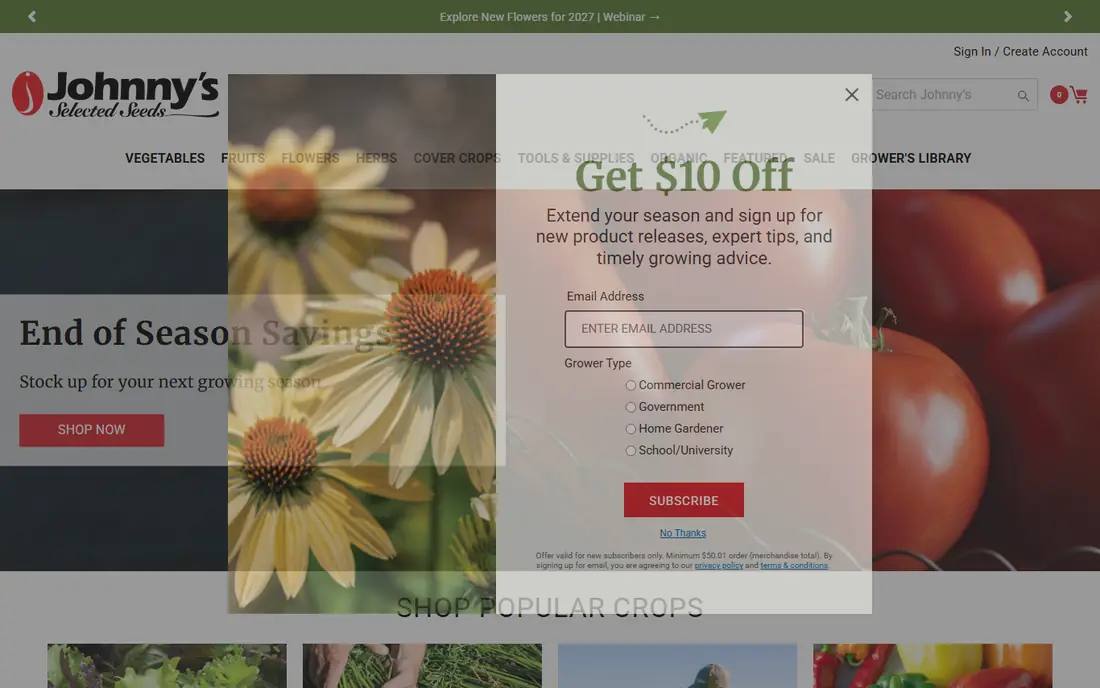
Johnny's is the most information dense seller on this list, and that is why we place it near the top. Product pages list seed count per packet, days to maturity, hybrid status, and disease resistance codes where they apply. A packet price of $6.45 for the Latte sweet corn packet shown on the vendor site gives a sense of the range, though prices vary by variety and size.
That detail comes at a cost. Johnny's packets often cost more than a basic packet elsewhere, and the catalog can feel geared toward market growers. If you want to compare varieties on facts rather than photos, Johnny's is worth the premium.
- Strong variety trials and specs
- Packet and bulk sizes
- Clear days to maturity and disease codes
- Packet prices run higher than many rivals
- Range leans toward serious growers
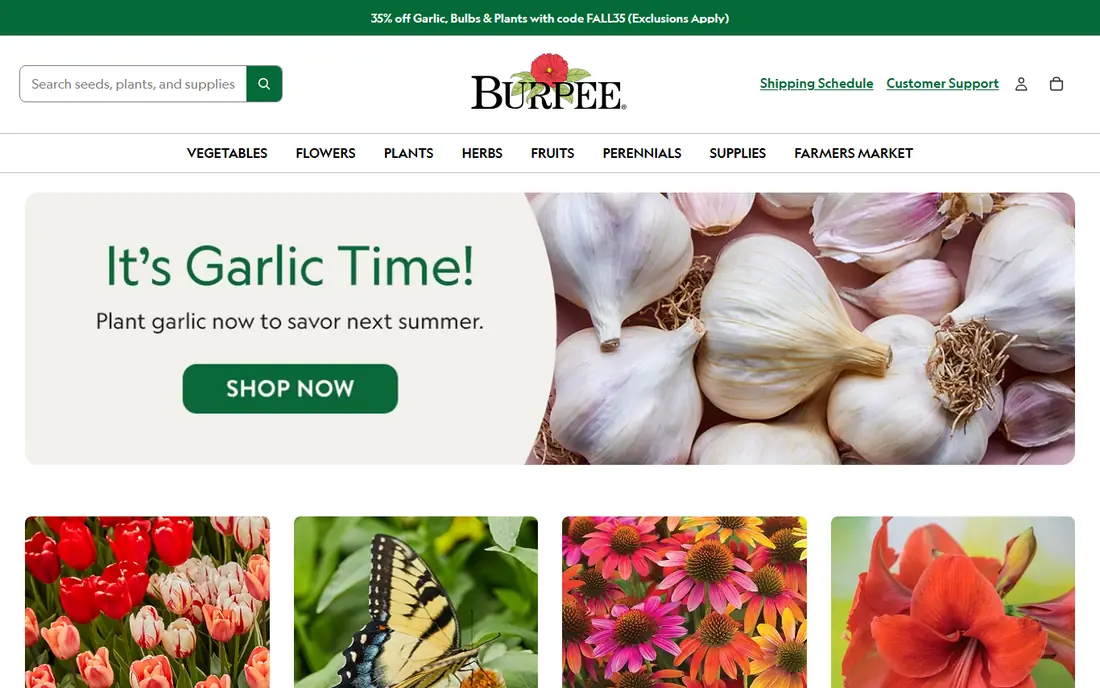
Burpee is a practical default for a first garden order. The company has sold seeds in the US for a long time, and the current site covers vegetables, flowers, herbs, and plants, plus seed starting supplies. That breadth helps when you want seeds, trays, and labels in one shipment, rather than splitting orders across several sellers.
The trade off is consistency. Seed counts differ by crop, and prices move by variety, so read each product page rather than assume a standard packet. For a simple, broad order with familiar varieties, Burpee remains a safe choice, but compare seed count before you judge value.
- Long history in US gardens
- Wide vegetable, flower, and herb range
- Plants and supplies in one order
- Packet contents and prices vary a lot by variety
- Some best sellers sell out fast
Seed Savers Exchange stands apart because buying here supports preservation work. The organization maintains heirloom varieties and offers a seed exchange where members can list and request varieties. Flower packets on the vendor shop start at $4.25 for several varieties shown, though prices vary by item and bulk size.
The limit is seasonal stock. Several listings note that a variety is sold out for 2026, with a notice option for restocks. That is normal for a preservation focused seller, but it can frustrate a gardener who needs seed by a set planting date. If you care about keeping old varieties in circulation, and you can plan around availability, Seed Savers Exchange is a meaningful place to buy.
- Nonprofit preservation mission
- Large heirloom collection
- Member seed exchange option
- Some varieties show as sold out for the season
- Site can feel less polished than commercial rivals
Territorial Seed Company is based in Oregon and trials many varieties in that climate, which helps gardeners in cool and short season regions. Product pages give seed counts and growing notes, and the vendor site lists a 50 seed zinnia packet at $3.75, which shows that small packets stay affordable for trial plantings.
The catch is climate fit. A variety that performs well in Oregon may struggle in a hot, humid summer, so check heat tolerance and days to maturity for your zone. Territorial still offers plenty of broadly adapted varieties, but it rewards a careful read of the description. If you garden in the Pacific Northwest or a similar cool climate, this seller deserves a close look.
- Trial notes from the Pacific Northwest
- Vegetable, flower, and herb range
- Clear seed counts
- Some varieties suit cool climates better than hot ones
- Stock can run out
Park Seed suits gardeners who want flowers and vegetables from one seller. The homepage notes more than 1,000 flower varieties in one collection, plus vegetable seeds, bulbs, and plants. The site also highlights seed starting systems such as the Bio Dome, which can help beginners who struggle with indoor starts.
The downside is choice overload. With so many collections and kits, it is easy to spend more than planned. Read seed counts and spacing before you buy a collection, and start with crops you will actually eat or cut.
- Very large flower range
- Seed starting systems
- Flat rate seed only shipping noted on site
- Packet prices vary widely
- Site pushes many collections and kits
Eden Brothers is useful when you want the same variety in a packet for a home bed or in bulk for a larger plot. The vendor site lists a cucumber packet at $4.49, with larger ounce sizes priced higher, and similar packet to bulk steps across many crops. Planting guides on the site cover sowing depth, spacing, and zones, which helps newer growers.
The weakness is price scaling. Bulk sizes can look like good value until you check how many seeds you need for one season, since viability drops in storage. Buy bulk only for crops you sow in quantity, such as cover crops, cut flowers, or beans.
- Packet and bulk sizes for many varieties
- Wide flower and vegetable range
- Planting guides
- Bulk prices jump quickly
- Some varieties have thin review coverage
High Mowing Organic Seeds is our pick for gardeners who want certified organic seed across the board. The company is farm based in Vermont and has sold organic seed since 1996, with a catalog that covers vegetables, herbs, and flowers. Catalog guides note free standard shipping on orders over $10, which helps small orders stay affordable.
Pricing takes care to read. Many varieties are sold by seed count or weight, and some sizes show as backordered into the next season. Compare the smallest size you need, not just the headline price. If organic certification matters to you, this is the most focused seller on the list.
- Fully organic catalog
- Farm based trials
- Free shipping over $10 noted in catalog guides
- Prices vary by seed count, not just packet
- Some sizes sell out or backorder
Botanical Interests earns a place for packet quality. The company is known for detailed growing notes inside each packet, which helps when you are standing in the garden with soil on your hands and no phone signal. The range covers vegetables, flowers, and herbs for home beds, with a non-GMO stance across the catalog.
The limit is scale. If you need large bulk quantities for a market garden or a big cut flower plot, Eden Brothers or Johnny's offer more size steps. Botanical Interests is best for home gardeners who want clear instructions and a manageable packet size. It is a good choice for a first year gardener who wants to learn as they sow.
- Detailed inside packet information
- Wide home garden range
- Non-GMO focus
- Smaller bulk options than Eden Brothers
- Some varieties sell out in spring
Sow True Seed is a smaller, farm based seller in North Carolina that focuses on open pollinated and heirloom varieties, with many organic options. The catalog feels curated rather than vast, which can make choosing easier if a huge list leaves you stuck. Variety pages give growing notes and background that suit gardeners who like to know where a variety came from.
The trade off is depth. You will not find the same number of varieties per crop as at Park Seed or Johnny's, and popular items can run low. That is a fair exchange for a small farm catalog, but check stock early if you have a fixed planting window. Sow True Seed is a good second order seller, or a first choice if you prefer to support a small seed farm directly.
- Small farm focus
- Open pollinated and heirloom range
- Clear variety stories
- Smaller catalog than the large sellers
- Stock can be limited
How we picked these
We looked for US companies that sell vegetable and flower seeds online to home gardeners, with a current site and catalog in October 2026. We checked vendor product pages for packet prices, seed counts, and growing notes, and we used vendor FAQs and catalog guides for shipping and free packet terms. We favored sellers with clear variety data, a non-GMO stance, and a range that covers both vegetables and flowers, while keeping a mix of large sellers and smaller farms.
We did not rank on marketing claims alone. A large catalog scored well only when product pages gave usable data, such as days to maturity, spacing, or seed count. We also noted where stock, climate fit, or bulk pricing could trip up a home gardener, because those practical limits matter more than a long variety list.
How to choose seeds for your garden
Start with your frost dates and space
Find your last spring frost and first fall frost, then compare those dates with days to maturity on the packet. A tomato that needs 90 days may still work if you start indoors, but a direct sown crop with a long season can fail in a short summer. Measure your beds too, because a vining squash needs far more room than a row of lettuce. A short list that fits your season beats a long order that never matures.
Compare seed count, not just packet price
A $3 packet with 25 seeds can cost more per plant than a $6 packet with 200 seeds, once germination is counted. Check the seed count, the sowing rate, and how many plants you actually need. For small beds, a small packet is often the better buy, even at a higher price per seed, because leftover seed loses vigor in storage. For beans, peas, and cut flowers, a larger packet may make sense.
Match variety type to your goal
Heirloom and open pollinated varieties let you save seed that grows true to type, which suits gardeners who want to keep a favorite variety going. Hybrids often offer more uniform growth and disease resistance, but saved seed from a hybrid may not match the parent plant. Neither type is better in all cases. Pick heirlooms for flavor and seed saving, and hybrids when disease pressure or uniform harvest matters most in your garden.
Order early and store seed well
Popular varieties sell out in late winter and spring, so order in January or February when possible. Store seed in a cool, dry place in a sealed container, and label each packet with the year you bought it. Test old seed by sprouting ten seeds on a damp paper towel before you sow a full bed. Good storage can extend viability by a year or more, but fresh seed gives the most reliable germination.
Frequently asked questions
What is the best seed company for beginners?
Burpee and Botanical Interests are both good starting points, because they offer familiar varieties and clear growing notes. Johnny's suits beginners who want more data, but the catalog can feel dense at first. Start with five or six crops you enjoy eating or cutting, and add unusual varieties once you know your soil and season.
Are heirloom seeds better than hybrid seeds?
Heirloom seeds are not better in every case. They offer flavor, history, and seed saving, while hybrids often offer disease resistance and uniform harvests. Grow heirlooms for seed saving and old flavors, and hybrids when disease pressure is heavy.
How many seeds are in a packet?
Seed count varies by crop and seller, so always check the product page. A tomato packet may hold 25 to 30 seeds, while a lettuce packet may hold hundreds. Compare seed count with the number of plants you need, plus a margin for germination loss. Buying a huge packet for a small bed rarely saves money once storage loss is counted.
When should I order seeds?
Order in late winter, ideally January or February, for the widest choice and the best stock. Popular tomatoes, peppers, and flowers sell out first, and restocks may not arrive until the next harvest. If you miss the early window, check smaller sellers and seed exchanges, which sometimes hold stock after large catalogs sell out.
Do seed companies ship to all US states?
Most sellers on this list ship across the US, but some varieties face state rules on pests, diseases, or noxious weeds. Check the shipping note on the product page before you order, especially for potatoes, sweet potatoes, and certain flower bulbs. If a variety cannot ship to your state, the seller usually notes it at checkout.
Can I save seeds from my garden?
Yes, for open pollinated and heirloom varieties, if you prevent cross pollination between similar crops. Save seed from healthy plants, dry it fully, and store it cool and dry with a clear label. Seed from hybrids may differ from the parent plant. Start with beans, peas, lettuce, and tomatoes.
Sources we checked (10)
- https://www.rareseeds.com/pages/faq
- https://www.johnnyseeds.com/vegetables/corn/sweet-corn/latte-treated-f1-corn-seed-4456T.59.html
- https://www.burpee.com/pages/for-growers
- https://shop.seedsavers.org/flower/flowers/custitemplantingstyle/Direct-Sow/custitemseedtype/Conventional
- https://territorialseed.com/collections/new-products/products/illumination
- https://www.parkseed.com
- https://www.edenbrothers.com/products/cucumber-seeds-pick-a-bushel
- https://www.highmowingseeds.com/blog/how-to-use-our-seed-catalog/
- https://botanicalinterests.com
- https://sowtrueseed.com

Online Jobs is an independent blog about careers, online work, learning new skills and the tools that help people earn. More about us.
Keep reading
All posts
Best Platform Beds
We compared the best platform beds for 2026, from Thuma and Floyd to Zinus, Saatva and Burrow, with prices, weight capacities, sizes and honest trade-offs.

Best Home Design Software
Best home design software compared, including free home design apps for floor plans, 3D rooms, and full house layouts, with prices and limits explained.

Best Apps for Interior Design
Best apps for interior design compared for 2026, including room planners, 3D design, floor plans and shopping tools, with pros, cons and pricing notes.