Best Apps to Meet People in 2026: 9 Apps Compared

How we put this together: we compare official feature and pricing pages, app store listings, privacy policies and public user reviews. Prices change, so check the provider's site before you pay.
Key takeaways
- The best app to meet people depends on whether you want dating, friendship, or a local group, so start with that goal before you download anything.
- Bumble BFF and Meetup are the strongest starting points for friendship, because both are built around meeting people without a dating frame.
- Hinge and Bumble suit people who want dating with more profile detail and clearer controls, while Tinder suits people who want the largest pool and faster matching.
- Every app here is for adults only, and photo verification, blocking, and reporting tools matter more than any paid feature.
- Free plans are usable on most of these apps, so try one or two for a few weeks before paying for a subscription.
Quick comparison
| Name | Who it suits | Starting price | Free option | |
|---|---|---|---|---|
 Bumble | Dating with women messaging first | See website | Yes | Visit |
 Hinge | Relationship-minded dating | See website | Yes | Visit |
 Tinder | The largest dating pool | See website | Yes | Visit |
 Bumble BFF | Making friends only | Free | Yes | Visit |
 Meetup | Local groups and events | Free | Yes | Visit |
 Feeld | Open and non-monogamous dating | See website | Yes | Visit |
 Nextdoor | Meeting neighbours | Free | Yes | Visit |
 Timeleft | Group dinners with strangers | See website | No | Visit |
 Yubo | Casual social discovery for adults | Free | Yes | Visit |
The best apps to meet people
Meeting new people as an adult is harder than it looks, because work, moves, and busy schedules leave less room for chance encounters. These apps cover three different needs: dating, friendship, and local community. Pick the category first, then compare the apps inside it.
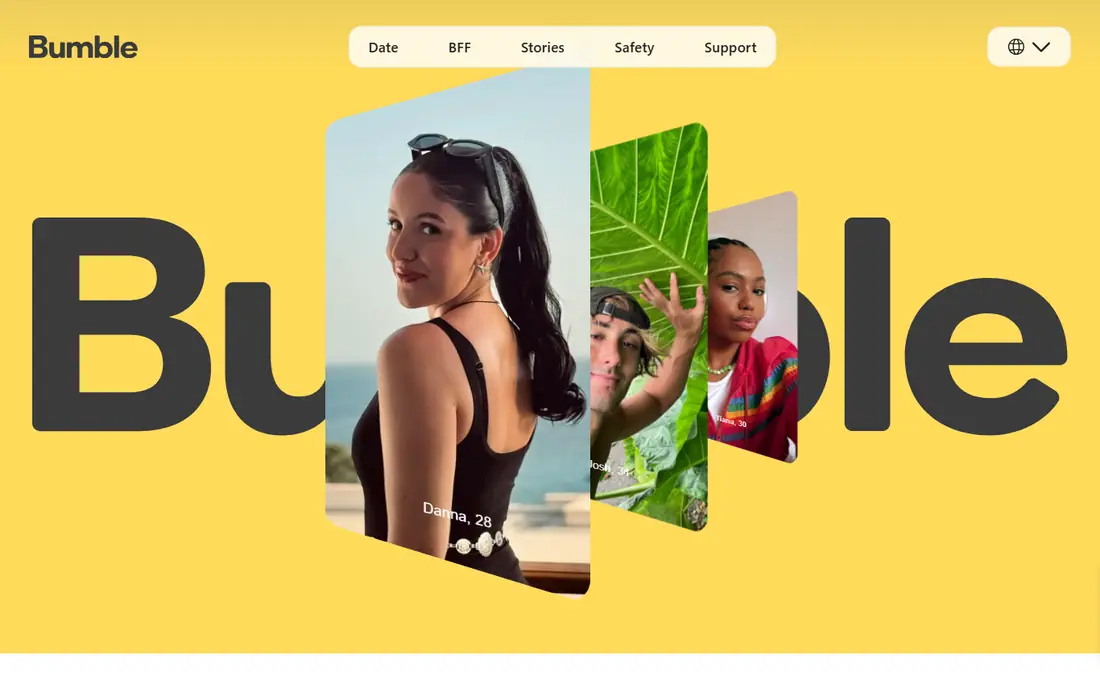
Bumble is our pick for most people who want a mainstream dating app with a clearer sense of control. In heterosexual matches, women send the first message, which cuts down on unwanted opening messages and puts the pace of the conversation in the hands of the person who was approached. Profiles include prompts, interests, and verification badges, so you can get a better read on someone before you match.
The catch is the expiry clock. If neither side messages within the window, the match disappears, which can feel rushed if you only check the app a few times a week. Paid tiers add features such as seeing who liked you and advanced filters, but the free plan is workable for regular use. Check the price inside the app before you subscribe, because Bumble prices vary and the headline rate is rarely the whole story.
- Photo verification
- Women send the first message in heterosexual matches
- Friendship and business modes sit beside dating
- Matches expire if no message is sent
- Paid prices vary by age, location, and plan length
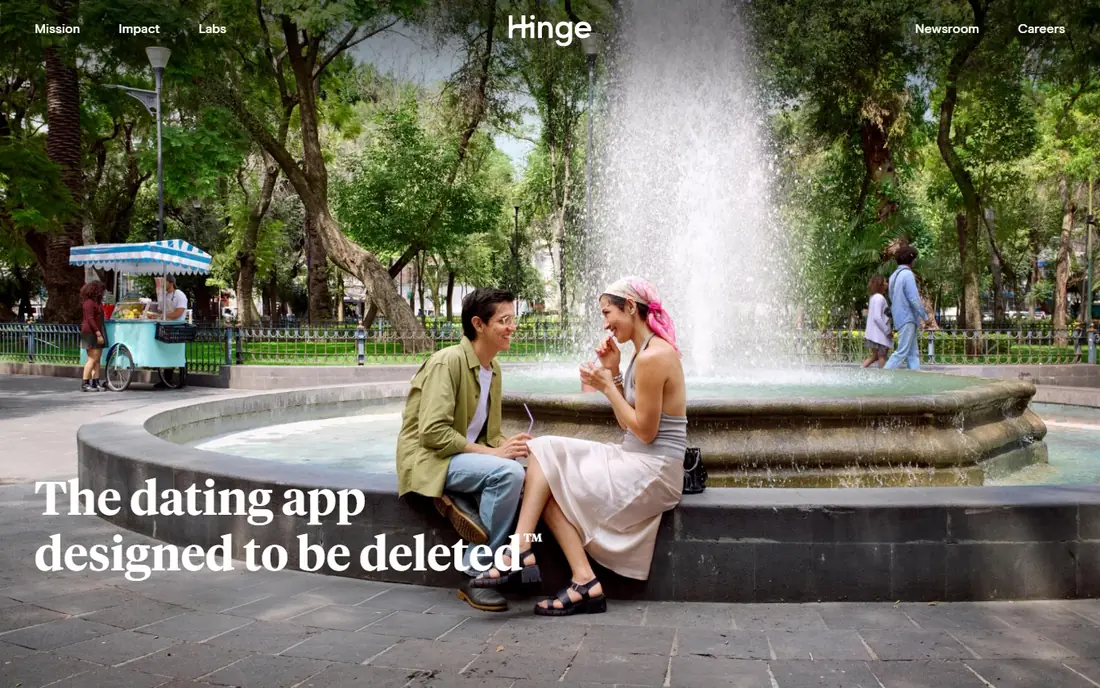
Hinge is built around profiles that give you something to talk about. Instead of a blank photo stack, you see prompts, voice notes, and answers that invite a specific comment, which makes opening messages feel less generic. That design suits people who want dating to move toward a relationship rather than endless swiping, and it rewards taking a few minutes on your own profile.
The daily like limit on the free plan is the main trade-off. It forces you to be selective, which many people find helpful, but it can frustrate you in a smaller city with fewer profiles. Paid plans remove the limit and add advanced preferences. If you are unsure, start free and only upgrade when you regularly run out of likes on profiles you genuinely like.
- Prompt-based profiles encourage real replies
- You can like a specific photo or answer
- Strong free plan for careful users
- Free likes are limited each day
- Paid tiers are costly on a monthly basis
Tinder remains the simplest way to meet a lot of people quickly. The swipe format is familiar, the pool is large in most US cities, and you can get started with a few photos and a short bio. That breadth is a real advantage if you live somewhere with fewer options on smaller apps, or if you want to date casually and see what is out there.
Breadth is also the weakness. Profiles often carry little detail, so matches can feel shallow, and the free plan limits how much you can swipe each day. Paid tiers add unlimited likes, rewinds, and location changes, but they do not fix a thin profile. Put effort into photos and a clear bio first, then decide whether a paid tier would actually help you.
- Very large pool in most cities
- Fast to set up
- Passport-style location features on paid plans
- Profiles carry less detail than Hinge
- Free swipes are limited
- Paid pricing varies widely
Bumble BFF is the clearest friends-only option in this list. It uses the same matching format as Bumble, but everyone there is looking for friendship, which removes the awkward question of whether a match is romantic. Photo verification adds a layer of trust, and group features let you join conversations around interests rather than relying only on one-to-one matching.
The main limit is local activity. In a large city, you will find plenty of profiles and groups. In a smaller town, the pool may be thin, and you may need to pair it with Meetup or a local group. Bumble BFF is free, so there is little downside to trying it alongside another option and keeping whichever one produces real plans.
- Friends-only mode separate from dating
- Photo verification for matches
- Group features for shared interests
- Activity varies a lot by city
- Turning a match into a real meetup still takes effort
Meetup is the best choice if you would rather meet people by doing something than by swiping. Groups cover hiking, board games, language practice, running, professional networking, and hundreds of other interests, and most events are free to attend. Showing up repeatedly to the same group is also the most reliable way to turn acquaintances into friends, because you see the same faces more than once.
Quality does vary. Some groups are active and welcoming, while others are quiet or poorly organised, so try several before you judge the platform. A few events charge a small fee to cover venue costs, which the organiser sets. Meetup is free for attendees in most cases, and it pairs well with a friendship app for the weeks when no event fits your schedule.
- Built around shared interests and real events
- Attending is free for most members
- Huge range of groups
- Group quality varies
- Some events charge a fee set by the organiser
- Organising a group is paid
Feeld is the most useful option in this list for people looking for non-monogamous dating, and it is the one we would point to for that specific need. Profiles let people state their relationship style, interests, and boundaries in plain terms, which avoids the mismatched expectations that happen on mainstream apps. Couples can link profiles, and privacy settings let you control who sees you.
The pool is smaller than Tinder or Bumble, especially outside large cities, so patience matters. Some useful features, such as seeing who liked you, require a paid plan, and prices vary by plan and location. If you want monogamous dating, stick with Hinge or Bumble instead, since Feeld is designed for a different audience and works best when everyone is clear about what they want.
- Explicit support for non-monogamy, couples, and varied relationship styles
- Detailed preference settings
- Discreet profile options
- Smaller pool than mainstream apps
- Some features sit behind a paid plan
- Not the right fit for monogamous dating
Nextdoor is not a dating app, and that is exactly why it belongs here. It connects you with people on your own street and in nearby neighbourhoods, verified by address, which makes it a practical way to meet neighbours, find local events, and get recommendations. If you just moved somewhere, it can make a new place feel familiar faster than any swipe-based app.
The trade-off is tone. The feed often leans toward lost pets, package alerts, and local complaints, so it is better for knowing your block than for building a close social circle on its own. Use it as a complement to Meetup or Bumble BFF: Nextdoor for local roots, and one of those for friendships built around shared interests.
- Verified neighbourhood membership
- Free to join
- Useful for local events, recommendations, and help
- Feed leans toward local news and complaints rather than friendship
- Less useful for dating or interest groups
Timeleft takes a different approach: instead of browsing profiles, you book a dinner and get matched into a small group of strangers at a restaurant. That structure solves the hardest part of meeting people, which is turning an online match into a real conversation. Everyone at the table chose to be there, and the shared meal gives you an easy topic to start with.
The catch is cost and coverage. Timeleft is paid, and it only runs in cities where it has enough diners to fill tables, so check availability before you get your hopes up. You also cannot hand-pick your tablemates, which is part of the point but may not suit everyone. For people who dislike swiping and prefer a planned evening out, it is a refreshing change.
- Matches you into a small dinner group
- No swiping or profile browsing
- A set time and place removes planning friction
- Paid per dinner or by plan
- Availability depends on your city
- You cannot choose exactly who attends
Yubo is a social discovery app built around live streams, group chats, and swiping for friends rather than formal dating profiles. It suits adults who enjoy casual, low-pressure conversation and want to meet people through shared streams and interests instead of a single photo. The core app is free, with optional paid packs for extra features.
Because live spaces move fast, moderation and personal judgement matter more here than on a slower, profile-based app. Yubo is rated for older teens and adults in app stores, but this guide is for adults only, and we recommend it only for users aged 18 and over. Keep personal details private, stay in the app for early conversations, and move to an in-person meeting only in a public place once you feel comfortable.
- Live streams and group chats for casual conversation
- Free core features
- Interest-based discovery
- Skewed toward a younger adult audience
- Paid packs add up
- Moderation quality matters more in live spaces
How we picked these
We compared official feature pages, pricing pages, and app store listings for each service, and we favoured apps with clear verification, blocking, and reporting tools. We also looked for a mix of dating, friendship, and local options, because the best app to meet people is not the same for someone seeking a relationship and someone seeking a hiking group. We did not claim hands-on testing that did not happen, and we left out apps that were discontinued, region-locked, or too small to be useful in most US cities.
Staying safe when you meet people online
Safety is not a feature you can outsource to an app, but the right habits make a real difference. All of the apps in this guide are for adults aged 18 and over. Never share your home address, workplace details, or financial information with someone you just met online, and be wary of anyone who asks for money, pushes you off the app quickly, or avoids video calls and public meetings. Use photo verification where it is offered, and report and block anyone who makes you uncomfortable.
For a first meeting, choose a busy public place in daylight, tell a friend where you are going and when you expect to be back, and arrange your own transport so you can leave when you want. That advice applies to dating, friendship, and group events alike. If a conversation feels wrong, trust that feeling and step away. A good match will respect a slow pace and a public first meeting.
Choosing between dating and friendship apps
Start by naming what you actually want. If you want a relationship, Hinge or Bumble will serve you better than a friendship app where romance is off the table. If you want friends, Bumble BFF and Meetup will waste less of your time than a dating app used sideways. If you want both, run one app from each category rather than expecting one app to do everything well.
Making a match into a real plan
Matches fade when nobody suggests a concrete plan. After a good conversation, propose a specific, low-pressure activity with a time and a public place, such as coffee, a group event, or a walk in a busy park. If the other person keeps delaying or will not commit to anything public, move on. Consistency matters more than chemistry in a first chat: people who show up twice are the ones who become friends.
Frequently asked questions
What is the best app to meet people for friendship?
Bumble BFF and Meetup are the strongest pair for friendship. Bumble BFF gives you one-to-one friend matching, while Meetup gives you group events where you meet the same people repeatedly. Use both for a month and keep the one that produces real plans in your city.
What is the best app for meeting people if I want a relationship?
Hinge is our first suggestion for relationship-minded dating, because its prompt-based profiles make it easier to start a real conversation. Bumble is a close second, especially if you value the control of women messaging first in heterosexual matches. Tinder works best if you want the largest pool and do not mind sorting through more profiles.
Are there apps to meet new people that are not dating apps?
Yes. Bumble BFF is friends-only, Meetup is built around groups and events, Nextdoor connects neighbours, and Timeleft organises group dinners. These options suit people who want social contact without romantic expectations, and they pair well with each other.
What is the best dating app for non-monogamy?
Feeld is the clearest fit for non-monogamous dating in this list, because it lets people state their relationship style and boundaries openly. Mainstream apps can work for open relationships too, but you will spend more time explaining what you want and filtering out mismatched expectations.
How do I stay safe when meeting someone from an app?
Meet in a busy public place, tell a friend your plans, arrange your own transport, and keep personal and financial details private until you trust the person. Use the app's verification, blocking, and reporting tools, and step away from anyone who pressures you to meet privately or send money.
Do I need to pay to meet people on these apps?
No, not at first. Bumble BFF, Meetup for attendees, and Nextdoor are free for core use, and the dating apps here all have usable free plans. Pay only when a specific paid feature, such as unlimited likes or advanced filters, would clearly help you, and check the price inside the app first.
Sources we checked (9)

Online Jobs is an independent blog about careers, online work, learning new skills and the tools that help people earn. More about us.
Keep reading
All posts
WatchCartoonOnline.io Alternatives
Compare legal WatchCartoonOnline.io alternatives for cartoons and anime, from free services to paid streaming, with honest catalog limits for every household.
Reddit Alternatives
We compared the best Reddit alternatives for 2026, from Lemmy and PieFed to Discuit, Tildes, MetaFilter, Hacker News and Discord, with community notes.
M4uFree Alternatives
Looking for m4ufree alternatives? We list legal streaming services with free and paid plans, plus the malware and legal risks of unlicensed sites today.