Best Apps to Make Friends in 2026: 9 Apps Compared

How we put this together: we compare official feature and pricing pages, app store listings, privacy policies and public user reviews. Prices change, so check the provider's site before you pay.
Key takeaways
- Bumble BFF is the best starting point for most people, because it is free, photo-verified and built purely for friendship rather than dating.
- Meetup works best for people who prefer meeting around an activity, since joining a hiking, book or tech group removes the pressure of one-to-one chats.
- Women-only options like Hey! VINA and Peanut suit users who want a more focused space, while Nextdoor is the strongest pick for neighbourhood connections.
- No app replaces showing up. The apps that work best are the ones that get you to a real event, class or coffee within a week or two.
Quick comparison
| Name | Who it suits | Starting price | Free option | |
|---|---|---|---|---|
 Bumble BFF | One-to-one friendship matching | Free | Yes | Visit |
 Meetup | Activity and interest groups | Free | Yes | Visit |
 Hey! VINA | Women making new friends | Free | Yes | Visit |
 Friender | Interest-based matching | See website | No | Visit |
 Yubo | Younger users and live social rooms | Free | Yes | Visit |
 Peanut | Mums and women at similar life stages | Free | Yes | Visit |
 Nextdoor | Neighbours and local connections | Free | Yes | Visit |
 Patook | Strictly platonic matching | See website | No | Visit |
 Timeleft | Guided group dinners with strangers | See website | No | Visit |
The best apps to make friends
Making friends as an adult is awkward, and an app can only lower the first barrier. The nine apps below take different routes to the same goal: some match profiles, some gather groups, and some put you at a table with strangers. Pick the route that fits your personality, not just the app with the most downloads.
A short safety note applies to every app here. Meet new people in public places, tell a friend where you are going, and keep first meetings short and daytime where possible. Any app that asks for money before you can talk to anyone deserves a second look, and you should never share your home address or financial details with a new match.
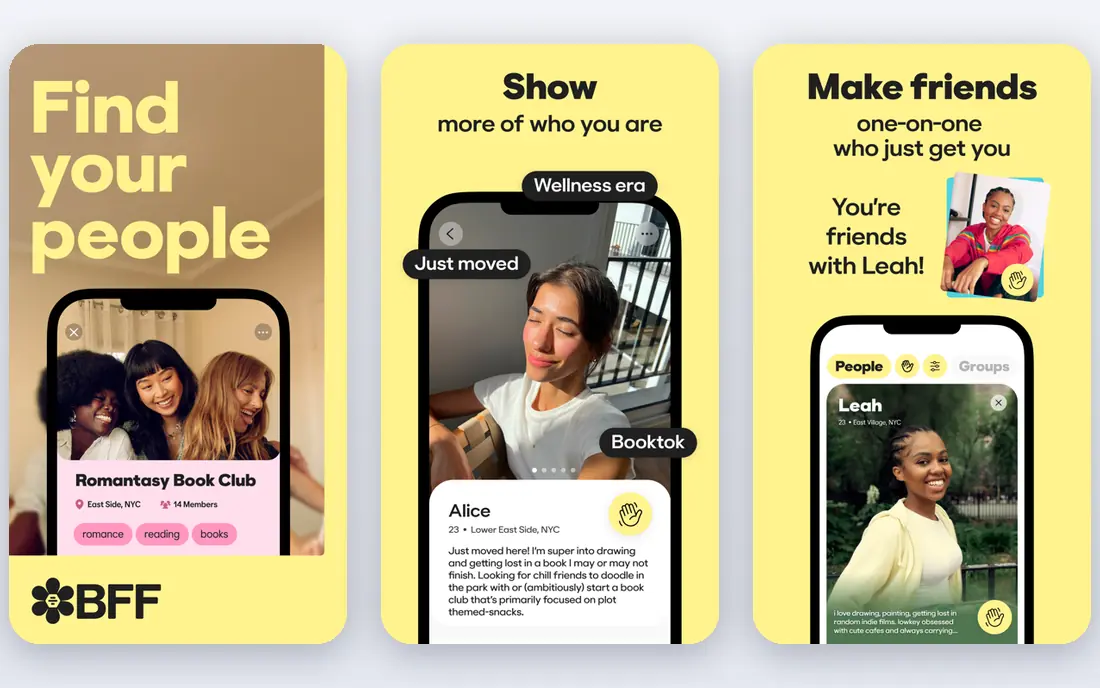
Bumble BFF is the standalone friendship app from Bumble, and it is the easiest recommendation in this list. You build a profile with photos, interest tags and prompts, swipe through nearby people, and chat once you match. Groups add a lower-pressure route, letting you join conversations around run clubs, gaming, books or brunch before meeting one to one.
The main limit is geography. In a large city, matches arrive quickly and groups stay active. In a small town, the pool thins out fast, and you may need to widen your distance or pair Bumble BFF with Meetup. That said, the fact that every core feature is free, with no paywall on groups or events, makes it the right first download for most people.
- Free core features
- Photo verification
- Groups and events alongside matching
- Works best in larger cities
- Profile quality varies by area
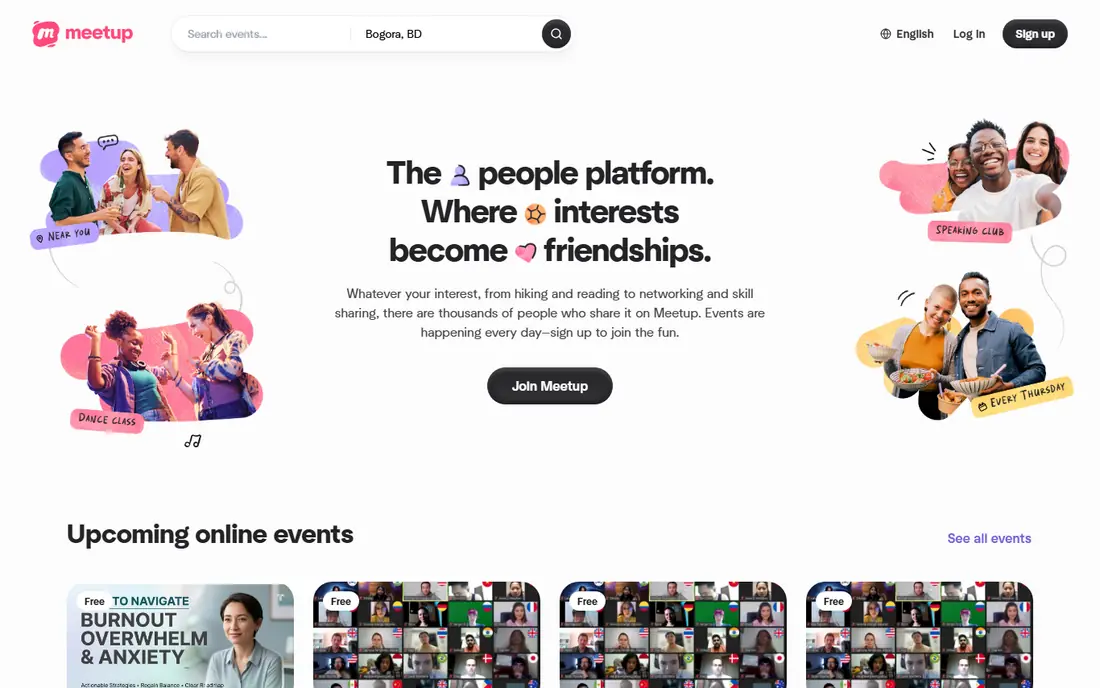
Meetup takes a different approach: instead of matching faces, it matches calendars. You join groups built around hiking, board games, coding, language practice or almost anything else, then turn up to a scheduled event. That structure helps enormously if one-to-one messaging feels forced, because the activity does the social work for you.
Joining and attending as a member is free, although organisers pay a subscription from $29.99 per month, and some events carry a small fee set by the organiser. The real variable is local activity, so search your city and check how recently groups actually met before judging it. Where groups are alive, Meetup is still the most reliable way to meet people regularly rather than once.
- Deepest directory of local groups
- Events give instant conversation topics
- Free for members
- Organisers pay a subscription
- Some groups go quiet

Hey! VINA is built for women who want new friends, and it starts with a personality quiz covering interests, downtime habits and social style. From there you can swipe through profiles or join communities, which gives both the one-to-one route and the group route in one app. The women-only design is the point: many users say it changes the tone of first messages for the better.
The trade-off is reach. Hey! VINA has fewer users than the big general apps, so results depend heavily on your city. If your area has an active community, it is a warm, focused alternative to the open market of Bumble BFF. If it does not, use it alongside a larger app rather than instead of one.
- Women-only space
- Personality quiz for matching
- Community groups included
- Smaller user base than Bumble BFF
- Limited in smaller towns
Friender matches people on activities rather than looks, which suits anyone who finds photo-first swiping shallow. You list the things you like doing, see people with overlapping interests, and get suggestions for things to do together. That activity-first design makes the first message easy, because you already have a plan to suggest.
The honest weakness is transparency. Pricing and plan details are not clearly published on the site, so check the current terms in the app before paying for anything. The network is also smaller than the leaders here. Friender earns its place for people who care more about shared interests than about the size of the pool.
- Matches on shared activities
- Activity ideas built in
- Straightforward profiles
- Pricing is not clearly published
- Smaller network
Yubo mixes swiping with live social rooms, where groups of people can chat and play games together in real time. That live format suits users who like group energy and want to meet several people at once, rather than nursing a string of one-to-one chats. The app is free to use, with optional packs from $5.99 for extra features.
Age is the key filter here. Yubo skews much younger than the other apps in this list, and it is not the right pick for someone looking for peers in their thirties or forties. Live rooms also need sensible caution: stay in public group spaces at first, and move any in-person meeting to a public place with a friend told in advance.
- Live rooms for group chat
- Swipe matching
- Large younger audience
- Skewed young
- Optional packs add cost
- Moderation matters more in live rooms
Peanut started as an app for mums to meet each other, and it has grown into a broader space for women at similar life stages. Profiles highlight where you are in life, groups gather people around shared stages and interests, and live audio chats add a way to talk without the pressure of video or photos. For a new parent in a new city, that shared context is powerful.
The focus cuts both ways. If you are not in the life stages Peanut serves best, the app will feel less relevant than a general option like Bumble BFF or Meetup. For mums, though, Peanut often works faster than general apps, because every match starts from a large piece of common ground.
- Matches by life stage
- Groups and live audio chats
- Focused community
- Narrower audience by design
- Less useful outside parent communities
Nextdoor is not a friendship app in the swiping sense, and that is why it works. It connects you with verified neighbours, local groups and events in your actual area, which makes it easy to find a walking group, a book club or a neighbour who shares an interest. Friendships here grow from repeated local contact, which is how many adult friendships actually form.
The catch is that Nextdoor reflects your neighbourhood, for better or worse. Some areas are warm and active, others are quiet or dominated by local notices. Treat it as a complement to a matching app: Bumble BFF or Meetup can find people, and Nextdoor can turn them into people you bump into regularly.
- Built around your real neighbourhood
- Local events and groups
- Free to join
- Social tone varies by area
- Not designed for one-to-one matching
Patook takes platonic friendship seriously, with rules against flirting and a scoring system that rewards genuine activity. That strictness is the selling point for users who have been frustrated by dating apps repurposed for friendship, where intentions get muddled. Matching is built around interests, and profiles focus on what you like doing rather than how you look.
The downside is scale and clarity. Patook has fewer users than the leaders, and its pricing is not clearly published, so confirm costs inside the app before committing. For users who value a clearly platonic space above a large pool, Patook is worth a look alongside Bumble BFF.
- Strictly platonic rules with enforcement
- Interest-based matching
- Points system for activity
- Smaller user base
- Pricing details are unclear
Timeleft is the most structured option here. You answer a personality quiz, get matched with a small group of strangers, and meet for dinner at a set time and restaurant. There is no swiping and no weeks of messaging that fizzle out: the app books the table, and you turn up. For people who know they will not organise a meetup themselves, that structure is a real advantage.
The limits are cost and coverage. Dinners are paid, prices vary by city, and Timeleft only runs in selected cities, so check yours first. You also give up control over the group, which is the point but can produce a mixed table. As a monthly habit rather than a daily app, Timeleft pairs well with a free matching app for everyday use.
- Removes the awkward planning
- Everyone is there to meet people
- Regular weekly dinners
- Paid per dinner
- Limited cities
- Less control over who attends
How we picked these
We compared official app pages, app store listings and pricing pages for apps whose main purpose is platonic friendship, group events or neighbourhood connection, and we excluded dating apps that merely mention friends as a side feature. We kept only apps that are actively available in 2026 and that serve US users, and we noted where pricing is unclear rather than guessing a figure. Safety features, such as photo verification and reporting tools, weighed in our choices, since a friendship app is only useful if people feel comfortable meeting someone new through it.
How to actually make it work
Pick one matching app and one group app
A matching app like Bumble BFF gives you one-to-one conversations, while a group app like Meetup gives you regular events. Running both covers the two ways adult friendships form: a good conversation with one person, and repeated contact with a group. Two apps are enough. Five apps just split your attention.
Say yes to the first event
Most people download a friendship app, chat for two weeks, and never meet. Set a rule for yourself: accept the first reasonable invitation within two weeks of matching, and keep it short, public and daytime. A 45 minute coffee tells you more than a month of messaging, and it is easy to leave if the connection is not there.
Follow up once, then let it breathe
After a good meeting, send one message the same day saying you enjoyed it and suggesting a specific next thing. If there is no reply, leave it. Chasing a match that has gone quiet rarely turns into a friendship, and your time is better spent on the next event or group. Consistency beats intensity: showing up to the same group three times matters more than one brilliant evening.
Frequently asked questions
What is the best app to make friends?
Bumble BFF is the best starting point for most people, because it is free, photo-verified and focused purely on friendship. Meetup is the better pick if you prefer meeting through activities, and Hey! VINA or Peanut suit women who want a more focused space. The best app overall is the one with active users in your city, so check local activity before settling.
What is the best app to find friends nearby?
Bumble BFF and Nextdoor are the strongest nearby options, for different reasons. Bumble BFF matches you with people close by, while Nextdoor connects you with your actual neighbourhood and its local groups. Meetup also works well for nearby friends, since its groups are organised by city and meet in person.
Are friendship apps safe?
They can be, with sensible habits. Meet in public places, tell a friend your plans, keep first meetings short, and never share your home address or financial details. Photo verification, as used by Bumble BFF, helps, but it does not replace basic caution. Report and block anyone who pressures you to meet privately or asks for money.
Can you make friends on apps for free?
Yes. Bumble BFF, Meetup for members, Hey! VINA, Peanut and Nextdoor all offer free core use, and many friendships start without paying anything. Paid options like Timeleft dinners or Yubo packs are optional extras, not requirements. If an app charges before you can talk to anyone, check exactly what the payment covers first.
What is the best app to make new friends as an adult?
For adults starting fresh in a new city, combine Bumble BFF for one-to-one matching with Meetup for regular group events. That pairing covers both routes to friendship and keeps you meeting people weekly. Women may add Hey! VINA or Peanut, and anyone who struggles to organise meetups themselves may add a Timeleft dinner once a month.
Sources we checked (9)

Online Jobs is an independent blog about careers, online work, learning new skills and the tools that help people earn. More about us.
Keep reading
All posts
WatchCartoonOnline.io Alternatives
Compare legal WatchCartoonOnline.io alternatives for cartoons and anime, from free services to paid streaming, with honest catalog limits for every household.
Reddit Alternatives
We compared the best Reddit alternatives for 2026, from Lemmy and PieFed to Discuit, Tildes, MetaFilter, Hacker News and Discord, with community notes.

M4uFree Alternatives
Looking for m4ufree alternatives? We list legal streaming services with free and paid plans, plus the malware and legal risks of unlicensed sites today.